Children’s hair is amazing! It grows, changes color, gets curly or straight, and needs special care to stay healthy and strong. This guide explains how hair works for kids, from babies to teens, with tips on washing, styling, and keeping it shiny.
How Hair Grows on Your Head
Hair starts deep under your skin in tiny pockets called follicles. These follicles make hair like little factories, pushing out new strands all the time. On average, kids’ hair grows about half an inch every month, or around 6 inches a year. This speed depends on genes from your parents, what you eat, and how healthy you are.
Hair doesn’t grow forever in one go. It follows a cycle with four main stages:
- Growing stage (Anagen): This is the busy time when most hair (85-90%) grows fast. It can last 2-6 years for scalp hair.
- Transition stage (Catagen): Hair slows down and the follicle shrinks. This short phase lasts about 2 weeks, affecting just 1-3% of hair.
- Resting stage (Telogen): Hair chills out for 2-3 months. No growth happens here, but new hair gets ready below.
- Shedding stage (Exogen): Old hair falls out (50-100 per day is normal), making room for fresh strands.
For toddlers, the growing stage might be shorter at first, so baby fuzz turns into thicker locks slowly. By age 2, hair often gets wavier, longer, and denser.
Changes in Kids’ Hair Over Time
Babies often have soft, fine fuzz called lanugo. This changes as kids grow. Around age 1, a ‘halo’ of lengthening hair forms, with curls starting to show. Toddler hair might shift from straight to curly or get thicker.
| Age Stage | Hair Changes | Common Traits |
|---|---|---|
| Newborn (Stage 0) | Fine baby fuzz | May fall out and regrow; very delicate |
| 1 Year (Stage 1) | Halo effect, curls emerge | Longer, bouncier; needs gentle care |
| Toddler (2+ Years) | Thicker terminal hair | Wavier, denser; knots appear |
| School Age | Steady growth | Color darkens; texture sets |
| Puberty | More body hair | Pubic/armpit hair starts; scalp hair thickens |
Hair color can surprise you too! Light baby hair often darkens as pigments develop in the shafts. During puberty (around 10-14 years), hormones kick in, making scalp hair coarser and adding facial or body hair.
Different Kinds of Hair Textures
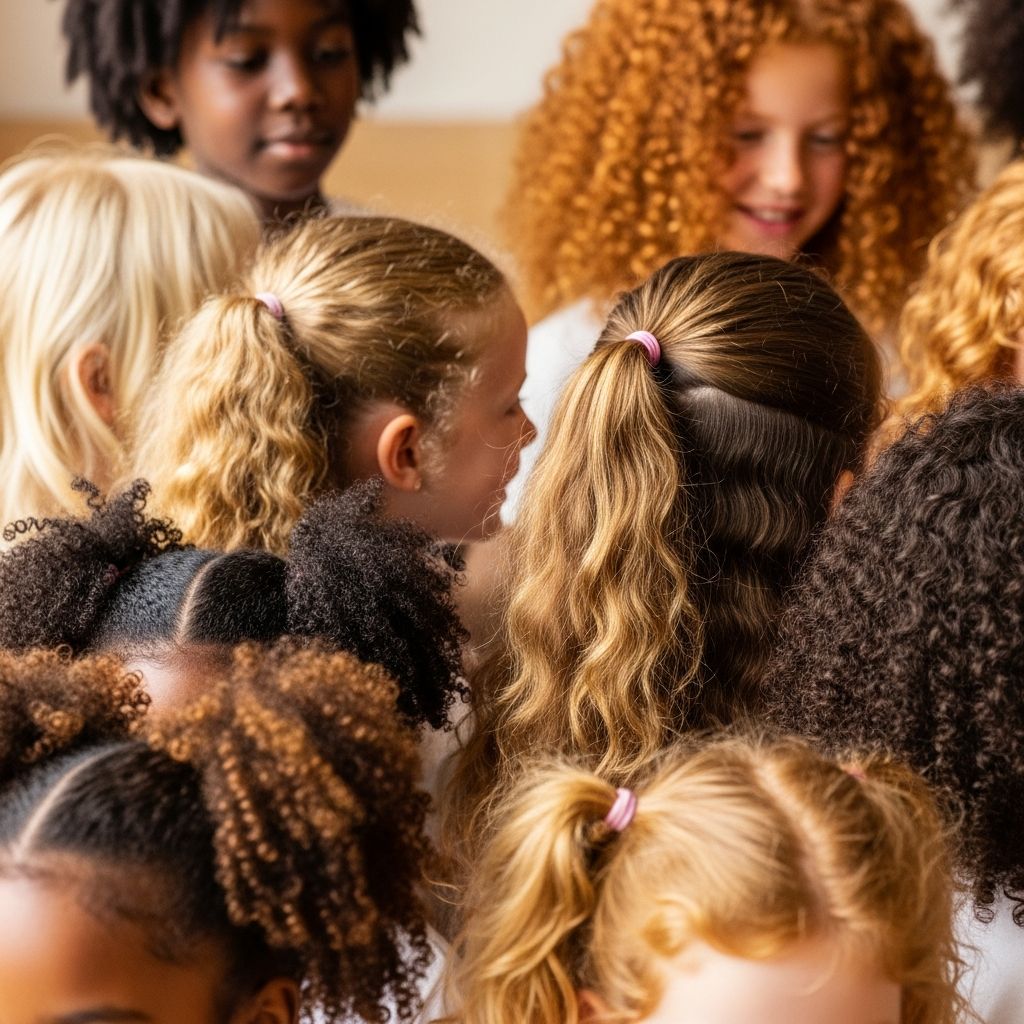
Not all kids’ hair looks the same. Genetics decide if it’s straight, wavy, curly, or coily. Here are the main types:
- Straight (Type 1): Smooth and shiny, lies flat. Grows fast but can get oily quick.
- Wavy (Type 2): S-shaped waves, loose or defined. Prone to frizz in humidity.
- Curly (Type 3): Spiral curls, from loose to tight. Needs moisture to avoid dryness.
- Coily/Kinky (Type 4): Zig-zag patterns, very dense. Grows slowly but is strong; loves oils.
Asian or Caucasian kids often have straighter hair, while African or mixed kids may have curlier types. Care changes by type: straight hair needs oil control, curly needs hydration.
Everyday Hair Care for Children
Good habits keep hair strong. Wash 2-3 times a week with gentle, sulfate-free shampoo to avoid stripping natural oils. Use conditioner on ends to detangle.
Brushing Tips:
- Start from ends, work up to roots to prevent breakage.
- Use wide-tooth combs for wet hair; soft brushes for dry.
- Avoid tight ponytails that pull follicles.
Style gently: braids or twists protect ends, but loosen at night. Heat tools like dryers? Rare and low-heat only. Sun protection: hats or UV sprays for color fade prevention.
What Makes Hair Healthy and Strong
Hair is mostly protein called keratin, made from nutrients. Eat protein-rich foods like eggs, fish, nuts, and beans. Vitamins matter too:
- Biotin & B-vitamins: For growth; in eggs, avocados.
- Iron & Zinc: Prevent loss; in spinach, meat.
- Vitamin D & Omega-3s: Shine and strength; from sun, fish.
Stay hydrated, sleep well, and manage stress—cortisol can push more hair into resting phase. Scalp massages boost blood flow to follicles.
Spotting and Fixing Hair Problems
Sometimes hair acts up. Losing more than 100 strands daily? Check diet or health. Dandruff shows as white flakes—use anti-fungal shampoo. Itchy scalp might mean dry skin or allergies.
Warning Signs:
- Patchy bald spots: Could be alopecia (autoimmune).
- Brittle strands: Protein lack or over-styling.
- Sudden thinning: See a doctor for thyroid or nutrition checks.
For infections, keep clean and see a pediatrician. Healthy habits fix most issues.
Hair During Puberty and Beyond
Puberty brings big changes. Girls: pubic hair stage 2 around age 10, breasts grow. Boys: testicles enlarge at 11, voice deepens, facial fuzz later. Hair gets oilier from hormones—wash more, use clarifying products.
Frequently Asked Questions (FAQs)
Why does my hair fall out a lot?
Normal shedding is 50-100 hairs daily as part of the cycle. More? Boost nutrition or see a doc.
Can I make my hair grow faster?
Genes set the pace (0.5 inch/month), but diet, scalp massage, and avoiding damage help it thrive.
Why did my hair color change?
Baby hair lightens from less pigment; it darkens as melanin builds up.
Is it okay to cut kids’ hair short?
Yes! Doesn’t affect growth rate, just style. Trim split ends for health.
What if my child has lice?
Check for nits, use medicated shampoo, wash bedding. Prevent with detangling.
Got more questions? Talk to a parent or doctor!
References
- Children’s Hair Growth Cycles and Texture Types: The Science Explained — Kids Hair Play. 2023. https://kidshairplay.co.uk/childrens-hair-growth-cycles-and-texture-types-the-science-explained/
- Understanding Your Toddler’s Hair Growth: From Baby Fuzz to Full Locks — Toddle About. 2023. https://toddleabout.co.uk/parenting/understanding-your-toddlers-hair-growth-from-baby-fuzz-to-full-locks/
- Kids’ Hair Growth: Healthy Hair for Kids — Llama Naturals. 2024. https://www.llamanaturals.com/blogs/kids-nutrition/kids-hair-growth
- What Are the Four Stages of Hair Growth? — Healthline (Medically reviewed by Joan Paul, MD). 2024-12-13. https://www.healthline.com/health/stages-of-hair-growth
- Baby Hair Growth Stages (Explained) — DommiesBlessed. 2023. https://www.dommiesblessed.com/baby-hair-growth
- Child Puberty: Stages, Signs and Growth Patterns in Boys and Girls — Banner Health. 2025. https://www.bannerhealth.com/services/pediatrics/wellness/puberty
- Everything You Need to Know About Babies’ and Kids’ Hair — Pipette Baby. 2024. https://www.pipettebaby.com/blogs/blog/8-facts-about-babies-and-kids-hair