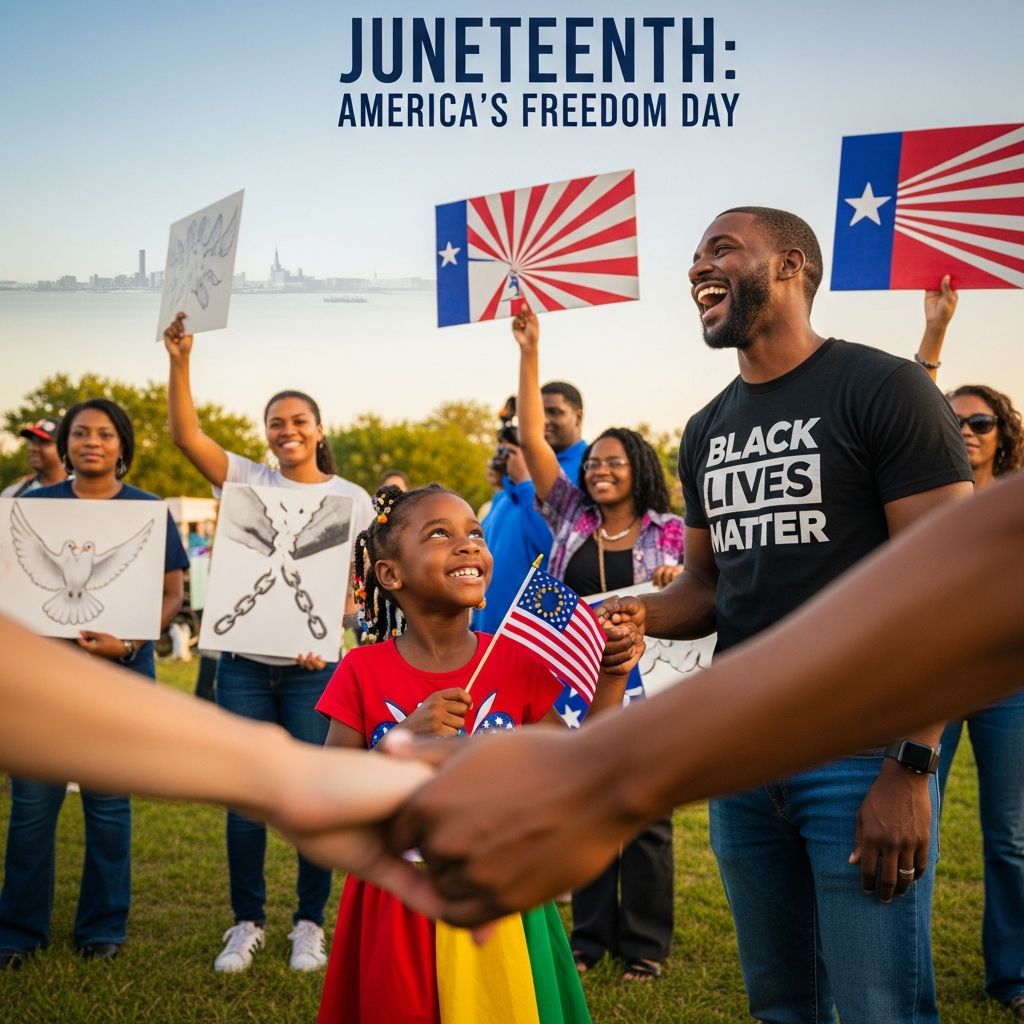
Juneteenth stands as a cornerstone of American history, honoring the day when the last enslaved individuals in the United States learned of their freedom. Observed on June 19, this federal holiday encapsulates the triumph over slavery and the persistent journey toward equality for Black Americans.
The Roots of Emancipation in Texas
The story of Juneteenth begins amid the closing chapters of the Civil War. On January 1, 1863, President Abraham Lincoln issued the Emancipation Proclamation, declaring freedom for enslaved people in Confederate states. However, enforcement lagged in remote areas like Texas, the westernmost Confederate holdout.
Texas, with its vast landscapes and isolation, sheltered over 250,000 enslaved people who remained in bondage long after the proclamation. The Civil War’s end in April 1865 did not immediately bring news to Galveston Bay. It was not until June 19, 1865, that Major General Gordon Granger and Union troops arrived, issuing General Order No. 3. This decree proclaimed: “The people of Texas are informed that, in accordance with a proclamation from the Executive of the United States, all slaves are free.” Reactions varied from stunned silence to joyous outbursts, igniting celebrations that evolved into an enduring tradition.
From Local Festivities to National Symbol
The first Juneteenth observances occurred in 1866 in Texas, featuring prayer services, spiritual singing, and communal feasts. Participants donned their finest attire, symbolizing dignity reclaimed from years of deprivation. These gatherings spread as Black families migrated, carrying the tradition across states.
By the early 20th century, Juneteenth had woven into the fabric of Black communities nationwide. Challenges like the Great Migration and Jim Crow laws tested its continuity, yet it persisted as a beacon of resilience. Texas formalized it as a state holiday in 1980, paving the way for broader recognition.
Federal Recognition: A Milestone in 2021
Momentum surged in 2020 amid nationwide protests following George Floyd’s murder. Activists, led by figures like Opal Lee—known as the “Grandmother of Juneteenth”—pushed for federal status. On June 17, 2021, President Joe Biden signed the Juneteenth National Independence Day Act, making it the 11th federal holiday and the first since Martin Luther King Jr. Day in 1983.
This legislation, passing the Senate unanimously and the House overwhelmingly, affirmed Juneteenth’s role in national reflection on slavery’s legacy. President Biden described it as a day of “profound weight and power,” acknowledging America’s “original sin” of enslavement.
Powerful Symbols of Liberation
Juneteenth’s flag, designed in 1997 by Nedra Dubois and Ben Haile, bursts with meaning. A bold white star at the center, encircled by a nova, represents new beginnings and Texas’s pivotal role, extending freedom’s light to all 50 states. The arched divide between blue (resilience) and red (sacrifice) fields evokes a bursting star, signifying hope rising from oppression.
- White Star: Freedom for Black Americans nationwide, rooted in Texas.
- Blue Field: The African diaspora and perseverance.
- Red Field: The bloodshed endured for liberty.
- Nova Burst: A fresh start and collective possibilities.
Time-Honored Traditions and Modern Observances
Traditional Juneteenth events echo 19th-century roots: barbecues with staples like ruby-red watermelon (symbolizing resilience) and strawberry soda, alongside music, games, and storytelling. Families gather for church services, educational programs, and parades, fostering intergenerational bonds.
In contemporary times, celebrations have expanded. Cities host festivals, rodeos, and readings of General Order No. 3. Corporations and institutions now observe the day with closures or programs on racial equity. Virtual events and community clean-ups blend reflection with action.
| Traditional Elements | Modern Adaptations |
|---|---|
| Prayer meetings and spirituals | Workshops on racial justice |
| Feasts with symbolic foods | Public festivals and parades |
| New clothes as resistance | Art exhibits and film screenings |
| Storytelling of emancipation | Online webinars and podcasts |
Juneteenth’s Deeper Significance
Beyond celebration, Juneteenth prompts introspection on freedom’s incomplete promise. It highlights slavery’s jagged end—not a singular event but a protracted struggle. As historian Jessica Mauldin notes, it symbolizes emancipation while sparking dialogues on persistent inequities.
For Black Americans, it instills pride in ancestral endurance and contributions to the nation. It serves as America’s “second Independence Day,” centering Black voices in freedom’s narrative and urging ongoing equity efforts.
Educating the Next Generation
Parents play a vital role in transmitting Juneteenth’s legacy. Age-appropriate approaches build understanding:
- For young children (ages 4-7): Use picture books like Juneteenth for Mazie to introduce joy and family gatherings.
- For school-age kids (8-12): Discuss the timeline from Emancipation Proclamation to General Order No. 3 via maps and timelines.
- For teens: Explore connections to contemporary issues like voting rights and police reform through documentaries.
Hands-on activities—crafting freedom flags, baking symbolic treats, or role-playing historical figures—make lessons memorable. Community events offer immersive experiences.
Juneteenth Around the World
While U.S.-centric, Juneteenth resonates globally. Descendants of Black Seminoles in Coahuila, Mexico, celebrate it, honoring escapes from U.S. slavery in 1852. International observances in Canada and the UK reflect the African diaspora’s shared history.
Frequently Asked Questions
What exactly does Juneteenth commemorate?
Juneteenth marks June 19, 1865, when Union General Gordon Granger announced the end of slavery in Texas, freeing the last enslaved people in the Confederacy.
Why was Texas the last to receive emancipation news?
Texas’s remoteness and lack of Union presence delayed enforcement of the 1863 Emancipation Proclamation until war’s end.
How did Juneteenth become a federal holiday?
Through the 2021 Juneteenth National Independence Day Act, signed by President Biden after bipartisan congressional support.
What foods are traditional for Juneteenth?
Red foods like watermelon, red velvet cake, and hibiscus tea symbolize resilience and the bloodshed of ancestors.
Is Juneteenth only for Black Americans?
No, it’s a national holiday inviting all to reflect on slavery’s history and commit to justice.
Looking Forward: Juneteenth’s Enduring Call
Juneteenth evolves, mirroring America’s racial reckoning. It challenges complacency, honoring past sacrifices while demanding progress in education, policy, and reconciliation. As celebrations grow, they reinforce that true freedom requires collective vigilance.
This holiday, born from delayed justice, now unites the nation in pursuing its ideals. By observing Juneteenth, we affirm that emancipation was just the beginning.
References
- Why is Juneteenth Important? — Smithsonian National Museum of African American History and Culture (NMAAHC). 2021. https://nmaahc.si.edu/explore/stories/why-juneteenth-important
- What is Juneteenth and Why is it a Holiday? — Southern New Hampshire University (SNHU). 2023-06-19. https://www.snhu.edu/about-us/newsroom/community/what-is-juneteenth-and-why-is-it-a-holiday
- Juneteenth — Wikipedia (informed by primary sources). 2026. https://en.wikipedia.org/wiki/Juneteenth
- Juneteenth | Federal Holiday, Meaning, Flag, History — Encyclopædia Britannica. 2024. https://www.britannica.com/topic/Juneteenth
- Juneteenth: The complicated history, significance and celebration — University of South Florida St. Petersburg. 2023-06. https://www.stpetersburg.usf.edu/news/2023/juneteenth-complicated-history-significance-celebration-around-struggle-for-freedom.aspx
- The Long History of Our New Federal Holiday: Juneteenth — U.S. Capitol Historical Society. 2021-06. https://capitolhistory.org/capitol-history-blog/the-long-history-of-our-new-federal-holiday-juneteenth/
- The Origins of Juneteenth and Why It Falls on June 19th — TIME. 2022-06-16. https://time.com/6988944/origins-of-juneteenth-black-independence-day-june-19th/