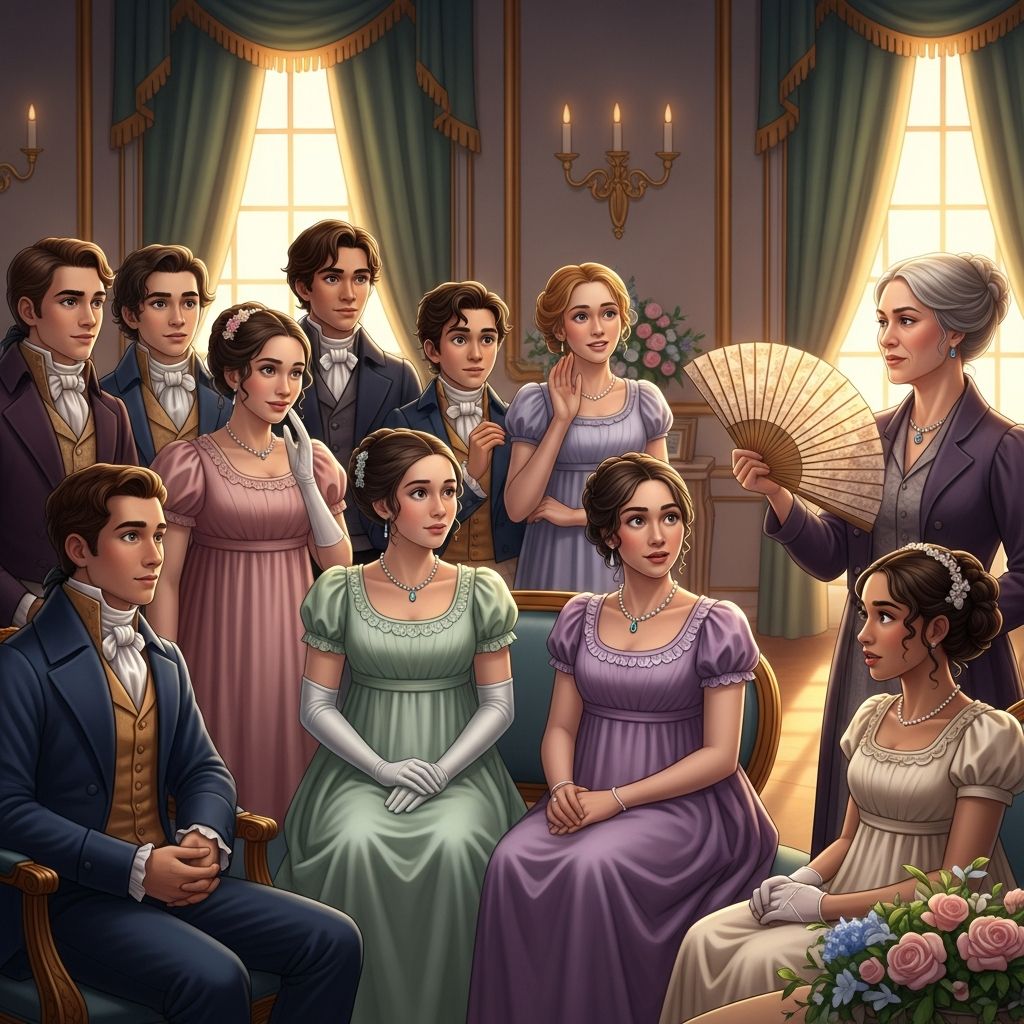
The Netflix sensation Bridgerton has captivated audiences with its lavish costumes, scandalous plots, and diverse cast set in Regency-era England. But with its TV-MA rating, many parents wonder if it’s suitable for teenagers. This guide explores the show’s content, official ratings, and key considerations for family viewing decisions.
Understanding the Official Age Rating
Bridgerton carries a TV-MA designation from the TV Parental Guidelines, indicating it’s designed for mature audiences aged 17 and older. This rating stems from frequent sexual content, nudity, and suggestive dialogue that dominate much of the series. The Motion Picture Association and TV ratings bodies flag such elements to alert viewers to potentially inappropriate material for younger eyes.
Across all seasons, episodes consistently feature intense romantic encounters that push boundaries beyond typical teen programming. Parents should note that streaming platforms like Netflix allow overrides, but the rating serves as a benchmark for content intensity.
Core Content Elements Breakdown
To assess suitability, examine the primary triggers: intimacy, language, violence, and thematic depth.
Intimate Scenes and Nudity
The series is notorious for its explicit portrayals of physical relationships. Couples engage in prolonged, graphic sequences involving partial and full nudity, close-up views of bodies, and simulated acts. These moments often drive character development but occur repeatedly, sometimes lasting several minutes per episode.
For instance, central relationships highlight passionate encounters that emphasize sensuality over subtlety. Such depictions align with critiques noting the show’s heavy reliance on visual eroticism, which can overwhelm younger viewers.
Language and Dialogue
Profanity peppers conversations, including strong expletives uttered in heated arguments or flirtations. While not constant, these words amplify during emotional peaks, contributing to the mature tone.
Violence and Dramatic Tension
Physical confrontations, including duels and aggressive outbursts, add edge. Emotional violence through manipulation and societal pressure also features prominently, exploring power dynamics in relationships.
| Content Type | Frequency | Severity | Teen Impact |
|---|---|---|---|
| Sexual Content/Nudity | High (multiple per episode) | Explicit | May confuse or desensitize |
| Language | Moderate | Strong | Normalizes casual profanity |
| Violence | Low-Moderate | Mild-Intense | Contextual, not gore-focused |
| Drugs/Alcohol | Moderate | Social use | Portrays party culture |
Themes and Psychological Layers
Beyond surface allure, Bridgerton delves into complex issues like consent, trauma, ambition, and social hierarchies. Protagonists navigate family pressures, personal insecurities, and romantic entanglements that mirror real-life adolescent struggles—albeit in corsets.
Psychological analyses highlight accurate depictions of trauma responses and relational dynamics, such as attachment styles influenced by childhood experiences. However, the romanticized lens may idealize unhealthy behaviors for impressionable teens.
- Consent Discussions: Key arcs address misunderstandings around physical intimacy, offering teachable moments if guided.
- Body Image and Pressure: Characters grapple with societal beauty standards and performance expectations.
- Diversity and Identity: The inclusive casting sparks talks on race, gender roles, and sexuality, though some scholars argue it glosses over historical realities.
Pros and Cons for Teenage Viewers
Weighing benefits against risks helps parents tailor choices to their child’s maturity.
Potential Benefits
- Sparks interest in history, literature, and classical music remixed modernly.
- Promotes empathy through multifaceted characters from varied backgrounds.
- Encourages open family dialogues on relationships, boundaries, and self-worth.
Key Risks
- Overemphasis on physical intimacy might skew perceptions of healthy romance.
- Glamorized drama could normalize toxic dynamics like deception or coercion.
- Limited historical context on diversity may confuse facts with fantasy.
Parental Strategies for Shared Viewing
If opting to allow teen access, proactive steps mitigate concerns.
- Preview Episodes: Watch ahead to flag specific scenes.
- Set Boundaries: Establish pause points for discussions.
- Co-View: Turn it into a family event to unpack themes.
- Use Resources: Common Sense Media or Plugged In offer detailed episode guides.
For younger teens (13-15), consider skipping or fast-forwarding; older ones (16-17) may handle with context.
Academic Perspectives on Representation
Scholars dissect Bridgerton‘s approach to diversity. While praised for inclusive casting, critiques note superficial integration. Gender norms are challenged thoughtfully, but race and queer elements receive less depth, often confined to brief moments. One study labels it ‘quasi-color consciousness,’ where stereotypes persist despite elevated roles.
Representation of interracial dynamics and cultural nods, like wedding rituals, aim for inclusivity but sometimes perpetuate power imbalances. These layers enrich analysis for mature teens interested in media studies.
Comparing to Similar Shows
| Show | Rating | Sexual Content | Suitability for 14+ |
|---|---|---|---|
| Bridgerton | TV-MA | High | With guidance |
| The Crown | TV-MA | Low | Moderate |
| Outlander | TV-MA | High | Similar caution |
| Gossip Girl (Reboot) | TV-MA | Moderate | Guided viewing |
Expert Recommendations by Age
- Under 13: Not recommended due to mature intimacy.
- 13-15: Avoid or heavily edited; focus on plot sans romance.
- 16-17: Possible with parental involvement and post-viewing talks.
- 18+: Fully appropriate.
Frequently Asked Questions
Can 14-year-olds watch Bridgerton?
Generally no, due to pervasive sexual content. Opt for parental controls or alternatives like Anne with an E.
Does Bridgerton have positive messages for teens?
Yes, on empowerment and resilience, but wrapped in mature packaging that requires context.
Is there LGBTQ+ representation?
Limited and discreet, often in shadowed contexts, sparking discussions on visibility.
How graphic is the nudity?
Features bare torsos, buttocks, and implied acts; no full frontal but highly sensual.
Should parents watch Season 2 with kids?
Similar rating, slightly less central sex but still mature; preview advised.
Final Parental Checklist
Before hitting play:
- Assess your teen’s emotional maturity and prior media exposure.
- Discuss expectations around romance and consent upfront.
- Monitor reactions and be ready to stop.
- Explore spin-offs like Queen Charlotte for varied tones.
Bridgerton blends escapism with provocation, making it a double-edged sword for teen audiences. Informed choices empower families to enjoy—or avoid—responsibly.
References
- An Intersectional Feminist Look at Bridgerton — University of Mary Washington. 2023. https://scholar.umw.edu/cgi/viewcontent.cgi?article=1502&context=student_research
- Content Analysis – Bridgerton — Josie King Portfolio. 2022. https://misskingpr.com/portfolio/content-analysis/
- Unmasking Bridgerton’s Diverse Casting — Journal of Intersectional Studies. 2023. https://jisj.pubpub.org/pub/zj7k3yj5
- 11 Psychological Hits and Misses in Bridgerton — Psychology Corner. 2021. https://psychologycorner.com/11-psychological-hits-and-misses-in-bridgerton/
- Desire in Bridgerton: Defining the Female Gaze — Georgia Southern University. 2022. https://digitalcommons.georgiasouthern.edu/cgi/viewcontent.cgi?article=1933&context=honors-theses
- Quasi-color consciousness: Casting, race, and sexual violence in Bridgerton — Wiley Online Library. 2024. https://onlinelibrary.wiley.com/doi/10.1111/jpcu.13375