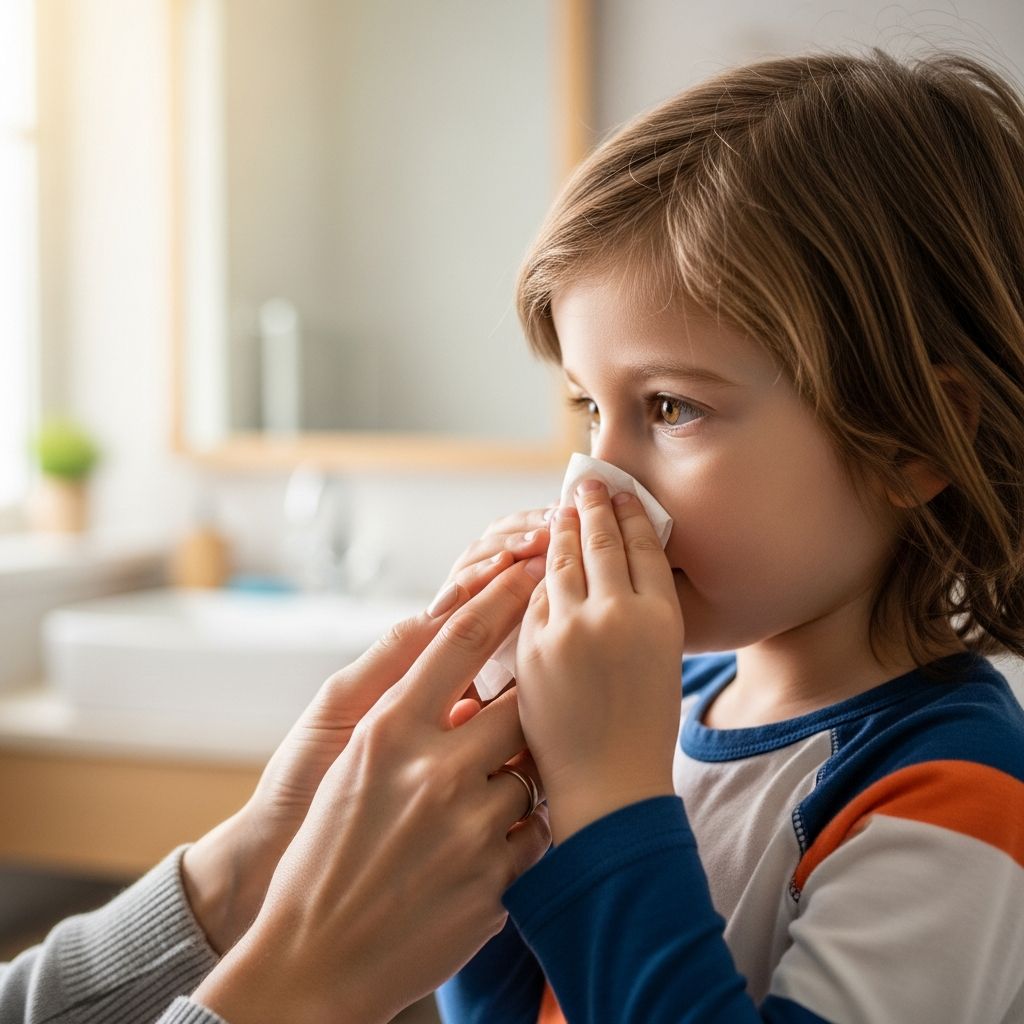
Understanding Nasal Hygiene as a Developmental Milestone
Teaching a child to blow their nose independently represents a significant step in self-care mastery. Unlike many other hygiene tasks that emerge naturally through observation and imitation, nose-blowing requires a specific combination of physical capabilities, body awareness, and coordinated effort. Parents often underestimate the complexity involved in this seemingly simple action. Successfully clearing nasal passages demands that children understand their body signals, coordinate multiple muscle groups, manage sensory input, and follow a multi-step process without adult intervention.
The journey toward independent nose-blowing varies considerably among children. Some master this skill by age three or four, while others require additional time and practice into their early school years. This variation is entirely normal and reflects differences in developmental readiness rather than capability deficits. Understanding the underlying skills required helps parents approach instruction with realistic expectations and appropriate strategies.
The Essential Skills Behind Successful Nose-Blowing
Before examining specific teaching methods, it’s helpful to recognize the multifaceted abilities children must develop to blow their noses effectively. This action integrates fine motor coordination, oral motor control, cognitive sequencing, and body awareness in ways that might surprise parents.
Fine Motor Development plays a crucial role in nasal hygiene management. Children must grasp and manipulate tissues without tearing them apart, hold the tissue at the correct angle near their nose, and maintain control throughout the blowing action. They need adequate pinch grip strength and eye-hand coordination to position the tissue properly while their vision may be partially obstructed. These motor components develop gradually and benefit from targeted practice.
Oral Motor Skills involve the precise coordination of breathing muscles and mouth closure. Children must learn to keep their mouth firmly closed while simultaneously pushing air forcefully through their nasal passages. This represents an unusual breathing pattern that doesn’t occur naturally in typical development, making it something children must actively learn rather than discover on their own.
Interoceptive Awareness refers to a child’s ability to recognize internal bodily signals. Before attempting to blow their nose, children must first recognize that their nose feels stuffy, full, or uncomfortable. They must also understand the difference between sniffling congestion back up into the sinuses versus clearing it out through blowing. This internal body awareness develops progressively throughout early childhood.
Cognitive and Executive Function Skills enable children to follow the sequential steps involved in complete nasal hygiene. This includes recognizing when to attempt nose-blowing, executing each step in order, recognizing when the task is complete, and managing the tissue appropriately afterward. For children with developmental delays or cognitive challenges, this multi-step process can prove particularly difficult.
Timing Your Approach: When to Begin Instruction
Parents frequently make the mistake of introducing nose-blowing instruction during illness, when nasal congestion is most prominent. While the motivation seems logical, this timing actually creates unnecessary frustration and difficulty. A child struggling with nasal blockage, discomfort from illness, and fatigue is far less likely to successfully learn a new skill or maintain patience for practice sessions.
Ideal Practice Scenarios occur when children feel healthy, rested, and in a positive mood. During these periods, children can focus attention on learning the mechanics without the overwhelming sensory input of actual congestion. They can practice the breathing patterns, muscle coordination, and procedural steps in a calm, low-pressure environment. Once these skills become familiar, children will be better prepared to apply them when genuine nasal congestion occurs.
Incorporate nose-blowing practice into existing daily routines for maximum consistency. Following toothbrushing, before bedtime, or after meals creates natural anchor points where practice becomes habitual. This approach integrates skill development seamlessly into family life rather than treating it as an isolated therapeutic task.
Progressive Teaching Strategies: From Visualization to Application
Stage One: Mouth-Based Blowing Foundation
Begin by introducing the concept of forceful air expulsion through the mouth. Ask your child to hold a tissue loosely in front of their mouth and blow outward as hard as they can. This establishes the fundamental understanding that air pushed from the body can move objects and create visible effects. Many children find this stage enjoyable and achieve quick success, building confidence for subsequent steps.
Stage Two: Visual Demonstrations and Mirroring
Help children visualize nasal airflow through activities that make invisible breath visible. Fogging a mirror by exhaling through the nose creates concrete proof of air movement. Ask your child to hold one nostril closed and blow onto the mirror surface with the open nostril. They can draw shapes or pictures in the fog, turning the exercise into a creative activity. This visual feedback makes the abstract concept tangible and engaging.
Stage Three: Water-Based Practice Activities
Water activities provide excellent practice opportunities with built-in visual feedback. During bathtime or with a simple cup of water, demonstrate how to make ripples by blowing air through the nose toward the water surface. Start with both nostrils, then progress to closing one nostril at a time. The resulting ripples immediately show children whether their nasal blowing is effective. Some children also enjoy blowing bubbles through their nose underwater, which requires similar muscle coordination and control.
Stage Four: Tissue-Based Practice
Once children demonstrate comfort with nose-blowing mechanics in playful contexts, introduce actual tissue use. Tear a small piece of tissue and crumple it into a loose ball. Place it on a table and ask your child to blow it across the surface using only nasal airflow. This bridges the gap between play-based practice and functional application. Exaggerate your own tissue-blowing demonstrations so children can clearly observe which nostril receives pressure, how your mouth positions, and the intensity of breath required.
Gamification and Creative Engagement Methods
Children learn most effectively through play and imagination. Frame nose-blowing instruction as adventure and exploration rather than a therapeutic task or health requirement.
Animal-Inspired Activities engage children’s imaginations while building necessary skills. Pretend to be an elephant using a tissue as a trunk, blowing air forcefully downward. Transform into a dragon breathing fire through the nose. Become a powerful windstorm clearing debris. These imaginative scenarios make practice enjoyable while developing the exact muscle control and breathing patterns required for actual nose-blowing.
Sound-Based Exploration helps children recognize that each nostril can produce slightly different sounds and sensations. Challenge them to make funny noises by blowing through their nose without using their mouth. Notice which side feels or sounds different when one nostril is closed. This playful exploration builds awareness of unilateral nasal function.
Comparison Games create friendly competition and motivation. Race to see whose tissue moves farther when blown with nasal air. Compare whose mirror fog appears thicker or whose water ripples spread wider. These comparative activities maintain engagement while providing implicit instruction in proper technique and effort levels.
Managing One-Nostril Control
Blowing from both nostrils simultaneously overwhelms many young children. Breaking this into one-nostril-at-a-time practice significantly improves success rates and reduces frustration. Gently press one side of your child’s nose closed and encourage them to blow air out of the open nostril. This reduces the complexity of the task and helps children feel the sensation more clearly.
Use descriptive language to help children understand and feel the difference. “Can you close this side and let air come out of just this side?” Some children respond well to feeling where you’re placing pressure and replicating your finger placement themselves. Others benefit from holding a small feather or tissue piece directly under the open nostril to see the air movement clearly.
Switch sides and repeat, eventually helping children recognize that one nostril might feel clearer or work more easily than the other. This recognition builds interoceptive awareness and helps children understand their own nasal physiology.
Addressing Challenges and Building Persistence
| Common Challenge | Underlying Cause | Suggested Strategy |
|---|---|---|
| Child refuses to close mouth while blowing | Unfamiliar breathing pattern feels uncomfortable or unnatural | Practice mouth closure separately; use exaggerated Simon Says demonstrations; offer positive reinforcement for any mouth closure attempt |
| Child sniffs instead of blows | Confusion about direction of airflow; habit of drawing congestion upward | Explicitly teach blowing outward; use downward arrows or hand gestures to indicate direction; practice with tissues to make outward airflow visible |
| Child becomes frustrated quickly | Unrealistic expectations; practicing during illness or discomfort; perfectionism | Practice only when healthy; celebrate small improvements; keep sessions brief; avoid pressure or criticism |
| Child fears tissue or messiness | Sensory sensitivities; concern about confronting nasal mucus | Use softer tissues; start with dry practice; normalize the process; begin with milder sensory input like mirrors before tissues |
Building Hygiene Awareness and Germ Education
Teaching nose-blowing extends beyond the physical mechanics to include understanding why this skill matters for health and social awareness. Age-appropriate discussions about germs help children understand that blowing their nose prevents spreading illness and maintains personal cleanliness.
Use simple explanations and visual demonstrations. Show how coughing or sneezing sends tiny droplets into the air and onto surfaces. Explain that blowing into a tissue instead of sniffling or using hands helps protect family members and friends from getting sick. This creates meaningful context for why the skill matters beyond just parental instruction.
Establish the complete hygiene routine as a connected sequence. After blowing their nose, children should wrap the tissue properly and dispose of it in a trash container. Hand-washing immediately after completes the hygiene cycle. Practicing this full sequence helps children understand nose-blowing as part of comprehensive personal care rather than an isolated task.
Progression Milestones and Realistic Expectations
Most children begin showing interest and capability in nose-blowing between ages two and four, though significant variation exists. By age three, many children can understand the basic concept and attempt the action with guidance. By age four, most children can execute the task with occasional reminders. By age five or six, independent nasal hygiene becomes more consistent and automatic for typically developing children.
Children with developmental delays, sensory sensitivities, or cognitive challenges may require additional time and modified strategies. Occupational therapists and speech-language pathologists can provide specialized guidance for children who struggle with this skill beyond typical age ranges.
Celebrate incremental progress rather than waiting for perfect independent execution. Acknowledge when children remember to blow instead of sniff, when they attempt to close one nostril, when they successfully move a tissue with nasal air, or when they remember to wash hands afterward. These building blocks eventually combine into consistent, independent nasal hygiene.
Maintaining Motivation and Consistency
Positive reinforcement proves far more effective than criticism or pressure. Respond to successful nose-blowing attempts with enthusiasm, praise, high-fives, or sticker rewards if your family uses reward systems. Keep the tone encouraging and playful throughout the learning process.
Consistency matters significantly for skill development. Regular practice, even during healthy periods when motivation is lower, establishes the neural pathways and muscle memory required for automaticity. Brief daily practice sessions prove more effective than irregular intensive practice followed by long gaps.
Model the behavior regularly by blowing your own nose with exaggerated movements and sound effects. Children learn through observation and imitation, so demonstrating proper technique normalizes the behavior and provides concrete reference points for your own execution.
When to Seek Additional Support
Most children master nose-blowing through consistent home practice using the strategies outlined above. However, some situations warrant professional guidance. If your child is significantly delayed in acquiring this skill compared to peers, shows extreme distress or anxiety about nasal tasks, has confirmed fine or oral motor delays, or demonstrates difficulty with other self-care skills, consulting with your pediatrician or occupational therapist can provide tailored strategies and identify underlying factors that might be contributing to difficulty.
Frequently Asked Questions
At what age should children typically learn to blow their noses?
Most children show readiness between ages two and four, with consistent independent skill development by ages four to six. However, significant variation is completely normal, and children develop at different rates.
Should I force my child to practice nose-blowing if they resist?
No. Pressure and force create negative associations with the task. Keep practice voluntary and playful. If your child consistently refuses, consider whether they’re developmentally ready or if sensory concerns might be involved.
Is it ever too early to introduce nose-blowing concepts?
No. Starting with playful activities like fogging mirrors or blowing feathers during toddlerhood establishes foundational understanding. Formal practice can begin when children show interest and readiness.
What if my child only blows from one nostril effectively?
This is common and often improves naturally over time as skills develop. Continue practicing with both sides, but don’t pressure equal performance. Some people naturally have one more patent nostril than the other.
How can I encourage nose-blowing during actual illness?
Remind them of the techniques practiced during healthy times, keep practice sessions brief to avoid frustration, offer comfort and encouragement, and remind them that blowing helps them feel better faster.
References
- Teach Kids How to Blow Their Nose – The OT Toolbox — The OT Toolbox. https://www.theottoolbox.com/tips-help-kids-learn-how-to-blow-their-nose/
- Goodbye Sniffles, Hello Tissues: Teaching Toddlers to Blow Their Nose — SIU Medicine. https://www.siumed.org/blog/goodbye-sniffles-hello-tissues-teaching-toddlers-blow-their-nose
- How To Teach Your Child To Blow Their Nose — The OT Guide, YouTube. April 25, 2024. https://www.youtube.com/watch?v=JQalk5jY8i4
- Nose Blowing — Boys Town Pediatrics, YouTube. https://www.youtube.com/watch?v=4LPeYd5Q08o
- Teaching Kids How to Blow Their Nose — Boogie Wipes. https://boogiewipes.com/blogs/all/teaching-kids-how-to-blow-their-nose