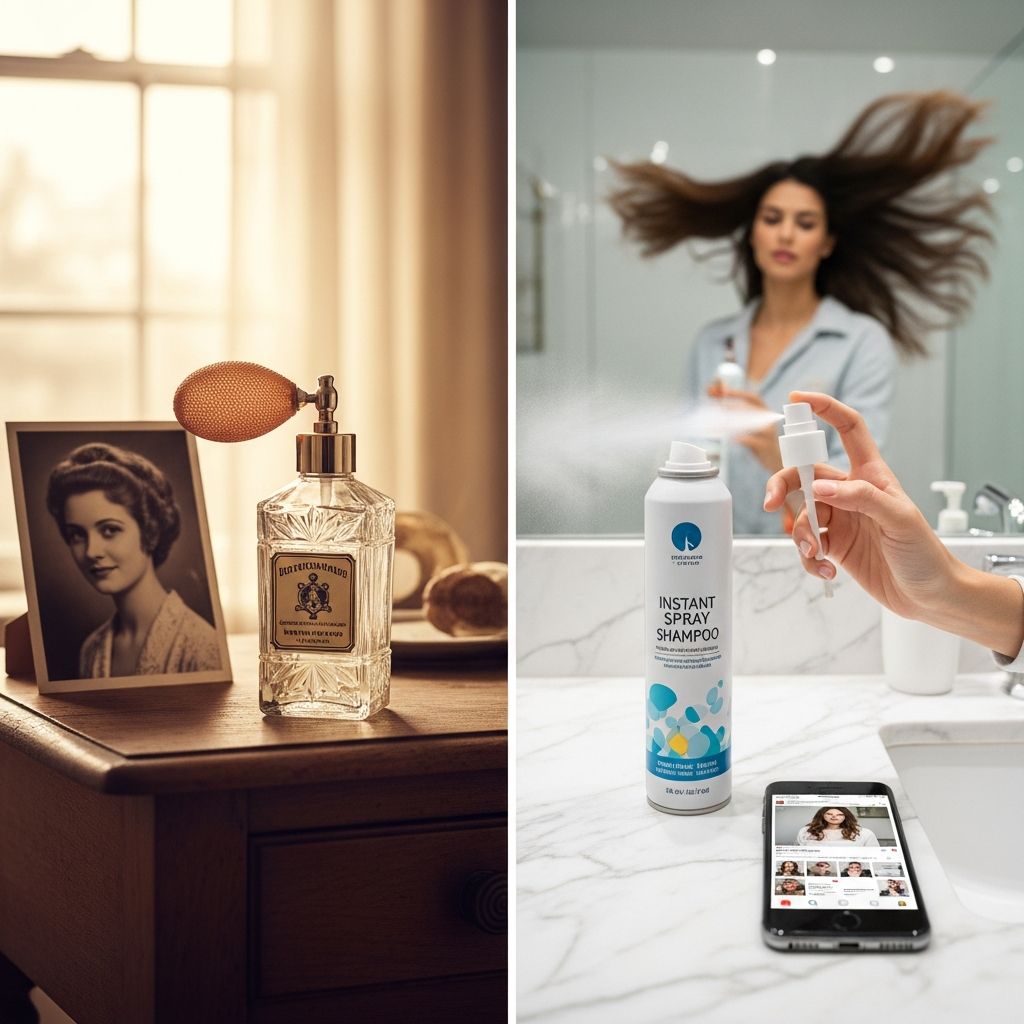
Instant spray shampoo, better known today as aerosol dry shampoo, started life as a quirky workaround for oily roots and has quietly transformed into a staple for busy mornings, post-gym touch-ups, and heat-free styling days. Instead of lathering and rinsing, you spray, wait, tousle, and go.
This article takes inspiration from the nostalgic appeal of early instant spray shampoos while offering a completely fresh, modern look at how and why this product works, who it suits, and how to choose and use it wisely for healthier-looking hair.
What Exactly Is Instant Spray Shampoo?
Instant spray shampoo is a waterless hair product that uses fine powders and lightweight solvents to soak up excess oil and surface impurities at the scalp, helping hair look fresher between regular washes. Unlike traditional shampoo, it does not require rinsing and does not fully cleanse the scalp in the same way a wash with water and surfactants does.
Most formulas are packaged in pressurized cans and dispensed as a mist that turns into a soft, powdery veil when it reaches your hair. Some are translucent or tinted to blend better with specific hair colors, while others are deliberately mattifying to give that slightly lived-in, textured look that works so well for casual styles.
- Designed for use on dry hair only.
- Targets oiliness at the roots more than the lengths.
- Acts more like a cosmetic refresh than a full cleanse.
How Does Instant Spray Shampoo Work?
The magic of instant spray shampoo comes from its absorbent ingredients, which cling to oil and sweat on the hair and scalp, making them less visible so hair appears cleaner. When you brush or massage the product through, those particles and the trapped oils distribute more evenly rather than sitting in obvious, greasy patches.
Most sprays combine a few basic components that work together to refresh hair quickly, without the time and friction of a full wash-and-dry routine.
Typical Components Inside the Can
- Starches (e.g., rice, corn, tapioca): Fine particles that absorb oil on contact and lend light volume.
- Silica or clays: Help mattify and add grip, making hair easier to style.
- Alcohols or fast-evaporating carriers: Disperse the powders evenly and then quickly evaporate.
- Fragrances or deodorizing agents: Neutralize or mask unwanted odors between washes.
- Conditioning agents (in some formulas): Reduce roughness so hair does not feel chalky or stiff.
From a user’s point of view, the process is simple: you spray, allow the ingredients to latch onto the excess sebum, then brush or scrunch through so the hair looks less oily, a bit fuller, and often more manageable for styling.
Key Benefits of Using Instant Spray Shampoo
While instant spray shampoo started off as an emergency fix for oily hair, it has grown into a versatile product that supports both hair health and lifestyle habits. Understanding its strengths can help you use it with intention instead of just as a last-minute rescue.
Why People Reach for It
- Time saving: Skips the wash–blow-dry cycle, which can easily take 30–60 minutes for longer or thicker hair.
- Style preservation: Helps maintain blowouts, curls, or straightened styles for extra days by minimizing moisture and friction.
- Volume boost: Adds subtle lift at the roots, making flat hair look fuller without heavy mousses.
- Travel convenience: Useful when showers are limited or you want to avoid hotel hairdryers.
- Less heat exposure: Reduces how often you use hot tools, potentially limiting heat-related damage over time.
Used strategically—rather than as a substitute for all regular washing—instant spray shampoo can extend the time between shampoos, which may help some hair types retain more natural moisture and color vibrancy.
Drawbacks and Common Misconceptions
For all its advantages, instant spray shampoo is not a miracle product and becomes problematic when used as a replacement for proper washing. It manages the appearance of oil but does not fully remove all buildup from styling products, pollution, and dead skin cells on the scalp.
Overuse can leave a film on the hair and scalp, potentially leading to dullness, itchiness, or styling difficulty if not balanced with thorough washing and, occasionally, clarifying products.
Things to Keep in Mind
- Not a true shampoo: It refreshes but does not completely cleanse the scalp like water and surfactants do.
- Residue risk: Frequent, heavy use without proper washing can contribute to buildup.
- White cast on dark hair: Some formulas may leave visible powder unless blended or brushed thoroughly.
- Sensitive scalps: Fragrance or certain solvents can be irritating for some people.
When treated as a supplement instead of a primary cleansing method, instant spray shampoo is far more likely to support your hair goals rather than work against them.
Who Benefits Most from Instant Spray Shampoo?
The appeal of instant spray shampoo spans multiple lifestyles and hair types. From retro fans who remember early versions to minimalists who want fewer wash days, there is usually a way to integrate it that feels practical and personalized.
Below is a simple overview of how different hair types might respond to regular use.
| Hair Type | Likely Benefits | Potential Issues | Usage Tip |
|---|---|---|---|
| Fine, oily hair | Extra volume at roots, less mid-day greasiness. | Can feel gritty if over-applied. | Spray lightly in layers and brush out thoroughly. |
| Thick, straight hair | Extends time between washes; controls heavy, oily roots. | Powder may linger near scalp if not massaged well. | Section hair before spraying for even distribution. |
| Wavy or curly hair | Refreshes scalp while preserving curl pattern. | Some formulas can leave curls dull or stiff. | Choose moisture-friendly, non-chalky sprays and scrunch instead of brushing. |
| Color-treated hair | Fewer wash days may help color appear vibrant longer. | Very matte formulas may emphasize dryness. | Look for gentle, color-safe labels and avoid daily reliance. |
| Textured or coily hair | Useful between cleansing routines, especially at the scalp. | Brushing out powder can disrupt defined styles. | Apply close to roots, then pat and massage instead of combing through. |
Step-by-Step: How to Use Instant Spray Shampoo Correctly
Technique matters. Spraying instant shampoo incorrectly can leave hair stiff, dull, or dusty instead of light and refreshed. A few intentional steps can dramatically improve the finished look and feel.
Simple Application Routine
- Start with completely dry hair. Moisture interferes with how the powders cling and can create uneven patches.
- Shake the can thoroughly. This helps distribute the powders and propellant for a more even mist.
- Section your hair. Part your hair horizontally at the crown and around the sides so you can reach the actual roots instead of just the top layer.
- Hold the can about 6–10 inches away. Spraying too close can concentrate the product and cause visible white spots.
- Apply in short bursts at the roots. Focus on the oiliest areas such as the hairline, crown, and behind the ears.
- Wait 30–60 seconds. Allow the product to sit so the absorbing ingredients can grip the oils effectively.
- Massage or brush through. Use fingertips to gently rub the product into the scalp, then brush through or tousle to distribute.
- Style as desired. Add extra lift by backcombing slightly at the crown, or smooth with a paddle brush for a polished finish.
Resist the urge to keep spraying. It is usually more effective to start with a small amount, blend it thoroughly, and then add a little more only where truly needed.
How Often Should You Use Instant Spray Shampoo?
There is no universal rule, but a practical guideline is to treat instant spray shampoo as a mid-week helper rather than a daily habit. Most people find that using it one to three times between regular washes strikes a comfortable balance between freshness and scalp comfort.
If your hair feels coated, itchy, or unusually stiff, that is a signal to reset with a proper wash and, occasionally, a gentle clarifying shampoo to remove accumulated residue from styling products and environmental particles.
Signs You Might Be Overusing It
- Persistent itchiness, tightness, or flaking at the scalp.
- Hair that feels rough, sticky, or unusually resistant to styling.
- Visible white or grayish film along part lines or at the crown.
- Styles that collapse faster, despite adding more product.
Choosing the Right Instant Spray Shampoo for You
Not all instant spray shampoos are built the same. Some lean ultra-matte and texturizing, while others emphasize softness and a more natural finish. Your ideal match depends on hair type, scalp sensitivity, and the look you want to achieve.
Selection Checklist
- Hair color: Dark hair often benefits from tinted or translucent formulas that minimize white cast; lighter hair is more forgiving.
- Desired finish: Choose mattifying sprays for volume and grip, or soft-focus formulas if you want movement with subtle sheen.
- Scalp sensitivity: Look for fragrance-free or hypoallergenic labels if your scalp tends to itch or redden.
- Lifestyle: If you exercise frequently, a product with strong odor-neutralizing claims may feel more effective.
- Ingredients: Consider whether you are comfortable with certain propellants or prefer more naturally derived starches and powders.
Experimenting with travel sizes can be a cost-effective way to test different formulas without committing to full-size cans that may not suit your needs.
Vintage Charm: Why Old-School Instant Shampoos Still Fascinate
Part of the modern fascination with instant spray shampoo comes from its vintage roots: older formulations marketed glamorous ease long before the current wave of time-saving beauty hacks. Retro packaging, nostalgic scents, and throwback advertisements often spark curiosity about how people maintained polished hairstyles without daily washing decades ago.
Today’s products borrow that sense of effortless chic but benefit from improved nozzle designs, more finely milled powders, and broader shade ranges. The result is a category that still carries a nostalgic glow yet functions more reliably for a wide variety of hair types and routines.
Practical Tips for Best Results
Fast fixes can easily become frustrating without a few practical habits. These small adjustments help you get cleaner-looking hair with fewer side effects, especially if you rely on instant spray shampoo more than once a week.
Smart Usage Habits
- Apply before bed occasionally so the product can absorb overnight; brush out in the morning for a softer finish.
- Aim the nozzle at the scalp, not down the hair shaft, since most oil builds at the roots.
- Combine with a gentle scalp massage in the shower on wash days to help lift leftover powder and product.
- Rotate with non-aerosol options (like loose powders or foams) if you want more flexibility in finish and ingredients.
- Store the can at room temperature and avoid crushing or denting it to keep the spray pattern even.
Frequently Asked Questions About Instant Spray Shampoo
1. Does instant spray shampoo actually clean my hair?
Instant spray shampoo improves the appearance and feel of hair by absorbing oils and surface impurities, but it does not fully cleanse the scalp in the same way a water-and-shampoo wash does. Think of it as a cosmetic refresh that delays, rather than replaces, traditional washing.
2. Can I use it every day?
Using it occasionally—such as between wash days—is generally more comfortable for the scalp than relying on it daily. Frequent, heavy application without proper washing can lead to buildup and may make your hair feel coated or dull over time.
3. Will it damage my hair?
When used in moderation and followed by thorough washing on a regular basis, instant spray shampoo is unlikely to be damaging on its own. Problems usually arise when product layers build up on the scalp or when heavy use encourages long gaps between proper cleanses.
4. How do I avoid a white cast on dark hair?
To reduce visible residue, hold the can farther away, apply in light bursts, and concentrate on the underside sections rather than just the top. Brushing or massaging the product through thoroughly and choosing tinted or translucent formulas can also help.
5. Is instant spray shampoo safe for color-treated hair?
Many people use instant spray shampoo to stretch time between washes, which can indirectly help color fade more slowly. Still, if your hair is very dry or damaged from coloring, look for gentler, conditioning-leaning formulas and avoid relying on spray shampoo as your main cleansing step.
6. Can I travel with aerosol instant shampoo?
Most airlines allow small aerosol containers in checked bags and, in many cases, in carry-on luggage if they meet size limits, but rules can vary. It is always wise to check current travel guidelines, choose a travel-size can, and make sure caps and nozzles are secure.
Instant spray shampoo may have started as a niche, almost novelty product, but its staying power says a lot about modern hair routines: people want cleaner-looking hair, less hassle, and more freedom to skip the sink when life gets busy. By understanding what is inside the can, how it behaves on different hair types, and how to apply it thoughtfully, you can turn this retro-inspired shortcut into a reliable, modern-day styling ally.