Every time a baby kicks a toy and it jingles, presses a button and a light turns on, or drops a ball and watches it roll away, an important lesson is taking place. Cause and effect toys turn these tiny experiments into powerful learning experiences that build the foundation for thinking, communication, and problem-solving.
What Are Cause and Effect Toys?
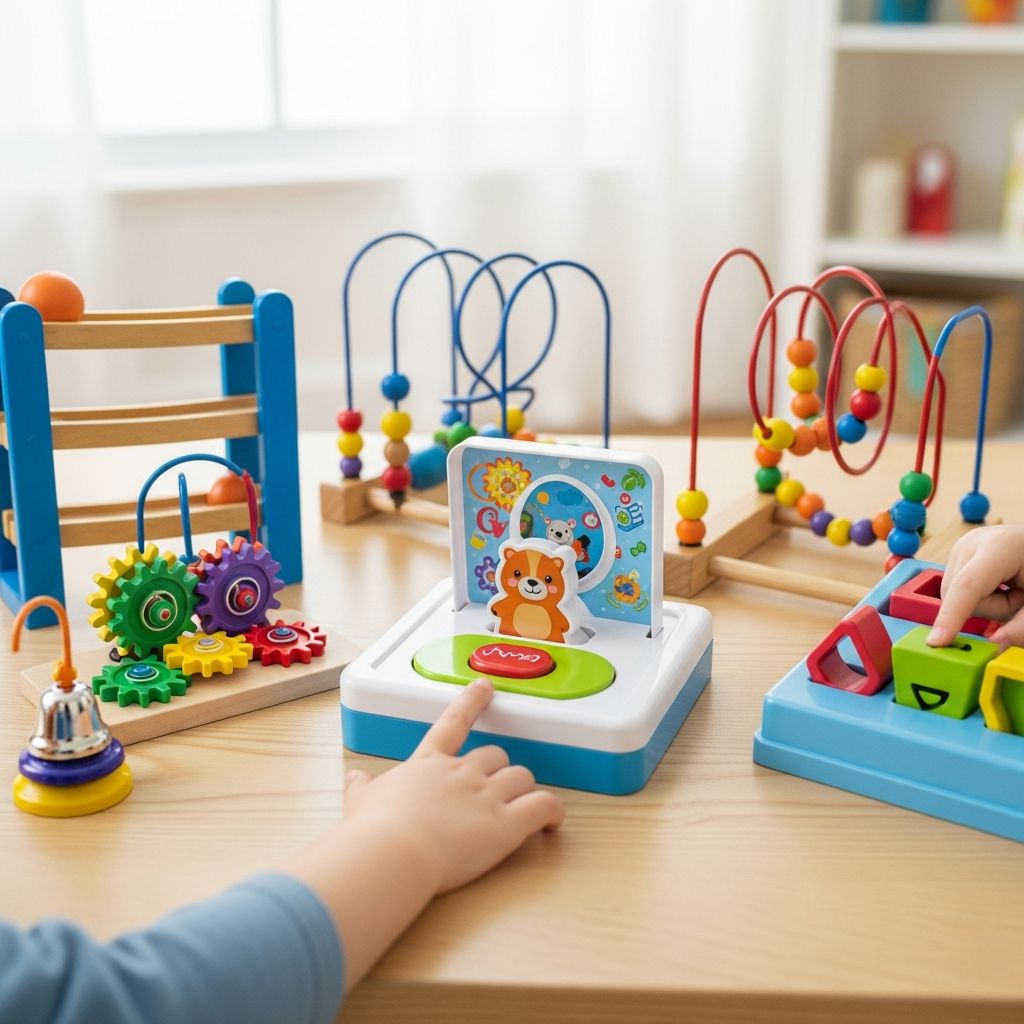
Cause and effect toys are play objects where a child’s action leads to a clear, noticeable reaction. The action might be pressing, pulling, dropping, turning, shaking, or banging, and the reaction might be a sound, light, motion, or new visual change. By repeating these actions, babies and toddlers learn that what they do matters and changes what happens around them.
- Typical examples include pop-up toys, ball ramps, musical instruments, light-up buttons, and push-and-go vehicles.
- The key feature is a direct and easy-to-understand link between the child’s movement and what they see, hear, or feel next.
Why Cause and Effect Matters in Early Development
Understanding cause and effect is a core thinking skill that underpins later learning in logic, science, and everyday problem-solving. When a baby learns that shaking a rattle makes a noise, they are beginning to predict outcomes and test ideas, which is the heart of early scientific thinking.
This kind of play also gives children an important sense of control. They discover that their bodies can influence their environment, which supports confidence, persistence, and curiosity.
Key Skills Supported by Cause and Effect Toys
These toys are far more than entertainment. They strengthen multiple developmental areas at once in a way that feels fun and natural to young children.
Cognitive and Problem-Solving Skills
- Helps children notice patterns (“When I do this, that happens”).
- Encourages experimentation, prediction, and simple troubleshooting when the toy doesn’t respond as expected.
- Builds early logical thinking that later supports math and science learning.
Motor and Sensory Development
- Strengthens hand and finger muscles through pressing, sliding, and turning movements.
- Improves hand–eye coordination as children aim for buttons, slots, and openings.
- Engages multiple senses with sights, sounds, and sometimes textures or vibrations.
Language and Communication
- Gives natural opportunities to hear and use words like “push,” “drop,” “again,” “more,” and “stop.”
- Supports turn-taking language, such as “my turn” and “your turn.”
- Helps connect actions with simple phrases, building understanding before talking fully emerges.
Social and Emotional Growth
- Encourages shared play when adults or siblings react with surprise, laughter, and comments.
- Teaches patience and waiting when toys have a sequence (for example, waiting for a ball to roll all the way down).
- Gives children a sense of accomplishment when their actions create a clear and exciting reaction.
Age-by-Age Guide to Cause and Effect Toys
The best cause and effect toy depends on what your child’s body and brain are ready to do. Use the guide below as a flexible starting point, always following your child’s interests and abilities.
| Age Range | Typical Skills Emerging | Useful Cause & Effect Toy Features |
|---|---|---|
| 0–6 months | Tracking with eyes, reaching, grasping, early kicking | Soft rattles, crinkle toys, kick-activated mats, high-contrast visuals |
| 6–12 months | Sitting, banging objects together, transferring toys hand-to-hand | Simple buttons, pop-up toys, rolling balls, textured shakers |
| 12–24 months | Pulling to stand, cruising, early walking, pointing, simple words | Ball ramps, push-and-go cars, pounding benches, simple musical toys |
| 2–3 years | More precise hand control, simple pretend play, short phrases | Cause-and-effect books, simple coding or sequence toys, water play tools |
| 3+ years | More complex problem-solving, imaginative scenarios, cooperative play | Marble runs, early STEM kits, chain-reaction building sets, simple board games |
Ideas for Simple Cause and Effect Toy Play
You don’t need a large collection of gadgets to support this kind of learning. A few thoughtfully chosen toys, used in playful ways, can be very powerful. Try turning everyday moments into mini cause and effect experiments.
For Babies Under 1 Year
- Use a soft rattle and gently shake it on one side, then the other, encouraging your baby to turn their head toward the sound.
- Guide their hands to squeeze or pat a crinkle toy so they begin to link their touch with the noise.
- Place a hanging toy within kicking distance and show them that their legs can make it swing or jingle.
For Young Toddlers (1–2 Years)
- Roll a ball down a ramp together and say a simple word or sound each time it reaches the bottom.
- Offer a push-button toy and pause expectantly, letting your child discover which action activates the sound or light.
- Introduce basic kitchen play, like pushing a toy toaster lever or turning a pretend stove knob to “cook” pretend food.
For Older Toddlers and Preschoolers (2–4 Years)
- Set up a simple water station with cups, funnels, and spouts so children see how pouring affects the flow.
- Use large building pieces to create short ramps and test which objects roll, slide, or stop.
- Play “cause and effect” pretend games like pressing a pretend doorbell and deciding together what happens next.
Choosing Cause and Effect Toys Wisely
With so many options on the market, it helps to focus on toys that truly support learning rather than simply entertaining for a moment. A good rule of thumb is that your child should do more than the toy does. Look for objects that invite active play instead of passive watching.
Features to Look For
- Clear, simple actions and reactions that young children can quickly understand.
- Sturdy construction that tolerates repeated drops, bangs, and experiments.
- Open-ended possibilities, such as different ways to press, roll, stack, or combine pieces.
- Moderate sensory input, avoiding toys that are overwhelmingly loud or visually busy.
Common Pitfalls to Avoid
- Overly complicated sequences that frustrate young children instead of empowering them.
- Toys that do all the work at the push of one button, leaving little room for exploration.
- Excessive screens or flashing lights that distract rather than support focused, hands-on play.
Balancing Simplicity and Technology
Both classic and modern toys can support cause and effect learning when used thoughtfully. A wooden ball ramp and a battery-operated light-up board may both teach “my action creates a result,” but they influence attention and play style differently.
Simple, low-tech toys usually offer more open-ended possibilities and encourage deeper engagement, while electronic toys can be exciting when used in moderation and paired with active adult interaction.
Safety Considerations for Cause and Effect Toys
Safety is always the first priority, especially with toys that invite vigorous exploration. Young children will often put toys in their mouths, drop them from heights, and bang them on hard surfaces.
- Check for small parts that could break off and become a choking hazard, particularly for children under three.
- Avoid long cords or strings that might pose strangulation risks.
- Choose non-toxic materials and finishes, especially for toys likely to be mouthed.
- Inspect toys regularly for cracks, loose pieces, or exposure of batteries or wiring.
Using Everyday Objects as Cause and Effect “Toys”
Not every learning opportunity has to come from a store-bought toy. Many household items can safely become cause and effect experiences with a bit of supervision and creativity.
- Plastic containers and lids can be stacked, knocked down, and used for simple drum play.
- Safe kitchen tools, such as wooden spoons and silicone spatulas, become instruments and stirring tools.
- Cardboard boxes can be pushed, climbed into, and turned into tunnels to show that movement changes space.
Supporting Learning Through Your Reactions
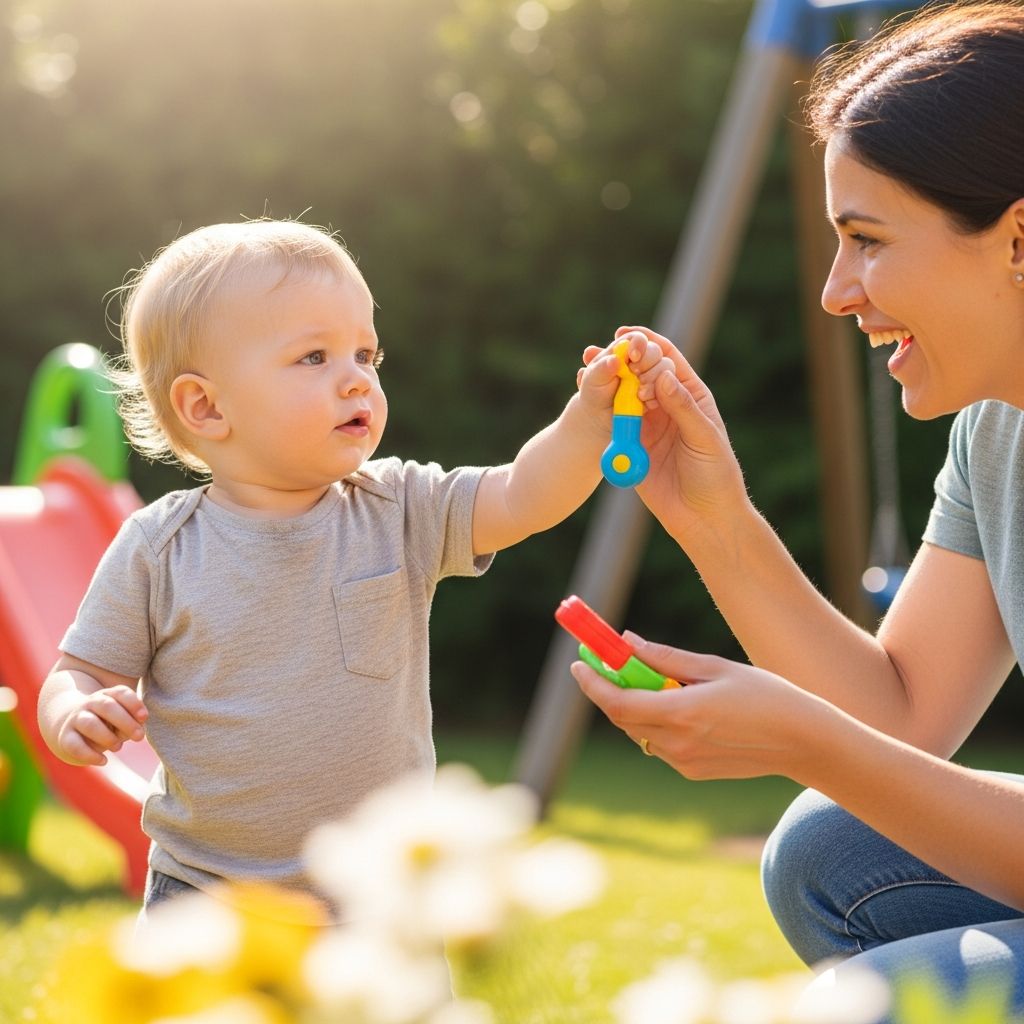
Your responses during play shape how your child understands cause and effect. When you notice and comment on what they are doing, you help them connect actions, outcomes, and language all at once.
- Describe what you see: “You pushed the button and the music started.”
- Pause before activating a toy yourself, giving your child time to try first.
- Celebrate effort and experimentation, not just “success” when the toy works perfectly.
Frequently Asked Questions About Cause and Effect Toys
At what age do babies start learning cause and effect?
Babies begin to sense cause and effect in the first few months of life, such as when crying brings a caregiver or kicking makes a mobile move. Clear, intentional cause and effect play usually becomes more visible around the middle of the first year, when infants can reach, grasp, and repeat actions on purpose.
How many cause and effect toys does my child need?
A small variety is usually enough. A few toys that involve pressing, rolling, shaking, and dropping can cover a broad range of experiences. Rotating toys occasionally and combining them with everyday household objects keeps play fresh and interesting.
Do electronic cause and effect toys help or hurt development?
Electronic toys can support learning when they require active participation and are used in short, supervised sessions. The main concern is when lights and sounds take over and children become passive observers rather than active experimenters. Focusing on toys that reward thoughtful actions, rather than constant stimulation, offers a healthier balance.
What if my child just wants to repeat the same action over and over?
Repetition is a natural and important part of learning. Each time your child presses a button, drops a ball, or opens a flap, their brain is strengthening the link between action and outcome. You can gently extend the play by adding simple variations, such as changing positions, using a different object, or adding language.
Can cause and effect toys support children with developmental delays?
Yes, these toys are often recommended in early intervention settings because they provide clear, motivating feedback. They can help children practice motor skills, build attention, and experience success, and they offer many chances for shared interaction between the child and supportive adults.
Bringing It All Together
Cause and effect toys show children that their actions matter, turning simple movements into lessons in thinking, coordination, communication, and confidence. With a few thoughtfully chosen toys, some everyday objects, and your warm engagement, you can turn daily play into a rich laboratory where your child joyfully discovers how the world works.