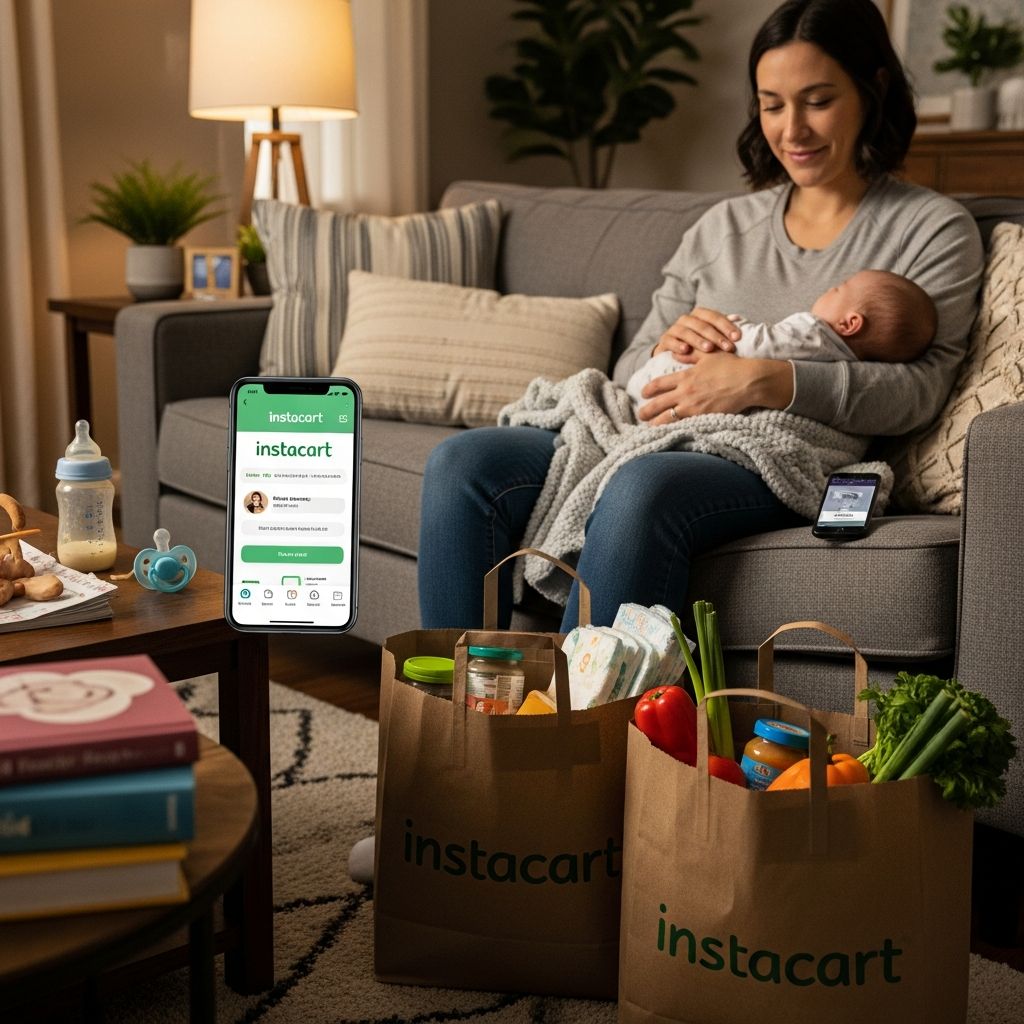
Bringing home a new baby changes everything, including how and when you eat. The simple act of running to the store for milk can feel impossible when you are healing, exhausted, and learning to care for a newborn. Grocery delivery services like Instacart can turn that chaos into something more manageable by bringing food and essentials straight to your door.
This guide explains how Instacart works, why it can be especially helpful for new parents, what it really costs, and how to get the most out of it without blowing your budget. You will find practical strategies, examples, and FAQs tailored specifically to life with a new baby.
Why Grocery Delivery Matters When You Have a New Baby
In the early weeks after birth, your energy, time, and attention are stretched thin. Leaving the house can require an Olympic-level effort: feed the baby, time naps, pack a diaper bag, cope with your own physical recovery, and then somehow stand under harsh store lights making decisions about cereal. For many new parents, this is simply not realistic.
Grocery delivery is not just a convenience in this season; it can be an important support tool for your physical and mental health. Having groceries arrive at your door means:
- You can prioritize rest, feeding, and bonding instead of errands.
- You avoid public spaces when your baby is very young or your immunity feels low.
- You reduce the number of decisions you have to make in person while sleep-deprived.
- You keep the household running even when no one feels able to do a store run.
How Instacart Works in Simple Terms
Instacart is an online platform that connects you with personal shoppers who pick up items from local stores and bring them to your home. You shop through a website or app, select a delivery window, and a shopper does the in-store work. You can choose from major supermarket chains, warehouse stores, and sometimes neighborhood markets, depending on where you live.
The basic steps look like this:
- Create an account and enter your address to see which stores deliver to you.
- Fill your cart with groceries, baby supplies, and household items.
- Choose a time window for delivery that fits around naps or feeding sessions.
- Approve substitutions and messages from your shopper if items are out of stock.
- Receive your order at the door (often with a contactless option) and put items away at your own pace.
For new parents, the key advantage is that almost all of this can be done one-handed while feeding a baby, from the couch or bed.
Benefits of Instacart Specifically for New Parents
Many grocery delivery articles mention convenience in vague terms, but new parents experience that convenience in very concrete ways. Below are some of the most meaningful benefits in the newborn months.
Less Physical Strain During Recovery
After childbirth—especially after a cesarean birth or complicated delivery—lifting heavy bags, standing in line, and walking long store aisles can be uncomfortable or not medically advisable. Instacart allows you to avoid that physical strain while still keeping the kitchen stocked.
- No need to lift large cases of water, cat litter, or bulk diapers.
- You can ask shoppers to leave bags at the door so you can bring them in slowly or with help.
- You can avoid driving if you are not yet cleared or do not feel safe behind the wheel.
Reduced Exposure and Overstimulation
Busy grocery stores can be loud, bright, and packed with people. In the early weeks, many parents prefer to limit their baby’s exposure to crowds and reduce sensory overload for themselves. Ordering from home gives you control over your environment and reduces the pressure to manage meltdowns in public when everyone is still adjusting.
Time Savings You Actually Feel
The real value of Instacart is not just the minutes saved but how they are used. The hour you are not spending in a checkout line can become:
- An uninterrupted nap for a recovering parent.
- Skin-to-skin time with your newborn.
- A shower you have been putting off all day.
- Time to prep bottles, sterilize pump parts, or portion snacks.
When you compare Instacart fees to the value of that time and rest, the trade-off can make sense, especially in the first few months.
What It Really Costs: A Simple Breakdown
Instacart’s pricing can feel confusing at first because the total cost comes from several pieces: service fees, delivery fees, membership (if you choose it), and tips. Understanding how these work helps you decide how often and when to use the service.
| Cost Element | What It Is | How It Affects New Parents |
|---|---|---|
| Item prices | The price of groceries, which may be similar or slightly higher than in-store depending on the retailer. | Stock up on essentials in one big order to make price differences less painful. |
| Delivery fee | A per-order fee that varies with store, distance, and time window. | Plan fewer, larger deliveries to avoid paying multiple times in a week. |
| Service fee | A percentage-based fee added by Instacart for operating the platform. | Expect this as part of every order and factor it into your mental budget. |
| Membership (optional) | A monthly or yearly subscription that can reduce or waive some delivery fees on eligible orders. | Worth considering if you expect to use delivery weekly or more during the newborn phase. |
| Tip | Money you give directly to your shopper for their work and care in handling your order. | Plan to tip generously when possible; shoppers are carrying heavy baby essentials to your door. |
There is no universal “right” price at which Instacart becomes worth it; it depends on your budget, frequency of use, and how much you value the time and energy saved. Many families choose to use it heavily for the first three months and then shift to a hybrid approach of in-store shopping plus occasional deliveries.
Practical Strategies to Make Instacart Work for Your Family
Instacart is most helpful when used intentionally. By planning ahead a little, you can stretch your budget and reduce stress further.
Build a Reusable New Parent Shopping List
Instead of starting from scratch every time, create a go-to list you can reload and tweak. Include items for the whole household: the birthing parent, partner, baby, and any older children.
- Ready-to-eat staples: pre-washed salad mixes, rotisserie chicken, frozen vegetables, microwave rice, prepared soups.
- Snackable energy foods: nuts, granola bars, yogurt, cheese sticks, cut fruit, hummus, whole-grain crackers.
- Hydration helpers: sparkling water, electrolyte drinks, herbal teas, flavored water drops.
- Breastfeeding or pumping support foods (if relevant): oatmeal, nut butters, easy one-handed snacks.
- Baby and household essentials: diapers, wipes, detergent, paper towels, trash bags, dish soap.
Once this list is saved, you can reorder 80% of what you need in a few taps, even while half-asleep.
Time Your Deliveries Around Your Rhythm
In the newborn stage, days and nights blur together, but most families discover certain patterns: maybe late afternoon is especially rough, or mornings are when you have the most energy. Schedule deliveries for the window when someone is most likely to be awake, clothed, and able to receive bags at the door.
- If evenings are meltdown time, avoid deliveries then.
- If one caregiver works from home, choose mid-morning windows when they can step away briefly.
- Consider weekend delivery if a partner is off work and can help unpack.
Use Notes to Communicate Like a Pro
Instacart lets you leave notes for your shopper on individual items and as a general message. For new parents, clear communication helps avoid back-and-forth messages during an already busy time.
- Specify ripeness for produce (for example, “firm avocados for later in the week”).
- Explain your priorities: “If this brand of diapers is out, please choose the same size in any fragrance-free brand.”
- Let them know about needs like “no-contact delivery” or “please leave bags on the porch; sleeping baby inside.”
Balancing Costs and Benefits: When Instacart Makes Sense
Because Instacart adds fees on top of your grocery bill, it is worth thinking about when it provides the most value. You do not need to use it for every single shop to benefit.
Situations Where Instacart Is Especially Helpful
- Immediately postpartum: Use it for your first several weeks at home to minimize trips and physical exertion.
- During illness: If anyone in the household is sick, delivery helps limit exposure for your baby and yourself.
- Solo parenting stretches: When a partner travels, works long shifts, or you are alone with multiple children.
- No nearby help: If you do not have local family or friends who can easily run errands for you.
Ways to Keep Costs Under Control
Instacart does not have to become an all-or-nothing decision. Combine it with other strategies to stay on budget.
- Use Instacart for big stock-up trips and handle small top-ups in person when you feel up to it.
- Compare prices across different partner stores in the app to find better deals or store brands.
- Avoid shopping while extremely hungry, which can lead to impulse extras even online.
- Consider a membership for your heaviest use months, then reassess later.
Sample One-Week Instacart Plan for New Parents
To help visualize how Instacart can fit into real life with a baby, here is an example of how one week of groceries might look. This is not a meal plan to follow strictly, but rather a template you can adapt.
Example Weekly Delivery Structure
- Day 1 (Big order): Pantry staples, frozen foods, snacks, baby items, cleaning supplies.
- Day 4 (Small order): Fresh produce refill, milk, eggs, bread, any forgotten essentials.
For the big order, think in terms of building blocks of meals:
- Breakfast options: oatmeal, yogurt and granola, eggs, pre-cut fruit, whole-grain toast.
- Lunch options: deli meat and cheese, salad kits, rotisserie chicken, whole-wheat wraps.
- Dinners: frozen lasagna, slow-cooker kits, sheet-pan ingredients (protein, veggies, potatoes).
- Snacks: nuts, trail mix, fruit cups, string cheese, baby-safe snacks if you have an older child.
Once you see how much food actually lasts your family a week, you can adjust up or down the next time you place a delivery.
Potential Drawbacks to Be Aware Of
Like any tool, Instacart is not perfect. Knowing its limitations ahead of time helps you avoid frustration when you are already exhausted.
- Substitutions may not match your preferences: If an item is out of stock, the replacement chosen may not be exactly what you had in mind unless you specify alternatives.
- Delivery windows are estimates: Traffic, store delays, and order volume can affect arrival times.
- Not every store is included: Depending on your area, your favorite neighborhood market may not be available on the platform.
- Costs can add up: Using delivery multiple times a week without a plan can strain your budget.
Most families find that setting expectations, communicating clearly with shoppers, and using Instacart strategically rather than constantly helps balance these challenges.
Frequently Asked Questions About Instacart for New Parents
Is Instacart safe for newborn families during cold and flu season?
Instacart offers contactless delivery options, which means your shopper can leave groceries outside your door without direct interaction. This can reduce face-to-face contact and may feel safer in seasons when viruses are circulating heavily. You can also disinfect high-touch packaging if that brings peace of mind.
How often should new parents use Instacart?
There is no single right answer, but a common pattern is to rely on Instacart heavily during the first six to eight weeks, then reassess. Some parents continue to use it weekly; others keep it as a backup for tough days, growth spurts, or illness. Your usage can evolve as your baby’s routine becomes more predictable.
Can Instacart handle special dietary needs or allergies?
Instacart allows you to search for specific dietary labels like gluten-free, dairy-free, or organic, and you can read ingredient lists and nutrition labels within the app for many items. If you have allergies, it is still important to double-check packaging when items arrive and to use the notes section to mention any critical constraints to your shopper.
Is tipping required, and how much is typical?
Tips are a major part of how shoppers earn money and are considered standard when using Instacart. Many people aim for a percentage similar to restaurant tipping, adjusting up for large or heavy orders—like those filled with cases of water, bulk formula, or diapers—or for challenging weather conditions.
What if I live in a small apartment or walk-up building?
Instacart can be especially helpful if you would otherwise need to carry heavy items up stairs or through tight hallways. You can specify exactly where you would like groceries left—outside your unit door, in a lobby, or at a gate—following your building’s rules. Being clear in the delivery instructions helps your shopper find you quickly and handle your order safely.
Making Instacart Part of Your Postpartum Support System
New parents often hear advice about building a “village” of support. That village can include people and tools: family, friends, meal trains, grocery delivery, and anything else that reduces friction in daily life. Instacart will not rock a crying baby or fold your laundry, but it can quietly solve one significant problem: how to keep everyone fed when you have no time or energy to spare.
If you decide to try Instacart, think of it as one more resource in your toolbox. Use it for the months when life feels most overwhelming, adjust your habits as your baby grows, and give yourself permission to trade a few extra dollars for the physical rest and mental space you deserve.