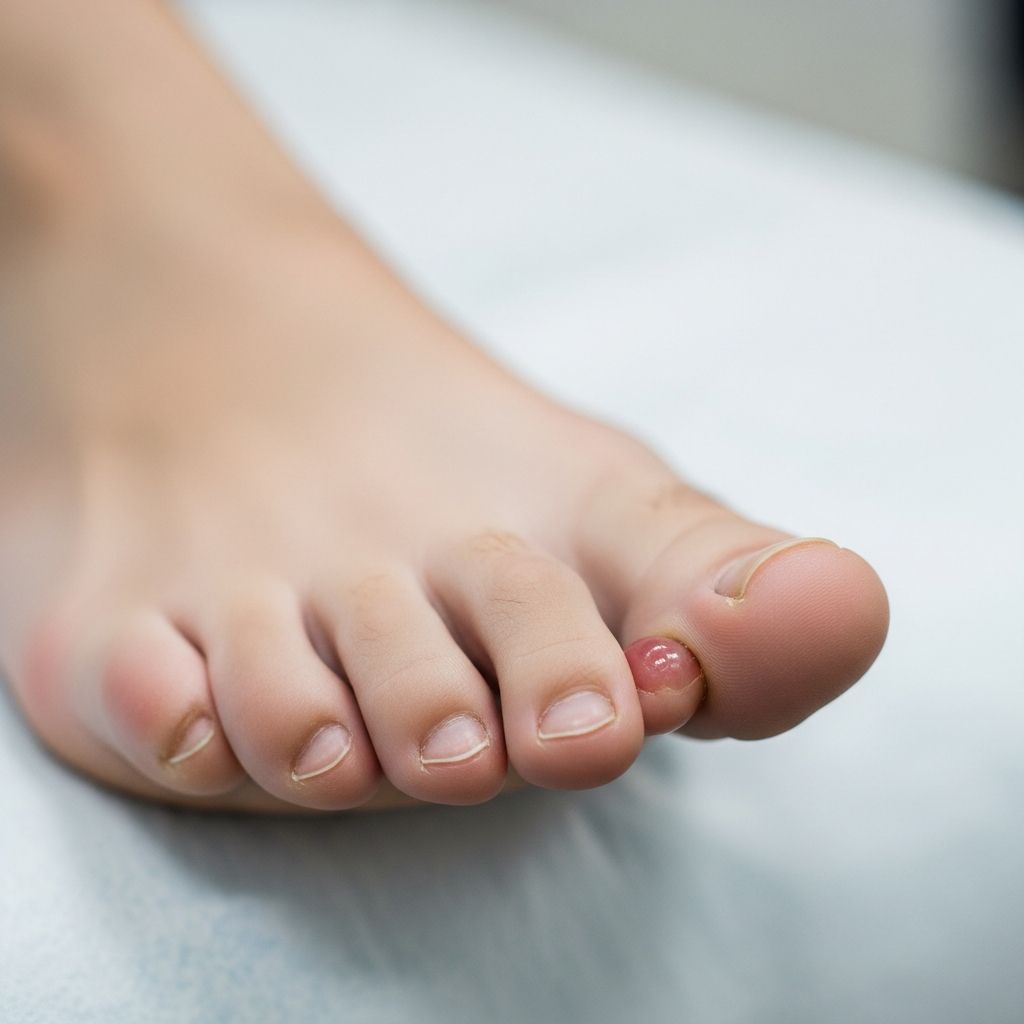
An ingrown toenail happens when the edge or corner of a toenail curves and grows into the nearby skin, causing pain, redness, and swelling. It can make simple things like walking, running, or wearing shoes feel uncomfortable or even unbearable. Although it can happen at any age, ingrown toenails are especially common in teens because of rapid growth, sports, and changing footwear choices.
Understanding how and why ingrown toenails form helps you take care of your feet, avoid infections, and know when it is time to ask a parent, school nurse, or doctor for help. This guide explains the causes, symptoms, safe home care, professional treatments, and prevention strategies in clear, teen-friendly language.
What Exactly Is an Ingrown Toenail?
A toenail normally grows straight out over the top of the toe, sitting in a small groove of skin on each side. With an ingrown toenail, the nail edge pushes into or under that side skin fold instead of sliding above it. The body reacts as if something is cutting or poking the skin, leading to soreness and inflammation.
Ingrown toenails usually affect the big toe, but any toe can be involved. At first it may just feel tender when you touch the area, but over time the skin can become more swollen and even infected if bacteria get in.
Why Teens Get Ingrown Toenails So Often
Several everyday habits and physical changes that are common during the teen years increase the chances of developing an ingrown toenail. Knowing these triggers makes it easier to adjust your routine and protect your feet.
Common triggers and risk factors
- Improper nail trimming. Cutting toenails too short or rounding the corners can encourage the edge of the nail to dig into the side skin instead of growing straight out.
- Tight or narrow shoes. Shoes that squeeze the toes together, especially at the front, press the nail into the surrounding skin and increase friction.
- Sports and physical activities. Running, jumping, and sudden stops can repeatedly bump the toes inside shoes, irritating the nail and skin folds.
- Sweaty feet. Moist, softened skin from sweat or damp socks is easier for the nail edge to penetrate.
- Toe injuries. Stubbing a toe, dropping something heavy on the foot, or having someone step on your toes can damage the nail and change the way it grows.
- Natural nail shape. Some people simply have nails that are more curved or thicker, which makes ingrown toenails more likely even with good care.
How an Ingrown Toenail Develops: Stages of the Problem
Ingrown toenails usually do not become severe overnight. They tend to move through stages, from mild irritation to more serious infection if nothing is done.
| Stage | What you might notice | What it means |
|---|---|---|
| Mild (Early) | Tenderness along the side of the nail, mild redness, discomfort in tight shoes | The nail edge has started to press into the skin but may not have broken it yet. |
| Moderate | Increased pain, more redness and swelling, warmth, possible clear fluid | The nail edge is now irritating or breaking the skin, and inflammation is building. |
| Severe | Throbbing pain, obvious swelling, pus, bleeding, difficulty wearing shoes | The area is likely infected, and medical care is usually needed. |
Symptoms You Should Pay Attention To
Early signs can be easy to ignore, especially if you are busy with school, sports, or activities. Paying attention to small changes in your toes prevents a minor problem from becoming a bigger one.
- Pain or tenderness along one or both sides of the toenail, especially when pressed
- Redness and mild swelling near the nail edge
- Warmth around the toe compared with nearby skin
- Skin that looks thicker or slightly raised beside the nail
- Discomfort when wearing tight shoes, cleats, or heels
Signs that the area may be infected and needs medical attention include:
- Pus or yellowish fluid draining from the side of the nail
- Skin that looks very red, shiny, or feels hot
- Intense, throbbing pain that makes it hard to walk
- Bad smell from the toe or visible growth of extra red tissue
- Fever or feeling generally unwell along with toe pain
Safe Home Care for Mild Ingrown Toenails
If the symptoms are mild and there are no signs of infection, careful home care may ease discomfort while the nail grows out. Home methods should always be gentle; forcing the nail or using sharp tools can make things worse.
Step-by-step gentle care
- Soak your foot.
Place your foot in warm (not hot) water for 15 to 20 minutes, up to three times a day. This softens the nail and skin and may reduce swelling.
- Dry thoroughly.
After soaking, pat the foot dry with a clean towel, including between the toes, to limit moisture that can attract bacteria.
- Protect the area.
If the skin is only slightly irritated, a small bandage or gauze pad can shield it from friction inside your shoe.
- Choose comfortable footwear.
Wear sandals, open-toe shoes, or roomy sneakers that do not press on the toe. Avoid tight socks or narrow shoes until the toe feels better.
- Use over-the-counter pain relief if needed.
With a parent or guardian’s guidance, you may take a non-prescription pain reliever as directed on the label, unless a doctor has told you not to.
Some people gently place a tiny bit of clean cotton under the edge of the nail to help it grow above the skin; this should only be done if there is no infection and without forcing the nail deeper. If this feels more painful or difficult, stop and talk to a healthcare professional instead.
When Home Care Is Not Enough
Not every ingrown toenail is safe to handle at home. Certain health conditions and warning signs mean it is safer to see a medical professional early.
Call a doctor or podiatrist right away if:
- You have diabetes, circulation problems, or nerve damage in your feet.
- The toe is very red, swollen, or oozing pus.
- Pain is severe, or you cannot wear shoes comfortably.
- The problem keeps coming back on the same toe.
- You notice red streaks spreading from the toe or you develop a fever.
In these situations, delaying care can allow infection to spread deeper into the toe, making treatment more complicated. A doctor can identify whether you need antibiotics, a minor procedure, or other specific care.
Medical Treatments for Ingrown Toenails
If conservative steps fail or the toenail is severely ingrown, a healthcare provider may recommend an in-office procedure. These treatments are usually quick, done with numbing medicine, and aim to reduce pain and prevent the nail from growing into the skin again.
Common procedures
- Partial nail removal. The provider trims and removes only the part of the toenail that is digging into the skin, after numbing the toe with local anesthetic. A bandage is applied, and instructions are given on how to keep the area clean while it heals.
- Removal of nail and root section. In cases that keep returning, part of the nail and the underlying root tissue may be treated with a chemical, laser, or other method so that section does not grow back. This usually changes the shape of the nail slightly, making it less likely to curve into the skin again.
- Drainage of infection. If there is a lot of pus or a pocket of infection, the doctor may open and drain it, sometimes along with prescribing antibiotics.
After most procedures, you may need to keep the foot elevated for a short time, change dressings as instructed, and avoid intense sports until the toe improves. Healing usually takes days to a few weeks, depending on how severe the ingrown toenail was and what treatment was performed.
Everyday Habits to Prevent Ingrown Toenails
Good foot habits can greatly lower your chances of getting another ingrown toenail. These steps are simple enough to build into your regular self-care routine.
Smart nail-trimming tips
- Use clean, sharp nail clippers rather than tearing or biting nails.
- Cut toenails straight across instead of rounding the corners.
- Leave a small bit of white edge; do not cut nails extremely short.
- Smooth rough edges gently with a nail file rather than cutting deeply at the corners.
Footwear and hygiene
- Choose shoes with enough space in the toe box so your toes can move freely.
- Avoid wearing pointy or tight shoes for long hours, especially if your toenails are already sore.
- Change socks daily and more often if they become damp from sweat or sports.
- Wash your feet with soap and water, dry well between the toes, and inspect your nails regularly.
Ingrown Toenails and Sports
Teens who play soccer, basketball, running sports, dance, or other activities that stress the feet are more prone to nail problems. Repeated impact, sudden stops, and tight performance shoes can all drive the nail into the skin over time.
- Make sure athletic shoes are the correct size, including enough length and width.
- Consider activity-specific socks that wick moisture away from the skin.
- Report toe pain early to a coach, parent, or trainer rather than ignoring it until it becomes severe.
- Take breaks from cleats or other narrow shoes when not actively playing.
Myths vs. Facts About Ingrown Toenails
There are many do-it-yourself tricks shared among friends or online that are not safe or effective. Sorting myths from facts helps you avoid making the problem worse.
| Myth | Reality |
|---|---|
| “Cutting the nail really short will fix it.” | Over-trimming often makes the nail more likely to grow into the skin. |
| “Digging out the nail with sharp tools is the best way.” | This can injure the skin, spread infection, and make professional treatment harder. |
| “Only older adults get ingrown toenails.” | Teens frequently get them because of growth spurts, sports, and shoe styles. |
| “If it does not hurt much, it cannot be a problem.” | Early discomfort can still progress to infection if ignored. |
Emotional Side: When Foot Pain Affects Confidence
Foot problems can feel embarrassing, especially if you are worried about how your toes look in sandals or during sports. Painful nails may also make it harder to participate in activities you enjoy, which can be frustrating.
Remember that ingrown toenails are extremely common and treatable. Talking openly with a parent, school nurse, or healthcare provider can help you feel more in control and less self-conscious.
Frequently Asked Questions (FAQs)
Can I just cut out the ingrown part of the nail myself?
It is not a good idea to dig out the nail on your own with scissors, razors, or other sharp objects. This can cut the skin, lead to infection, and usually does not solve the underlying problem.
How long does it take for an ingrown toenail to heal?
Healing time depends on how severe the ingrown toenail is and what treatment is used. Mild cases may improve within a few days to a couple of weeks with careful home care, while more serious cases treated by a doctor can take several weeks for the nail and skin to fully settle.
Do ingrown toenails always need surgery?
No, many mild ingrown toenails improve with gentle soaking, better footwear, and proper trimming once the area calms down. Procedures are usually recommended when the nail keeps growing into the skin, pain is intense, or there is clear infection.
Can an ingrown toenail come back?
Yes, it can return, especially if the same causes—such as tight shoes or improper trimming—remain. Following prevention tips and any instructions from your doctor lowers the chance of another problem on the same toe.
Is it okay to paint my toenails if I have an ingrown nail?
Nail polish itself usually does not cause an ingrown toenail, but if the area is sore, swollen, or infected, it is better to avoid polish until it heals. Keeping the nail unpainted also makes it easier for you and your doctor to see changes in color, shape, or infection.
Key Takeaways for Healthy Teen Feet
- Trim toenails straight across and avoid cutting them too short.
- Wear shoes and socks that give your toes room and keep your feet dry.
- Pay attention to early pain, redness, or swelling around the nail.
- Use gentle home care for mild cases, but seek medical help when symptoms are severe, infected, or do not improve.
- Talk with a trusted adult or health professional if you are unsure how to handle a nail problem.
With simple habits and timely care, most ingrown toenails can be managed effectively, letting you stay active and confident on your feet.