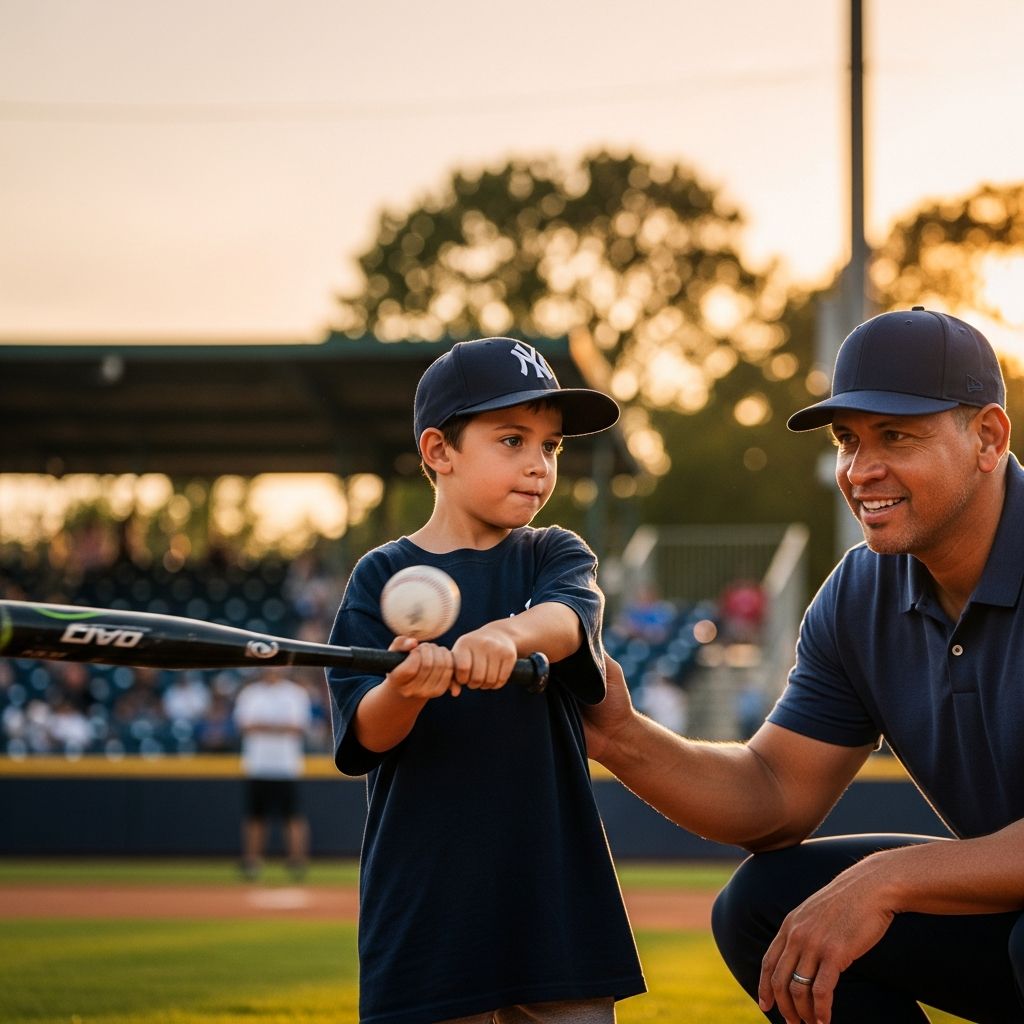
When a short clip of Alex Rodriguez gently coaching a young boy on his baseball swing began circulating online, people didn’t just see a former MLB superstar—they saw a patient mentor, a proud dad-figure, and a reminder of what youth sports can be at their very best.
The Viral Moment: A-Rod, A Bat, and a Big Smile
The heart of the video is simple: Alex Rodriguez standing beside a young boy, quietly and kindly adjusting his stance and offering easy-to-understand tips on his baseball swing. There is no pressure, no yelling, and no criticism—just calm, focused encouragement and clear instruction.
Viewers immediately picked up on the relaxed body language of the child, the way his smile grows as he tries the new tips, and how Rodriguez consistently keeps the mood light and supportive. That combination of expertise and gentleness is what turned an everyday coaching moment into something that felt special enough to share again and again.
- Rodriguez keeps eye contact and speaks at the boy’s level, both physically and emotionally.
- The boy is given time to practice, make mistakes, and adjust without any visible frustration from the adult.
- The atmosphere feels more like a proud uncle in the backyard than a high-pressure showcase with a celebrity.
What A-Rod Was Teaching About the Swing
Even in a brief clip, it is clear that Rodriguez is not simply telling the boy to “swing harder.” Instead, he breaks the motion down into basics that young players can manage: balance, stance, and a controlled, repeatable swing. This reflects the same principles often emphasized in professional hitting instruction.
While the exact words in the video may vary, the kind of foundational hitting tips a major league hitter like Rodriguez typically gives young players usually sounds something like this:
- Start with a quiet base: Feet roughly shoulder-width apart, knees bent slightly, and weight centered so the body feels stable instead of tense.
- Keep the head still: A consistent head position helps the eyes track the ball and makes it easier to repeat a good swing.
- Short, compact path: Bringing the hands directly to the ball instead of casting the bat in a big loop improves both power and contact.
- Finish balanced: Ending the swing on balance—even if the hitter misses—trains control, not just effort.
By demonstrating these concepts slowly, then letting the boy mimic him step by step, Rodriguez turns abstract advice into something that looks fun and achievable for a child.
Why Parents Loved This Video So Much
The reaction from parents and caregivers online wasn’t just about seeing a famous athlete; it was about seeing the kind of coach they hope their own kids will meet. Many adults recognize how fragile a child’s confidence can be in sports, and how easily it can be damaged by harsh criticism or unrealistic expectations.
In contrast, this video showcases several traits of great youth coaching that resonate deeply with parents:
- Patience over pressure: The boy gets multiple tries, with no hint that he is wasting anyone’s time.
- Specific, simple feedback: Instead of vague instructions like “hit it harder,” Rodriguez uses clear, bite-sized corrections.
- Visible encouragement: Smiles, nods, and positive body language make the boy feel safe to keep trying.
- Focus on effort, not perfection: The goal is clearly progress, not instant mastery.
How a Small Moment Became a Big Feel-Good Story
On the surface, the video is brief and extremely ordinary: a former pro player passes on a few tips to a child who looks thrilled just to hold a bat in front of him. What turned it into a feel-good story was the way people recognized themselves in it—parents remembered teaching their own kids, fans remembered their favorite youth coaches, and children saw a role model taking them seriously.
In the age of viral content, over-the-top reactions and controversy often dominate the feed. That is why a simple scene of kindness, respect, and skillful mentoring can stand out so strongly—and why so many viewers wanted to share it with comments about how “wholesome” and “refreshing” it felt.
Life Lessons Hidden in a Swing Tip
The technical side of the swing is only half the story. The way Rodriguez interacts with the boy quietly reinforces life lessons that reach beyond baseball, showing how sports can double as a classroom for character.
Parents and coaches can use similar moments to teach:
- Resilience: Every swing is a chance to adjust and try again, not proof of success or failure.
- Coachability: Learning to listen, experiment with feedback, and take ownership of improvement.
- Humility and gratitude: Recognizing that even the best players needed guidance when they were young.
- Joy in the game: Remembering that the main reason to play is because it’s fun.
Key Elements of A-Rod’s Coaching Style
For parents and youth coaches looking to copy what worked so well in the video, it helps to break down Rodriguez’s approach into a few repeatable elements. These are practical habits anyone can adopt, even without professional baseball experience.
| Element | What It Looks Like | Why It Matters for Kids |
|---|---|---|
| Calm presence | Speaking slowly, avoiding raised voices, and keeping movements relaxed. | Children mirror the adult’s emotional tone; calm coaching leads to calmer, more focused practice. |
| Simple language | Using one or two key points instead of a long lecture. | Young athletes absorb information better in small, concrete pieces. |
| Demonstration | Showing the stance and swing, then letting the child copy. | Visual learning makes abstract ideas more accessible. |
| Positive framing | Emphasizing what to do rather than listing everything wrong. | Protects confidence and encourages experimentation. |
| Repetition | Allowing the child several tries to integrate each tip. | Skills become more automatic when practiced in a low-pressure environment. |
How to Encourage Your Young Hitter at Home
You do not have to be a major league veteran to help a child fall in love with baseball and build better mechanics. What matters most is creating a setting that feels safe, fun, and just challenging enough. A simple backyard, driveway, or local park is more than enough.
Here are some practical ways to bring the spirit of A-Rod’s lesson into your own family’s practice time:
- Start with a few warm-up swings without a ball so the child can feel the motion.
- Focus on one key tip at a time, such as “keep your head still” or “finish balanced,” instead of correcting everything at once.
- Celebrate effort—”Nice adjustment,” “Great focus”—more than results like hits or distance.
- Use soft tosses, wiffle balls, or a tee to reduce fear of missing or getting hurt.
- End sessions on a positive note, even if that means stopping after a good swing instead of chasing perfection.
Sportsmanship, Fame, and Being a Role Model
Another reason the video drew so much attention is that it showed a famous athlete choosing to invest time and care in a single child. In an era when high-profile figures are constantly under scrutiny, moments like this remind audiences that real impact often happens in small, unrecorded gestures.
For kids, seeing a star treat them kindly can reinforce the idea that true greatness includes humility and generosity. For adults, it serves as a gentle challenge: every parent, coach, or fan has opportunities to make someone’s day better with a few thoughtful minutes of attention.
FAQs About Youth Baseball Swing Coaching
How long should a swing practice session last for kids?
For younger children, especially under 10, 15–20 minutes of focused practice is usually enough. The goal is to keep sessions short, fun, and high-energy so they end wanting more rather than feeling burned out.
What is the most important first tip for a young hitter?
Most coaches agree that balance and a relaxed stance are the foundation for everything else. If a child can start in a comfortable, stable position and keep their head fairly still, it becomes much easier to add power and refine mechanics later.
How do I correct my child without hurting their confidence?
Try using a “sandwich” approach: start with something they are doing well, add one clear suggestion for improvement, then finish with encouragement. Keeping your tone upbeat and limiting corrections to one or two points per session can make a big difference.
Does a child need expensive equipment to learn a good swing?
No. A properly sized bat, a few balls, and a safe open space are more than enough for meaningful practice. Emphasis on body control, timing, and repetition will help much more than specialized gear in the early years.
What should I look for in a youth coach?
Look for someone who stays calm under pressure, explains things simply, and clearly enjoys being around kids. A good youth coach measures success by effort, growth, and enthusiasm, not just wins or home runs.
Bringing the Lesson Home
The charm of watching Alex Rodriguez give a young boy a few swing tips lies in how ordinary—and yet how powerful—the scene truly is. It proves that world-class instruction can sound gentle, look patient, and feel joyful, especially when delivered with a child’s confidence in mind.
Whether your family lives and breathes baseball or just loves a good feel-good story, the deeper message is the same: offering a little time, attention, and kindness can change how a child sees both the game and themselves. That is the real home run hiding inside this simple, sweet video clip.