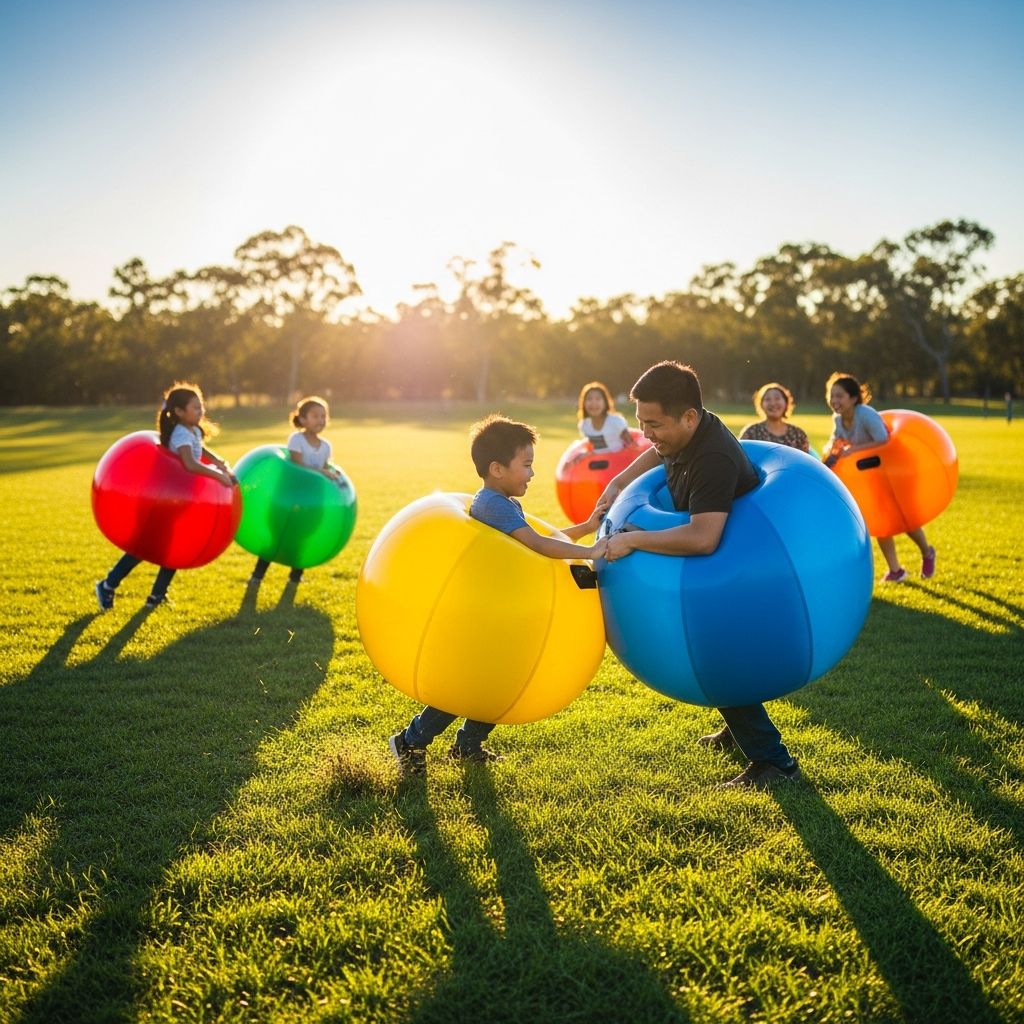
Inflatable bumper balls turn kids into walking, bouncing bubbles, letting them safely bump, roll, and tumble while wrapped in a cushion of air. These oversized spheres can transform a plain backyard or park into an instant adventure zone for birthdays, playdates, and family gatherings.
This guide explains what bumper balls are, how to use them safely, and how to choose the right set for your family, along with fun game ideas and practical care tips.
What Are Inflatable Bumper Balls?
Inflatable bumper balls are large, air-filled spheres that kids and adults wear around their upper bodies for active play. The ball covers the torso and head area, while the legs stay free to run, jump, and change direction.
Most designs include interior handles and shoulder straps so the player can hold the ball in place while bumping into others or rolling on the ground.
Key Features at a Glance
- Clear or brightly colored PVC or TPU material for visibility.
- Internal handles to grip during running and collisions.
- Adjustable shoulder straps that keep the ball centered on the body.
- Multiple air chambers or thick panels for cushioning impacts.
Why Kids (and Parents) Love Them
Kids are drawn to inflatable bumper balls because they turn basic movements like running and falling into a hilarious spectacle. Play often comes with lots of laughter as players bounce off one another and roll across the grass.
Parents appreciate that, when used properly, the inflated shell absorbs much of the impact, encouraging kids to be active while reducing the risk of serious bumps and bruises.
Benefits for Kids
- Physical activity: Running, dodging, and getting back up keeps kids moving and builds stamina.
- Coordination and balance: Maneuvering while inside a moving sphere challenges balance and spatial awareness.
- Social skills: Games promote turn-taking, teamwork, and learning to follow rules.
Types of Inflatable Bumper Balls
Not all bumper balls are identical. Understanding the main types helps you match the product to your child’s age, space, and budget.
| Type | Typical Size | Best For | Main Advantages |
|---|---|---|---|
| Kids’ bumper balls | Approx. 2–3 ft diameter | Young children and preteens | Lighter weight, easier to control, often more affordable. |
| Teen/adult bumper balls | Approx. 4–5 ft diameter | Teens, adults, mixed family groups | More room inside, better for high-energy games like bubble soccer. |
| Heavy-duty commercial balls | Varies | Event rentals, repeated group use | Thicker material, designed for frequent, rougher play. |
PVC vs. TPU Materials
The two most common materials are PVC (polyvinyl chloride) and TPU (thermoplastic polyurethane). PVC models tend to be more budget-friendly and are common in home sets.
TPU often offers greater flexibility, durability, and resistance to low temperatures, which can be helpful if you anticipate regular use or cooler weather play.
Safety First: Rules and Precautions
Even though the balls are cushioned, they still require clear rules and adult oversight. Proper use dramatically reduces the chances of injury and ensures everyone has fun.
Before anyone climbs into a bumper ball, set ground rules that kids can repeat back to show they understand.
Basic Safety Guidelines
- Always use bumper balls on soft, open surfaces such as grass or indoor turf.
- Keep players away from streets, driveways, pools, and bodies of water.
- Do not use near sharp objects, fences, trees, or playground equipment.
- Limit play to similar size and age groups to avoid mismatched collisions.
- Stop play immediately if a ball loses air, straps break, or a child seems uncomfortable.
Supervision and Health Considerations
Young children should never play in bumper balls without a responsible adult actively watching. Adults can monitor rule-breaking, fatigue, and rough behavior that might go too far.
Children with neck, back, or heart conditions—or those who are easily dizzy or claustrophobic—may not be good candidates for bumper ball play and should be evaluated individually.
How to Choose the Right Bumper Balls
Shopping for bumper balls can be confusing due to the wide range of sizes, materials, and price points. Focusing on a few core factors makes the choice easier and safer.
Key Buying Factors
- Recommended age and size: Check the manufacturer’s guidance on height, weight, and age to ensure a proper fit.
- Material quality: Look for thick, puncture-resistant PVC or TPU and reinforced seams.
- Number of balls per set: Two is a popular starting point, but four or more encourage team games.
- Included accessories: Patch kits and a pump reduce extra costs and help you start quickly.
- Storage needs: Consider how easily the balls deflate, fold, and store between uses.
Sizing by Height and Age
Choosing an appropriate diameter helps kids stand upright and maintain balance while wearing the ball. Too large and they may struggle to see; too small and the coverage may be inadequate.
| Player Height | Suggested Ball Diameter | Notes |
|---|---|---|
| 3’0″ – 4’0″ (approx. 90–120 cm) | About 2 ft (60 cm) | Best for young children with very close supervision. |
| 4’0″ – 5’0″ (120–150 cm) | About 3 ft (90 cm) | Works for many school-age kids and preteens. |
| 5’0″ – 6’0″ (150–180 cm) | 4–5 ft (120–150 cm) | Suited to teens and adults; check max weight ratings. |
Setting Up: Inflation and Fit
Once the bumper balls arrive, plan a few extra minutes for setup before the first play session. Proper inflation and strap adjustment make the difference between awkward and awesome.
Inflation Tips
- Use an electric or high-output manual pump for faster inflation.
- Fill until the surface is firm but still has a little give when pressed.
- Avoid over-inflation, especially in hot weather, since air expands and may strain seams.
- Check valves for a snug close to prevent slow leaks during play.
Adjusting Straps and Handles
The shoulder straps should hold the ball at chest height without digging into the skin. Adjust them so your child’s head remains centered inside the ball, not pressed against the top or sides.
Show children how to grip the handles loosely but securely, and practice walking, turning, and stopping before allowing full-speed running or bumping.
Game Ideas for Bumper Ball Fun
Once everyone is comfortable moving around, introduce structured games. Clear rules help prevent chaos and keep the focus on fun rather than competition or rough play.
Classic Bubble Soccer
Bubble soccer is one of the most popular uses for inflatable bumper balls. Players try to score goals while wearing the spheres, often bouncing off each other in the process.
- Keep teams small (for example, three vs. three) in a modest-sized field to reduce crowding.
- Use soft markers or cones for goals, and avoid rigid nets or posts.
- Limit game time to short rounds so kids can rest and hydrate.
Tag, Chase, and Bump
For younger children, simple variations of tag work well. Instead of tagging with a hand, players lightly “bump” the person they are chasing using their bumper ball.
- Designate a clear boundary so kids don’t wander too far.
- Rotate the “it” player frequently to keep everyone involved.
Bumper Relay Races
Relay races are excellent for parties and family events. Players run to a marker, perform a simple task, and return to tag the next teammate.
- Include silly actions like doing a slow spin or a gentle roll before turning back.
- Emphasize fun rather than speed to avoid reckless collisions.
House Rules to Keep Play Friendly
Every family or group can adapt rules to fit the ages and personalities of the players. Emphasizing respect helps kids enjoy the novelty without pushing boundaries too far.
Suggested House Rules
- No hitting, kicking, or pushing with hands or feet—only controlled body bumps.
- No running into someone’s back when they cannot see you coming.
- Stop instantly if someone falls and wait until they stand up to resume play.
- Remove the ball immediately if you feel dizzy, too hot, or uncomfortable.
- Adults have final say on when a round ends or when a rest break is needed.
Cleaning, Storage, and Maintenance
With proper care, a set of bumper balls can last through many seasons of use. Dirt, sand, and tiny sticks are the most common culprits that shorten the life of the material.
Cleaning After Use
- Wipe down the exterior with a soft cloth and mild soap solution to remove grass stains and sweat.
- Rinse with clean water and allow the balls to dry fully before deflating.
- Avoid harsh chemicals or rough scrubbers that could scratch or weaken the surface.
Storage Best Practices
Store bumper balls in a cool, dry area away from direct sunlight to prevent the material from becoming brittle. Rolling or loosely folding them when fully dry helps avoid creases and trapped moisture.
Keep the patch kit and pump together with the balls so everything is ready for the next outing.
Handling Punctures and Repairs
Even sturdy bumper balls can encounter sharp stones or thorns. A slow leak doesn’t always mean the end of the toy; small punctures are often repairable.
- Locate the leak by listening for escaping air or using a mild soapy water solution to spot bubbles.
- Thoroughly dry and clean the area before applying the patch according to the kit instructions.
- Allow the patch to cure for the recommended time before reinflating and returning to play.
When Are Bumper Balls a Good Fit for Your Family?
Bumper balls are best for families who enjoy outdoor activities, have access to grass or turf, and are comfortable supervising energetic play. They can be a show-stopping centerpiece for birthday parties or a special treat for weekend gatherings.
If your children prefer calm, quiet activities or are very sensitive to motion and noise, consider testing with short, gentle sessions before investing in a large set.
Frequently Asked Questions
Are inflatable bumper balls safe for young children?
Bumper balls can be safe for young children when they are specifically sized for their height, used on soft ground, and supervised by an attentive adult. Very young toddlers may be too small or unsteady, so it is wise to follow the manufacturer’s age and height recommendations.
Do kids need helmets or extra padding?
The inflatable cushioning provides significant protection, but some families feel more comfortable adding lightweight helmets, especially for first-time users. At minimum, ensure straps are adjusted properly and that play takes place away from hard obstacles or uneven ground.
How many balls do we need for a party?
Two balls can entertain a small group if children rotate turns, but four to six allow for mini games and teams. For larger events, shorter rounds and clear queues help keep everyone involved without needing dozens of balls.
Can bumper balls be used indoors?
Indoor use is possible in large, open spaces such as gyms or halls with padded walls and floors. Avoid tight areas, furniture, and breakable items, and confirm that the surface is not slick to reduce the risk of slipping.
How long does it take to inflate and deflate them?
With an electric pump, each ball usually inflates in just a few minutes. Deflation and folding also go quickly once you are familiar with the valves, so setup and cleanup can realistically fit into a single afternoon of play.
Bringing Bumper Ball Play to Life
Inflatable bumper balls offer a rare combination of physical exercise, imaginative play, and side-splitting laughter. With thoughtful preparation, clear rules, and the right size for your kids, they can become a go-to activity for sunny weekends and special celebrations.
Whether you’re planning a backyard birthday, a family reunion, or simply looking to coax kids away from screens, these giant bubbles of fun can help you create lasting memories.