Alopecia in children can be frightening for families, but understanding what is happening and how to support your child can make a big difference. This guide explains what alopecia is, why it develops, how doctors diagnose it, what treatments may help, and how to care for your child’s emotional well-being.
What Is Alopecia?
Alopecia is the medical term for hair loss, from the scalp or anywhere on the body. Hair loss can be mild or severe, temporary or long lasting, and it can appear as small bald patches or complete loss of hair on the scalp or body.
In children, the most common medically-evaluated form of sudden patchy hair loss is alopecia areata, an autoimmune type of alopecia.
Hair Loss vs. Alopecia Areata
- General alopecia (hair loss): Any cause of hair loss, including genetic, hormonal, traumatic, infectious, or autoimmune reasons.
- Alopecia areata: An autoimmune disease in which the immune system mistakenly attacks hair follicles, leading to round or oval patches of hair loss.
How Hair Normally Grows
Understanding normal hair growth can help explain why hair falls out. Each hair follicle cycles through three main phases:
- Anagen (growth phase): Hair is actively growing.
- Catagen (transition phase): Growth slows and the follicle shrinks.
- Telogen (resting/shedding phase): The old hair falls out and a new one begins to grow.
In alopecia areata and some other conditions, this normal cycle is disrupted, usually because of inflammation or damage to the follicle.
Types of Alopecia Relevant to Children
Doctors often group alopecia into several types. Among these, the non-scarring types are the most common in children.
| Type | What It Looks Like | Key Features in Children |
|---|---|---|
| Alopecia areata (patchy) | Round/oval bald patches on scalp or other hair-bearing skin. | Sudden onset; skin usually smooth with no redness or scarring. |
| Alopecia totalis | Complete loss of hair on the scalp. | Considered a more extensive form of alopecia areata. |
| Alopecia universalis | Loss of all body hair (scalp, brows, lashes, body). | Most severe form; children may lose eyebrows and eyelashes. |
| Diffuse alopecia areata | General thinning rather than obvious round spots. | Can be mistaken for other causes of thinning hair. |
Why Does Alopecia Areata Happen?
Alopecia areata is classified as an autoimmune disease. In autoimmune conditions, the immune system, which normally defends the body against infections, mistakenly targets healthy tissues. In alopecia areata, the target is the hair follicle.
Immune System Involvement
- Immune cells surround and attack hair follicles, especially in the growth phase.
- This attack interrupts the follicle’s ability to produce normal hair, leading to shedding and a pause in regrowth.
- Because the follicle usually is not permanently destroyed, regrowth is often possible if the immune attack quiets down.
Genes and Triggers
Research suggests that both genetic and environmental factors play roles:
- Certain genes in the human leukocyte antigen (HLA) complex are associated with higher risk of alopecia areata.
- Children with alopecia areata sometimes have family members with this or other autoimmune conditions, such as vitiligo or thyroid disease.
- Environmental triggers may include infections, major stress, or other events, though in many children no clear trigger is found.
What Does Alopecia Look Like in Children?
The appearance and pattern of hair loss can help doctors distinguish alopecia areata from other causes of hair loss.
Common Signs and Symptoms
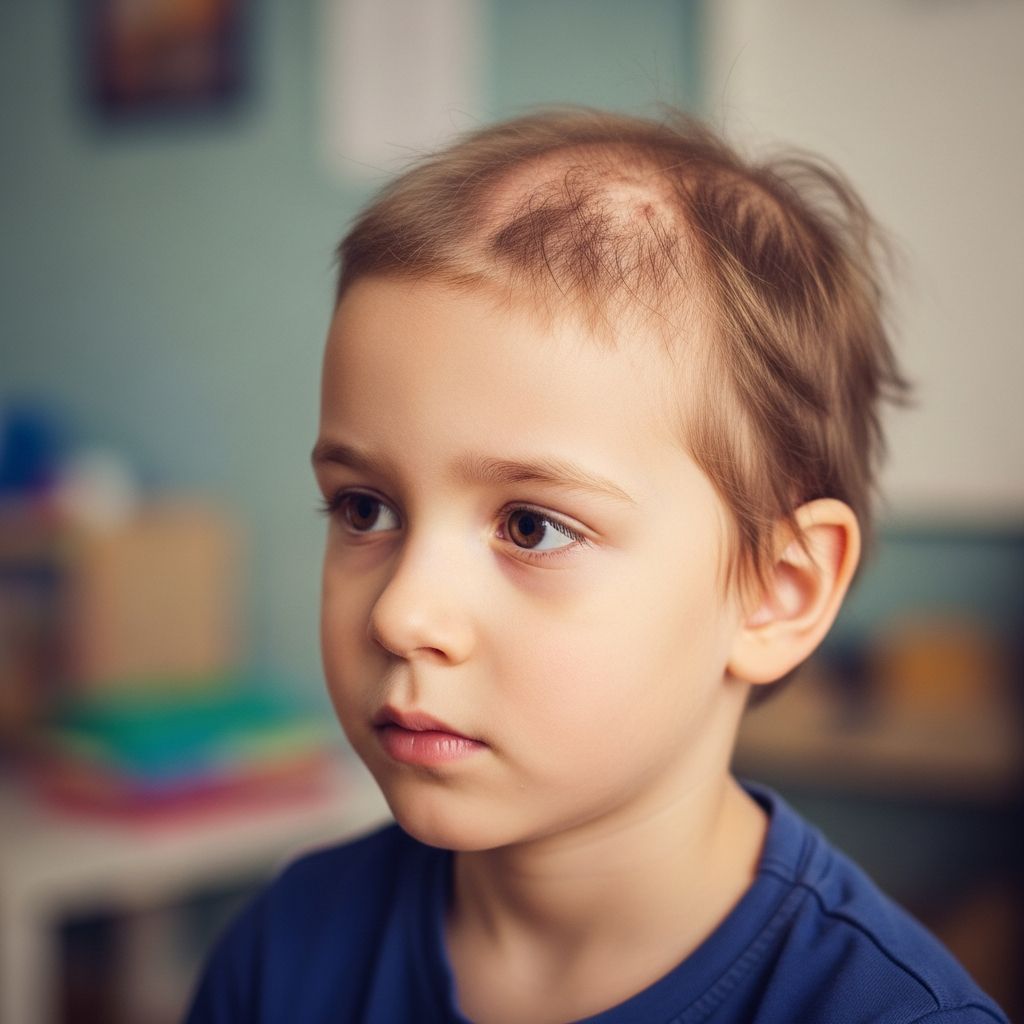
- Sudden development of round or oval smooth bald patches on the scalp, beard area (in older teens), or other body sites.
- Skin in the bald areas usually looks normal: no scarring, open sores, or heavy scaling.
- Some children feel mild tingling, burning, or itching in the area before the hair falls out.
- Hair may fall out in clumps, often about the size of a coin.
- In more extensive forms, all scalp hair (alopecia totalis) or all body hair (alopecia universalis) may be lost.
Nail Changes
Some children also have mild nail changes, such as:
- Fine pitting (tiny depressions) on the nail surface
- Roughness, ridging, or brittleness
These nail findings are not dangerous but can support the diagnosis.
How Do Doctors Diagnose Alopecia in Kids?
Pediatricians or dermatologists usually diagnose alopecia areata by examining the scalp and skin and asking questions about the child’s health.
Typical Diagnostic Steps
- Medical history: When hair loss started, how quickly it progressed, any illnesses, medications, or stresses, and any family history of autoimmune or hair loss conditions.
- Physical exam: Close look at the scalp, hair shafts, and skin elsewhere on the body.
- Pull test: Gently pulling on small sections of hair to see how easily they come out.
- Dermoscopy: Using a special magnifying tool to view hair follicles more clearly.
In many children, these steps are enough to make the diagnosis.
Additional Tests
Sometimes doctors order tests to rule out other causes of hair loss or to look for associated conditions:
- Blood tests to check for thyroid disease, iron deficiency, vitamin deficiencies, or other autoimmune diseases.
- Scalp biopsy (a tiny skin sample) if the cause of hair loss is still uncertain or if scarring alopecia is suspected.
Is Alopecia Dangerous?
From a physical standpoint, most children with alopecia are otherwise healthy. Alopecia areata does not shorten life expectancy and is not contagious.
However, the emotional and social impact can be significant, especially for school-aged children and teenagers. Supporting a child’s self-esteem is as important as medical treatment.
Treatment Options for Children
No single treatment works for all children, and there is currently no guaranteed cure for alopecia areata. Many kids, however, experience partial or complete regrowth over time, with or without treatment.
Goals of Treatment
- Encourage hair regrowth where possible
- Reduce inflammation and immune attack on hair follicles
- Protect the scalp and skin
- Support the child’s emotional well-being
Common Medical Treatments
Treatment choices depend on the child’s age, how much hair is lost, how quickly it is progressing, and the child’s comfort with procedures. Some commonly used options include:
- Topical corticosteroids
- Applied as creams, lotions, or foams to decrease inflammation around hair follicles.
- Often used for younger children because they are noninvasive.
- Intralesional corticosteroid injections
- Small amounts of steroid medicine injected directly into bald patches.
- More common in older children and teens who can tolerate injections.
- Topical immunotherapy
- Applying chemicals such as diphenylcyclopropenone (DPCP) or squaric acid under medical supervision to create a mild allergic reaction.
- Aims to change how the immune system behaves in the scalp.
- Other topicals
- Medications like minoxidil may be added to promote regrowth, usually in combination with other therapies.
In very severe cases, especially in older teens, doctors may discuss newer systemic treatments that affect the immune system more broadly, such as Janus kinase (JAK) inhibitors, but these require careful specialist supervision and discussion of risks and benefits.
What About Natural or Home Remedies?
Parents often ask about special diets, vitamins, or alternative therapies. While maintaining good nutrition and general health is important, there is limited high-quality evidence that supplements alone can reverse alopecia areata in otherwise healthy children. Any supplement or non-prescription product should be discussed with your child’s healthcare provider to avoid interactions or side effects.
Daily Care and Practical Tips
Even if medical treatment is chosen, daily care strategies can help protect your child’s skin and improve comfort.
Protecting the Scalp and Skin
- Use hats, scarves, or sunscreen on bald areas to prevent sunburn.
- Protect the head from cold with soft hats or beanies.
- Choose gentle shampoos and avoid harsh chemical treatments on remaining hair.
Hairpieces, Wigs, and Head Coverings
Some children feel more confident with a hairpiece or head covering.
- Modern wigs can look very natural and may be made from synthetic or human hair.
- Soft caps, scarves, or bandanas can be more comfortable for active children.
- In some regions, medical insurance may partially cover wigs when prescribed for medical hair loss; parents can ask their healthcare team about documentation.
Emotional and Social Support
The psychological impact of alopecia can be substantial for children and families. Studies highlight increased rates of anxiety and depression among people with alopecia areata, emphasizing the need for emotional support alongside medical care.
Helping Your Child Cope
- Explain the condition in age-appropriate language: that their body is attacking their hair, but they are not sick or contagious.
- Reassure your child that hair loss is not their fault.
- Encourage participation in favorite activities, sports, and hobbies to shift focus away from appearance.
- Support choices about wigs or head coverings, but avoid forcing them.
Working With Schools
- Inform teachers and school counselors so they can help respond to questions or bullying.
- Consider preparing a simple explanation your child is comfortable sharing with classmates, if they wish.
- Ask the school about anti-bullying policies and how hair-related teasing will be handled.
When to Consider Counseling
Professional support may help if your child:
- Withdraws from friends or activities
- Seems persistently sad, anxious, or angry about their appearance
- Refuses to attend school or social events
Child psychologists, social workers, or support groups (including those focused on alopecia areata) can offer coping strategies and a sense of community.
Prognosis: Will the Hair Grow Back?
The course of alopecia areata is unpredictable. Some children experience one or two small patches that regrow fully, while others have repeated episodes or more widespread loss.
Factors Linked With More Persistent Disease
- Very early onset
- Extensive hair loss (totalis or universalis)
- Associated autoimmune diseases
- Significant nail changes
Even in long-standing cases, spontaneous regrowth remains possible because hair follicles are often not permanently destroyed. However, more severe forms tend to be less responsive to treatment and more likely to recur.
Frequently Asked Questions (FAQs)
Is alopecia areata contagious?
No. Alopecia areata is an autoimmune condition and cannot be passed from one child to another through contact or sharing items.
Did stress cause my child’s hair loss?
Stress alone rarely explains alopecia areata. In some children, stressful events may seem to precede hair loss, but the underlying issue is an immune system response, often in a genetically susceptible child.
Should we change my child’s diet?
A balanced diet with adequate protein, iron, vitamins, and minerals supports healthy hair growth in general, but specific diets have not been proven to cure alopecia areata. Discuss any major dietary changes or supplements with your child’s doctor.
Will shaving the head make the hair grow back faster?
Shaving does not change how quickly or thickly hair grows from the follicles. Some families choose shaving for a more even appearance, but it is a cosmetic choice, not a medical treatment.
Can my child play sports and swim?
Yes. Alopecia does not limit physical activity. If your child wears a wig or head covering, ask for secure options suitable for sports and swimming, or consider going without during these activities if your child is comfortable.
When should we see a specialist?
See a dermatologist or pediatric dermatologist if:
- Hair loss is rapidly worsening
- Large or multiple patches are appearing
- There are signs of scarring, redness, pain, or scaling
- Initial treatments are not helping or the diagnosis is uncertain
References
- Alopecia | Clinical Keywords — Yale Medicine. 2023-05-01. https://www.yalemedicine.org/clinical-keywords/alopecia
- Alopecia Areata: Symptoms, Causes, Treatment & Regrowth — Cleveland Clinic. 2023-08-18. https://my.clevelandclinic.org/health/diseases/12423-alopecia-areata
- Hair Loss (Alopecia) – Symptoms and Causes — Penn Medicine. 2022-10-11. https://www.pennmedicine.org/conditions/hair-loss-alopecia
- Hair loss – Symptoms and causes — Mayo Clinic. 2022-03-18. https://www.mayoclinic.org/diseases-conditions/hair-loss/symptoms-causes/syc-20372926
- Alopecia Areata Overview: Types, Causes, Symptoms, and Treatment — Pfizer. 2023-06-12. https://www.pfizer.com/disease-and-conditions/alopecia-areata
- National Alopecia Areata Foundation – About Alopecia Areata — NAAF. 2023-04-05. https://www.naaf.org/alopecia-areata/
- Alopecia universalis — StatPearls (via NCBI Bookshelf). 2022-07-04. https://www.ncbi.nlm.nih.gov/books/NBK482498/