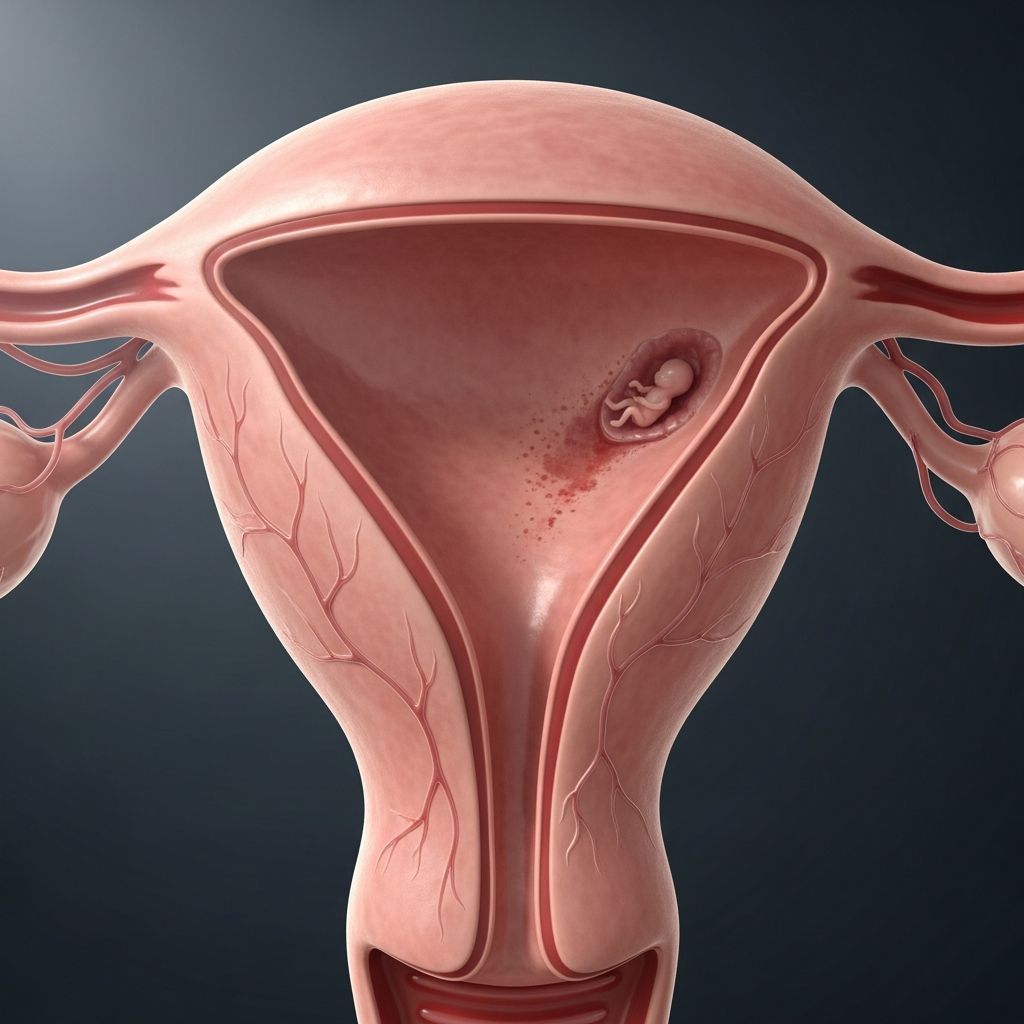
Implantation bleeding represents a subtle yet significant milestone in early pregnancy, signaling the moment a fertilized egg burrows into the uterine lining. Affecting roughly 25% of pregnancies, this phenomenon often raises questions for those tracking their cycles or trying to conceive. Understanding its nature helps distinguish it from other bleeding causes, promoting informed decisions during this delicate phase.
The Biological Process Behind Implantation
When sperm fertilizes an egg, the resulting embryo journeys through the fallopian tube toward the uterus. Upon arrival, it must embed itself into the nutrient-rich endometrial lining to establish a connection for growth. This attachment, known as implantation, typically disrupts minor blood vessels, leading to light bleeding in some cases.
The uterine lining thickens during the menstrual cycle’s luteal phase, preparing for potential pregnancy. Hormones like progesterone maintain this lining, but the embryo’s invasion causes small ruptures, releasing minimal blood. This process usually completes without noticeable symptoms, but spotting occurs when blood escapes the uterus.
Timing of Implantation Bleeding
Implantation generally happens 6-12 days post-ovulation, or 10-14 days after conception, coinciding with the expected period for many. For a 28-day cycle, this falls around days 20-24. Variability exists based on cycle length; shorter cycles may align it closer to menstruation onset.
- Post-Ovulation Window: 6-12 days, aligning with rising hCG levels.
- Pre-Period Occurrence: Often 1-2 days before anticipated menstrual flow.
- Duration: Typically 1-2 days, rarely extending longer without concern.
Tracking ovulation via basal body temperature, apps, or kits aids in pinpointing this window accurately.
Recognizing Implantation Bleeding Characteristics
Unlike menstrual flow, implantation bleeding is minimal and brief. It appears as spotting rather than a steady stream, often requiring only a panty liner.
| Feature | Implantation Bleeding | Menstrual Period |
|---|---|---|
| Amount | Light spotting, few drops | Moderate to heavy flow |
| Color | Pink, brown, or dark red | Bright red |
| Duration | Hours to 2 days | 3-7 days |
| Clots | None | Possible |
| Cramping | Mild, if any | Moderate to severe |
These distinctions stem from the limited blood volume involved—merely a disruption of tiny vessels versus the full shedding of the endometrial layer during menstruation.
Associated Symptoms and Sensations
Many experience implantation alongside subtle signs, though not universally. Mild uterine twinges, akin to pre-period discomfort, arise from the embedding process.
- Breast tenderness from surging hormones.
- Slight bloating or cervical mucus changes.
- Basal body temperature elevation persisting post-implantation.
- Occasional nausea or fatigue as early pregnancy hormones activate.
Not all pregnancies feature bleeding; its absence does not indicate issues. Conversely, its presence confirms successful attachment in those cases.
Prevalence and Who Experiences It
Statistics indicate 15-25% of women notice implantation bleeding, more common in first pregnancies due to less accustomed uterine lining. Factors like cycle regularity influence perception; irregular cycles may blur distinctions with periods.
First-time mothers often report slightly more spotting, analogous to initial gum irritation during flossing—subsequent attachments provoke less response as tissues adapt.
Differentiating from Other Early Bleeding Causes
Not all early pregnancy spotting signals implantation. Several benign and serious conditions mimic it, necessitating vigilance.
- Cervical Irritation: From intercourse, exams, or exercise, causing fragile cervical changes.
- Infections: STIs like trichomoniasis or bacterial vaginosis provoke spotting.
- Fibroids/Polyps: Uterine growths leading to intermittent bleeding.
Serious concerns include ectopic pregnancy (implantation outside uterus) or miscarriage precursors, marked by heavier flow and pain.
When to Seek Medical Evaluation
Implantation bleeding resolves spontaneously without intervention. However, prompt care is essential for:
- Heavy bleeding soaking a pad hourly.
- Bleeding with severe cramps, dizziness, or clots.
- Persistent spotting beyond 3 days post-missed period.
- Accompanying fever, foul discharge, or shoulder pain (ectopic indicator).
Post-bleeding, wait 2-3 days before testing; early hCG may yield false negatives. Confirmed pregnancy with any bleeding warrants ultrasound monitoring.
Testing and Confirming Pregnancy After Spotting
Home tests detect hCG produced post-implantation, most sensitive 10-14 days after. Blood tests offer earlier, quantitative results via clinics.
Ultrasounds around 6-8 weeks visualize the gestational sac, ruling out ectopics. Serial hCG monitoring tracks rising levels appropriately.
Lifestyle Tips During Early Pregnancy Suspected Bleeding
While awaiting confirmation:
- Avoid tampons to prevent infection risk; use pads.
- Refrain from intercourse until cleared.
- Hydrate, rest, and monitor symptoms.
- Track flow, color, and associated pains in a journal.
Prenatal vitamins with folic acid support development regardless.
Common Myths and Misconceptions
Myth 1: All early bleeding means miscarriage. Reality: Most resolves harmlessly.
Myth 2: Heavy implantation bleeding exists. Reality: By definition, it’s light; heavier suggests alternatives.
Myth 3: Bleeding prevents pregnancy tests. Reality: Tests remain accurate post-resolution.
Long-Term Implications for Pregnancy Health
Implantation bleeding correlates with no increased risks; babies develop normally. It may even reassure successful attachment. Routine prenatal care from 8 weeks monitors progress universally.
Understanding empowers proactive health management, reducing anxiety amid early uncertainties.
Frequently Asked Questions About Implantation Bleeding
Does implantation bleeding always occur?
No, only about 25% of pregnancies feature it; absence is normal.
Can implantation bleeding be heavy?
No, it’s characteristically light; heavy flow requires medical review.
Is cramping with implantation bleeding dangerous?
Mild cramping is typical; severe pain signals potential issues like ectopic pregnancy.
When can I take a pregnancy test after spotting?
Wait until a day after bleeding stops or missed period for accuracy.
Does implantation bleeding affect the baby?
No evidence suggests harm; it’s a normal implantation sign.
Supporting Your Journey Through Early Pregnancy
Navigating potential implantation involves awareness and caution. Consult healthcare providers for personalized advice, as individual factors vary. Early detection fosters optimal outcomes.
References
- Implantation bleeding: Causes and symptoms — Medical News Today. 2023-10-01. https://www.medicalnewstoday.com/articles/318659
- Implantation Bleeding: Causes and Symptoms — WebMD. 2024-05-15. https://www.webmd.com/baby/implantation-bleeding-pregnancy
- What is Implantation Bleeding? — American Pregnancy Association. 2023-11-20. https://americanpregnancy.org/pregnancy-symptoms/what-is-implantation-bleeding/
- Understanding and Recognizing Implantation Bleeding — Thrive Medical Clinic. 2024-02-10. https://thrivemedicalclinic.org/blog/understanding-and-recognizing-implantation-bleeding
- What you need to know about implantation bleeding — Clearblue. 2024-01-05. https://www.clearblue.com/am-i-pregnant/implantation-bleeding
- Vaginal bleeding in pregnancy — NHS. 2024-08-12. https://www.nhs.uk/pregnancy/common-symptoms/vaginal-bleeding/
- Implantation bleeding: Common in early pregnancy? — Mayo Clinic. 2023-09-18. https://www.mayoclinic.org/healthy-lifestyle/pregnancy-week-by-week/expert-answers/implantation-bleeding/faq-20058257