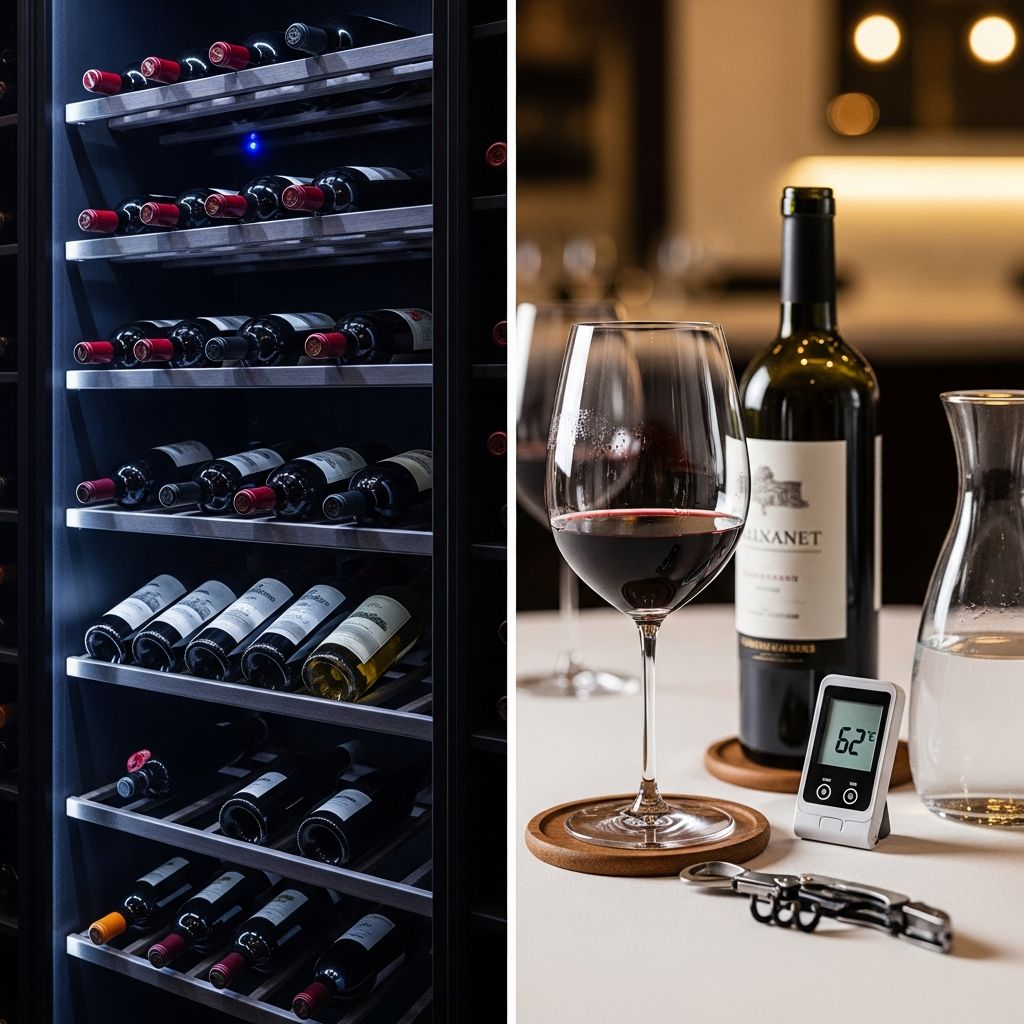
Perfect wine is not just about grape variety, vintage, or price; temperature quietly shapes how every aroma and flavor shows up in your glass. Serve or store a bottle at the wrong temperature, and even an excellent wine can taste flat, sharp, or unbalanced.
This guide explains, in simple terms, the ideal temperatures for storing and serving red, white, rosé, sparkling, and dessert wines, along with practical tricks for real homes (not professional cellars). Use it as a reference whenever you open a bottle.
How Temperature Changes the Taste of Wine
Wine is a living product, and temperature acts like a volume knob for its main components: fruit, acidity, tannin, sweetness, and alcohol. Get the temperature right, and everything feels harmonious; get it wrong, and one element dominates.
- Too warm: Alcohol feels hotter, the wine seems heavier, and subtle aromas disappear behind a boozy sensation.
- Too cold: Aromas are muted, fruit flavors seem dull, tannins may feel harsher, and acidity can appear sharper than intended.
- Big swings: Repeated heating and cooling can push wine in and out of the cork, leading to oxidation, leaks, and premature aging.
Thinking about temperature as part of the wine’s “seasoning” helps. Just as a pinch too much salt can throw off a dish, a few degrees in the wrong direction can change the entire impression of a wine.
Ideal Long-Term Storage Temperatures
Long-term storage is about protecting wine from stress so it matures gracefully instead of breaking down. Consistency is more important than hitting a single perfect number.
- General storage range: Aim for roughly 10–15°C (50–59°F) for most wines you plan to keep for more than a few months.
- Stability over precision: A steady, slightly imperfect temperature is better than constant fluctuations between warm and cool.
- Humidity and darkness: Moderate humidity helps natural corks stay sealed, and darkness protects wine from light damage that can create off aromas.
If you do not own a dedicated wine fridge, a cool interior closet or a shaded corner away from appliances and windows can be surprisingly effective for short to medium-term storage.
Short-Term vs. Long-Term Storage
Not every bottle needs to be cellared for years. How you treat a wine depends on how soon you plan to drink it.
- Short-term (a few days to a few weeks): A kitchen cabinet away from the oven or a sideboard in a cool room is usually acceptable.
- Medium-term (several months): Look for the coolest, darkest, most stable spot in your home, such as an interior closet or a basement corner.
- Long-term (years): A wine fridge or proper cellar is strongly recommended to keep temperature and humidity within a safe, consistent band.
Whenever possible, store bottles on their side if they are sealed with natural cork, so the cork remains in contact with the wine and does not dry out over time.
Serving Temperature Overview by Wine Style
Different wine styles taste best at different serving temperatures. As a broad rule, lighter and more delicate wines are served cooler; fuller and more structured wines are served warmer (but rarely as warm as a modern heated room).
| Wine Style | Serving Range (°C) | Serving Range (°F) | What You Notice at This Range |
|---|---|---|---|
| Light red (Pinot Noir, Gamay) | 14–16°C | 57–61°F | Fresh fruit, softer tannins, lively acidity. |
| Medium to full red (Cabernet, Syrah, Malbec) | 16–18°C | 61–64°F | Balanced structure, integrated tannin, complex aromas. |
| Light white (Sauvignon Blanc, Pinot Grigio) | 7–10°C | 45–50°F | Crisp, refreshing, citrus and herbal notes highlighted. |
| Full white (Chardonnay, Viognier) | 10–13°C | 50–55°F | Richer texture, stone fruit and oak nuances more expressive. |
| Rosé | 8–12°C | 46–54°F | Juicy fruit, refreshing but not numbingly cold. |
| Sparkling (Champagne, Prosecco, Cava) | 6–10°C | 43–50°F | Fine bubbles, bright acidity, controlled frothiness. |
| Dessert and fortified (Port, Sauternes) | 8–14°C | 46–57°F | Sweetness balanced by acidity and aroma, not cloying. |
Getting Red Wine Temperature Right
Many people assume red wine should be served at “room temperature”, but modern indoor heating often makes that far too warm. A slightly cool red almost always tastes fresher and more nuanced than a warm one.
- Light reds: Chill in the fridge for about 30–45 minutes, then let sit on the counter briefly before serving.
- Full reds: If stored at normal room temperature, cool in the fridge for 20–30 minutes before opening.
- Quick adjustments: If the wine still feels too cold in the glass, cup the bowl with your hands and gently swirl to bring it up a degree or two.
At the right temperature, reds should feel smooth on the palate, with fruit, tannin, and alcohol in balance rather than any single element shouting for attention.
Chilling White and Rosé Wines Correctly
Whites and rosés are usually served chilled, but there is a difference between pleasingly cool and so cold that flavors are locked away. Over-chilling can make even a high-quality bottle seem neutral and thin.
- Light whites and dry rosés: Store in the fridge for a few hours, then serve straight from there for a bright, refreshing profile.
- Fuller whites: Take the bottle from the fridge 15–20 minutes before pouring so texture and aroma have time to open.
- Ice bucket guideline: A mix of ice and water chills wine more evenly than ice alone and works well when you need to cool a bottle quickly.
If a white or rosé tastes bland, give it a few minutes on the table; as it warms slightly, fruit and complexity often reappear.
Serving Sparkling Wine Without Losing the Fizz
Sparkling wines demand colder service than still wines to keep their bubbles fine and persistent. The right chill also prevents the cork from exploding aggressively when opened.
- Pre-chill thoroughly: Leave the bottle in the refrigerator for several hours or overnight before serving.
- Use an ice bucket: For service, keep the bottle in an ice-and-water bath to maintain a stable, cool temperature between pours.
- Opening safely: Angle the bottle away from people, hold the cork firmly, and twist the bottle, not the cork, to release pressure gently.
Too warm and sparkling wine can foam violently and taste heavy; properly chilled, it feels crisp, energetic, and refined.
What Heat and Cold Really Do to Stored Wine
Storage temperature does not only affect immediate taste; it also shapes how a wine ages over months and years. Gentle conditions allow complex flavors to develop; harsh conditions can ruin a bottle before it is ever opened.
- Excessive heat (above roughly 24°C / mid-70s°F): Can “cook” wine, leading to jammy, dull flavors and sometimes pushing liquid past the cork.
- Refrigerator cold (near 0–4°C / mid-30s–40°F) long term: Can dry out natural corks and slow aging to a crawl, risking air leakage when the bottle is later moved.
- Rapid swings: Expansion and contraction inside the bottle can disturb the seal, letting oxygen sneak in and prematurely age the wine.
While brief exposure to less-than-ideal temperatures is not always catastrophic, repeated or extreme conditions increase the risk that a wine will taste tired or flawed when it is finally opened.
Practical At-Home Temperature Hacks
Not everyone has a climate-controlled cellar, but there are simple, low-cost ways to keep wine closer to its comfort zone. Small adjustments in where and how you store bottles can make a major difference.
- Avoid the kitchen hotspot: Stoves, ovens, and dishwashers create temperature spikes; choose a sideboard or interior shelf instead.
- Use cardboard or wooden boxes: Keeping bottles inside their cases provides insulation from drafts and small fluctuations.
- Consider a modest wine fridge: Even a compact unit can stabilize conditions for your “special occasion” bottles.
- Track with a thermometer: A simple digital thermometer in your chosen storage area tells you whether you are within a safe range.
If your only option is a relatively warm room, focus on buying wines meant for near-term drinking, as they are less sensitive to imperfect conditions over brief periods.
Simple Timing Guide for Chilling and Warming
Remembering exact degrees is less important than knowing how long to chill or warm a bottle from typical room temperature. Use these time frames as starting points and adjust for your particular fridge and climate.
- Red wine: 20–30 minutes in the refrigerator cools an average room-temperature bottle to a pleasant serving range.
- White and rosé wine: About 2 hours in the fridge generally creates a good chill; 10–15 minutes on the counter softens an over-cold bottle.
- Sparkling wine: Plan for at least 3 hours in the fridge or around 45 minutes in an ice-and-water bath.
Because every refrigerator runs differently, it is wise to check by touch: the bottle should feel cool but not painfully cold, and condensation should form without turning to frost.
Frequently Asked Questions About Wine Temperature
Can wine be ruined by one hot day?
A single warm afternoon in a hot car or sunny room may not completely destroy a wine, but it does increase the risk of cooked flavors and premature aging. If the cork has pushed up, or the wine smells stewed or flat when opened, heat damage is likely.
Is it bad to put red wine in the refrigerator?
Short-term chilling is not harmful and is actually recommended to reach ideal serving temperature, especially in warm climates. Just avoid leaving fine reds in the fridge for weeks, as prolonged, very cold storage can dry out the cork and dull the wine’s evolution.
Can I store wine upright?
Storing bottles upright for a few days is fine, particularly if they are closed with screwcaps or synthetic corks. For longer storage of wines sealed with natural cork, laying bottles on their side helps maintain a tight seal and reduces the chance of air sneaking in.
How do I know if my wine is too cold or too warm?
If your wine has very little aroma, tastes sharp or hard, and feels almost numb on the palate, it is probably too cold. If alcohol burns in the nose or throat and the wine seems heavy and dull, it is likely too warm; a short chill can bring it back into balance.
Do all wines need the same storage temperature?
Most still wines are comfortable in a similar cool, stable range, so one well-managed storage temperature can work for a mixed collection. Serving temperatures will differ more than storage temperatures, and you can fine-tune those right before pouring rather than during long-term cellaring.
Key Takeaways for Better Bottles
Wine temperature does not have to be complicated. Focus on keeping stored bottles cool and stable, then adjust serving temperatures gently depending on whether you are pouring red, white, rosé, sparkling, or dessert wine.
- Store wines in a consistently cool, dark place rather than chasing a single “perfect” degree.
- Serve reds slightly cooler than typical room temperature, and serve whites, rosés, and sparkling wines chilled but not icy.
- Use time in the refrigerator, a simple ice bucket, and your own senses of touch and taste as practical guides.
With a bit of attention to temperature, everyday bottles can taste more expressive, and special wines can truly shine the way their makers intended.