The Transformation of Naming Conventions in America
The choices parents make when naming their children offer a fascinating window into the values, beliefs, and cultural influences of their era. Over the past century, the landscape of American baby names has undergone a dramatic metamorphosis, shifting from highly concentrated traditional selections to an increasingly diverse and individualized spectrum. This evolution reflects far more than simple preference changes—it embodies the social upheaval, technological advancement, and cultural diversification that have defined American society.
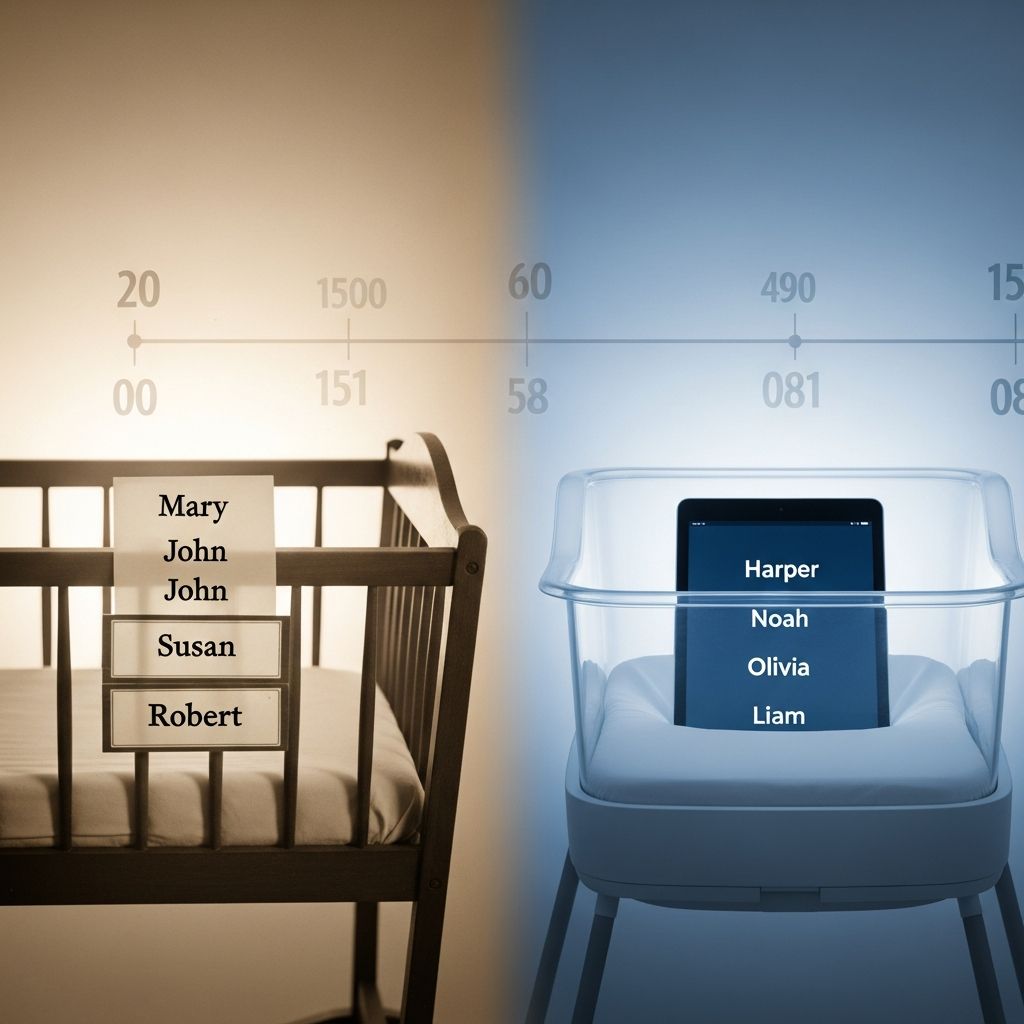
The concentration of popular names has declined significantly over time. In 1916, the most popular boy’s name accounted for 5.4% of all babies born that year, while girls’ names showed even stronger concentration at 5.7%. By 2016, this pattern had reversed dramatically, with the leading boy’s name representing only 0.9% of births and girls’ names at 1.0%. This statistical transformation illustrates a broader cultural shift toward individuality and personal expression in naming practices.
Traditional Foundations: Religion and Family Heritage in Early Twentieth Century
The early decades of the twentieth century witnessed naming conventions deeply rooted in religious tradition and ancestral reverence. Names such as Mary, John, and William dominated birth announcements across the nation, serving purposes beyond simple identification. These selections reflected genuine cultural priorities: families passed names through generations as a way to honor ancestors, maintain family bonds across time, and express their religious faith through biblical or religiously significant nomenclature.
The concentration of these names was remarkably pronounced. Parents operated within a relatively narrow band of socially acceptable choices, and deviating from established naming conventions could invite social judgment. The practice of naming children after family members created a cyclical pattern where certain names remained continuously present in family trees, maintaining their cultural dominance across decades.
The Hollywood Effect: Mid-Century Transformation
The 1920s and 1930s introduced a pivotal shift in naming psychology. The emergence of motion pictures as a dominant entertainment medium fundamentally altered how parents viewed naming possibilities. Names like Betty, Dorothy, and Richard gained sudden prominence, largely attributed to the influence of Hollywood stars and popular literary characters. This represented one of the first major instances where popular culture directly influenced parental naming decisions on a mass scale.
The 1950s and 1960s continued this trend with names such as Linda, Susan, and Michael rising to prominence. One particularly notable example illustrates the power of cultural moments: a popular song called “Linda” released in 1947 resulted in approximately 100,000 babies receiving this name in a single year, elevating it to the top position and marking the first time one name successfully dethroned another in girls’ naming history.
Counterculture and Creative Expression: 1970s and Beyond
The cultural revolution of the 1960s and 1970s fundamentally challenged traditional naming structures. Parents increasingly embraced unconventional choices, with nature-inspired names like River and Sky gaining traction among families seeking to express countercultural values through their naming decisions. This period marked a significant departure from the religious and ancestral naming traditions that had dominated American culture for centuries.
The rise of Jennifer during the 1970s exemplified both the power of naming trends and their potential cultural impact. The name became so overwhelmingly popular that support groups were later formed for women named Jennifer born during this decade, as they frequently encountered multiple classmates and colleagues sharing their name. This phenomenon demonstrated that extreme concentration in naming, even when driven by cultural fashion, could create unexpected social consequences.
The Resurgence of Classic Names with Modern Variations
The late twentieth century witnessed an intriguing pattern: the return of classic names with innovative twists. Names such as Emma, Olivia, and Ethan regained prominence, but parents frequently selected creative spelling variations or alternative forms. This approach allowed families to honor traditional naming sensibilities while simultaneously asserting individuality through personalization.
The fragmentation of popular names through creative spelling has become increasingly significant in understanding modern naming trends. When popular names like Madeleine generate multiple spelling variations—Madeline, Madalyn, Madelyn, Maddelyn, and Madelynn—each variant is counted separately in official statistics, diluting the apparent concentration of any single name form. This phenomenon partially explains why modern naming appears more diverse than historical data might initially suggest, as what appears as distinct names in statistics often represents variations of identical names.
Contemporary Influences: Celebrity, Technology, and Global Culture
In the twenty-first century, baby naming has become increasingly influenced by a complex matrix of celebrity choices, entertainment properties, and global cultural references. Names like Luna, Harper, and Mason experienced dramatic popularity surges following their selection by well-known celebrities. Television shows and films have become powerful naming vectors—for instance, the character Emma from the television show Friends, introduced in 2001, contributed to Emma’s resurgence from relative obscurity to become one of the most popular girls’ names.
The name Madison illustrates this cultural influence pattern particularly well. Before the 1984 film “Splash,” Madison was virtually unknown as a girls’ name. Once the protagonist mermaid character selected this name in the movie, parents began perceiving it as an attractive feminine choice, creating a snowball effect that established Madison as a major naming trend. Such examples demonstrate how entertainment properties can literally create naming fashions from nothing.
Statistical Diversity and the Decline of Universal Names
Only one name that ranked in the top ten for boys in 1916—William—maintained its position in the top ten by 2016, illustrating the fundamental reshuffling of naming preferences across a century. This statistic reflects not merely changing tastes but a complete cultural recalibration regarding how parents approach the naming process.
The diversification extends beyond simple ranking changes. Contemporary parents appear to operate from a fundamentally different philosophical framework regarding naming. Where earlier generations selected from a narrow range of socially acceptable options, modern parents increasingly view naming as an opportunity for creative self-expression, cultural identity assertion, or tribute to personally meaningful figures and places.
The Cycle of Return: Vintage Names in Modern Contexts
An intriguing phenomenon in contemporary naming involves the resurrection of names that had fallen into relative obscurity. Emma, for example, was extremely popular during the 1880s through 1930s, subsequently declined dramatically to approximately the 400th most popular position, and has now resurged dramatically in recent years. This cyclical pattern suggests that naming trends operate partially according to generational cycles, where names become associated with specific age cohorts and then regain appeal once that association fades.
The resurgence of Emma benefited from multiple reinforcing cultural factors: the character Emma from “Friends,” the actress Emma Watson from the “Harry Potter” film series, and the fact that grandmothers named Emma had largely passed away, making the name feel fresh and historical rather than contemporary. This pattern illustrates how naming trends result from complex interactions between demographic shifts, media representation, and cultural memory.
Data Considerations and Name Counting Methodologies
Understanding modern naming trends requires awareness of how naming data is collected and categorized. The Social Security Administration maintains comprehensive records of baby names dating to 1880, though early data carries significant limitations. Social Security cards and numbers were not mandatory until 1935, meaning that names recorded from 1880 actually represent adults who applied for Social Security decades after their birth, creating potential sampling biases.
Additionally, the way names are counted significantly impacts trend analysis. Exact spelling matching means that Emma and Emme are counted as separate names, even though parents likely perceive them as identical. This counting methodology can artificially reduce the apparent popularity of individual names while increasing the appearance of overall diversity.
Geographic and Socioeconomic Variations in Naming Patterns
While national trends provide valuable overview, naming preferences vary significantly across geographic regions, socioeconomic backgrounds, and cultural communities. Certain names predominate in specific regions or demographic groups, creating localized naming landscapes that differ from national aggregates. Parents in different communities may experience dramatically different name popularity for identical names, affecting how unique or common their child’s name becomes.
This regional variation has become increasingly important in recent decades as transportation, communication, and cultural integration have paradoxically both increased national homogenization and enhanced awareness of alternative naming traditions. Parents now consciously choose names from diverse cultural traditions, reflecting America’s multicultural evolution and the increasing visibility of global naming conventions.
Key Naming Trends Across Decades
- 1900s-1920s: Dominance of biblical and traditional names reflecting religious values and family heritage preservation
- 1930s-1950s: Rise of celebrity-influenced names as motion pictures became cultural touchstones for parental naming decisions
- 1960s-1970s: Emergence of unconventional and nature-inspired names reflecting countercultural values and generational rebellion
- 1980s-2000s: Return of vintage names combined with creative spelling variations and sustained celebrity influence
- 2010s-present: Extreme diversification with increasing use of unconventional names and cross-cultural naming choices
The Role of Specific Cultural Moments in Naming
Certain historical events and cultural phenomena create measurable spikes in specific names. The song “Linda” in 1947 created a naming spike significant enough to make Linda the most popular girls’ name that year. Similarly, presidential daughters have influenced naming patterns—the daughter of President Grover Cleveland named Ruth inspired a sudden surge in this name’s popularity as parents adopted it en masse. These examples demonstrate that naming trends are not inevitable forces but rather responsive to specific cultural moments that capture parental imagination.
Frequently Asked Questions About Baby Naming Trends
Q: Why have baby names become more diverse over time?
A: Multiple factors contribute to greater naming diversity, including increased cultural diversity in American society, greater access to information about alternative names, reduced social pressure to conform to traditional naming conventions, and the influence of global culture through entertainment and technology.
Q: How much influence do celebrities have on baby naming?
A: Celebrity influence appears substantial and measurable. Names chosen by famous personalities, such as Luna, Harper, and Mason, experience demonstrable popularity surges following their selection by celebrities. However, celebrity influence typically works in combination with other cultural factors rather than in isolation.
Q: Are vintage names actually coming back, or is this an illusion created by how names are counted?
A: Both factors contribute. Vintage names like Emma genuinely are resurging in popularity, but creative spelling variations can create statistical illusions of diversity. When names are counted by exact spelling rather than phonetic similarity, apparent diversity increases even if the underlying naming choices remain relatively concentrated.
Q: What is the most important influence on baby naming today?
A: Modern baby naming is influenced by multiple factors working simultaneously: celebrity and entertainment industry choices, cultural representation in media, family heritage considerations, and increasing access to diverse naming options from global cultures.
Q: Will naming trends continue to become more diverse in the future?
A: Current evidence suggests continued diversification is likely, given ongoing cultural globalization and the normalization of non-traditional names. However, naming fashions also operate cyclically, with periodic resurgences of traditional names alongside innovative selections.
References
- Historical Trends in Baby Names — Sociological Images. 2008-07-18. https://thesocietypages.org/socimages/2008/07/18/historical-trends-in-baby-names/
- A Look at Baby Naming Trends Over the Years — Bunnies by the Bay. https://bunniesbythebay.com/blogs/how-to-delight/a-look-at-baby-naming-trends-over-the-years
- Social Security Administration: Popular Baby Names by Decade — U.S. Social Security Administration. https://www.ssa.gov/oact/babynames/decades/
- Evolution of US Baby Names Commentary — YouTube. https://www.youtube.com/watch?v=V11DuuxsnoQ
- US Baby Name Popularity Visualizer — Engaging Data. https://engaging-data.com/baby-name-visualizer/