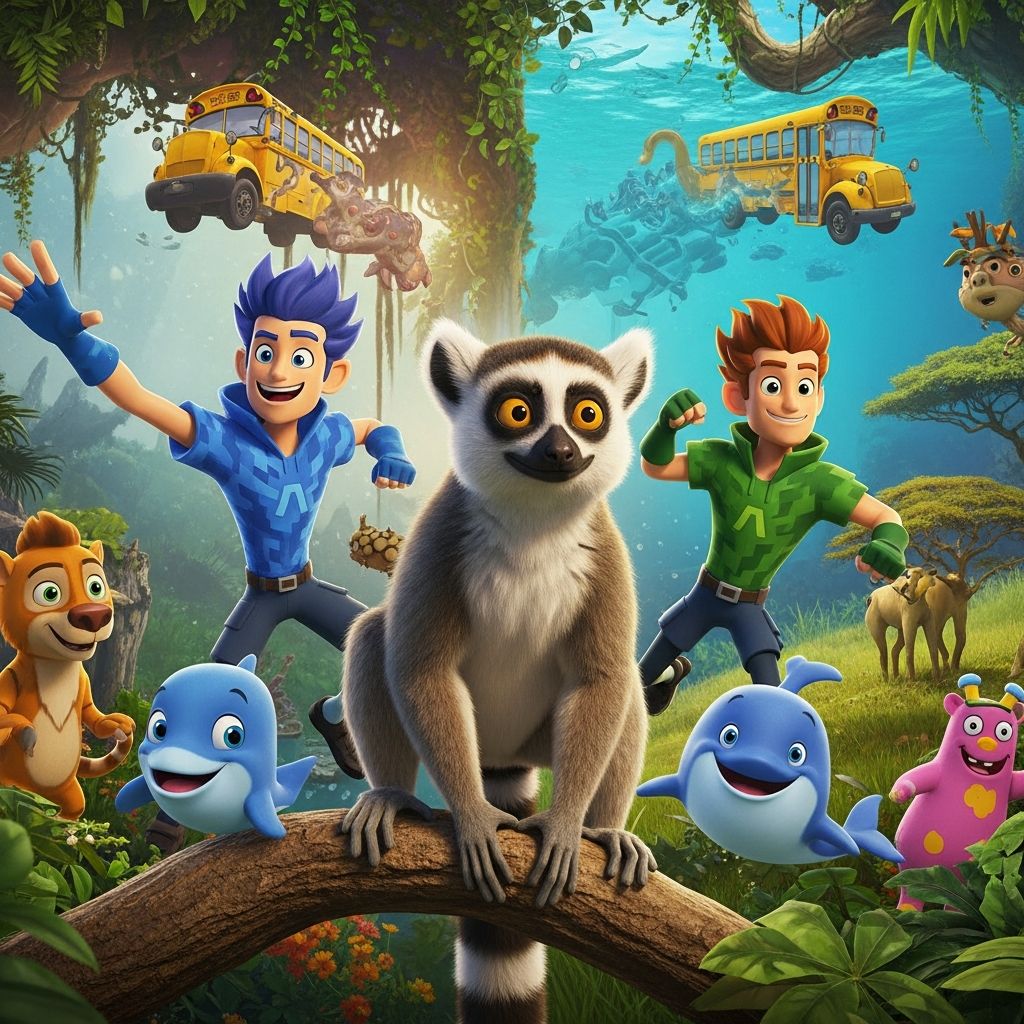
Long before streaming queues were packed with nature documentaries, a lemur named Zoboomafoo hopped into a small TV studio and changed how many kids first learned to love animals. Years later, the animated world of Wild Kratts would pick up that legacy, turning wildlife biology into fast-paced adventure stories. Together, these shows helped define what engaging, science-rich children’s television could look like.
Animal TV in the Bigger Story of Kids’ Programming
To understand why Zoboomafoo and Wild Kratts mattered, it helps to see where they sit in the wider timeline of children’s TV. For decades, the biggest shift in kids’ programming was the move from pure entertainment to intentional education.
- Early shows such as Howdy Doody and Captain Kangaroo were mostly light variety and comedy, not structured lessons.
- Sesame Street (1969) revolutionized the idea that television could be designed specifically to teach young children using a research-based curriculum.
- Later, shows like Mister Rogers’ Neighborhood focused on emotional learning and empathy, while other series introduced math, literacy, and problem-solving skills.
- By the 1990s, cable channels devoted entirely to kids’ content, like Nickelodeon, made educational-yet-fun programming a major part of the TV landscape.
Within that evolving ecosystem, animal-focused series carved out a special niche, teaching biology, ecology, and empathy for living things through stories that felt more like play than school.
Zoboomafoo: When a Lemur Became a Teacher
Zoboomafoo debuted as a live-action series anchored by two human hosts and one unforgettable nonhuman star: a playful lemur who seemed to step straight out of a nature documentary and into kids’ imaginations. The show stood out because it collapsed the distance between classroom, zoo, and living room.
Why Zoboomafoo Felt Different
- Real animals on screen: Kids weren’t just told about wildlife; they saw it. Live animals, behind-the-scenes caretaking, and hands-on demonstrations made the natural world feel tangible.
- A talkative animal friend: Zoboomafoo (in puppet and voice form) translated scientific ideas into the language of preschool curiosity—”What does it eat? Can it jump? Is it scary?”
- Short, focused segments: Concepts like habitats, food chains, and adaptations were broken into bite-sized pieces that fit young attention spans.
- Gentle humor and kindness: Jokes never came at the expense of animals; the tone modeled respect for living creatures, echoing the empathy-forward style of shows like Mister Rogers’ Neighborhood.
In a media environment that often treated animals as props or punchlines, Zoboomafoo presented them as complex, deserving of care, and endlessly interesting.
Skills Kids Picked Up Without Noticing
Even though Zoboomafoo looked like pure fun, it quietly introduced foundational science ideas that match what researchers highlight as core early learning goals in STEM-related media.
- Observation: Viewers were invited to notice fur, feathers, body shapes, and movements, mirroring guided observation techniques used in early childhood classrooms.
- Classification: Animals were grouped by traits (climbers, diggers, swimmers), hinting at basic biology and taxonomy.
- Cause and effect: Segments frequently showed how an animal’s body helped it survive in a specific habitat, reinforcing adaptation and environment links.
- Ethical thinking: Simple conservation messages—like not disturbing wildlife or protecting habitats—introduced the idea that human choices matter for other species.
The Kratt Brothers’ Evolving Mission
The hosts behind Zoboomafoo had a clear through-line in their work: make wildlife knowledge feel as fun and accessible as superhero lore. Their projects followed the broader move in children’s television toward more interactive, curriculum-conscious content.
Across their shows, certain themes stayed constant:
- Curiosity first: Stories always began with a kid-level question—”How does it run so fast?”, “Why does it live there?”—inviting viewers to wonder along.
- Respect for animals: Even predators and “scary” species were framed as important parts of ecosystems, not villains.
- Clear science language: Technical terms (like “mammal,” “habitat,” “endangered”) were used accurately but explained in accessible language, consistent with best practices in educational media design.
- Playful repetition: Key ideas about species traits and environments repeated across episodes, reinforcing long-term learning similar to approaches used by shows such as Sesame Street.
Wild Kratts: Turning Biology into Superpowers
When the Kratt brothers later launched Wild Kratts, they shifted from live-action to animation, but kept the same educational engine. Instead of just showing animal behavior, Wild Kratts asks: What if people could “borrow” those abilities?
Core Concept: Creature Powers as Learning Hooks
Each episode typically centers on one or a few species. The heroes activate “creature power suits” that give them abilities modeled on those animals’ real-world traits. This simple mechanic does heavy educational lifting:
- Focus on adaptations: Every power (gliding, echolocation, camouflage) ties directly to an adaptation that helps the animal survive.
- Concrete visuals: Transformations make invisible ideas (like thermal sensing or flight mechanics) more visible and memorable.
- Transfer of knowledge: Kids see how the same trait (like a powerful beak or strong legs) can solve different problems in different settings.
How Wild Kratts Extends the Legacy of Educational TV
Wild Kratts takes cues from decades of research on effective educational television:
| Educational Strategy | How Wild Kratts Uses It | Links to Broader TV Trends |
|---|---|---|
| Clear learning goals | Each episode spotlights specific animal facts and ecosystem ideas. | Echoes curriculum-driven design popularized by Sesame Street. |
| Interactivity | Characters often pose questions to the audience or pause for predictions. | Builds on “talking back to the TV” approaches refined by later kids’ networks. |
| Story-based learning | Science is embedded in rescue missions, races, and mysteries. | Aligns with research showing that narrative helps children remember content. |
| Diverse representation of nature | Episodes span continents, climates, and a huge range of species. | Reflects the push to show a wider world to kids, similar to Sesame Street’s inclusive neighborhood. |
Why Animal Shows Stick in Kids’ Memories
Many adults who grew up watching Zoboomafoo or Wild Kratts can still name obscure species, recall quirky animal facts, or trace their love of biology back to those shows. That staying power lines up with broader findings about children’s educational media:
- Visual richness: Wildlife footage and colorful animation give kids strong mental images to attach to new words and ideas, a pattern observed across nature programming and children’s science media.
- Emotional connection: When animals are personified just enough to be relatable—but still presented accurately—children build empathy, which supports prosocial attitudes and concern for the environment.
- Repetition over years: Kids often watch these series at multiple ages. Long-running shows like Sesame Street demonstrate how repeated exposure can deepen understanding as children’s cognitive abilities grow.
From Screen to Real-World Curiosity
What begins as a half-hour of TV can ripple outward into how children play, explore, and even think about future careers. Animal-centered shows are particularly good at turning viewing into action.
Common “Side Effects” of Growing Up on Animal TV
- Outdoor exploration: Many kids head outside looking for bugs, birds, or tracks after watching an episode, mirroring informal science learning behaviors educators aim to spark.
- Imaginative play: Children pretend to be their favorite animals or “activate creature powers,” reinforcing what they learned through embodied play.
- Early activism: Stories about endangered species or threatened habitats sometimes inspire kids to ask adults about recycling, reducing plastic, or supporting animal charities.
- Interest in STEM paths: Exposure to animal behavior, field research, and conservation careers gives some viewers their first glimpse of what scientists and wildlife professionals actually do.
Balancing Screen Time and Learning: Tips for Families
Parents have asked whether TV is “good” for kids since the earliest days of the medium. The consensus from decades of research is nuanced: content and context matter more than raw minutes watched. With shows like Zoboomafoo and Wild Kratts, adults can tilt the balance toward learning and connection.
Simple Ways to Make Animal Shows More Educational
- Watch together when you can: Co-viewing lets you answer questions, repeat new words, and connect what’s on screen to your child’s real-world experiences.
- Pause and wonder aloud: Brief pauses to ask “Why do you think that animal lives there?” encourage reasoning, not just recall.
- Follow up offline: Visit a library, park, zoo, or reputable nature website to learn more about animals from a favorite episode.
- Encourage creative responses: Invite kids to draw an animal, invent a new “creature power,” or build a habitat out of blocks.
- Model respect: When animals are portrayed as gross or scary elsewhere, refer back to what the shows taught about their role in ecosystems.
New Platforms, Same Core Ideas
Today’s children encounter animal content on streaming services, short-form video platforms, and interactive apps as well as traditional TV. While the technology has changed, many of the educational principles behind shows like Zoboomafoo and Wild Kratts remain relevant:
- Clear learning goals: The most effective media still decide in advance what they want children to understand after watching.
- Research-informed design: Many modern educational series are developed with child development specialists, continuing a tradition established by early pioneers.
- Equity and representation: Creators increasingly aim to show diverse communities, regions, and cultural relationships to nature, building on the inclusive ethos of landmark shows like Sesame Street.
Animal-focused programs that honor these principles don’t just entertain; they help raise more informed, empathetic citizens who understand that humans share the planet with countless other species.
Why This Legacy Still Matters
In an era of climate change, biodiversity loss, and rapid technological shifts, the seeds planted by a friendly lemur and two animated brothers are more than nostalgic memories. They represent a pathway for helping children grasp big, sometimes overwhelming topics—like extinction, habitat destruction, and conservation—through stories grounded in wonder rather than fear.
By treating animals as teachers, not just spectacle, Zoboomafoo and Wild Kratts showed that educational TV can be playful, emotionally rich, and scientifically accurate at the same time. That combination has influenced how newer shows approach nature, science, and social responsibility, and it continues to shape how families use screens as tools for learning instead of just distraction.
Frequently Asked Questions (FAQs)
Q: Are shows like Zoboomafoo and Wild Kratts really educational or just fun?
Research on children’s television indicates that well-designed programs with clear learning goals can support vocabulary, science understanding, and prosocial behavior, especially when adults occasionally watch alongside children. Zoboomafoo and Wild Kratts are built around accurate animal facts and simple ecological ideas, so the fun is the delivery system for real content.
Q: What age range benefits most from these kinds of animal shows?
Younger children tend to respond to the visual excitement, humor, and basic naming of animals, while older kids can grasp more complex ideas like food webs, adaptations, and conservation. Educational media research shows that the same program can offer different layers of learning as children grow.
Q: How much screen time is appropriate if my child loves animal shows?
Health and education experts generally recommend setting reasonable daily limits and focusing on the quality of content and the presence of adult guidance rather than strict time alone. Pairing viewing with outdoor play, reading, or hands-on exploration helps keep screen time in balance.
Q: Can TV really encourage children to care about conservation?
Yes. Studies of educational children’s media have found that exposure to stories emphasizing empathy, diversity, and shared responsibility can positively shape attitudes and awareness. When animal shows highlight threats like habitat loss and model solutions, they can spark early interest in environmental stewardship.
Q: What should I look for in new animal shows for my child?
Look for programs that use accurate information, clearly respect animals, and avoid portraying wildlife purely as villains or slapstick props. Signs of high-quality educational design include clear explanations, opportunities for kids to think or respond, and narratives that connect animal behavior to broader ideas about ecosystems, cooperation, or problem-solving.
References
- Brief History: Children’s Television — TIME. 2010-01-25. https://time.com/archive/6689977/brief-history-childrens-television/
- Lessons from the History of Children’s Television, the Original Distance Learning — Early Learning Nation (M. Swartz). 2021-03-02. https://earlylearningnation.com/2021/03/lessons-from-the-history-of-childrens-television-the-original-distance-learning/
- Children’s Television Series — Encyclopedic overview, citing multiple broadcast and academic sources. Last updated 2024. https://en.wikipedia.org/wiki/Children%27s_television_series
- Screen Sense: Setting the Record Straight — Research-Based Guidelines for Screen Use for Children Under 3 Years Old — Zero to Three. 2014-01-01. https://www.zerotothree.org/resource/screen-sense-setting-the-record-straight/
- The Recontact Study: Longitudinal Results of the Impact of Early Childhood Viewing of Sesame Street — Sesame Workshop / Children’s Television Workshop. 2001-01-01. https://www.sesameworkshop.org