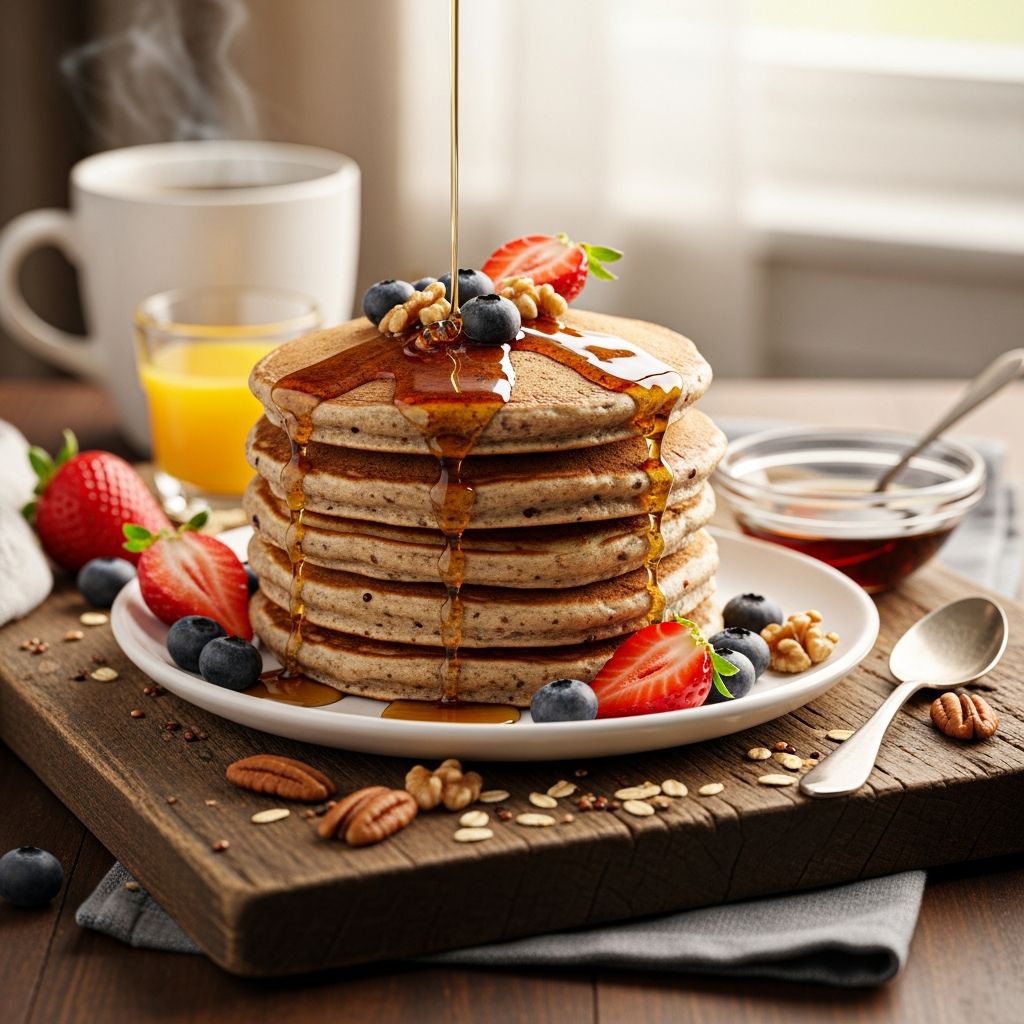
Multigrain gluten-free pancakes bring together the comfort of a classic breakfast with the nutrition of whole grains and the inclusivity of gluten-free cooking. These pancakes can be soft, fluffy, and satisfying without relying on wheat flour, making them a versatile option for families with mixed dietary needs.
This guide introduces an original multigrain gluten-free pancake recipe along with clear instructions, customization ideas, and practical troubleshooting tips. Whether cooking for one or feeding a crowd, you can use these techniques to create a reliable weekend staple or a quick weekday treat.
Why Choose Multigrain Gluten-Free Pancakes?
Using a variety of gluten-free grains adds layers of flavor and texture that a single flour rarely provides. Oats might offer a mild, cozy taste, while brown rice flour brings lightness and structure, and buckwheat or sorghum can add a subtle nuttiness. Combining them helps avoid the dense or gummy texture commonly associated with basic gluten-free blends.
Because these pancakes use whole-grain flours, they can be more filling than many traditional recipes. That means you may feel satisfied with fewer pancakes, while still enjoying the familiar comfort of a lazy-morning stack.
- More complex flavor from multiple grains.
- Improved texture compared with single-flour recipes.
- Flexible enough for dairy-free and egg-free adaptations.
Key Ingredients and Their Roles
A successful multigrain gluten-free pancake recipe relies on a thoughtful blend of flours and a few support ingredients that help mimic the structure of wheat-based pancakes. Understanding what each component does makes substitutions and variations much easier.
| Ingredient | Main Role | Notes / Alternatives |
|---|---|---|
| Oat flour (certified gluten-free) | Soft texture, mild flavor, adds body. | Make at home by blending rolled oats into a fine powder. |
| Brown rice flour | Lightness and structure. | White rice flour can be used for a slightly lighter, less nutty result. |
| Buckwheat or sorghum flour | Nuttiness and whole-grain depth. | Buckwheat is earthier; sorghum is milder and slightly sweet. |
| Starch (tapioca or arrowroot) | Elasticity and tenderness. | Helps prevent dry, crumbly pancakes. |
| Baking powder and baking soda | Lift and airiness. | Use aluminum-free baking powder for a cleaner flavor. |
| Eggs or egg replacer | Binding and additional lift. | Flax or chia “eggs” work for a vegan version. |
| Milk (dairy or plant-based) | Hydration, tenderness, browning. | Unsweetened almond, oat, or soy milk all work well. |
| Fat (melted butter or oil) | Soft crumb, richness, and non-stick properties. | Coconut oil, avocado oil, or vegan butter are good options. |
| Sweetener (maple syrup or sugar) | Mild sweetness and browning. | Honey or coconut sugar can be used in similar quantities. |
| Acid (lemon juice or vinegar) | Reacts with baking soda for extra lift. | Also adds a subtle tang reminiscent of buttermilk. |
Base Multigrain Gluten-Free Pancake Recipe
The following recipe makes enough pancakes for approximately 4 modest servings. Adjust quantities proportionally if you need to feed a bigger group, or prepare a double batch and freeze leftovers for future busy mornings.
Dry mixture
- 3/4 cup gluten-free oat flour.
- 1/2 cup brown rice flour.
- 1/4 cup buckwheat or sorghum flour.
- 1/4 cup tapioca or arrowroot starch.
- 2 teaspoons baking powder.
- 1/4 teaspoon baking soda.
- 1/4 teaspoon fine sea salt.
- 1–2 tablespoons coconut sugar, cane sugar, or maple sugar (optional, for subtle sweetness).
Wet mixture
- 2 large eggs (or 2 flax eggs for a vegan version).
- 1 1/4 cups milk of choice (start here; add up to 2 tablespoons more if the batter is overly thick).
- 2 tablespoons melted butter, coconut oil, or neutral oil.
- 1 tablespoon pure maple syrup or honey.
- 1 teaspoon vanilla extract.
- 1 tablespoon lemon juice or apple cider vinegar.
Step-by-Step Cooking Instructions
1. Combine the dry ingredients
In a medium mixing bowl, whisk together the oat flour, brown rice flour, buckwheat or sorghum flour, starch, baking powder, baking soda, salt, and optional granulated sweetener. Whisking helps banish lumps and evenly distributes the leavening agents, which is crucial for even rising.
2. Whisk the wet ingredients
In a separate bowl or large measuring jug, whisk the eggs until lightly frothy, then add the milk, melted fat, maple syrup or honey, vanilla, and lemon juice or vinegar. Ensure the melted butter or oil has cooled slightly so it does not scramble the eggs.
3. Bring the batter together
Pour the wet mixture into the bowl of dry ingredients and gently whisk or stir with a spatula until just combined. Some small flecks or tiny lumps are perfectly acceptable; over-mixing can make even gluten-free pancakes tough or rubbery.
Let the batter rest for about 5–10 minutes. This resting time allows the grains and starch to hydrate fully, which helps the pancakes cook more evenly and makes them easier to flip.
4. Preheat and grease the pan
Heat a non-stick skillet or griddle over medium heat. To check if it is ready, flick a few drops of water onto the surface; they should sizzle and evaporate fairly quickly without instantly disappearing or burning.
Lightly grease the surface with a small amount of butter, oil, or non-stick spray. Too much fat can cause the edges to fry and become crispy before the center cooks through, so aim for a thin, even coating.
5. Portion and cook the pancakes
- Use a 1/4 cup measure to portion the batter for small, evenly sized pancakes.
- Pour the batter gently onto the hot surface, leaving space between pancakes so they are easy to flip.
- Cook until the edges look set and small bubbles appear across the surface, then continue another 20–30 seconds.
- Flip carefully with a thin spatula and cook the second side until golden brown and springy to the touch.
If the pancakes are darkening too quickly, reduce the heat slightly. If they seem pale and sluggish, increase the heat just a notch.
6. Keep warm and serve
Place cooked pancakes on a baking sheet in a low oven (about 90–100°C / 200°F) while you finish the remaining batter. This keeps them warm without drying them out.
Serve with your favorite toppings, such as fresh berries, sliced bananas, nut or seed butter, yogurt, or a drizzle of maple syrup. Adding a handful of toasted nuts or seeds on top can increase both crunch and staying power.
Flavor Variations and Mix-Ins
One of the strengths of a solid base recipe is the freedom to tailor it to different moods and seasons. Small adjustments to the flours or mix-ins can completely change the character of your pancakes while maintaining the same basic method.
- Berry burst pancakes: Fold in 1/2 to 3/4 cup fresh or frozen blueberries or raspberries just before cooking.
- Spiced autumn pancakes: Add 1 teaspoon ground cinnamon, 1/4 teaspoon nutmeg, and 1/2 cup finely grated apple or pumpkin purée.
- Nutty crunch: Stir in 1/3 cup chopped pecans, walnuts, or almonds for extra texture.
- Chocolate chip treat: Sprinkle dark chocolate chips onto each pancake after pouring the batter into the pan for a dessert-style breakfast.
- Citrus twist: Add the finely grated zest of one orange or lemon along with the vanilla.
Adapting the Recipe for Different Diets
This multigrain recipe is intentionally flexible so it can accommodate a variety of dietary needs. Simple swaps allow you to tailor the pancakes to vegan, dairy-free, or egg-free preferences without sacrificing texture.
- Dairy-free: Use a plant-based milk such as almond, soy, oat, or coconut, and choose oil or vegan butter instead of dairy butter.
- Egg-free / vegan: Replace each egg with 1 tablespoon ground flaxseed mixed with 3 tablespoons warm water, set aside for 5–10 minutes until thickened.
- Lower sugar: Reduce or omit the added sweetener in the batter and rely on fruit toppings or a light drizzle of syrup at the table.
- Nut-free: Avoid nut-based milks and toppings, and opt for seeds such as sunflower or pumpkin instead.
Common Problems and Simple Fixes
Gluten-free pancakes can be slightly more finicky than traditional ones, but most issues have straightforward solutions. Use the quick troubleshooting table below to adjust the recipe on the fly.
| Problem | Likely Cause | Quick Fix |
|---|---|---|
| Pancakes are too dense or heavy | Too little leavening or over-mixing the batter. | Add a small extra pinch of baking powder next time and mix only until combined. |
| Gummy center | Heat too high or pancakes too thick. | Lower the heat slightly and cook a bit longer; consider thinning the batter with a splash of milk. |
| Crumbly and dry | Too much dry flour or not enough fat. | Add an extra teaspoon or two of oil to the batter and serve with moist toppings like yogurt or fruit. |
| Pancakes spread too much | Batter too thin. | Stir in an extra tablespoon of oat flour and let the batter rest for a few minutes. |
| Uneven browning | Pan not fully preheated or hot spots on the surface. | Let the pan heat thoroughly and rotate it occasionally if using a stovetop. |
Storage and Make-Ahead Tips
Multigrain gluten-free pancakes keep surprisingly well, which makes them a smart candidate for weekend meal prep. A large batch can provide several days of quick breakfasts or snacks.
- Refrigeration: Store cooled pancakes in an airtight container for up to 3–4 days, separated by parchment if stacking.
- Freezing: Arrange in a single layer on a baking sheet to freeze, then transfer to a freezer bag. Reheat in a toaster or low oven straight from frozen.
- Dry mix jar: Combine all dry ingredients in advance, store in a lidded jar, and simply add the wet ingredients on busy mornings.
Serving Ideas and Topping Combinations
The right toppings can turn a basic stack into a themed breakfast or a memorable brunch centerpiece. Mix and match flavors to balance sweetness, creaminess, and crunch.
- Everyday simple: A pat of butter or coconut oil and a drizzle of maple syrup.
- Protein-packed: Greek-style yogurt or dairy-free yogurt, plus a spoonful of nut or seed butter.
- Fresh and fruity: Sliced bananas, mixed berries, and a squeeze of citrus.
- Weekend indulgence: A light dusting of cocoa powder, a few dark chocolate shavings, and toasted nuts.
- Kid-friendly fun: Arrange fruit slices as “smiles” or “eyes” on top of mini pancakes.
Frequently Asked Questions
Can regular oats be used instead of oat flour?
Yes, rolled oats can be turned into oat flour by blending them in a high-speed blender or food processor until they become a fine, powdery flour. If cross-contamination is a concern, make sure to choose oats labeled gluten-free.
Do these pancakes taste like traditional wheat pancakes?
While the flavor is slightly more complex and nutty because of the mix of whole grains, the texture can be just as soft and fluffy as classic wheat-based pancakes. Mild toppings like butter and maple syrup will highlight the familiar pancake character.
Can the batter be made the night before?
It is generally better to mix the wet and dry ingredients shortly before cooking, because the leavening agents begin reacting as soon as they are hydrated. For convenience, you can measure and combine the dry ingredients in advance and refrigerate the wet ingredients separately.
How can the recipe be made higher in protein?
To increase the protein content, consider using a higher-protein milk such as soy milk, adding a spoonful of Greek-style yogurt, or serving the pancakes with eggs, nut butter, or a sprinkle of hemp seeds. A small amount of unflavored protein powder can also be added, though you may need to add a splash more liquid.
What is the best way to keep pancakes warm for guests?
The easiest approach is to place cooked pancakes on a baking sheet in a low oven while you finish cooking the rest. Avoid covering them tightly with foil, which can trap steam and make the pancakes soggy.
Bringing It All Together
Multigrain gluten-free pancakes offer a flexible, nourishing, and crowd-pleasing alternative to traditional recipes. By using a thoughtful blend of whole-grain flours, paying attention to batter consistency, and controlling pan temperature, you can achieve a fluffy, flavorful stack that feels special enough for brunch yet simple enough to prepare on an ordinary morning.
Once you are comfortable with the base recipe, experiment with new grains, seasonal flavors, and creative toppings. Over time, this adaptable multigrain formula can become a personalized house favorite that fits your tastes, schedule, and dietary needs.