Getting children to maintain organized bedrooms represents one of the most persistent challenges parents face. Rather than viewing a messy room as a character flaw, understanding that organization is a learned skill transforms the entire approach. When parents recognize that children need explicit instruction, patience, and consistent reinforcement to develop these competencies, the journey toward cleaner rooms becomes more manageable and less frustrating for everyone involved.
The Foundation: Why Room Organization Matters
Beyond aesthetic preferences, teaching children to organize their spaces develops critical life skills that extend far beyond their bedroom doors. Organization teaches problem-solving, decision-making, time management, and responsibility. When children learn to identify what belongs in their room, categorize items logically, and maintain systems, they’re building cognitive skills applicable to every area of life. A well-organized bedroom also promotes better sleep, reduces anxiety, and creates a more functional space for studying, playing, and relaxation.
Parents who invest time in teaching these skills early establish foundations that children carry into adulthood. The goal isn’t perfection but rather creating sustainable habits that become part of a child’s routine without constant parental intervention.
Breaking Down the Overwhelming into Manageable Portions
One of the most critical mistakes parents make is asking children to “clean your room” without providing adequate structure. When confronted with an entire room full of disorder, children experience overwhelm, which often leads to procrastination, avoidance, or incomplete efforts. Breaking the larger project into smaller, discrete tasks makes the work psychologically manageable and allows children to experience success incrementally.
Consider dividing the room into specific zones or sections. Rather than tackling the entire space simultaneously, have your child focus on one area at a time. This could mean working on one corner, one shelf, one category of items, or completing one specific task before moving to the next. The segmentation approach prevents fatigue and helps children maintain focus.
An alternative strategy involves organizing by item category. For instance, a child might dedicate the first session to gathering and sorting all clothing, the next session to toys, and a subsequent session to books and miscellaneous items. This categorical approach often feels less chaotic than trying to address everything simultaneously and helps children develop classification skills in the process.
Establishing Clear Systems and Expectations
Children thrive when they understand precisely what’s expected of them. Vague instructions like “clean up” leave room for misinterpretation and incomplete work. Instead, parents should communicate specific, measurable expectations that children can actually understand and execute.
Create a step-by-step checklist that outlines the exact sequence your child should follow when organizing their room. This checklist should be visual, age-appropriate, and simple enough that your child can reference it independently once they’ve learned the process. Including illustrations or photos alongside written instructions helps younger children or visual learners understand expectations more clearly.
A sample organization sequence might include:
- Removing all trash and placing it in a designated receptacle
- Gathering dirty clothing and placing it in a laundry hamper
- Folding or hanging clean clothing and storing it in designated drawers or on hangers
- Sorting toys and other items into appropriate storage containers
- Making the bed with clean sheets and blankets
- Performing final touches like vacuuming or dusting if applicable
Present this sequence to your child multiple times before expecting independent execution. Walk through the steps together, demonstrate your expectations clearly, and allow your child to practice with your guidance. Repetition builds competence and confidence.
Designing Spaces That Support Independent Organization
The physical environment significantly influences whether children can successfully maintain organization. When storage solutions, closet systems, and furniture arrangements make it difficult for children to put items away independently, you’re inadvertently setting them up for failure. Conversely, thoughtfully designed spaces dramatically increase the likelihood that children will maintain organization.
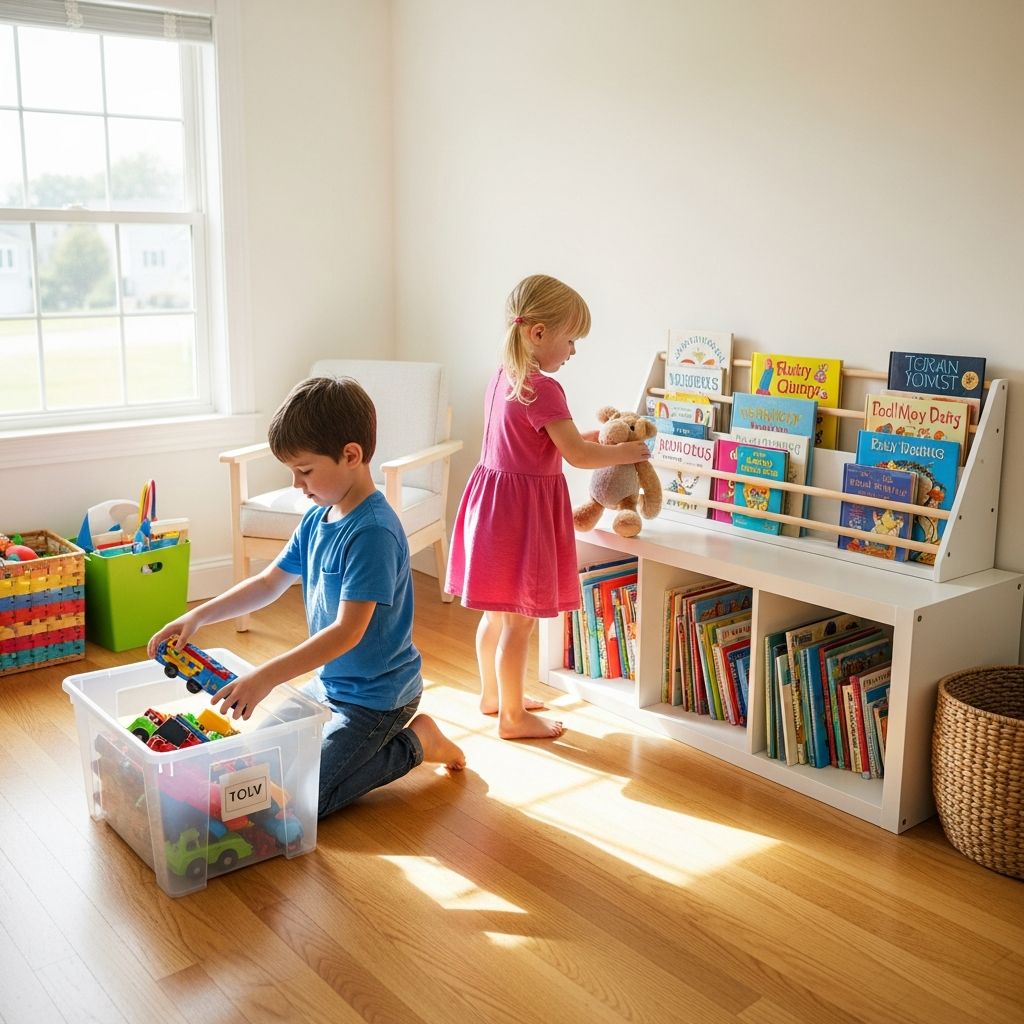
Ensure that storage containers, shelves, and closet rods are positioned at heights your child can easily access without adult assistance. When children must ask for help to put things away or cannot physically reach where items belong, they’re more likely to abandon the effort. Consider your child’s size and developmental stage when organizing their space.
Labeling storage areas with words, pictures, or both helps children understand where specific items belong. Rather than having a generic “toys” box, create distinct containers for action figures, building blocks, stuffed animals, and other categories. This specificity eliminates confusion and reduces the likelihood of items ending up in random locations.
Minimize the total volume of items in your child’s room. Too many possessions make organization exponentially more challenging. Periodically review toys, clothing, and other items, removing those that are broken, outgrown, or no longer used. This seasonal decluttering makes the remaining items easier for children to manage.
Participating Alongside Your Child
While the ultimate goal involves children cleaning and organizing independently, the path toward that goal typically requires parental participation initially. Working alongside your child during the early phases of learning demonstrates your expectations, teaches proper techniques, and reinforces that organization is a valued family priority.
When you organize together, narrate your actions so your child understands your decision-making process. “I’m putting these blocks in the container because they belong together,” or “This shirt is too small, so it goes in the donation box” helps children develop the reasoning skills necessary for independent organization later.
Gradually reduce your involvement as your child demonstrates competence. Begin by organizing half the room while your child organizes the other half. Eventually transition to your child taking the lead while you supervise and provide encouragement. This gradual release of responsibility helps build confidence and independence.
Creating Consistent Routines and Habits
Occasional organization efforts yield temporary results. Sustained improvement comes from establishing consistent routines that become habitual. When organization becomes part of daily or weekly rhythm rather than a one-time event, children develop sustainable habits.
Integrate room organization into your family’s existing routines. This might mean a brief ten-minute tidy-up each morning after getting dressed, a quick pickup before dinner, or a more thorough weekly organization session on Saturday mornings. Consistency reinforces that maintaining organization is an ongoing responsibility rather than an occasional chore.
Some families find success with morning routines that include making the bed before leaving the room. Others prefer evening pickups that ensure the room is ready for the next day. The specific timing matters less than the consistency of the practice.
Using visual reminders like charts or calendars helps children remember when organization time occurs. A checklist posted on the bedroom door or a calendar marking organization days provides external structure that supports habit formation.
Making the Process Engaging Rather Than Punitive
When organization becomes associated with punishment or conflict, children develop negative feelings about the task that persist into adulthood. Conversely, introducing elements of play and positivity can transform organization from a dreaded obligation into an acceptable or even enjoyable activity.
Music provides a powerful tool for making organization more enjoyable. Playing upbeat songs during cleaning time creates a more positive atmosphere and can naturally motivate faster work. Some children enjoy racing against the clock to beat a song’s duration. Others prefer creating a “cleaning playlist” they look forward to during organization time.
Friendly competition can also increase motivation. Offering to work alongside your child and setting a timer to see who can organize their designated section first introduces an element of play. Similarly, allowing siblings to compete or challenge each other to organize can harness their natural competitive instincts productively.
Celebrating progress and completion reinforces positive associations with organization. Acknowledgment might be as simple as a compliment: “You did a great job sorting those toys into the right containers today.” Some families use reward systems where consistent organization earns privileges or small rewards.
Addressing Common Obstacles and Setbacks
Despite best efforts, most families encounter periods where organization lapses or children resist the routine. Understanding common obstacles helps parents respond effectively rather than with frustration.
Resistance often indicates that expectations are too high, the process is too complicated, or the child genuinely doesn’t understand what’s expected. Rather than interpreting resistance as defiance, investigate the underlying cause. Simplifying the process, reducing expectations temporarily, or providing additional instruction often resolves the issue.
Busy family schedules sometimes make maintaining organization routines challenging. Rather than abandoning the practice entirely, parents might streamline expectations during hectic periods. A quick daily pickup followed by a more thorough weekly organization session might replace the original routine temporarily.
Some children naturally struggle with organization due to developmental delays, attention difficulties, or other factors. These children may need additional visual supports, more frequent reminders, or simplified systems to succeed. Recognizing individual differences and adjusting accordingly shows children that you support their success.
Transitioning Toward Independence
The ultimate measure of success involves children maintaining organized rooms with minimal parental reminding or involvement. This transition doesn’t happen overnight but rather through gradual progress over weeks and months.
Begin by reducing the frequency of reminders. If you’ve been reminding your child daily, shift to reminding several times weekly. Eventually, your child should remember organization time independently. Some visual cues like charts or phone reminders can support this transition.
Allow your child to experience natural consequences of skipping organization. If they can’t find a favorite item because the room is disorganized, that experience often provides more powerful motivation than parental nagging. Similarly, if friends refuse to visit because the room is too messy, that social consequence might inspire greater effort.
Frequently Asked Questions
At what age can children begin learning room organization skills?
Children as young as three or four can begin learning simple organization with significant parental guidance. By ages six to eight, children can handle more complex organizational tasks with reminders and some assistance. By the preteen years, most children can manage room organization with minimal parental involvement.
What should I do if my child refuses to organize their room?
Refusal often indicates the task feels overwhelming or expectations aren’t clear. Simplify the process, work alongside your child, and ensure they understand exactly what’s expected. Avoid turning organization into a power struggle. If resistance persists, investigate whether underlying issues like anxiety, attention difficulties, or depression might be contributing factors.
How often should children organize their rooms?
Daily quick tidying combined with a more thorough weekly organization typically maintains order effectively. The specific frequency depends on your child’s age, the number of items in the room, and family preferences. Consistency matters more than frequency.
Should I clean my child’s room for them if they refuse?
Cleaning their room for them teaches that resistance leads to removal of responsibility, which discourages learning. Instead, establish clear consequences and follow through consistently. This might mean restricting screen time until organization is complete or removing privileges until the room meets expectations.
How can I help my child with organization if they have ADHD or other attention challenges?
Children with attention challenges often benefit from simpler systems, more visual supports, frequent reminders, and shorter organization sessions. Breaking tasks into very small steps, using timers, and providing immediate positive feedback all support success. Consulting with your child’s healthcare provider or school for specific recommendations tailored to their needs is valuable.
References
- How to Teach Kids to Clean Their Bedroom — Clean Mama. Accessed February 2026. https://cleanmama.com/how-to-teach-kids-to-clean-their-bedroom/
- Children’s Room Cleaning Checklist — A Step-By-Step Guide — Scary Mommy. Accessed February 2026. https://www.scarymommy.com/parenting/childrens-room-cleaning-checklist
- How to Declutter Your Kid’s Bedroom Like a Pro — Rose Lounsbury. Accessed February 2026. https://roselounsbury.com/declutter-kids-rooms/
- Winning The Battle: How To Get Kids To Clean Their Rooms — This Time of Mine. Accessed February 2026. https://thistimeofmine.com/how-to-get-kids-to-clean-their-rooms/
- 2 Hacks That Make Your Kids Room Easy To Clean — Real Mom Real Solutions. YouTube. July 10, 2021. https://www.youtube.com/watch?v=PlIp6jUaaoI