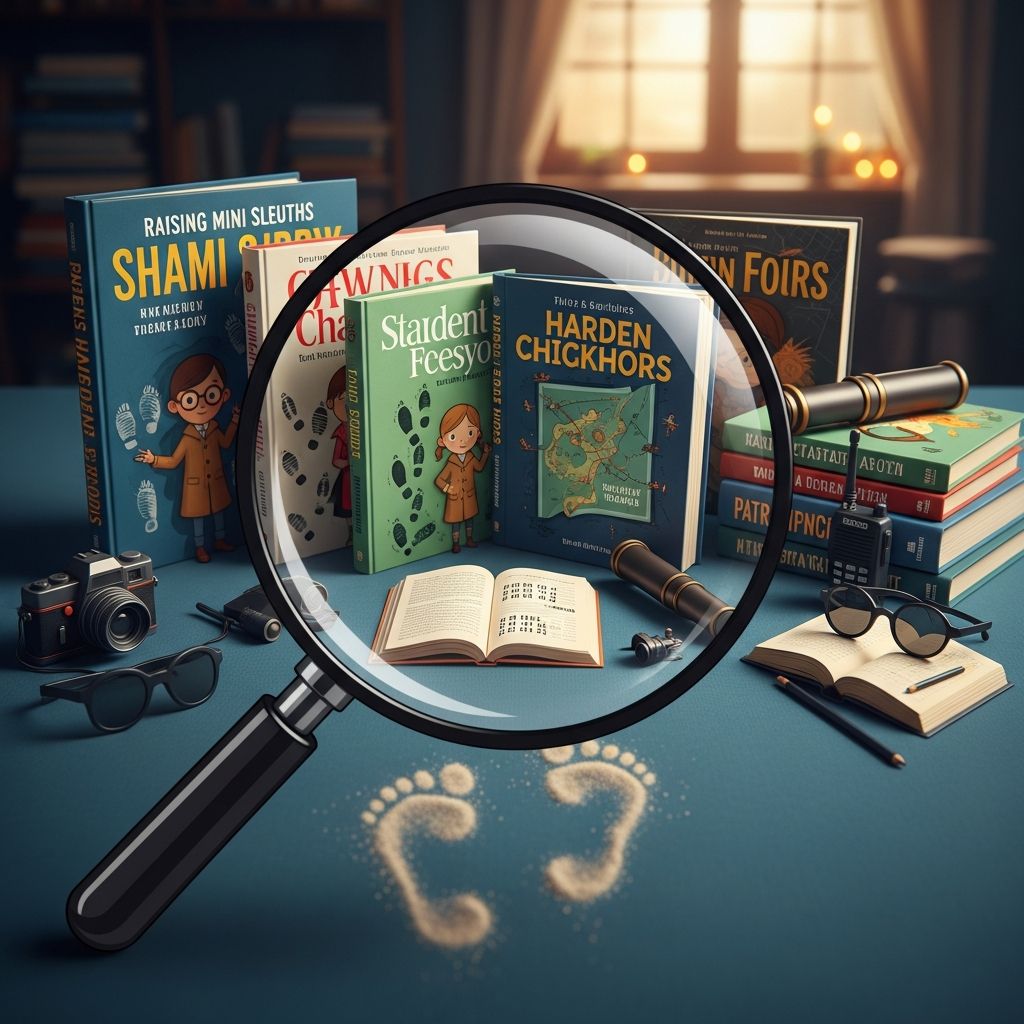
Spy and secret-agent stories tap into something almost every child already has: a natural love for mysteries, secret codes, and sneaking around with a mission in mind. These books are not just fun; they are powerful tools for growing readers who are curious, confident, and eager to turn the page.
Why Spy Stories Hook Young Readers
Children’s spy books offer a perfect mix of mystery, humor, and suspense, wrapped in characters who feel just like them—only with cooler gadgets and more daring adventures. When a child follows a young secret agent on a mission, reading becomes an experience rather than a chore.
- Spy plots are goal-driven, so kids feel a strong urge to see how the mission ends.
- Secrets, codes, and clues invite children to participate actively instead of reading passively.
- High stakes and twists keep reluctant readers engaged longer than more everyday stories.
Skills Children Build Through Secret-Agent Stories
Underneath the disguises and decoder rings, spy-themed books quietly nurture important emotional, social, and cognitive skills. You can use these stories to spark conversations about real-life character traits and decisions.
- Critical thinking: Kids practice connecting clues, predicting outcomes, and questioning what characters assume is true.
- Empathy: When characters go undercover, children consider different perspectives and motives.
- Resilience: Missions rarely go smoothly, so young readers watch heroes adapt, regroup, and try again.
- Ethics and integrity: Spy stories naturally raise questions about honesty, loyalty, and the difference between secrets and lies.
Age-Appropriate Spy Adventures
Almost every age group can enjoy the world of secret missions, as long as the topics and tone match where your child is developmentally. Think of the journey from playful pretend play to more complex thrillers as a gradual climb rather than a sudden jump.
| Age Range | Story Style | Common Themes |
|---|---|---|
| 3–6 years | Picture books with simple “missions” and lots of visual clues. | Finding lost items, silly disguises, friendship, and helping others. |
| 6–9 years | Early chapter books, light mysteries, and humorous detective tales. | Schoolyard secrets, neighborhood puzzles, and teamwork. |
| 9–12 years | Middle-grade spy novels with ongoing storylines and bigger stakes. | International missions, family secrets, codes, and moral dilemmas. |
| 12+ years | More complex thrillers with layered plots and character development. | Identity, trust, double agents, and consequences of choices. |
Types of Spy Books Kids Love
Not all spy narratives feel the same. Some lean into comedy, others are more puzzle-heavy, and some blend history or science with espionage. Understanding these flavors makes it easier to match a book to your child’s personality and interests.
- Cozy junior mysteries: Small, contained puzzles solved by clever kids in familiar settings like schools or neighborhoods.
- Action-driven adventures: Fast-paced plots featuring daring escapes, chases, and high-stakes missions.
- Code-and-puzzle books: Stories that invite readers to crack ciphers, decode messages, and solve riddles along with the characters.
- Historical espionage: Missions set during real events, weaving in history, geography, and culture.
- STEM-infused spy stories: Plots built around gadgets, robotics, coding, or scientific discoveries.
Choosing the Right Book for Your Child
With so many secret-agent stories on shelves, selection matters. The most memorable books are the ones that align with both your child’s reading level and their emotional comfort zone. A story that is too intense or too simple can quickly backfire.
- Check the intensity of danger: Younger readers typically do better with silly or exaggerated peril rather than realistic violence.
- Skim a few pages aloud: Listen for vocabulary that feels challenging but not frustrating.
- Look for relatable heroes: Characters who share your child’s age, fears, or quirks are more likely to inspire and reassure.
- Consider sensitivity to secrecy: If your child is prone to anxiety, avoid plots with betrayal or heavy themes of constant surveillance.
Spy-Themed Reading Rituals for Families
One of the most delightful ways to use spy books is to turn reading itself into a “mission.” With a bit of creativity, storytime can transform into a shared undercover operation that children will beg to continue.
- Create a “family agency” name and assign code names for each person before reading.
- Write the night’s reading goal as a “Top Secret Mission Brief” on a sticky note.
- Pause at a cliffhanger and ask your child to predict what the spy should do next.
- Use whisper voices or “encrypted” notes to share thoughts about characters or clues.
DIY Spy Activities Inspired by Books
After the last page, the fun does not have to stop. Simple, low-cost activities can bring the world of espionage into your living room, reinforcing literacy while your child thinks they are just playing.
- Secret code messages: Invent a simple symbol or number code together and use it to trade messages about everyday tasks.
- Living-room laser maze: Tape string or yarn across a hallway and challenge kids to navigate without touching the “lasers.”
- Spy notebook: Give your child a small notebook for “field notes” on suspicious characters (pets), mysterious sounds, or daily observations.
- Evidence hunt: Hide “clues” around the house that lead to a small treasure or the next book in a series.
Balancing Fun With Values and Boundaries
Because spy stories involve secrets, disguises, and bending rules, they are a natural springboard for important conversations. Reading together allows you to enjoy the excitement while clarifying where the fictional world stops and family values begin.
- Talk about when keeping a secret is fun (a surprise party) and when it is harmful (hiding something dangerous or unsafe).
- Ask your child how the spy could have solved a problem without lying or breaking trust.
- Highlight moments when characters admit mistakes or tell the truth, even when it is difficult.
- Explore the idea that cleverness is best when paired with kindness and responsibility.
Spotlighting Undercover Heroines and Diverse Agents
Spy fiction offers a chance to show children that heroes come in many forms—different genders, backgrounds, family structures, and abilities. When the secret agent on the page looks like them or their friends, kids receive a quiet but powerful message about who gets to be brave and brilliant.
- Seek stories where girls lead missions and use brains, not just bravery, to succeed.
- Look for casts that include characters from multiple cultures and countries, especially in globe-trotting plots.
- Value books that show emotional intelligence—reading people, understanding motives—as a real spy talent.
Reading Challenges: When Missions Go Off Script
Even the most enthusiastic reader can hit a wall. Sometimes a series that started strong becomes overwhelming, or life changes disrupt reading routines. Spy books can help you gently re-engage a drifting reader without pressure or guilt.
- If your child stalls on a long novel, offer a shorter, puzzle-style spy book as a “side mission.”
- For busy weeks, switch to audiobooks on car rides to keep the story alive.
- Invite your child to “brief” you on the last chapter, treating their summary like a debriefing after a mission.
- Let them abandon a book that truly doesn’t fit; choosing the next mission is part of the fun.
Simple Spy-Themed Conversation Starters
Meaningful discussions do not require formal comprehension questions. Casual, playful prompts often lead to deeper thinking and richer family connections. Use these questions during dinner, in the car, or while tucking your little agent into bed.
- “If you had a spy gadget today at school, what would you want it to do?”
- “Which character in the book would make the best real-life friend and why?”
- “When did the spy in the story feel scared or unsure? What did they do about it?”
- “If you were the villain, what would you do differently?”
Quick Reference: Matching Spy Stories to Your Reader
Use the table below as a quick guide when browsing shelves or library lists. Think about which column best matches your child’s current mood, not just their age, and feel free to experiment across categories.
| Reader Type | Look For | Avoid For Now |
|---|---|---|
| Reluctant reader | Short chapters, lots of humor, and visible clues in illustrations. | Dense text with long descriptions and slow build-ups. |
| Highly sensitive child | Cozy mysteries with low-stress tension and happy resolutions. | Realistic violence, kidnappings, or intense betrayals. |
| Thrill-seeker | Fast-paced missions, ticking clocks, and clever escapes. | Stories where nothing much happens for several chapters. |
| Deep thinker | Plots with moral dilemmas, layered motives, and emotional depth. | One-note, purely slapstick adventures. |
SEO-Friendly FAQs About Children’s Spy Books
Are spy-themed children’s books appropriate for young kids?
Yes—when chosen carefully, spy stories can be perfectly suitable for young children and even preschoolers. For this age, focus on light-hearted mystery and simple make-believe missions rather than realistic danger or complex espionage plots.
What age is best to start reading spy books?
Children as young as three or four can enjoy playful, picture-based “secret missions,” especially when adults read aloud with exaggerated voices and gestures. Independent readers often grow into more developed spy stories around ages seven to nine, though every child’s timeline is different.
Can spy stories encourage sneaky behavior?
Spy novels can raise questions about sneaking and lying, which is why guided conversation is important. When you discuss what is fun in fiction versus what is kind and safe in real life, these books become tools for teaching honesty and boundaries rather than promoting mischief.
How can I use spy books to help a reluctant reader?
Spy stories are ideal for reluctant readers because missions naturally create suspense and a sense of purpose. Choose books with short chapters, plenty of dialogue, and obvious cliffhangers, then treat each reading session like a mission your child helps to complete.
Do spy-themed books work well in classrooms or book clubs?
Yes, secret-agent stories are excellent for group reading because they invite discussion, prediction, and collaborative problem-solving. Teachers and group leaders can turn each meeting into a “briefing,” assign roles like code-breaker or clue-tracker, and use the narrative to explore topics such as ethics, teamwork, and global awareness.
How do I balance screen-based spy shows with reading?
Instead of framing books as competition, position them as “classified files” that reveal more about the fictional world kids already know from screens. You can also encourage children to read a chapter before watching an episode or to write their own mission report based on what both formats reveal.
Turning Curiosity Into a Lifelong Mission
Spy-themed children’s books do more than entertain; they provide a safe, imaginative space for kids to experiment with bravery, cleverness, and moral choices. When families treat reading as a shared mission—filled with codes, questions, and quiet moments of reflection—children learn that the most powerful tool any secret agent can carry is a curious, well-read mind.