Preschool is often the first time a child spends long stretches of the day running, climbing, and playing away from home, and the shoes you choose can make that experience easier or harder. The right pair will support healthy foot development, keep your child safe on busy playgrounds, and allow them to put shoes on and take them off independently. This guide walks you through what to look for, what to avoid, and how to make shoe shopping less of a guessing game.
Why Preschool Shoes Matter More Than You Think
In preschool, children are constantly on the move: they sprint indoors, climb outside, and transition through activities all day long. Poorly chosen shoes can contribute to slips, blisters, and frustration, while well-fitted, flexible shoes help them move naturally and comfortably. Preschool is also the stage when many schools have specific shoe rules, so a smart choice keeps both your child and the teacher happy.
Key Features of a Good Preschool Shoe
A great preschool shoe balances comfort, safety, and independence. Instead of focusing first on color or brand, start with how the shoe is made and how it fits your child’s actual foot.
Flexible, Supportive Sole
Preschoolers need shoes that move with their feet rather than fight against them. A sole that is too stiff can change how a child walks, making them more likely to trip or tire out quickly.
- Choose a sole that bends easily at the ball of the foot when you try to flex it with your hands.
- Avoid heavy, overly thick soles that feel like small platforms.
- Look for rubber or similar materials that provide good grip on playgrounds and indoor floors.
Roomy, Rounded Toe Box
Little toes need space to spread out as children run, jump, and grip surfaces. A narrow, pointy front can crowd the toes and lead to discomfort or rubbing.
- Pick shoes with a wide, rounded front that follows the natural shape of your child’s foot.
- Check that your child can wiggle each toe inside the shoe without the top or sides pressing down.
- Skip styles that taper sharply at the front, even if they look cute.
Secure but Comfortable Heel
The heel area should hold the foot in place so it doesn’t slip out, but it should not dig into the skin. A well-designed heel cup keeps the shoe from flopping while still allowing free movement.
- Look for a heel that cups the back of the foot snugly when the straps are fastened.
- Gently pull at the heel when your child is standing; it should not slide off easily.
- A small amount of padding at the heel can prevent rubbing without making the shoe bulky.
Easy, Child-Friendly Closures
Most preschoolers are not ready for laces, and teachers rarely have time to tie them repeatedly. Choosing simple closures encourages independence and helps your child participate more fully in daily routines.
- Choose hook-and-loop straps (often called Velcro), elastic toggles, or simple pull-on designs.
- Aim for closures your child can open and close themselves while seated.
- Avoid long, traditional laces for everyday preschool use, especially if your child cannot reliably tie them.
Getting the Fit Right: A Step-by-Step Check
Size alone is only part of the puzzle; different brands and styles fit differently. Use this simple at-home and in-store checklist to test whether a shoe really fits.
How Much Growing Room Is Enough?
Preschoolers’ feet grow quickly, but buying shoes that are far too large can cause tripping and blisters. Aim for just enough space for growth, not a full size of extra length.
- Have your child stand up fully in the shoe, with their weight evenly on both feet.
- Feel the front of the shoe: there should be roughly the width of an adult thumb between the longest toe and the end.
- Check again after your child has walked in them; feet can slide forward slightly in motion.
Length, Width, and Depth
All three dimensions affect comfort. A shoe can be technically long enough but still too tight in width or too shallow over the toes.
- Length: Toes should not press the front; there should be a small, consistent gap.
- Width: The sides of the shoe should touch the foot but not squeeze it or bulge out.
- Depth: The top of the shoe should not press down onto the toenails or create rubbing points.
Simple At-Home Fit Test
Use this quick method to decide whether to keep or return a new pair of shoes. It only takes a few minutes and can save you from surprise blisters later.
- Have your child stand in the shoes on a flat surface, wearing the socks they’ll use for preschool.
- Press gently at the front to locate the longest toe and feel for space.
- Slide a finger down the back of the heel; it should fit snugly but not too tightly.
- Watch your child walk, turn, squat, and run a few steps; look for tripping, heel slippage, or reluctance.
Common Preschool Shoe Styles: Pros and Cons
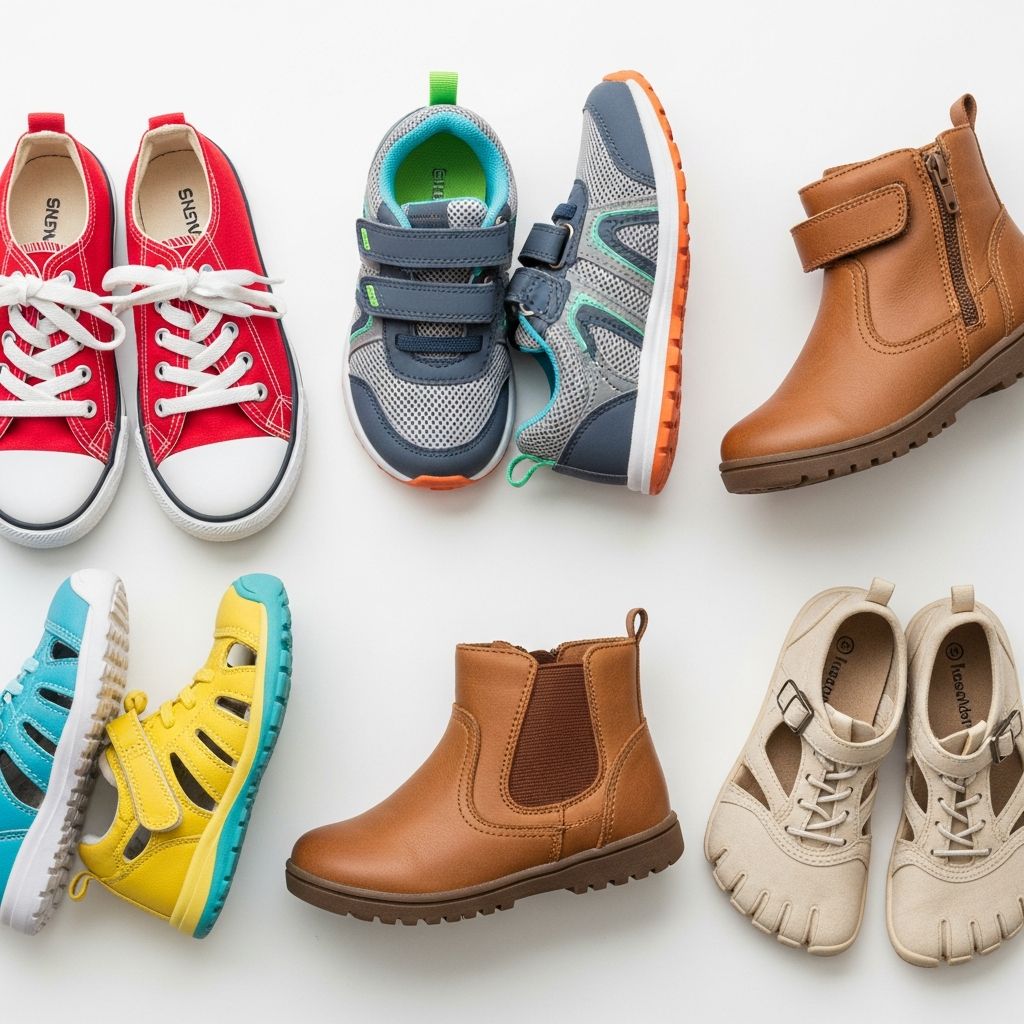
Different shoe types work better for different activities and climates. Most families find that a small rotation of two to three pairs covers daily preschool life.
| Type | Best For | Advantages | Potential Drawbacks |
|---|---|---|---|
| Closed-toe sneakers | Daily preschool wear, playground time | Good protection, stable sole, easy to run and climb | Can get warm in hot weather if not breathable |
| Sporty Mary Jane or strap shoe | Indoor play, casual outings | Lightweight, easy on and off, often more flexible | Some styles may slip off if strap is too loose |
| Low boots | Cooler weather, outdoor play in fall | Extra coverage, good for damp or chilly days | Can be harder for some children to pull on alone |
| Water-friendly shoes | Water play areas, splash pads (if school allows) | Dry quickly, protect feet from hot surfaces | Some designs lack support or can become slippery inside |
Shoes and Preschool Rules
Many preschools have dress codes that touch on footwear. These rules are usually about safety and independence rather than style, so it helps to read them closely before shopping.
- Some programs do not allow sandals, flip-flops, or open-toe shoes for safety on climbing equipment.
- Others discourage laced shoes unless the child can reliably tie them, to prevent trips and save teacher time.
- Check whether water shoes, boots, or special indoor shoes are required for certain seasons or activities.
Independence: Shoes Kids Can Manage Themselves
Preschool is a big step toward self-care skills, and footwear is a daily chance to practice. Shoes that children can handle themselves make transitions smoother for everyone.
Features That Help Kids Help Themselves
- Wide openings that make it easy to slide feet in.
- Single or double hook-and-loop straps instead of multiple tiny fasteners.
- Pull loops at the back of the heel to give kids something to grip.
- Clear left/right markings inside (some brands print pictures or color codes).
Simple Ways to Teach Shoe Skills
Even the best-designed shoe still takes practice. Building shoe routines into play at home helps children feel proud and capable.
- Practice putting shoes on while sitting on a low bench or step for stability.
- Use a fun rhyme or game to help them check that the strap is pulled snugly, not hanging loose.
- Let your child help choose colors or patterns so they feel more invested in wearing the shoes.
Materials, Breathability, and Durability
Preschool shoes work hard: they face sand, paint, mud, and repeated washing. The materials you choose can affect how comfortable the shoes feel and how long they last.
Upper Materials
The upper part of the shoe should let air flow and bend easily while still holding up to daily abuse. Both natural and synthetic options can work if they are well made.
- Leather and canvas often mold well to the foot and can be quite durable.
- Mesh panels increase airflow, which helps keep feet cooler and drier.
- Avoid very stiff or plastic-like materials that crease sharply over the toes.
Inside the Shoe: Lining and Insole
The inside surface touches your child’s skin all day, so it should be soft and absorbent. A good insole gently cushions without creating a thick, unstable platform.
- Look for smooth seams or padding that prevents rubbing on the heel and sides.
- Choose insoles made from absorbent materials, especially if your child tends to have sweaty feet.
- Most preschoolers do not need rigid arch supports unless advised by a pediatric specialist.
How Many Pairs Does a Preschooler Really Need?
It is easy to end up with a closet full of shoes that barely get worn, but preschoolers truly need only a few reliable pairs. Think in terms of roles, not fashion outfits.
- One main pair of everyday sneakers with closed toes and good grip.
- One secondary pair, such as a slightly dressier strap shoe or casual sneaker.
- One seasonal or specialty pair if needed, such as rain boots or water shoes (follow school policy).
Dealing With Growth Spurts
Children’s feet can change quickly, especially during preschool years. Building a habit of checking size regularly can prevent discomfort before it starts.
- Inspect shoes every month or two for signs of wear at the toes or edges.
- Ask your child if anything feels tight, rubs, or hurts after a playground session.
- Look for red marks, blisters, or calloused spots when you remove their shoes and socks.
Shopping Tips for Less Stress and Better Choices
Shoe shopping with a preschooler can be chaotic, but a bit of planning goes a long way. Timing and preparation often matter as much as the brand you choose.
Before You Go to the Store
- Measure your child’s feet at home or in-store, including both length and width.
- Bring the type of socks your child will wear to preschool, not extra-thick or extra-thin ones.
- Try to shop later in the day when feet may be slightly larger from normal activity.
In the Store or At Home (If Ordering Online)
- Limit the number of pairs you try to a few strong options to avoid overwhelming your child.
- Let your child walk around on different surfaces: carpet, hard floor, and, if allowed, a short step.
- If ordering online, read return policies carefully and test the shoes indoors before committing.
Frequently Asked Questions About Preschool Shoes
How often do preschoolers usually need new shoes?
Many preschoolers need new shoes every few months, although this varies with growth rate and how hard they are on footwear. The best signs that it is time for a new pair are cramped toes, visible wear at the sole or toe, or complaints of discomfort.
Are sandals okay for preschool?
This depends on school rules and the sandal design. Many programs do not allow open-toe or backless sandals for safety reasons, and even allowed styles should have a closed toe, secure straps, and a flexible, non-slip sole.
Should I buy shoes a size too big so they last longer?
Buying shoes that are much too large can cause tripping and awkward movement, so it is safer to aim for a small amount of extra space instead of a full size up. Well-fitted shoes with modest growing room are usually more comfortable and safer than oversized ones that “they’ll grow into.”
Do preschoolers need special supportive insoles?
Most healthy children do well in flexible, well-fitting shoes without extra rigid supports. If you are concerned about your child’s foot shape, frequent tripping, or complaints of pain, consult your pediatrician or a pediatric foot specialist rather than adding inserts on your own.
Is it okay for preschoolers to go barefoot sometimes?
In safe, clean indoor environments, occasional barefoot time can help develop balance and strength. For preschool, however, closed-toe shoes are typically required to protect feet from hard surfaces, dropped toys, and playground equipment.
Bringing It All Together
The best preschool shoes are the ones that your child can run, jump, and play in without thinking about their feet at all. When in doubt, prioritize flexible soles, a roomy toe box, secure closures, and a fit that allows a bit of growth without turning your child’s feet into passengers in oversized boats. With a small rotation of well-chosen pairs, you can support healthy development, satisfy school rules, and make your preschooler feel confident every time they step into class.