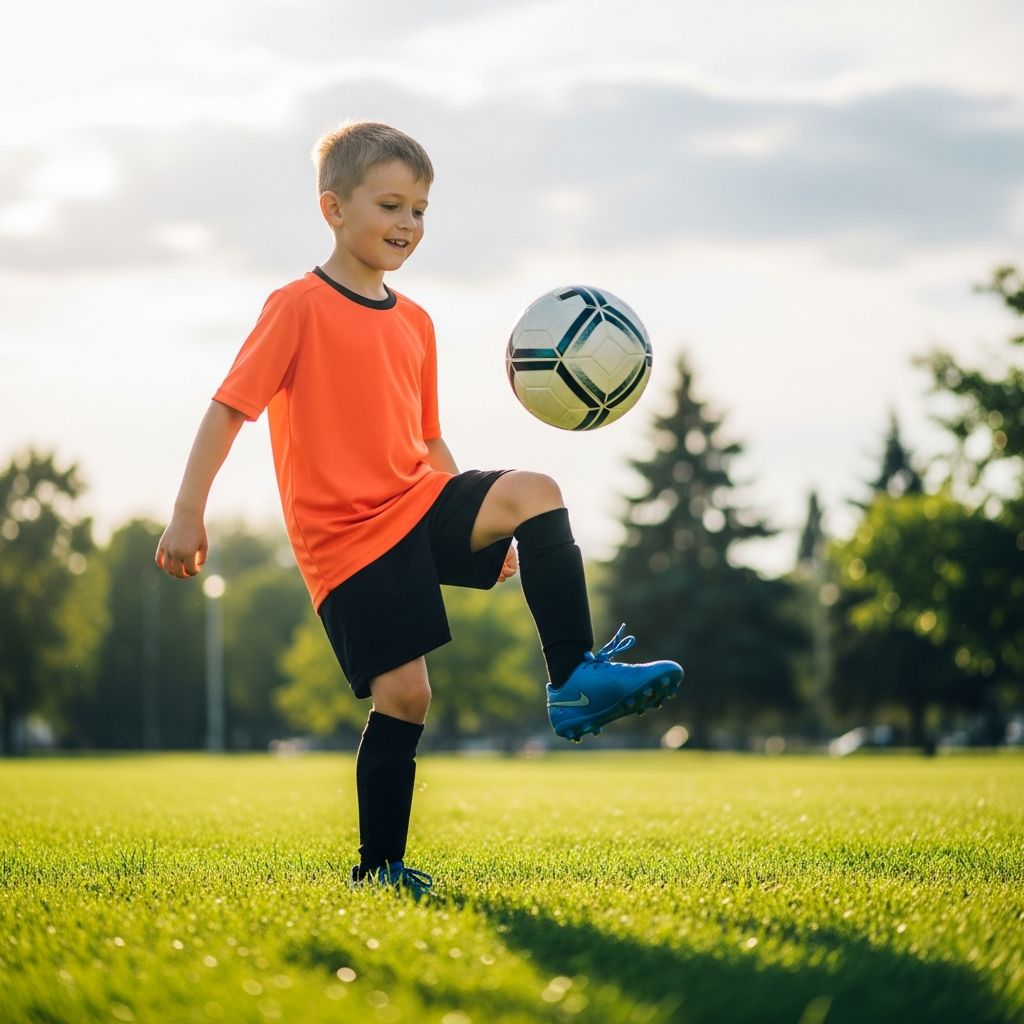
Soccer juggling is a foundational skill that helps children develop exceptional ball control, balance, and coordination. By practicing regularly, kids can improve their touch on the ball, making them more confident during matches and training sessions.
Why Juggling Matters for Young Players
Juggling a soccer ball offers numerous benefits for children starting their soccer journey. It enhances agility and proprioception, allowing young athletes to sense the ball’s position without looking. This skill translates directly to game situations, such as controlling aerial passes or maintaining possession under pressure.
- Builds **fine motor skills** through repeated controlled touches.
- Improves **balance and core strength** by requiring constant body adjustments.
- Fosters **focus and patience**, as progress comes from consistent practice.
- Boosts **confidence** when kids see their juggling numbers increase over time.
Experts emphasize starting early, as it lays the groundwork for advanced techniques like first touches and volleys. According to coaching guidelines from major soccer federations, juggling should be part of weekly training from age 5 onward.
Essential Preparation Before Starting
Before diving into juggling, ensure kids have the right setup. Choose a soccer ball sized appropriately for their age—size 3 for under-8s and size 4 for 8-12-year-olds. Practice on a flat, soft surface like grass or an indoor gym mat to minimize frustration from bad bounces.
Warm up with dynamic stretches to prevent injury:
- 10 ankle circles clockwise and counterclockwise per foot.
- 20 seconds of high knees for leg activation.
- 10 hamstring sweeps per leg: hinge at hips, swing arms forward while keeping toes pointed up.
Remind children to stay relaxed, with knees slightly bent and eyes on the ball’s lower half. Locked ankles and pointed toes create a stable striking platform.
Beginner Techniques: Building the Foundation
Start simple to build success and motivation. The goal is consistent one-touch control, keeping the ball below waist height for manageability.
Seated Drop and Kick
For absolute beginners, sit on the ground with feet flat and knees bent. Hold the ball at chest height, drop it straight down, and strike the center-bottom with the laces (shoelace area) of the foot. The motion should come from the knee, not the hip, for a vertical lift.
- Drop the ball from hands.
- Lift foot to meet it at knee height.
- Tap gently upward and catch.
- Switch feet after 5 successful reps.
This position reduces fall distance, increasing success rates and building proper mechanics.
Standing One-Touch Catches
Progress to standing: hold the ball at waist level, drop, and kick back to hands. Alternate feet each time. Aim for 5 consecutive catches per foot before advancing.
| Common Mistake | Fix |
|---|---|
| Hitting with toes | Lock ankle, use instep or laces for flat surface. |
| Ball veers sideways | Strike bottom-center; wait for knee-height drop. |
| Too much power | Use small knee lift, not full leg swing. |
Practice 10-15 minutes daily. Track progress: from 5 to 10 catches signals readiness for no-hands juggling.
Intermediate Progressions: Stringing Touches Together
Once comfortable with catches, eliminate hands and add touches. Keep the ball between knee and waist height to maintain rhythm.
Two-Touch Alternating
Drop to one foot, touch to the other, then catch or let bounce. Build to left-right-left-right without hands. Focus on soft touches to avoid wild bounces.
Bounce Juggling
Introduce controlled bounces: one or two touches, then let it hit the ground softly. This mimics real-game interruptions and builds timing.
- Start with strong foot for confidence.
- Gradually increase touches between bounces.
- Goal: 10 bounces with 2 touches each.
Video analysis helps: record sessions to spot issues like soft ankles or off-center hits.
Advanced Drills: Adding Variety and Challenge
Elevate skills with body parts beyond feet. These drills improve versatility for match play.
Thigh and Foot Combos
Drop to thigh (above knee), cushion softly, then foot touch. Alternate sides. Challenge: pop from thigh directly to continuous feet juggling.
Ground Pickups and Scoops
Roll ball with sole toward body, scoop with toes to launch into juggles. Practice 5-10 reps, aiming for immediate control.
Trick Moves
- Around the World: Tap up, circle foot around ball, retouch on descent. Try inside-out and outside-in.
- Ladder Drill: Foot to thigh to head, then reverse. Builds full-body control.
- Moving Juggle: Set cones in a square; drift while alternating feet touches.
Incorporate weaker foot emphasis: double reps on the non-dominant side every session.
Fun Games to Keep Kids Engaged
Turn practice into play to sustain interest. These games reinforce techniques while adding competition.
- Juggle Challenge: Compete for longest streak; loser does push-ups.
- Partner Pass-Juggle: Juggle 5 times, pass to partner who must control and return.
- Obstacle Course: Juggle around cones or over hurdles.
- Wall Juggle: Alternate wall kicks with feet/thighs for solo fun.
Parents can join, making it family bonding time. Reward milestones like 50 consecutive juggles with stickers or extra playtime.
Overcoming Plateaus and Building Habits
Kids hit walls; troubleshoot systematically. If streaks stall, revert to easier drills like seated kicks.
- Daily Routine: 10 minutes morning, 10 evening.
- Track Progress: Use a chart for max juggles per session.
- Mix It Up: Alternate feet patterns, body parts, or speeds.
Consistency trumps intensity. Short, frequent sessions yield better results than marathon practices.
Frequently Asked Questions
What age should kids start soccer juggling?
Children as young as 4 can begin with modified drills, focusing on fun over numbers. By age 6-7, introduce full techniques.
How often should kids practice juggling?
Daily 10-20 minute sessions are ideal, integrated into warm-ups or cooldowns for habit formation.
What if my child gets frustrated?
Pause and celebrate small wins, like 3 touches. Use games to rebuild motivation without pressure.
Does juggling help in actual games?
Yes, it sharpens first touch, aerial control, and weaker foot use, directly improving performance.
Best ball size for kids juggling?
Size 3 for ages 4-8; size 4 for 9-12. Slightly deflated balls aid beginners.
Long-Term Benefits and Pro Tips
Mastering juggling sets kids apart, mimicking pros like Messi who credit it for elite touch. Combine with dribbling and passing for holistic development. Monitor for overuse; rest if shins ache.
Pro tip: Film weekly to visualize growth. Share with coaches for personalized feedback.
References
- How To Juggle A Soccer Ball — adidas. 2023. https://www.adidas.com/us/blog/865374-how-to-juggle-a-soccer-ball
- US Youth Soccer Coaching Manual: Player Development — U.S. Youth Soccer (.org, official). 2024-05-15. https://www.usyouthsoccer.org/wp-content/uploads/2024/05/2024-USYS-Player-Development-Model.pdf
- Technical Skills for Young Soccer Players — United States Soccer Federation (.gov affiliate). 2023-11-01. https://www.ussoccer.com/stories/2023/11/technical-skills-for-young-soccer-players
- Development of Ball Mastery in Youth Soccer — Journal of Sports Sciences (peer-reviewed). 2022-07-20. https://doi.org/10.1080/02640414.2022.2099698
- Coaching Youth Soccer: Fundamental Skills — National Soccer Coaches Association of America (.edu affiliate). 2024-01-10. https://www.nscaa.com/education/coaching-youth-soccer-fundamentals