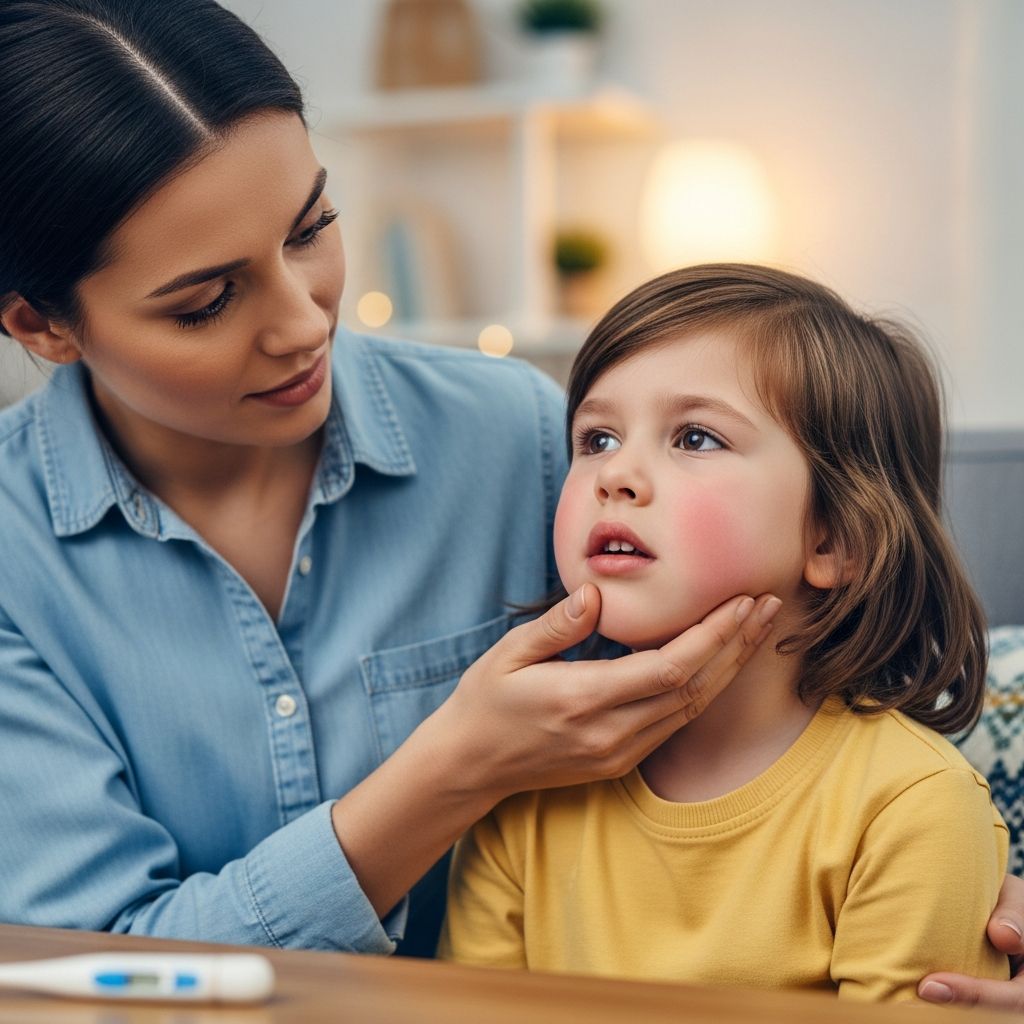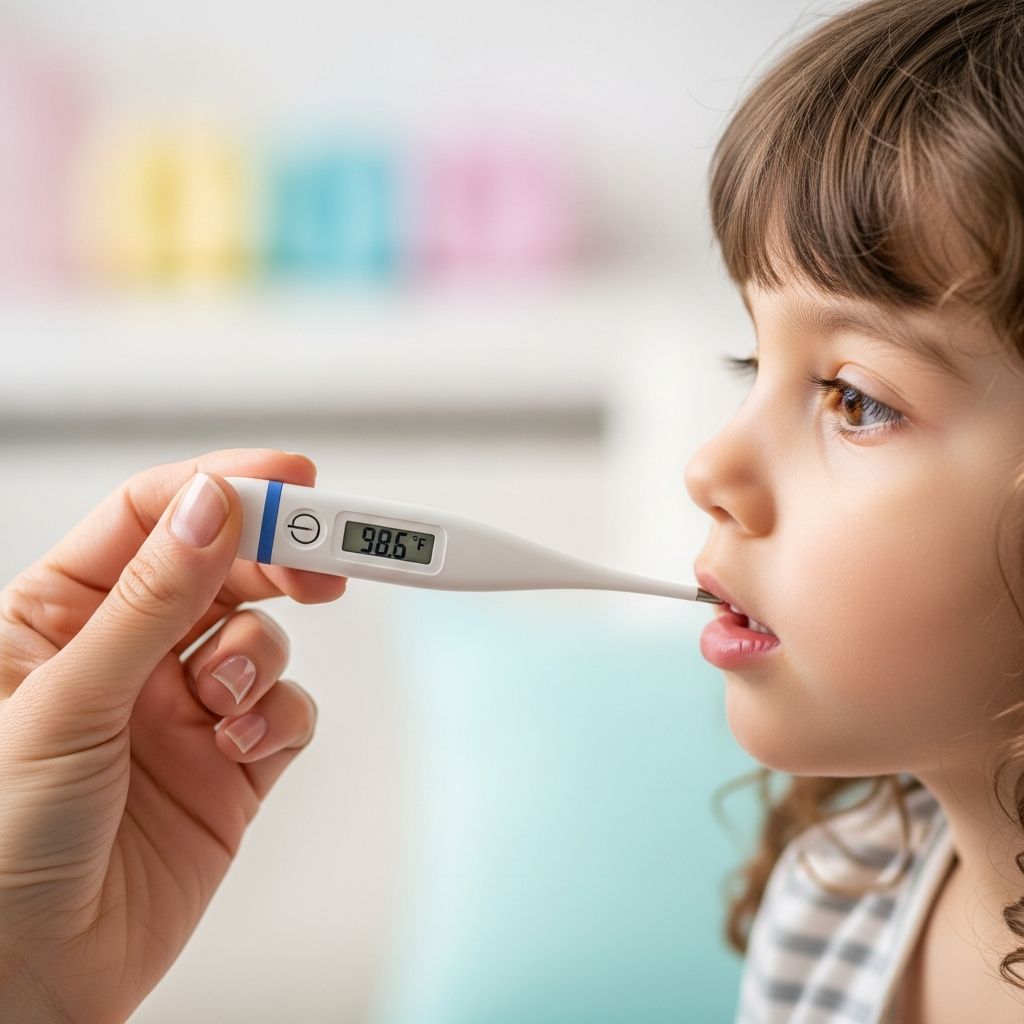
Knowing how to check your child’s temperature by mouth can help you decide when to call the doctor, when to give fever medicine, and when simple home care is enough. This guide explains, in clear parent-friendly language, how to use an oral thermometer safely and correctly, what the numbers mean, and when to seek medical advice.
Why Oral Temperature Matters
An accurate temperature reading is one of the key signs doctors use to understand how sick a child may be. You can measure temperature at several places on the body (mouth, rectum, armpit, ear, or forehead), but the reading changes depending on where you measure.
- Oral (mouth) temperatures are widely used for older children and adults and are generally considered reliable when done properly.
- Rectal temperatures are often a bit higher and are considered the most accurate way to check for fever in young children and babies.
- Armpit, ear, and forehead temperatures are convenient but can be slightly lower or less consistent than oral or rectal readings.
For school-age kids who can follow directions, taking the temperature by mouth is often the easiest and least stressful option.
When Is Oral Temperature the Right Choice?
Oral temperature is not always the best method for every child or every situation. Consider your child’s age, health, and ability to cooperate.
Good candidates for oral temperature
- Children who are typically 4–5 years or older and can understand instructions.
- Kids who can keep their mouth closed around the thermometer without biting.
- Children who are breathing comfortably through the nose.
- Situations where you need a fairly quick, reasonably accurate reading at home.
When to avoid the oral method
- Your child is younger than 4 years, or cannot follow simple directions.
- Your child is coughing often, vomiting, or breathing mostly through the mouth.
- Your child has mouth pain, sores, recent dental work, or jaw surgery.
- Your child just had a hot or cold drink, food, or chewing gum and you cannot wait the needed time before measuring.
- In an emergency or in a very young child where the doctor has specifically requested a rectal reading.
Understanding Normal and Fever Temperatures
Body temperature is not the same for everyone, and it changes throughout the day. Still, there are common ranges that help you decide when a child likely has a fever.
| Measurement site | Typical normal range | Common fever threshold | Notes |
|---|---|---|---|
| Oral (mouth) | About 96.4–99.1 °F (35.8–37.3 °C) | Around 100.4 °F (38 °C) or higher is often considered fever | Average oral temp is about 98.6 °F (37 °C). |
| Rectal | Usually slightly higher than oral | 100.4 °F (38 °C) or higher commonly used as fever definition | Best reflects core body temperature. |
| Armpit (axillary) | Often 0.5–1.0 °F (0.3–0.6 °C) lower than oral | Fever threshold is less certain; discuss with your doctor | Often the least accurate site. |
Some research shows that oral readings can be about 1 °F lower than rectal temperatures, and may miss some fevers if you only look at a single cutoff value. Because of this, always describe to your child’s clinician both the number and the body site where you measured.
Choosing the Right Thermometer for Oral Use
Modern thermometers come in several types. For children, digital devices are preferred over old glass mercury thermometers for both safety and accuracy.
Common thermometer types for oral readings
- Digital stick thermometers
- Small, handheld devices with a metal tip and digital screen.
- Often color-coded (for example, blue for oral use) in hospitals and clinics.
- Can be used orally, and in some cases rectally or under the armpit, depending on instructions.
- Infrared ear or forehead thermometers
- Measure heat from the eardrum or skin.
- Usually not designed for use in the mouth.
- Useful alternatives when a child cannot cooperate with oral or rectal measurement.
Always read the manufacturer’s instructions so you know exactly which sites are approved and how to switch between them if the thermometer allows more than one location.
Getting Ready: Before You Take the Temperature
A few simple steps can improve accuracy and keep your child safe and comfortable.
1. Prepare the thermometer
- Make sure the device is clean. Wash the tip with cool soapy water or wipe with alcohol, then rinse and dry.
- If your thermometer uses disposable probe covers, place a new cover on the tip without touching the part that goes in the mouth.
- Confirm the thermometer is set to oral mode if it has multiple modes.
- Check that the battery level looks adequate and the display is working.
2. Check your child’s recent activity
- Wait at least 20–30 minutes after your child has smoked (for teens), eaten, or had a hot or cold drink before taking an oral temperature.
- Wait at least 1 hour after a hot bath or heavy exercise, which can temporarily raise body temperature.
- Avoid measuring right after your child comes inside from extreme heat or cold—allow a few minutes to adjust to room temperature.
3. Explain the process to your child
- Use simple, calming language: for example, “I’m going to gently put this under your tongue to see how warm your body is.”
- Practice with a pretend “open, close, and breathe through your nose” routine before using the actual thermometer.
- Reassure your child that it won’t hurt and that it only takes a short time.
Step-by-Step: How to Take an Oral Temperature
Follow these steps each time to help ensure a reliable reading.
- Seat your child safely. Have your child sit upright, either on your lap or in a chair. Avoid lying flat, which can make it harder to keep the thermometer in place.
- Turn on the thermometer. Wait for any ready signal (such as a beep or symbol on the screen).
- Position the thermometer tip.
- Ask your child to open the mouth.
- Gently place the tip of the thermometer under the tongue, toward the back, slightly off to one side in the pocket next to the tongue. This area is close to a blood vessel that reflects body temperature well.
- Close the lips gently. Ask your child to close their mouth and keep the lips sealed around the thermometer without biting it.
- Ask your child to breathe through the nose. Breathing through the mouth can cool the tip and lead to a falsely low reading.
- Hold the thermometer steady. You may gently support the thermometer with your fingers under your child’s chin or by holding the handle, being careful not to move it.
- Wait for the signal. Most digital thermometers beep when they have finished measuring. Oral readings typically take around 30–60 seconds, but times vary by device.
- Remove and read the temperature. Take the thermometer out carefully and read the displayed number immediately.
- Record the result. Note the temperature, the method (oral), and the time of day. This information is helpful if you contact your child’s clinician.
- Clean the thermometer again. After use, clean the tip in cool soapy water or with alcohol, then rinse and dry. Throw away any disposable cover.
Avoiding Common Mistakes
Even a high-quality thermometer can give misleading results if used incorrectly. These are some frequent errors and how to prevent them.
- Measuring too soon after food or drink
- Cold beverages can lower the reading.
- Hot drinks or soup can raise it.
- Always wait the recommended time before measuring.
- Placing the tip in the front of the mouth
- Readings taken under the tongue but too far forward may be lower than the true temperature.
- Aim for the back, side pocket under the tongue.
- Allowing the child to talk or open the mouth
- Talking, laughing, or mouth breathing lets cooler air in.
- Remind your child to stay quiet and keep their lips gently closed.
- Switching sites with the same thermometer without cleaning
- If your thermometer is used rectally, do not use it orally unless the manufacturer instructs exactly how to convert and clean it.
- Many families choose to keep separate thermometers for mouth and rectum for safety and hygiene.
- Ignoring the instructions
- Different brands may have slightly different techniques or timing.
- Always read and follow the package insert that comes with your thermometer.
How Reliable Is an Oral Temperature?
When done correctly, oral temperature is generally considered accurate for older children and adults. However, research comparing oral readings with rectal temperatures (a closer reflection of core body heat) finds that oral measurements are often a bit lower and may miss some fevers.
What this means for parents:
- A single oral reading slightly below a “fever line” does not always rule out a fever, especially if your child looks or acts very ill.
- Always describe to the doctor how you measured the temperature and what the reading was.
- If your child is very young, has a serious medical condition, or your clinician requests it, you may be advised to use a rectal thermometer instead.
When to Call the Doctor
Fever is only one sign of illness. How your child looks and behaves is just as important as the exact number on the thermometer. The thresholds below are general ideas; always follow advice from your child’s own clinician.
- Call your child’s health care provider or seek urgent care if:
- Your baby is under 3 months old and you think they have a fever, no matter the number or method.
- Your child has an oral temperature that is around 100.4 °F (38 °C) or higher and also looks very sick, unusually sleepy, or hard to wake.
- Fever lasts for several days or keeps coming back.
- Your child has trouble breathing, a stiff neck, a seizure, a rash that does not fade when pressed, or other concerning symptoms.
- Share details when you call:
- The highest temperature you recorded.
- Whether you measured it orally, rectally, under the arm, etc.
- When you last gave any fever medicine.
If your child has a known chronic condition or has been instructed by a specialist to seek care at a particular temperature, follow that personalized plan.
Comfort and Safety Tips for Parents
Beyond getting a number, you also want the experience to be calm and safe for your child.
- Stay calm yourself. Children often mirror a parent’s worry. Use a relaxed tone and gentle touch.
- Practice when your child is well. Showing your child the thermometer and doing a pretend temperature check on a healthy day can make the real thing less scary.
- Never leave a young child alone with a thermometer in their mouth, even for a short time.
- Store thermometers safely out of reach and use battery covers that are hard for small children to open.
- Use non-medical comforts too: fluids, light clothing, a cool room, and quiet activities can help a child with fever feel better while you monitor their temperature.
Frequently Asked Questions (FAQs)
Q1: At what age can I start taking my child’s temperature by mouth?
Most children can handle an oral thermometer around 4–5 years of age, when they can follow instructions to keep their mouth closed and avoid biting. Younger children usually do better with rectal, ear, forehead, or underarm readings, depending on what your child’s health care provider recommends.
Q2: My child’s oral temperature is 99 °F (37.2 °C). Is that a fever?
Not necessarily. Normal oral temperatures can range from about 96.4–99.1 °F (35.8–37.3 °C). Mildly higher numbers can still be normal, especially later in the day or after activity. Many health professionals use around 100.4 °F (38 °C) as a general oral fever cutoff, but they also consider how your child looks and acts.
Q3: The ear thermometer shows a different number than the oral thermometer. Which is right?
Different sites on the body give different readings, and there is not a perfect one-to-one match between them. Rectal temperature is often treated as closest to core body temperature, while oral is slightly lower and ear or forehead can vary. The most important thing is to be consistent with the method you use, write it down, and share both the number and the method with your child’s clinician.
Q4: How often should I recheck my child’s temperature?
In many situations, checking every 4–6 hours when your child is awake and seems warm is enough. You may check more often if your child’s condition is changing quickly, if your doctor has given specific instructions, or right before giving fever-reducing medicine. Constantly checking every few minutes is usually not helpful and can increase anxiety.
Q5: Does a higher fever always mean a more serious illness?
No. Some minor viral infections can cause high fevers, while some serious infections cause only mild temperature changes. Clinicians pay close attention not only to the number on the thermometer, but also to your child’s breathing, alertness, eating, drinking, and other symptoms. Use the oral thermometer as one tool among many to understand how your child is doing, and always seek medical advice if you are worried.
References
- Oral and tympanic membrane temperatures are inaccurate to detect fever in emergency department adults — Kelly AM, et al., Emerg Med Australas. 2011-12-01. https://www.ncbi.nlm.nih.gov/pmc/articles/PMC3236177/
- How to Get an Accurate Temperature Measurement — American Diagnostic Corporation (ADC). 2023-05-01. https://www.adctoday.com/blog/how-get-accurate-temperature-measurement
- Oral Temperature – Vital Sign Measurement Across the Lifespan — BCcampus OpenEd. 2020-01-15. https://opentextbc.ca/vitalsignmeasurement/chapter/oral-temperature/
- Temperature Measurement — UF Health. 2022-06-10. https://ufhealth.org/conditions-and-treatments/temperature-measurement
- Fever Temperatures: Accuracy and Comparison — MyHealth.Alberta.ca. 2021-09-01. https://myhealth.alberta.ca/Health/pages/conditions.aspx?hwid=tw9223
- Thermometers: Understand the options — Mayo Clinic Staff. 2023-03-18. https://www.mayoclinic.org/diseases-conditions/fever/in-depth/thermometers/art-20046737