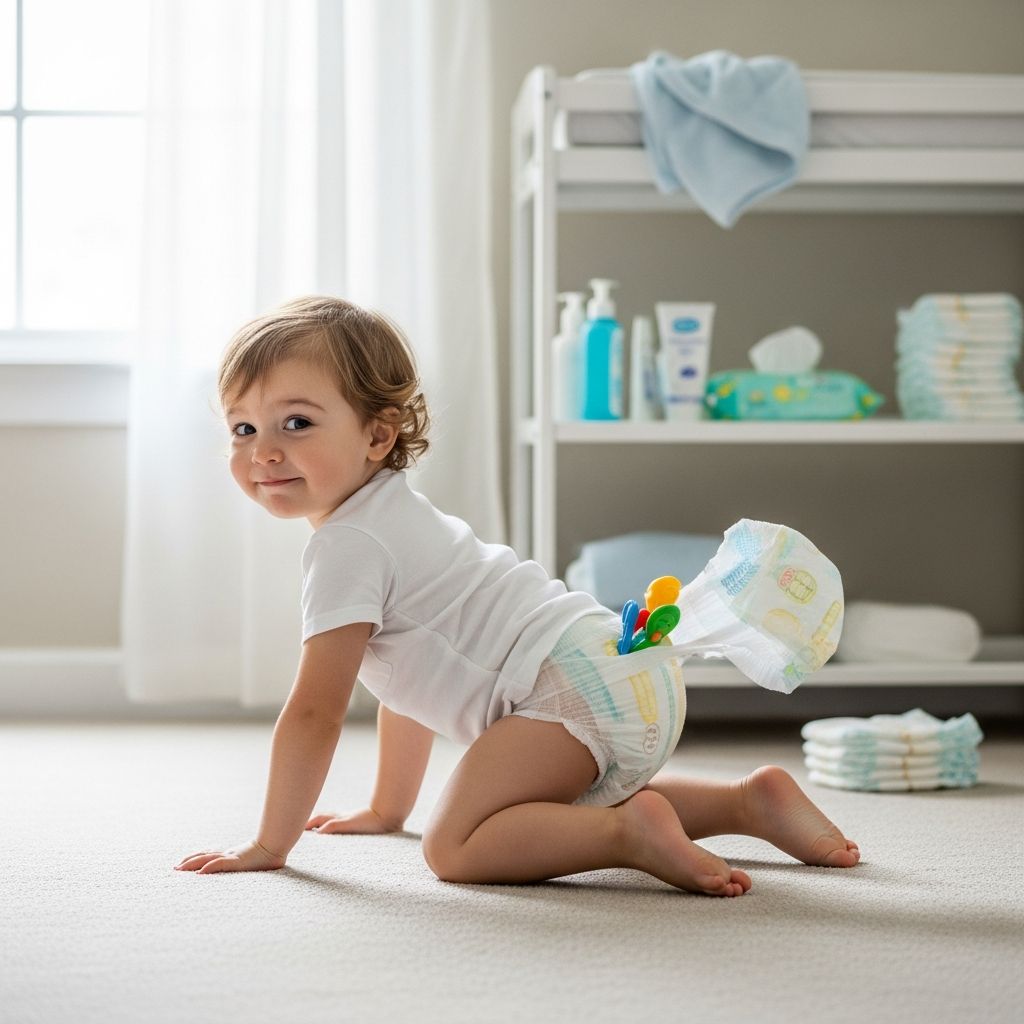
Walking into your toddler’s room and finding a naked child, a discarded diaper, and a mess on the crib or floor can make even the calmest parent want to scream. This phase is very common, rarely a sign that anything is “wrong,” and with some planning you can usually reduce both the frequency and the drama.
This guide explains why toddlers strip off their diapers, how to respond safely, and which practical strategies can help you get through this stage with less mess and more sanity.
Why Toddlers Take Their Diapers Off
Toddlers are not trying to ruin your life. Their diaper-ditching behavior usually has understandable reasons behind it.
- Curiosity about their body: Around 1–3 years, children naturally become more aware of their bodies and may want to touch, see, and explore without a diaper in the way.
- Discomfort or irritation: A wet or soiled diaper, a too-tight waistband, or a rash can make a toddler desperate to get the diaper off.
- Temperature issues: Being too hot or too cold can make diapers feel extra annoying.
- Desire for control: Toddlers have very little control over their lives. Removing a diaper is one thing they can control, so it can become a power struggle.
- Attention and reaction: If stripping the diaper off reliably gets a big, dramatic reaction from adults, some toddlers will repeat it for the attention.
- Early potty awareness: Some toddlers start disliking the feeling of peeing or pooping in a diaper, which can overlap with emerging readiness for toilet training.
Understanding the “why” helps you choose strategies that address the root cause instead of just battling the behavior.
Safety and Hygiene Come First
Before focusing on long-term fixes, protect your child and your home from health risks when those surprise diaper escapades happen.
- Handle poop safely: Clean and disinfect all contaminated surfaces to reduce the spread of germs like norovirus and E. coli.
- Protect little hands: Gently but firmly remove your child from the mess, wash their hands thoroughly with soap and water, and avoid letting them touch their face while you clean.
- Use child-safe cleaning products: Keep stronger disinfectants out of reach and follow label directions for safe use.
- Stay calm in the moment: You can feel frustrated without turning cleanup into a big emotional explosion. Big reactions can accidentally reinforce the behavior.
Once everyone is clean and the area is disinfected, then you can think about your longer-term game plan.
Check for Comfort and Health Issues
Sometimes the simplest fixes make the biggest difference. Start by asking whether the diaper itself is the problem.
- Check the fit: A diaper that is too small, too tight, or rubbing can make your child desperate to remove it. A snug but not tight fit is important to avoid leaks and discomfort.
- Look for rashes or irritation: Redness, bumps, or broken skin can make a diaper feel unbearable. Use a barrier cream as recommended by pediatric guidance and change diapers promptly.
- Try a different brand or style: Some kids react to certain materials or prefer the feel of cloth vs. disposable (or vice versa). A change in texture or shape sometimes solves the issue.
- Adjust change frequency: If your toddler often strips after peeing or pooping, more frequent checks and changes may reduce their urge to escape.
If rashes are severe, frequent, or not improving with standard care, talk with your pediatrician or a pediatric dermatologist.
Clothing Tricks that Make Diaper Removal Harder
Once you’ve addressed comfort, the next step is to make it physically harder for your toddler to access the diaper—without overheating them or causing distress.
| Clothing Strategy | How It Helps | Best For |
|---|---|---|
| Onesies or bodysuits | Snaps at the crotch slow access and make it harder to reach diaper tabs. | Daytime, naps, mild temperatures |
| Layered clothing | Pants or shorts over a bodysuit require multiple steps to get to the diaper. | Cooler weather, at home or outings |
| Footed pajamas | One-piece outfits reduce the ability to tug clothes down, especially with zippers. | Nighttime, cooler seasons |
| Back-zip or backward PJs | Zippers or fasteners out of reach, preventing kids from unzipping themselves. | Persistent diaper escape artists |
| Snug waistbands | Leggings or snug pants add friction, making it harder to pull clothes or diapers down. | Active toddlers, daytime |
Some parents also invest in specialized escape-proof pajamas designed for children who repeatedly undress or remove diapers; these typically use back zips, hidden fasteners, or designs that limit access to the diaper area.
Diaper Choices and Simple “Hacks”
Small changes to the type of diaper or how you fasten it can slow down even the most determined Houdini.
- Switch from hook-and-loop to snaps: Cloth diapers with snap closures are typically harder for toddlers to undo than Velcro-style fasteners.
- Pull-on styles or training pants: Diaper pants or early training pants can be slightly harder to remove quickly, and they introduce the idea of underwear-like clothing.
- Diaper covers: A snug, pull-on diaper cover over a disposable or cloth diaper creates another layer between little hands and diaper tabs.
- Reinforcing the tabs: For short periods and with care, some parents use tape over the diaper tabs to make them much harder to pull open. If you do this, always ensure skin is never in contact with the adhesive and that adults can still remove the diaper quickly for health or safety.
When considering any “hack,” keep two priorities in mind: your child’s skin and your ability to remove the diaper quickly if your child is sick, has diarrhea, or needs frequent checks.
Behavior Strategies: Changing the Emotional Script
Clothing and diaper tricks can help, but behavior and communication matter just as much. How you respond when it happens can either reduce or fuel repeat performances.
Stay Neutral, Not Dramatic
Many toddler behaviors persist because they are interesting to adults. Big reactions—yelling, scolding, laughing loudly—can turn diaper removal into a high-impact way to get attention.
- Use a calm, matter-of-fact voice: “Diaper off. Time to clean up.”
- Avoid shaming language about their body or bodily functions.
- Save your emotional energy for genuine emergencies.
Involve Your Toddler in Cleanup
Having your child help with age-appropriate parts of the cleanup sends a clear message without harsh punishment. Parenting programs based on social learning theory often recommend letting children help with the logical consequences of their actions in a calm way.
- Ask them to carry the soiled pajamas or bedding to the laundry basket.
- Let them hand you wipes or a clean diaper.
- Have them help you wipe a safe area of the floor with a damp cloth (and then you disinfect properly afterward).
The goal is not to scare or shame, but to show that taking the diaper off creates work and mess that they help fix.
Teach a Simple Diaper Rule
Toddlers respond well to short, consistent rules.
- Use a phrase like: “Diaper stays on until grown-up says it comes off.”
- Repeat the rule calmly during changes, before naps, and at bedtime.
- When they try to remove it, gently block and restate the rule.
Over time, consistent, low-drama repetition helps the rule sink in.
Positive Attention and Rewards
Instead of focusing only on the moments your child takes the diaper off, look for opportunities to notice when they don’t.
- Specific praise: Say exactly what you like. For example: “You kept your diaper on during your whole nap. That helps keep your bed clean. Thank you!”
- Sticker or star charts: For some toddlers, simple visual rewards for dry, clothed naps or nights can be motivating.
- Planned attention: Build in regular one-on-one playtime each day so your child’s need for attention is met in positive ways.
Research on behavior change in young children shows that consistent, specific praise for desired behaviors can be more effective than punishment for unwanted ones.
Is It Time to Talk About Potty Training?
Diaper removal sometimes overlaps with signs that your child is starting to be ready for toilet training—but the behavior alone does not mean you must start immediately.
Professional guidelines suggest watching for a combination of readiness signs, such as:
- Staying dry for at least 2 hours at a time during the day.
- Recognizing when they are peeing or pooping (or right after).
- Showing interest in the toilet or wanting to watch others use it.
- Following simple directions.
- Being able to walk to and sit on the potty with some assistance.
If several of these apply and your child hates wearing diapers, starting a gentle, low-pressure potty-training process may help. If not, you can work on diaper-keeping strategies now and revisit potty training later.
Nighttime vs. Daytime Escape Artists
You may notice big differences in your toddler’s behavior depending on the time of day. Adjust your approach to match the setting.
Daytime Tips
- Use easy-on clothing to support toilet learning if you’re starting potty training, but add barriers (like a bodysuit) if diaper removal is constant.
- Offer frequent potty breaks or diaper checks so your child is not sitting in a wet or soiled diaper for long.
- Pay attention to boredom: Many toddlers strip when they are bored or under-stimulated. Redirect with a toy, activity, or outdoor time.
Nighttime Tips
- Use one-piece pajamas with back zippers or snaps if needed.
- Consider a nighttime diaper or extra-absorbent option to reduce the discomfort of wetness during long stretches of sleep.
- Keep the room at a comfortable temperature so your child is not overheating in layered clothing.
- Limit extra liquids right before bed (within reason), while ensuring your child stays well hydrated throughout the day.
When to Talk to a Professional
For most toddlers, the diaper-stripping phase is brief and developmentally normal. However, it is reasonable to seek expert guidance if:
- The behavior is extreme, frequent, or combined with smearing feces and you feel overwhelmed.
- There are other concerning behaviors, such as developmental regression, sleep disturbances, or self-injury.
- Skin irritation, rashes, or infections are frequent or severe.
- You suspect sensory processing issues (for example, your child cannot tolerate the feeling of clothing or certain fabrics).
Your pediatrician can help rule out medical issues (like chronic constipation, diarrhea, or dermatitis) and may refer you to a pediatric dermatologist, occupational therapist, or developmental specialist if needed.
Practical Checklist for Parents
If your toddler is in a heavy diaper-escape phase, this simple checklist can help you respond consistently:
- ☑️ Check for rashes, tightness, or other sources of discomfort.
- ☑️ Adjust diaper brand, size, or style if needed.
- ☑️ Choose clothing that slows access: bodysuits, pants, or one-piece pajamas.
- ☑️ Keep reactions low-drama and matter-of-fact.
- ☑️ Involve your child in cleanup in a calm, age-appropriate way.
- ☑️ Praise and, if useful, reward times when they keep their diaper on.
- ☑️ Watch for signs of toilet-training readiness and plan accordingly.
- ☑️ Ask your pediatrician if you see persistent rashes, extreme behaviors, or have gut feelings that something more is going on.
Frequently Asked Questions (FAQs)
Q: Is taking off a diaper a sign my toddler is ready for potty training?
A: Not by itself. Diaper removal can overlap with potty readiness, but you also want to see other signs such as staying dry for longer stretches, noticing when they pee or poop, and showing interest in the toilet.
Q: Should I punish my child for taking off their diaper?
A: Harsh punishment or shaming is not recommended and can increase anxiety around bodies and toileting. Calmly involving them in cleanup and using clear rules and positive reinforcement is usually more effective and developmentally appropriate.
Q: Is it safe to use tape on my child’s diaper?
A: Tape should never touch your child’s skin, and you must always be able to remove the diaper quickly for health or safety reasons. If you choose to reinforce tabs for short periods, do so carefully, monitor your child, and stop if you see any irritation.
Q: My toddler only strips at night. What should I try first?
A: Start with one-piece pajamas (possibly zipped in the back), a comfortable but secure nighttime diaper, and a room temperature that is not too hot. Add a bodysuit underneath if needed, and keep your response calm when accidents happen.
Q: Will this phase ever end?
A: Yes. For most children, the diaper escape phase is temporary. As they gain language, self-control, and eventually transition out of diapers, the behavior usually fades on its own—especially when adults stay consistent and low-key.
References
- Caring for Your Baby and Young Child: Birth to Age 5 — American Academy of Pediatrics. 2019-10-01. https://publications.aap.org
- Toilet Training — HealthyChildren.org (American Academy of Pediatrics). 2021-02-01. https://www.healthychildren.org/English/ages-stages/toddler/toilet-training/Pages/default.aspx
- Cleaning and Disinfection for Households — Centers for Disease Control and Prevention (CDC). 2021-06-17. https://www.cdc.gov/infectioncontrol/guidelines
- Safe Sleep and Your Baby — Mayo Clinic. 2023-04-12. https://www.mayoclinic.org/healthy-lifestyle/infant-and-toddler-health/in-depth/infant-sleep/art-20049254
- Diaper Rash in Children — MedlinePlus, U.S. National Library of Medicine. 2022-05-24. https://medlineplus.gov/diaperrash.html
- Positive Parenting Tips — Centers for Disease Control and Prevention (CDC). 2021-07-22. https://www.cdc.gov/ncbddd/childdevelopment/positiveparenting/index.html