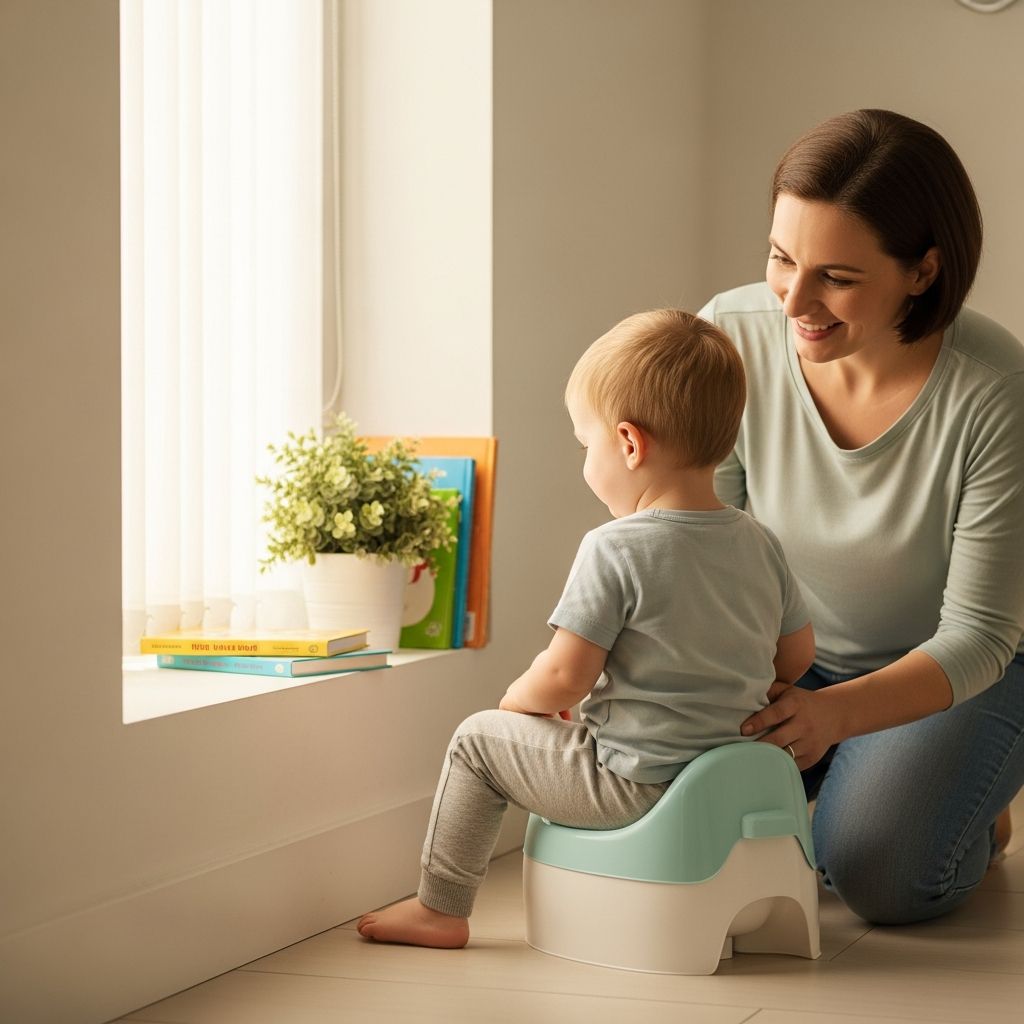
Few things drain a parent’s energy faster than a toddler who clearly needs to use the potty but refuses, screams, or holds it until there’s an accident. What often begins as an exciting milestone can quickly turn into a daily tug-of-war where everyone feels frustrated, ashamed, or stuck.
This article offers a gentle, psychology-informed approach to ending potty-training power struggles. Instead of trying to win a battle of wills, you will learn how to step out of the fight, protect your relationship, and create the conditions that make cooperation more likely.
Why Potty Training Turns Into a Power Struggle
Toilet learning sits right at the intersection of two intense toddler drives: the desire for independence and the need for control over their own body. When adults add pressure, anxiety, or urgency, children often react by doubling down on “no,” even when they actually want to succeed.
- Control over the body: Your child is the only one who can relax or tighten those muscles. If they sense that you feel desperate for them to go, saying no can feel like their last remaining power.
- Independence and identity: Toddlers are wired to test limits and assert themselves. Potty training becomes a convenient arena to say, “You can’t make me.”
- Emotional pressure: When accidents bring criticism, lectures, or disappointment, the bathroom begins to feel unsafe, and resistance or avoidance grows.
Understanding these emotional dynamics is the first step away from power struggles. The goal is to share responsibility with your child instead of wrestling it away from them.
Readiness Before Results: Check the Foundations
Many battles begin because adults want dry days before the child is physically or emotionally ready. There is a wide range of normal, and some children simply need more time and support than others.
Signs your child might be ready
- Can stay dry for 1.5–2 hours or more.
- Shows awareness when peeing or pooping (pausing, hiding, or telling you).
- Can walk to the bathroom and sit safely on a potty or toilet insert.
- Can follow simple two-step directions (for example, “Let’s go to the bathroom and pull down your pants.”).
- Shows some interest in underwear, toilets, or watching you or siblings.
Signs you may need to slow down
- Intense meltdowns at the mention of the potty.
- Constipation, painful stools, or clear anxiety around pooping.
- Recent major changes (new sibling, move, daycare change) and lots of clinginess or regressions in other areas.
- Frequent power battles about many topics, not just toileting.
Slowing down does not mean doing nothing; it means shifting your focus from performance (dry pants) to safety, comfort, and trust in the bathroom routine.
Common Power-Struggle Patterns (and What’s Underneath)
Not all resistance looks the same. Recognizing the pattern helps you respond more effectively and with more empathy.
| Behavior | What it may signal | Helpful parent response |
|---|---|---|
| Refusing to sit on the potty | Need for control, fear of falling, negative previous experience | Offer choices, use a small floor potty, sit together, reduce pressure |
| Hiding to poop in a diaper | Desire for privacy, discomfort with the sound/feel of pooping in a toilet | Respect privacy, move poop from diaper to potty together, normalize the process |
| Withholding pee/poop until bedtime pull-up | Anxiety, dislike of the potty, or dislike of being watched/pressured | Back off prompting, create a relaxed bedtime routine with low-key potty opportunities |
| Accidents right after leaving the bathroom | Immature body signals, distraction, or rushing during potty time | Allow more time on the potty without pressure, tie potty trips to natural routines |
Shifting Your Role: From Enforcer to Guide
When parents feel desperate for progress, they often slide into nagging, pleading, or forcing. This usually backfires because it reinforces the child’s sense that control is being taken away. Your most powerful move is to redefine your role.
- You provide the structure: Access to a comfortable potty, predictable routines, clean clothes, and calm support.
- Your child provides the action: Listening to their body, deciding when to release, and eventually going independently.
- Together you share responsibility: Cleaning up accidents, celebrating small wins, and practicing new skills.
When your child senses that you trust them to learn at their pace, the urgency eases, and cooperation becomes less threatening.
Language That Reduces Resistance
The words you use around the potty matter as much as the logistics. Threats, bribes, or shaming comments may “work” once or twice but often create more anxiety and pushback in the long run. Gentle, clear language can keep expectations in place without turning the bathroom into a battlefield.
Helpful communication habits
- Describe rather than judge: “Your pants are wet. Let’s get you clean,” instead of “You’re too big for this.”
- Use matter-of-fact tone: Treat accidents like a spilled drink, not a crisis.
- Offer simple choices: “Do you want to sit on the little potty or the big toilet seat?”
- Invite, don’t beg: A calm invitation followed by respect for no builds more trust than repeated pleading.
Sample phrases to try
- “It’s bathroom time, you can walk or I can carry you. You choose.”
- “Your job is to listen to your body. My job is to help keep you clean and comfy.”
- “Accidents happen. We’ll clean this up together and try again next time.”
- “You don’t have to go, but it’s time to sit and give your body a chance.”
Notice that these statements keep boundaries but avoid humiliation. You are still the adult in charge of routines, but you are not using shame as a tool.
Practical Steps to De-escalate Power Struggles
There is no single script that works for every family, but some practical steps help reduce friction in most homes. Think of these as levers you can adjust rather than rigid rules.
1. Reset the tone
- Take a short break from focused training if things feel tense, while still offering the potty calmly.
- Stop all forcing, dragging, or physically holding your child on the potty.
- Privately decide that you will not turn bathroom time into a debate; you will state the plan once, offer a choice, and then move on.
2. Tie potty time to natural rhythms
- Invite your child to use the potty around predictable moments such as waking up, before leaving the house, before naps, and before bed.
- Avoid constant questioning (“Do you have to go now?” every 10 minutes). Instead, use simple statements: “Before we put on shoes, everyone uses the potty.”
- Join in when possible: “I’m going to pee; you can bring your book and sit too.”
3. Make the bathroom feel safe and inviting
- Use a small, stable potty or a secure seat insert plus a step stool so your child feels grounded.
- Keep a basket nearby with books, small toys, or fidget items reserved for potty time.
- Allow reasonable privacy if your child seems shy; you can stay nearby but turn around or step just outside the doorway.
4. Share cleanup without blame
- Calmly say what happened: “There’s pee on the floor.”
- Invite participation: “Here’s a towel for you; I’ll wipe with this one.”
- Avoid commentary about age, comparison with siblings, or hints of disappointment.
Consistency in these small steps teaches your child that bathroom needs are normal, solvable, and not a measure of their worth.
Supporting a Child Who Will Not Poop on the Potty
Pooping usually arrives later than peeing in the potty. For many children, releasing stool in the toilet feels scary, noisy, or too exposed. Some prefer to hide, ask for a diaper, or hold it in, which can quickly lead to discomfort or constipation.
- Allow a gradual transition by letting your child poop in a diaper while sitting on the potty or in the bathroom.
- Talk casually about poop as something the body no longer needs, with no disgust or joking that might increase embarrassment.
- Keep your pediatrician in the loop if there is pain, bleeding, extreme withholding, or long gaps between bowel movements.
As your child feels safer and more in control, you can slowly move from standing in a corner in a diaper, to sitting on the potty in a diaper, to eventually trying without the diaper when they indicate readiness.
Balancing Boundaries and Empathy
Being gentle does not mean having no limits. Children feel safer when adults stay calm but clear about family expectations. The skill is to hold boundaries without sliding into threats or emotional withdrawal.
- Set non-negotiable basics: For example, “We clean up when there’s pee or poop on the floor,” or “We sit for one minute before bed to give our body a chance.”
- Stay connected during conflict: Offer a hug, sit nearby, or use a soothing voice even when your child screams or refuses.
- Repair after rough moments: If you lose your temper, circle back later with a brief repair: “I was very upset earlier. You don’t deserve yelling. We’ll keep practicing together.”
This combination of warmth and structure helps children feel emotionally safe enough to let go of control battles they never fully understood in the first place.
When External Pressures Make It Harder
Potty-training stress often spikes because of daycare or preschool deadlines, family expectations, or comparisons with siblings and peers. These outside pressures can tempt adults to push harder at home, even when the child is clearly not ready for that pace.
- Speak honestly with caregivers or schools about where your child is, and ask about interim accommodations such as pull-ups during class time.
- Shield your child from adult worries; they should not carry the burden of deadlines or rules they did not create.
- Ignore comparisons, even if other parents brag about early training. Each nervous system and temperament is different.
Your main job is to protect your child’s sense of competence and security. Logistics matter, but your long-term relationship matters more.
Red Flags: When to Seek Extra Support
Most potty-training challenges are behavioral or emotional and improve with time, patience, and a reset in approach. Sometimes, though, medical or developmental issues play a role, and outside guidance is important.
- Frequent pain, blood, or extreme constipation.
- History of urinary tract infections or daytime/nighttime wetting that is unusually frequent or persists after years of training.
- Intense fear or panic related to toilets, draining water, or flushing, not improving over months.
- Developmental delays or sensory differences that might require tailored strategies from professionals.
Reaching out for help is not a failure. It is a way of honoring both your child’s needs and your own limits.
Sample Daily Rhythm Without Battles
Below is a simple example of how a low-pressure, structured day might look. This is not a rigid schedule, but a model you can adapt to your family’s routines.
| Time | Routine | Potty Opportunity |
|---|---|---|
| Wake-up | Cuddle, change night diaper or check dryness | “Let’s sit on the potty before breakfast; I’ll come with you.” |
| Before going out | Getting dressed, putting on shoes | “Before we put on shoes, everyone uses the potty.” |
| Midday | After lunch, before quiet time or nap | “Potty, then stories.” |
| Afternoon | Back from playground or errands | “We wash hands and try the potty when we come home.” |
| Evening | Bath, pajamas, bedtime routine | “Last potty sit, then books and snuggles.” |
Notice how the potty is built into transitions, not presented as a constant test of obedience. This lowers the emotional charge around each visit.
FAQs About Potty-Training Power Struggles
What if my toddler screams and runs away every time I mention the potty?
Intense reactions usually signal that your child associates the potty with pressure, conflict, or shame. For a period of time, step back from active training and shift to gentle exposure only: keep the potty visible, let your child see you use the bathroom, invite them to sit fully clothed if they are willing, and avoid all forcing or lengthy lectures. Once the emotional temperature drops, you can gradually reintroduce short, predictable potty sits tied to routines.
Is it okay to use rewards or sticker charts?
Small incentives can motivate some children, but relying heavily on rewards may unintentionally send the message that the child is performing for you, rather than learning to listen to their own body. If you do use rewards, keep them light and playful, avoid taking them away for accidents, and make sure your primary focus stays on connection, encouragement, and body awareness rather than on prizes.
How long should my child sit on the potty?
Most toddlers do best with very brief sits—usually one to three minutes. Long, forced sits tend to create resistance and can make children associate the potty with boredom or punishment. A timer, a short song, or a tiny stack of special books can help signal when potty time is done without turning it into an endurance test.
What if my child was trained and then started having accidents again?
Regression is common around times of change, stress, or new responsibilities, such as a new sibling, a move, or starting school. Rather than framing it as defiance, treat it as a signal that your child needs more emotional support and possibly a temporary return to some of the earlier structure (for example, offering the potty more proactively or using training pants again). Keeping your response calm and predictable helps the nervous system settle so skills can return.
How can I stay patient when I feel embarrassed or judged?
Feeling watched by relatives, teachers, or other parents can tempt you to push your child harder than feels right. Remind yourself that potty training is not a race and that each child reaches this milestone on their own timetable. Prioritize your relationship and your child’s sense of safety over performing competence for others; the more secure your child feels, the sooner genuine, lasting progress is likely to come.
Putting It All Together
Ending potty-training power struggles is less about discovering a perfect method and more about changing the emotional climate around the bathroom. When adults slow down, reduce pressure, and offer calm structure, toddlers can relax enough to listen to their bodies instead of defending their autonomy at all costs.
Over time, this approach does far more than produce dry pants. It teaches your child that their body is theirs, that mistakes are safe to make, and that even tricky skills can be learned in a relationship grounded in trust rather than fear. Those lessons reach far beyond the potty and into every challenge you will face together in the years to come.