Knots, tears, and endless negotiations over the hairbrush are a familiar part of many families’ mornings. The good news: with a few smart habits and gentle techniques, your child’s hair can stay smoother, healthier, and much easier to manage.
This guide walks you through practical, research-informed ways to prevent tangles, detangle without pain, and build a simple routine that works for straight, wavy, curly, or coily hair.
Why Kids’ Hair Tangles So Easily
Children’s hair and scalp are not just “smaller adult” versions. They are often finer, more delicate, and more vulnerable to damage.
- Fine strands bend and knot more easily, especially around collars, hoods, and car seats.
- High activity (running, rolling, napping, car rides) creates friction that leads to tangles.
- Dryness makes the cuticle rough, so strands catch on each other and form knots.
- Curly and coily hair has natural bends and coils that can wrap around themselves if not well moisturized.
Because their scalp is sensitive and still developing, dermatology and pediatric groups recommend gentle products and handling for babies and young children.
Building a Simple, Kid-Friendly Hair Routine
A predictable routine does more than protect hair—it helps your child know what to expect, which reduces resistance and anxiety.
How Often to Wash
There is no single schedule that works for every child, but many pediatric dermatology sources suggest:
- Dry, curly, or coily hair: about once or twice a week, focusing on moisture.
- Straight or fine hair: every 2–3 days, or more often if very oily or sweaty.
- Babies and toddlers: often less frequent washing is needed; follow your pediatrician’s or dermatologist’s advice.
On non-wash days, you can still refresh hair with water, a light leave-in conditioner, or detangling spray.
Choosing Gentle Products
Official pediatric and dermatology guidelines emphasize mild, fragrance-limited, and sulfate-free cleansers for young children to protect the skin barrier.
- Look for tear-free, mild shampoos labeled for babies or children.
- Prefer sulfate-free formulas (they cleanse without stripping as much natural oil).
- Pick products free of strong perfumes if your child has sensitive skin or eczema.
- Conditioners or leave-ins that contain coconut oil, shea butter, jojoba oil, or glycerin can help soften and reduce friction between strands.
| Hair Type | Typical Needs | Helpful Products |
|---|---|---|
| Straight & fine | Light moisture, easy detangling | Mild shampoo, light rinse-out conditioner, detangling spray |
| Wavy | Frizz control, flexible hold | Moisturizing conditioner, leave-in, wide-tooth comb |
| Curly | High moisture, reduced breakage | Creamy conditioner, rich leave-in, curl-friendly detangling brush |
| Coily / very textured | Intense hydration, protective styling | Moisturizing shampoo, deep conditioner, oils or butters, protective styles |
Bath Time Without the Tangles
Many knots form in the bath or shower, not just afterward. A few adjustments can prevent them from forming in the first place.
Before Washing
- Gently detangle dry or slightly damp hair before the bath. This keeps small knots from turning into tight mats when wet.
- Apply a small amount of pre-wash oil or conditioner to very dry or tightly curled hair to protect it before shampooing.
During Shampoo
- Have your child tilt their head back so water and shampoo run away from the face.
- Massage the scalp with fingertips, not nails, to avoid irritation.
- Let the suds gently run down the hair; you rarely need to scrub the full length.
- Avoid twisting or piling hair on top of the head, which can lead to tangles.
Conditioning for Slip and Shine
- Squeeze out excess water first so conditioner can cling to the hair.
- Apply mostly to the mid-lengths and ends, where tangles and dryness are worst.
- Use your fingers or a wide-tooth comb to gently work through knots while the conditioner is in.
- Let it sit for a few minutes, then rinse thoroughly but gently.
Drying Hair the Tangle-Smart Way
How you dry your child’s hair affects frizz, tangles, and even breakage.
- Skip rough towel-rubbing. Instead, gently squeeze and blot with a soft cotton towel or T-shirt.
- For curls and coils, avoid separating curls too much; scrunch upward to encourage defined clumps.
- Let hair air-dry when possible. If you must use a hair dryer, keep it on a cool or low-heat setting and at a distance.
- When hair is still damp, apply a leave-in conditioner or detangling spray to keep it smooth as it dries.
Detangling Without Tears: Step-by-Step
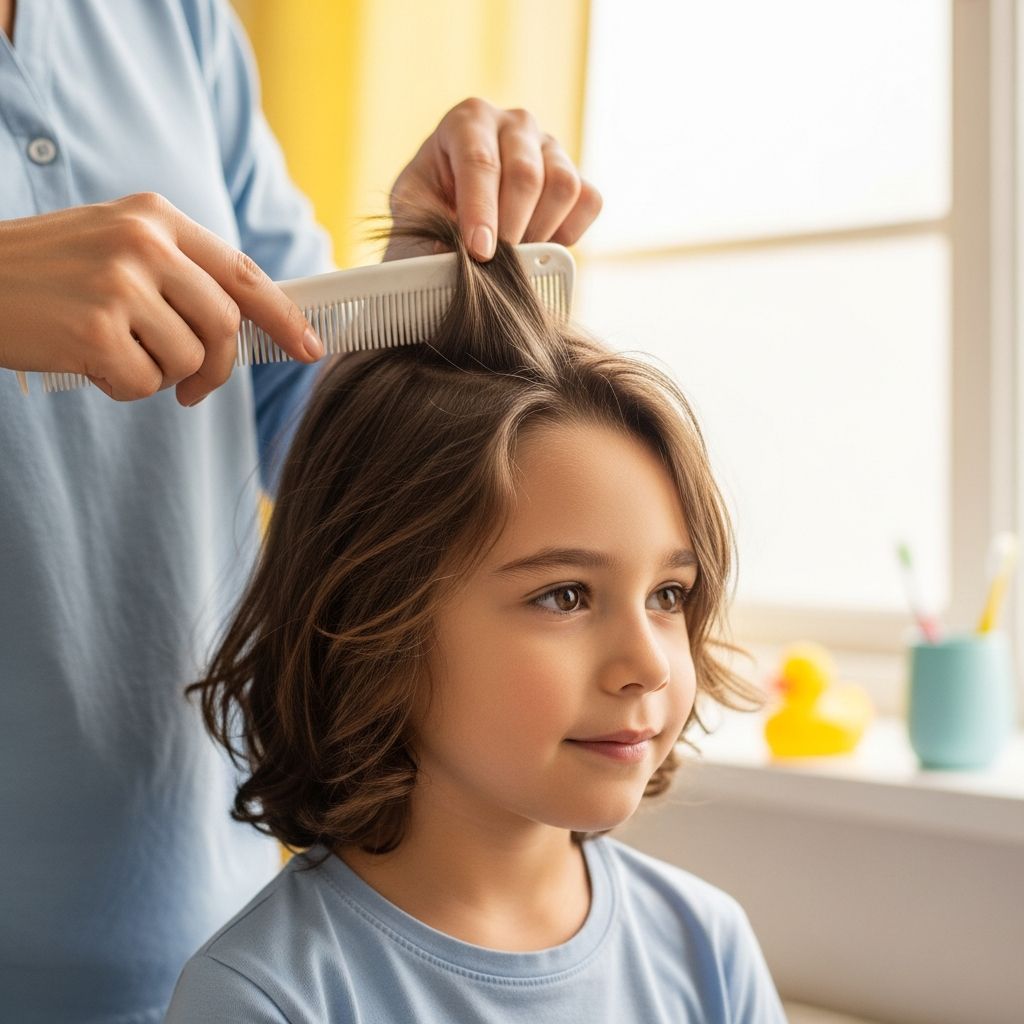
Whether your child woke up with a nest at the back of their head or came home from the playground with wind-whipped knots, this gentle method can help.
- Start with damp, not dripping, hair.
Use a spray bottle of water mixed with a bit of conditioner, or apply a leave-in or detangling spray for slip. - Work in sections.
Divide hair into 2–6 sections, depending on length and thickness. Clip or tie the unused sections out of the way. - Begin at the ends.
Use your fingers or a wide-tooth comb to loosen the very bottom first, then slowly move upward. This prevents you from dragging tight knots down the shaft. - Support the hair.
Hold a small section above the knot so any tugging is absorbed by your hand, not the scalp. - Use the right tools.
A wide-tooth comb, soft-bristle brush, or flexible detangling brush is usually gentler than a fine-tooth comb for everyday use. - Take breaks if needed.
If your child becomes upset, pause, let them choose a song, story, or toy, and start again slowly.
Smart Styles That Keep Knots Away
Protective and low-friction styles can dramatically cut down on tangles, especially for long or textured hair.
- Low ponytails or braids at the nape of the neck reduce rubbing against collars and car seats.
- Two braids or twists can keep hair organized at night and make mornings much easier.
- Buns or puffs help protect ends for curly and coily hair.
- Use soft, snag-free hair ties and fabric-covered elastics; avoid rubber bands and metal clasps that break hair.
- Change styles regularly so the same area of hair is not pulled in exactly the same place every day.
Night and Morning Habits That Prevent Tangles
Before Bed
- Very gently detangle and smooth hair to remove the day’s knots.
- Consider a loose braid, twist, or pineapple (for curls) to keep hair contained.
- A satin or silk pillowcase or bonnet can cut down on friction, which helps prevent tangles and frizz.
In the Morning
- Spritz hair lightly with water or detangling spray to reshape and smooth.
- Gently comb through from ends to roots, focusing on the nape of the neck and behind the ears where tangles often form.
- Re-style into a low-friction style for the day’s activities (school, sports, or outdoor play).
Keeping the Experience Calm and Positive
For many kids, hair brushing is as much an emotional challenge as a physical one. Turning it into a predictable, respectful ritual can make a big difference.
- Explain what you are doing in simple terms so your child knows what to expect.
- Let them choose something—the brush color, the hair tie, the song you play, or which side you start on.
- Use a calm, steady voice and validate their feelings: “I know this is uncomfortable; I’m going slowly.”
- Set up a hair basket with their special brush, spray, and ties so the routine feels familiar and contained.
- Offer praise for cooperation and patience rather than only commenting when they resist.
When to Ask a Professional for Help
Sometimes tangles and scalp issues need advice from a pediatrician, dermatologist, or professional stylist.
- Persistent mats that you cannot loosen without pain or breakage.
- Flaking, redness, or sores on the scalp, which may indicate dandruff, eczema, or another skin condition.
- Sudden or patchy hair loss or your child pulling out hair.
- Extreme sensitivity to touch on the scalp that does not improve with gentler tools and techniques.
Pediatric and dermatology organizations encourage parents to seek medical advice when skin or hair changes are sudden, severe, or causing distress.
Frequently Asked Questions (FAQs)
Q: How can I tell if my child’s shampoo is gentle enough?
A: Look for shampoos marketed for babies or children that are labeled mild, tear-free, and free from strong fragrances. Pediatric dermatology guidance recommends gentle, pH-balanced cleansers that do not strip the natural oils or irritate the eyes and scalp.
Q: Is it okay to detangle my child’s hair when it’s dry?
A: For straight or wavy hair, light dampening or using a detangling spray usually makes the process less painful and reduces breakage. For curly and coily hair, many experts suggest detangling when hair is wet and coated in conditioner to minimize damage and preserve curl patterns.
Q: How often should I trim my child’s hair to avoid tangles?
A: Regular trims every 8–12 weeks can help remove split ends, which naturally snag and tangle more easily. If you notice lots of rough, frayed ends or more frequent knots, it may be time for a trim.
Q: My child screams during brushing. Is this normal or a sign of a bigger problem?
A: Many children resist hair brushing because of past painful experiences or sensory sensitivity. Trying softer tools, extra slip (conditioner or spray), and very small sections can help. If your child seems unusually distressed by any scalp touch or grooming, consult your pediatrician to rule out medical or sensory issues.
Q: Do I really need special products for kids, or can I use mine?
A: Adult products often contain stronger cleansing agents, heavier fragrances, or active ingredients that may be too harsh for a child’s delicate scalp. Organizations such as the American Academy of Dermatology recommend gentle, child-appropriate cleansers and moisturizers for young skin and hair whenever possible.
References
- Children’s skin: How to care for your child’s skin — American Academy of Dermatology Association. 2023-04-01. https://www.aad.org/public/everyday-care/skin-care-basics/children/child-skin
- How to care for your child’s hair — Nemours KidsHealth. 2022-07-15. https://kidshealth.org/en/parents/hair-care.html
- Hair care for children: Basic tips — Nationwide Children’s Hospital. 2021-09-10. https://www.nationwidechildrens.org/family-resources-education/family-resources-library/hair-care-for-children
- Scalp and hair care for infants and children — American Academy of Pediatrics / HealthyChildren.org. 2022-03-21. https://www.healthychildren.org/English/ages-stages/baby/bathing-skin-care/Pages/Hair-and-Scalp-Care-for-Your-Baby.aspx
- Bathing your baby — Mayo Clinic. 2023-02-28. https://www.mayoclinic.org/healthy-lifestyle/infant-and-toddler-health/in-depth/infant-bathing/art-20044578