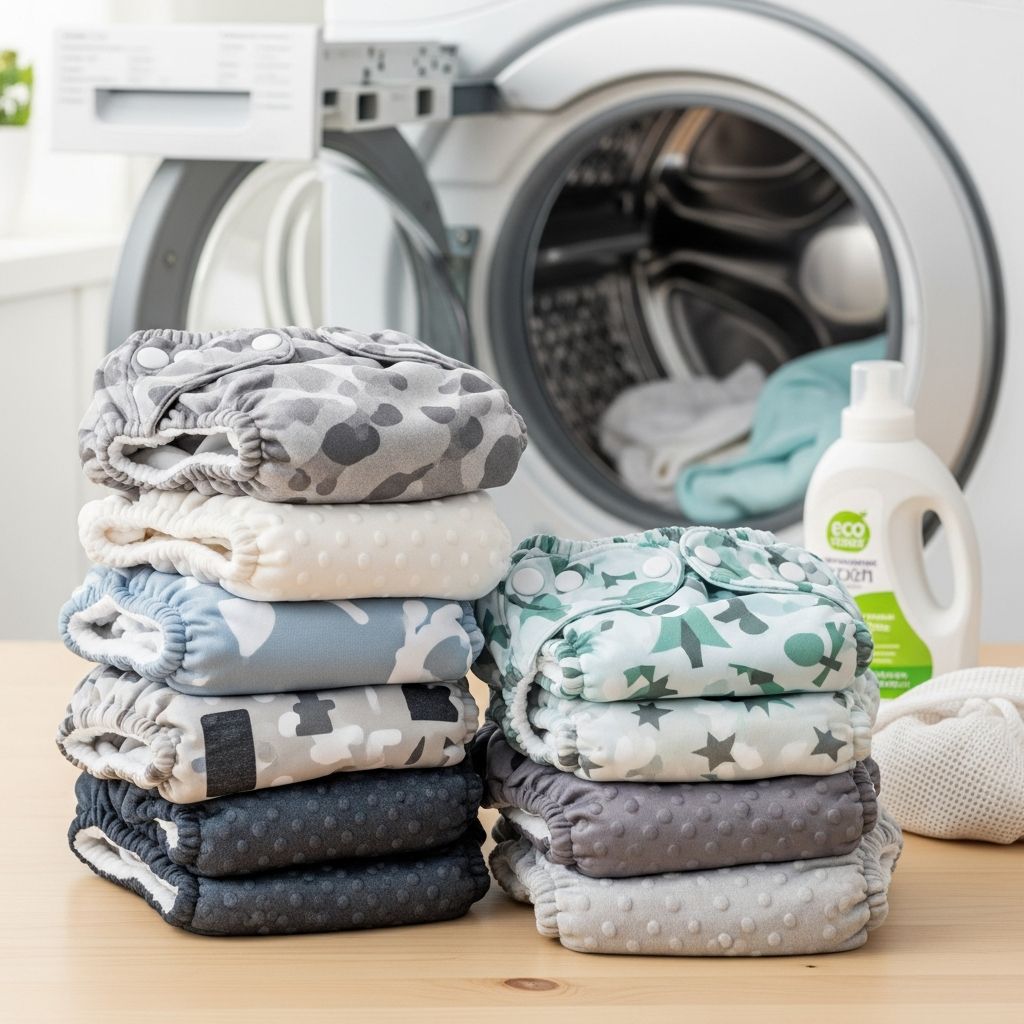
New cloth diapers almost never perform their best right out of the package. They need a little breaking in so they can absorb properly, fit comfortably, and wash cleanly. For parents with high-efficiency (HE) machines, this step can feel extra intimidating, but with the right approach it is completely manageable.
This guide walks you through exactly how to prep different types of cloth diapers, why HE machines can be tricky, and what practical steps you can take to get soft, absorbent diapers without wasting time, water, or sanity.
Why New Cloth Diapers Need Prepping
Prepping is simply the process of washing and sometimes drying new diapers so they reach their full absorbency and lose any manufacturing residues. Skipping or rushing this step is one of the most common reasons parents experience early leaks or feel like cloth “doesn’t work” for their baby.
Prepping matters because it does three important jobs:
- Removes natural oils and waxes from fibers like cotton, hemp, and bamboo that initially repel liquids instead of soaking them up.
- Washes away factory residues such as dust, finishing agents, and leftover dyes that can irritate skin or interfere with absorbency.
- Helps the fabric fluff, shrink, and soften into the shape and texture it will have in everyday use.
Understanding Diaper Fabrics Before You Start
Not all diapers are created equal when it comes to prepping. The fabric inside the diaper determines how much work you need to do before that first wear. Knowing what you own helps you avoid under-prepping absorbent inserts and overworking delicate covers.
Most modern cloth diapers fall into two broad categories: natural fibers and synthetic fibers. Many diaper stashes include a mix of both, especially when you use pockets or all-in-twos with separate inserts.
Main Cloth Diaper Fabric Types
| Fabric type | Examples | Prepping needs | Key notes |
|---|---|---|---|
| Natural fibers | Cotton, organic cotton, hemp, bamboo blends | Multiple washes (often 3–8) to reach near full absorbency | Start off slightly stiff or flat; soften and fluff over time |
| Synthetics | Microfiber, microfleece, microsuede, polyester inserts | Usually one wash is enough | Absorb quickly at first but can hold onto detergent residues |
| Waterproof layers | PUL/TPU covers, pocket shells, all-in-one outer shells | One gentle wash before use | Do not require repeated prepping; avoid high heat for longevity |
The HE Machine Challenge (And Why It’s Not Hopeless)
Traditional top-loading washers rely on lots of water and vigorous agitation. HE machines use less water and a very different motion, which is great for utility bills—but can be frustrating when you are trying to flush oils out of dense natural fibers. Less water contact and gentler agitation can mean inefficient prepping if you do not adjust your routine.
Instead of fighting your HE machine, it helps to understand its quirks and work with them. The trick is to create enough friction between diaper pieces and enough water movement for effective cleaning, even with the machine’s water-saving habits.
Common HE Washer Issues When Prepping Diapers
- Loads that are too small, causing diapers to float in shallow water without rubbing against one another.
- Automatic sensors that add very little water because the diapers are lightweight when dry.
- Short or gentle cycles that do not give enough time to dissolve and remove natural oils.
- Parents relying on a single cycle when natural fibers often need multiple rounds.
HE-Friendly Prepping Strategy: Big Picture
Before diving into fabric-specific details, it helps to think of prepping in phases rather than strict counts. Some diapers will be reasonably absorbent after a couple of washes, while others keep improving after a dozen regular laundry cycles. The goal is to reach “good enough to use” while recognizing that absorbency will continue to build with time.
A practical, HE-friendly approach looks like this:
- Use cycles that provide strong agitation and a decent amount of water.
- Combine diapers with small towels or baby clothes so the machine senses an adequate load size.
- Wash natural fibers multiple times before first use, and then continue to expect improvements after several wears and washes.
Step-by-Step: Prepping Natural Fiber Diapers
Natural fibers are the workhorses of many cloth diaper setups. They last a long time, resist stink, and absorb a lot, but they do demand more prep work than synthetic inserts. Think of this phase as “seasoning” your diapers so they can handle real-life messes.
Phase 1: Initial Rinse or First Wash
Most parents like to begin with a quick cycle to rinse away obvious dust or factory residue. This wash does not usually require detergent and does not need to be very long; the goal is simply to wet the fabric and start loosening surface coatings.
- Select a short warm or cold cycle.
- Skip detergent for this step unless the diapers feel heavily treated or stiff.
- Add some small towels or baby clothing to bulk up the load so the machine uses enough water.
Phase 2: Repeated Hot Washes for Natural Fibers
After that quick rinse, the real prepping happens in a series of hot washes. Hot water helps break down natural oils, while detergent binds to them and carries them away. You do not need to complete all washes in a single day; you can spread them over several days if that fits family life better.
For cotton, hemp, and bamboo inserts or fitted diapers:
- Run a hot cycle using the machine’s most thorough setting that still allows for good agitation.
- Use a normal amount of a cloth-diaper-friendly detergent—do not skimp, but avoid overpouring.
- Repeat this hot wash two to four times before first use for most cotton and bamboo items.
- Expect hemp and unbleached organic cotton to need more total washes over time before they reach their peak absorbency.
Phase 3: Drying Between Washes (When It Helps)
Drying between some of your prep washes can help fibers change shape, shrink to their intended size, and become more textured. This new texture encourages better water absorption during later washes and when the diapers are on your baby. Drying also gives you a clearer sense of how they will fit in real use.
- Dry natural fiber inserts and prefolds on medium heat if your manufacturer allows it.
- Rotate between machine drying and line drying if you prefer to reduce wear and energy use.
- Do not worry if diapers still look a bit flat or stiff after the first dry; they usually fluff up after several full cycles of use.
Prepping Synthetic Inserts and Waterproof Covers
Synthetic inserts and waterproof shells are mercifully lower maintenance when it comes to prepping. They do not contain natural oils, so a single effective wash is usually enough for basic readiness. The main concern is avoiding anything that damages the waterproofing or causes buildup that leads to stink later.
Quick Start for Synthetic Materials
- Wash new microfiber or polyester inserts once with detergent on a warm or hot cycle.
- Dry according to manufacturer guidelines—usually low to medium heat or line dry.
- Wash PUL covers and pocket shells on a gentle or normal setting, then hang dry or tumble on low.
Many parents like to prep synthetics and natural fibers separately for the first wash or two. This avoids transferring any remaining natural oils onto synthetic fibers, which can limit absorbency and encourage buildup.
Making HE Machines Work Better for You
Because HE washers are designed to be stingy with water, your main job is to help the machine provide enough contact and friction for proper cleaning. A few small tweaks to your routine can dramatically improve prep results and make your ongoing diaper laundry easier too.
Practical HE Hacks for Diaper Prepping
- Build the load size: Combine new diapers with clean towels or baby clothes to convince the machine to use more water and improve agitation.
- Avoid tiny loads: Very small batches of diapers tend to float, twist, or cling to the drum, which means fewer surfaces rubbing together to release oils.
- Pick the right cycle: Use a cycle with enough time and agitation; “bulky,” “cotton,” or “heavy duty” often work better than “delicate” for prepping.
- Skip fabric softener: Liquid softeners and dryer sheets can coat fibers and fight against all the work you are doing to remove natural oils.
- Check the drum after filling: If the diapers look only lightly damp instead of submerged and moving freely, consider adding a rinse or choosing a cycle that uses more water.
How to Know When Diapers Are Ready
There is no single magic number of washes that guarantees perfect performance. Instead of chasing an exact count, pay attention to how the fabric behaves in a simple sink test and in early real-world use. This approach keeps expectations realistic and lets you start diapering sooner.
Simple Absorbency Check at Home
- Lay a clean, prepped insert or prefold flat.
- Drip a small amount of water onto the surface.
- Watch how quickly the droplet is absorbed.
If water beads up for several seconds before soaking in, the diaper likely needs more prepping or more real-use wash cycles. If it sinks in within a second or two and does not immediately run off the sides, the diaper is generally ready for trial runs on your baby.
Realistic Expectations for First Uses
Even well-prepped natural fiber diapers often perform at “good enough” during the first few wears and then gradually reach “wow” levels of absorbency after a few weeks. Planning around this reality helps prevent frustration and night-time disasters. Treat the early days as a testing phase rather than proof that cloth is failing.
Many parents find it helpful to lean on disposables or their most absorbent, well-broken-in inserts for nighttime or long car rides during the first couple of weeks of cloth use, while new diapers are still improving in the background.
Common Prepping Mistakes (And Simple Fixes)
When diapers leak or smell odd during the first weeks, the problem is often easier to solve than it feels at 2 a.m. Most issues trace back to one of a few simple missteps: too few prep washes, too small a load, or products that interfere with absorbency.
Frequent Issues and What to Do
- Persistent leaks from day one: Add several more hot washes for natural fiber inserts, and double-check that the fit is snug at the legs and waist.
- Water rolling off the fabric: Repeat hot washes with a proper amount of detergent; avoid any fabric softeners and oily diaper creams without liners.
- Strong or odd smells after prepping: Run an extra rinse or short wash with no detergent to remove leftover suds; make sure you are not overusing detergent.
- Stiff or scratchy diapers: Try a few drying cycles in the dryer on low to medium heat, or tumble briefly after line drying to soften the fibers.
Balancing Eco-Consciousness With Practical Reality
One of the big reasons families choose cloth is environmental concern, so the idea of washing new diapers multiple times can feel uncomfortable. It helps to zoom out and look at the full lifespan of the diapers: a few intense prep cycles spread over years of use still represent a much smaller footprint than single-use disposables.
You can also be strategic about when and how you prep. Combining prep loads with light, compatible laundry, using energy-efficient water temperatures where possible, and line drying when weather allows are all ways to keep the process both effective and environmentally thoughtful.
Sample HE Prepping Routine You Can Customize
Every household’s water hardness, detergent choice, and machine style is slightly different, so think of this as a starting template. Adjust as you learn how your diapers and machine behave together.
- First, run a short warm or cold cycle with new diapers and some small towels, no detergent.
- Next, complete two to three hot washes with detergent for natural fiber diapers, using a strong cycle and a load large enough for good agitation.
- Dry natural fibers on medium heat once or twice during the process to help them shrink and fluff.
- For synthetics and covers, wash once with detergent on a normal cycle and dry according to manufacturer guidance.
- Begin using the diapers while continuing to wash regularly; expect absorbency to keep improving over the next several weeks.
SEO-Friendly Frequently Asked Questions
How many times should I wash new cloth diapers before using them?
Most natural fiber diapers, such as cotton or bamboo prefolds and inserts, benefit from at least three good washes before first use, and they will continue to become more absorbent over another five to ten regular laundry cycles. Synthetic inserts and waterproof covers usually need only one wash to be ready. Rather than fixating on an exact number, use a quick water droplet test and your baby’s early wear experience to decide if more prep is needed.
Can I prep all my new cloth diapers together in an HE washer?
Many parents successfully prep multiple types of diapers together, especially after the first couple of washes. However, it is helpful to keep natural fibers and synthetics separate for the very first prep cycles so leftover natural oils do not migrate onto synthetic inserts. As long as you avoid fabric softeners and build a load large enough for good agitation, your HE machine can handle mixed diapers in later washes.
Do I really have to use hot water when prepping cloth diapers?
Hot water makes prepping more efficient because it softens natural oils and helps detergents do their job. If your home setup limits hot water use, you can still prep diapers with warm cycles; you may simply need more total washes before they reach their best performance. Focus on strong agitation, appropriate detergent use, and patience as the absorbency builds over time.
What if my HE machine never seems to use enough water for diaper prepping?
If your HE washer appears too stingy with water, the easiest adjustment is to change the load size rather than fight the machine’s programming. Add more textiles, such as small towels or baby clothes, so the sensor detects a heavier load and automatically adds more water. Choosing cycles labeled for bulky items or heavy soil can also increase water levels and extend wash times, making your prep more effective.
Why are my new cloth diapers still leaking after multiple prep washes?
Leaks from new diapers usually come from a combination of developing absorbency and minor fit issues rather than a single cause. Try adding a few more hot washes for natural fibers, especially hemp and unbleached cotton, and check that the diaper is snug around the legs with no visible gaps. In the meantime, use extra absorbent inserts or backup solutions for naps and nighttime while the rest of your stash gradually reaches full strength.