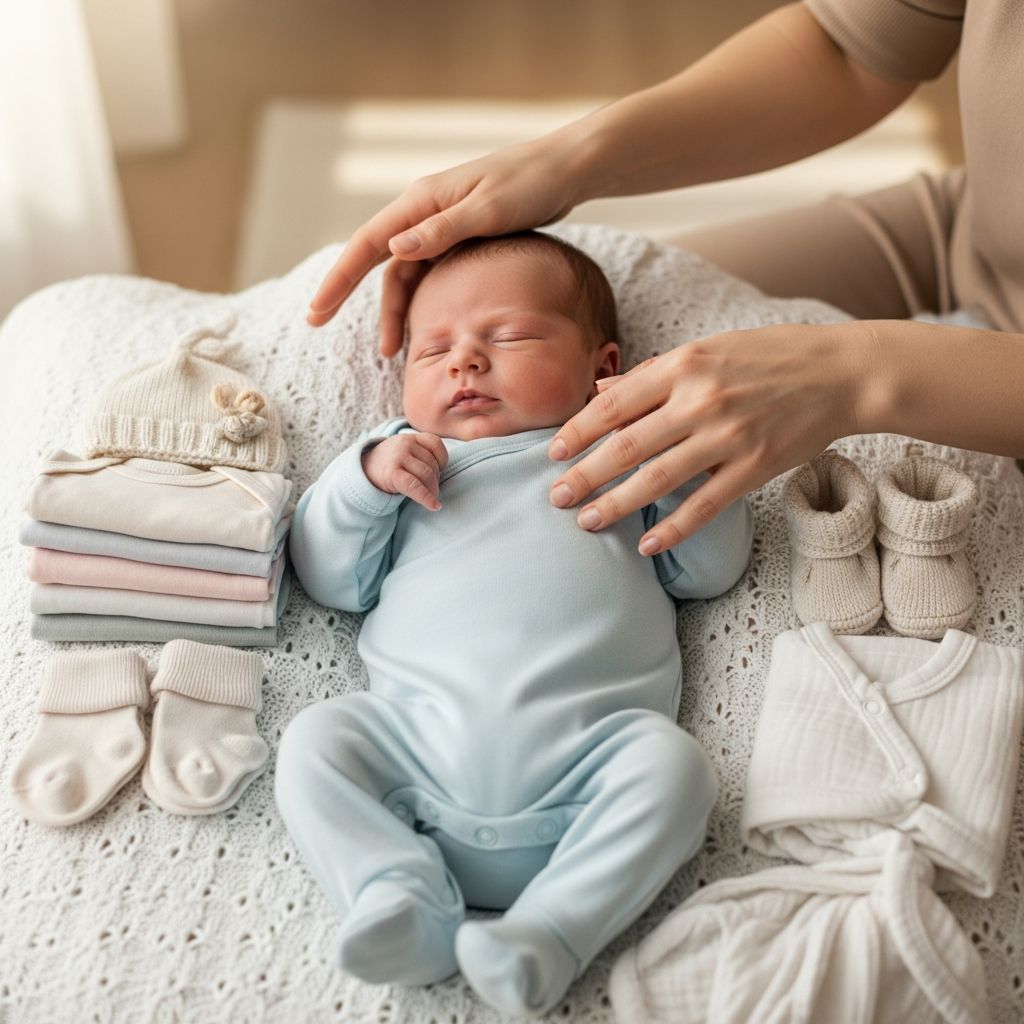
Bringing your baby home is emotional and exciting, and then a surprisingly tricky question pops up: how do you actually dress a newborn so they are comfortable, safe, and not swimming in fabric? This guide walks you through what to put on your baby, how many layers to use, and what you really need in that tiny wardrobe.
Understanding Newborn Temperature Needs
Newborns cannot regulate their body temperature as efficiently as older children and adults because of their relatively large body surface area, limited ability to shiver, and immature thermoregulation systems. This is why clothing and layers matter so much in the first weeks.
General rule of thumb for layers
A widely used guideline from pediatric care providers is:
- Dress your newborn in one more layer than you are wearing in the same environment.
- Use thin, breathable layers instead of one very thick outfit so you can add or remove pieces easily.
Always check your baby’s temperature with your hands rather than relying only on what the thermostat says.
How to tell if your baby is too hot or too cold
- Check the chest or back of the neck: it should feel warm, not sweaty or cold.
- Hands and feet can feel cool and still be normal in young babies, so don’t judge only by fingers and toes.
- Too warm signs: damp hair, flushed skin, sweating, heat rash, or rapid breathing.
- Too cold signs: cool chest, mottled or bluish skin, fussiness that improves when warmed.
If you suspect overheating, remove a layer and recheck in several minutes; overheating is associated with an increased risk of sudden infant death syndrome (SIDS).
Core Newborn Wardrobe: What You Really Need
You do not need a closet full of tiny outfits. Newborns grow quickly and spend much of their time feeding and sleeping. Many maternity and pediatric sources recommend focusing on a small core of soft, easy-to-wash basics and planning to do laundry every few days.
Suggested everyday clothing quantities (0–8 weeks)
| Item | Suggested Quantity | Why You Need It |
|---|---|---|
| Bodysuits / onesies (short or long sleeve) | 6–8 | Base layer for day and night; easy to change after spit-up or leaks. |
| Pants / leggings | 3–4 | Combine with bodysuits to adjust for room temperature and outings. |
| Sleepers / footed pajamas | 4–6 | Main sleepwear; footed designs keep feet covered. |
| Socks or booties | 4–6 pairs | Extra warmth if using non-footed outfits. |
| Soft caps / hats | 2–3 | For outdoor use or immediately after birth; not for routine indoor sleep. |
| Light sweaters / cardigans | 1–2 | Layer for cooler rooms or short outings. |
These numbers are approximate and assume washing every two to three days. If you plan to wash less often, add a few extras.
Fabric and Design: Choosing Clothes That Work
Best fabrics for newborn skin
- Soft cotton or organic cotton is often recommended because it is breathable, easy to wash, and gentle on sensitive skin.
- Merino wool or other fine, natural wool blends can be useful in colder climates as a temperature-regulating layer, as long as they are soft and non-itchy.
- Avoid rough, stiff, or heavily embellished fabrics that may irritate or overheat your baby.
Design features that make life easier
- Wide or envelope necklines so clothes can be pulled down over the body if there’s a diaper blowout.
- Front snaps or zippers on sleepers and outfits to avoid pulling tight clothing over the head.
- Two-way zippers for night changes, so you can open from the bottom and keep baby’s chest covered.
- Built-in mittens and footies on some sleepers to keep hands from scratching and feet warm.
- Tagless labels or external tags to prevent rubbing on the back of the neck.
When possible, wash new clothes before use using a gentle, fragrance-free detergent approved for baby clothes to reduce residual chemicals and potential skin irritation.
How to Dress a Newborn for Sleep
Safe sleep recommendations emphasize placing babies on their backs on a firm, flat surface with no loose bedding, pillows, or soft toys. Clothing is the main way to keep your newborn warm at night without relying on blankets.
Layering for sleep
- Use a fitted bodysuit as a base layer.
- Add a footed sleeper or one-piece pajama on top in cooler rooms.
- Consider a sleep sack (wearable blanket) instead of loose blankets, making sure it is the correct size and not too thick.
A common approach is:
- Warm room (around 22–24°C / 71–75°F): bodysuit + lightweight sleeper or sleep sack.
- Cooler room (around 20–21°C / 68–70°F): bodysuit + slightly thicker sleeper, or bodysuit + sleeper + light sleep sack.
Always check for signs of overheating. Your baby should feel comfortably warm, not sweaty or damp on the chest or back of the neck.
What to avoid at bedtime
- No hats for indoor sleep: head coverings are associated with overheating and are not recommended for routine sleep.
- No loose blankets under or over the baby in a crib or bassinet.
- No bulky snowsuits or coats in a crib or bassinet; they increase overheating and suffocation risk.
Dressing for Different Temperatures and Seasons
Cool or cold weather (indoors)
In cooler months, most babies are comfortable in:
- A long-sleeve bodysuit or singlet as a base.
- Footed sleeper or bodysuit plus pants and socks.
- Light cardigan if the room is on the cold side.
Thin layers trap warm air between them and can be removed one by one if the room warms up.
Warm or hot weather (indoors)
Overheating is more likely in hot weather, so keep clothing light and breathable:
- Short-sleeve bodysuit or even just a diaper with a light cotton wrap in very warm, safe environments.
- A thin muslin swaddle or lightweight sleep sack for naps and nighttime instead of heavy fabrics.
If your baby’s chest and neck feel warm and dry and they are settled, their clothing is likely appropriate.
Going outside in winter
For brief trips outdoors in cold weather, you will need to add more layers than you use inside:
- Base layer: bodiesuit (cotton or soft wool blend in very cold climates).
- Middle layer: footed sleeper or pants and long-sleeve top.
- Outer layer: snowsuit or warm bunting if temperatures are very low, or a warm jacket and blanket over the car seat or stroller.
- Hat, mittens, and warm booties to protect head, hands, and feet.
Once indoors or in a heated car or shop, remove outer layers promptly to prevent overheating.
Going outside in summer
- Choose a lightweight cotton bodysuit or romper.
- Use a wide-brimmed hat or shade for sun protection; keep infants out of direct sun when possible.
- Cover arms and legs with light fabric rather than relying only on sunscreen for very young babies.
Practical Tips for Getting Clothes On and Off
Changing diapers without a struggle
- Look for sleepers and pants that have snap or zipper openings from ankle to ankle to avoid undressing completely at each change.
- Practice opening and closing zippers and snaps before you put them on your baby so you know how they work.
Dressing a wiggly newborn
- Dress the head and arms first, then pull clothes down over the body gently.
- Support the neck and head with one hand while guiding sleeves with the other.
- Gather a sleeve up, insert your fingers through the opening, and gently hold your baby’s hand to pull it through rather than pushing their arm blindly.
Keeping clothing safe
- Avoid long strings, ribbons, or loose ties near the neck that could pose strangulation risks.
- Skip outfits with small, easily detachable decorations that could become choking hazards.
- Check for tight elastic marks around wrists, ankles, and waist; if you see deep marks, choose looser items.
Sample Daily Outfits
These examples show how to combine pieces from a small wardrobe to suit different situations.
At home, moderate temperature
- Short- or long-sleeve bodysuit.
- Pants or leggings if the room feels a bit cool, or just the bodysuit if it is comfortably warm.
- Socks if feet feel cool to your touch.
Nighttime sleep
- Fitted bodysuit as base layer.
- Footed sleeper or pajamas.
- Optional light sleep sack if the room is on the cooler side and the product is appropriate for your baby’s age and size.
Quick outing in cool weather
- Long-sleeve bodysuit.
- Pants and socks.
- Cardigan or light jacket.
- Soft hat for outdoor use.
Frequently Asked Questions (FAQs)
How many newborn outfits should I buy before the baby is born?
For the first month or two, many families find that 6–8 bodysuits, 3–4 pairs of pants, and 4–6 sleepers, plus a small number of hats and socks, are enough if you do laundry every two to three days. Buying more than this in the smallest size may lead to unused clothes because babies grow quickly.
Should my newborn wear a hat indoors?
A hat is useful right after birth or in very cool environments, but for routine indoor use in a normal home temperature, a healthy full-term newborn usually does not need a hat. Overusing hats indoors can contribute to overheating, especially during sleep.
Is it okay for my baby to sleep in just a onesie?
Yes, if the room is warm enough and your baby’s chest feels warm and comfortable, a single layer such as a bodysuit may be sufficient. In cooler rooms, you can add a footed sleeper or a wearable blanket to keep them warm without using loose blankets.
How can I tell if clothing is too tight for my newborn?
Look for deep red marks from elastic, difficulty closing snaps around the diaper area, or a baby who seems unusually uncomfortable when dressed. Clothing should fit close to the body for safety but allow full movement of arms and legs and easy breathing.
What should my baby wear in the car seat?
Safety organizations advise against bulky coats or snowsuits under car seat harnesses because they can compress in a crash and make the straps too loose. Dress your baby in thin layers, buckle the harness snugly, and then place a blanket or car seat cover over (not under) the straps.
References
- What Clothes Do I Need for a Newborn? — Poppylist. 2022-05-10. https://www.poppylist.com/blog/what-clothes-do-i-need-for-a-newborn
- How Many Baby Clothes Do I Need? — Babylist. 2021-07-14. https://www.babylist.com/hello-baby/how-many-baby-clothes-do-i-need
- How to Dress a Newborn in Winter — Woolino. 2023-11-01. https://www.woolino.com/blogs/blog/how-to-dress-newborn-winter
- Newborn Baby Clothing Checklist: Essentials for First Wardrobe — Purebaby. 2023-09-05. https://purebaby.com.au/blogs/journal/newborn-baby-clothing-checklist
- A Mama’s Guide to Building a Practical Newborn Wardrobe — Little Sleepies. 2022-03-22. https://www.littlesleepies.com/blogs/news/a-mamas-guide-to-building-a-practical-newborn-wardrobe
- Keeping Baby Warm and Safe — American Academy of Pediatrics (HealthyChildren.org). 2022-12-15. https://www.healthychildren.org/English/ages-stages/baby/Pages/Keeping-Baby-Warm.aspx