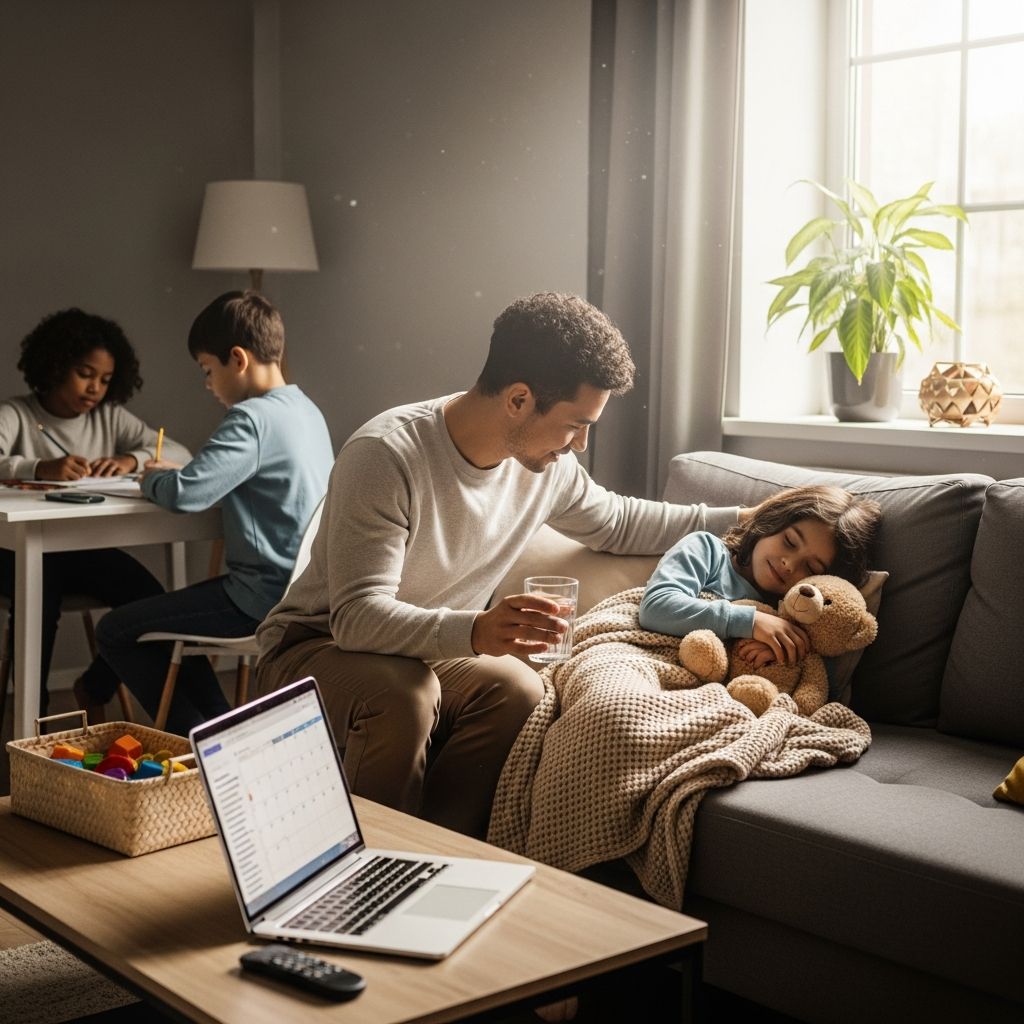
Navigating Parenthood During Illness: Essential Strategies for Recovery
Illness among parents presents a unique challenge that disrupts the typical rhythm of family life. Unlike childless adults who can rest and recover without additional responsibilities, parents face the simultaneous demands of personal health management and ongoing childcare obligations. This reality requires a fundamentally different approach to sick days—one that acknowledges the impossibility of traditional bed rest while still prioritizing recovery and family wellbeing.
The intersection of parental duties and personal illness creates what many describe as “survival mode.” Rather than viewing this as a failure to maintain normal standards, reframing sick days as temporary operational adjustments allows parents to make intentional choices that serve both their recovery and their family’s needs. The goal becomes maintaining basic safety and functionality rather than preserving everyday routines.
Establishing Realistic Expectations and Communication
The foundation of managing illness while parenting begins with transparent communication about what the day will look like. Children benefit from understanding that a parent is unwell and that activities will differ from their typical schedule. This conversation need not be elaborate—simple explanations appropriate to the child’s age help normalize the temporary shift and reduce confusion or worry.
Setting clear boundaries around energy limitations prevents both parent and child frustration. Communicating specific quiet times when independent play is necessary allows children to prepare mentally for these periods rather than experiencing them as sudden restrictions. When children understand that mom or dad needs rest between activities, they’re more likely to respect those boundaries and engage in self-directed play during those windows.
Expectations should also address what will not happen during sick days. Household cleaning, elaborate meal preparation, and extended outdoor activities may need postponement. Acknowledging these temporary departures from normal routines prevents parents from experiencing guilt about necessary compromises.
Creating a Consolidated Physical Space
Centralizing family activities to a single room or floor represents one of the most effective conservation strategies during parental illness. Rather than managing multiple zones throughout the home, concentrating children’s activities, sleeping areas, and essential supplies in proximity reduces unnecessary movement and energy expenditure.
A well-organized sick-day hub includes:
- Comfortable seating where a parent can supervise while resting
- A collection of blankets, pillows, and cushions for creating a cozy environment
- Easy access to hydration and simple snacks
- Entertainment options that require minimal parental involvement
- Essential supplies such as tissues, medications, and comfort items
- Basic hygiene materials within arm’s reach
This consolidated approach eliminates unnecessary stair climbing and reduces the mental load of managing scattered spaces. Children can access what they need independently while remaining within sight of a supervising parent, creating both safety and some degree of parental respite.
Rethinking Screen Time and Digital Entertainment
One of the most significant mental shifts required during parental illness involves temporarily suspending standard screen time restrictions. Parents who typically limit electronic media find that increased access to shows, videos, and digital entertainment becomes a practical necessity rather than a parenting failure.
Movies and television programs serve dual purposes during illness: they occupy children’s attention while requiring minimal parental energy to facilitate. Unlike interactive activities that demand constant engagement, screen-based entertainment allows parents to rest nearby while children remain occupied and content. Educational content such as documentary series, language-learning programs, or problem-solving shows can provide both entertainment and learning value.
The temporary nature of this adjustment is important. Recognizing that increased screen time represents a short-term accommodation during recovery allows parents to implement this strategy without anxiety about long-term developmental impacts. Most families successfully return to previous media boundaries once health improves, experiencing no lasting effects from this brief adjustment.
Low-Energy Activity Planning
When screen-based activities alone prove insufficient, low-energy options that occupy children independently become invaluable. The selection of appropriate activities depends on the child’s age and developmental stage, but common effective choices include:
- Building materials such as blocks, LEGOs, or magnetic tiles that encourage independent creation
- Tactile play options like play dough or kinetic sand that engage sensory systems
- Visual activities including coloring books, blank paper with markers, and sticker sets
- Puzzles and matching games scaled to the child’s ability level
- Audio experiences such as audiobooks or podcasts designed for children
- Imaginative play scenarios with dolls, action figures, or stuffed animals
- Bath time, which provides extended containment while children play independently
- Simple fort construction using blankets and furniture, requiring minimal parental effort
Rotating through a limited selection of favorite activities proves more effective than introducing numerous options. When children deeply enjoy particular toys or games, returning to these favorites requires less setup and explanation than constantly presenting novel activities. Parents preparing for potential illness benefit from noting which activities consistently engage their children independently.
Simplified Nutrition and Hydration Strategies
Food preparation often consumes significant parental energy, making simplified nutrition approaches essential during illness. Rather than preparing multiple meals or accommodating individual preferences, focusing on simple, familiar foods served in straightforward ways reduces both physical demands and decision-making fatigue.
Effective approaches include:
| Strategy | Implementation | Benefits |
|---|---|---|
| Self-serve snack stations | Place child-accessible snacks and beverages on low shelves or tables | Children help themselves; minimal parental involvement |
| Simple meal options | Cereal, sandwiches, pasta with butter, fruit, yogurt, granola bars | No cooking required; children can prepare independently |
| Pre-prepared frozen meals | Heat and serve previously made food or store-bought options | Reduces meal preparation to minimal effort |
| Hydration emphasis | Provide multiple water bottles throughout the shared space | Supports parental recovery while teaching independent hydration |
The nutritional quality of foods during sick days need not match typical standards. Accepting that children may eat more snacks or simpler meals than usual prevents parental guilt about nutritional compromise. This temporary adjustment does not establish lasting dietary patterns and pales in importance compared to parental recovery.
Activating Your Support Network
Parents often hesitate to request assistance, yet reaching out to family and friends represents one of the most effective illness management strategies. Support can take multiple forms depending on available resources and individual circumstances.
Potential support options include:
- Extended family members who can take children for several hours or the full day
- Neighbors who might manage school pickups or supervision
- Friends willing to deliver prepared meals or handle specific household tasks
- Partners or co-parents adjusting work schedules to provide daytime support
- Professional childcare providers, babysitters, or nannies who can step in on short notice
- Community resources such as organized meal trains or childcare exchanges
Overcoming reluctance to ask for help often requires recognizing that most people genuinely want to support struggling parents. Framing requests as specific, manageable tasks increases the likelihood of positive responses. Rather than vaguely mentioning difficulty, requesting “Could you pick up Emma from school Wednesday and stay until 5?” provides clarity that facilitates agreement.
Building reciprocal relationships strengthens networks and normalizes asking for assistance. Parents who recognize support as an ongoing community exchange rather than a personal weakness find it easier to activate help when needed.
Managing Basic Hygiene and Care Routines
During illness, parental energy must prioritize the most essential caregiving elements. Rather than maintaining comprehensive hygiene routines, focusing on core needs—feeding, basic cleanliness, and sleep—allows parents to preserve energy for recovery.
Streamlined approaches include:
- Bath time as primary cleaning, reducing the need for multiple hand-washing reminders
- Simplified bedtime routines that eliminate optional steps
- Accepting that children may wear the same clothing for multiple days if clean
- Skipping elaborate grooming or styling in favor of functional simplicity
- Reducing the frequency or intensity of other optional care tasks
This temporary reduction in hygiene vigilance does not compromise child health or development. Children remain fundamentally healthy with slightly relaxed cleanliness standards for a day or two. Acknowledging this reality reduces parental stress and supports recovery.
Rest and Recovery Timing
Strategic rest moments throughout the day multiply the recovery benefits of otherwise interrupted sick days. Parents with young children who maintain nap schedules benefit immensely from aligning personal rest with these predictable quiet periods. Rather than using nap time for household tasks, redirecting this time toward parental sleep directly supports recovery.
For parents of older children without scheduled naps, establishing specific quiet time periods—often 30 to 90 minutes after lunch—provides protected rest opportunities. Setting clear expectations that this constitutes non-negotiable downtime, with children engaging in independent activities, allows genuine mental and physical restoration.
Even brief 15 to 20-minute rest periods between activities provide measurable recovery benefits. Rather than pushing through the day in continuous engagement, accepting that rest need not occur only during nighttime sleep adjusts recovery expectations to realistic family circumstances.
Recognizing When Additional Support Is Necessary
While most parental illnesses resolve within days with basic household adjustments, certain circumstances warrant additional intervention. Parents experiencing severe symptoms, high fevers, breathing difficulties, or concerning health changes should contact healthcare providers promptly, as managing childcare during serious illness may exceed realistic capabilities.
Additionally, parents raising very young children who require intensive care—infants needing frequent feeding or diaper changes, toddlers without language skills to communicate basic needs—may find that illness management requires professional support. Recognizing these limits and arranging backup care represents responsible health management rather than failure.
When concerned about recovery capacity, consulting with pediatricians or family physicians provides professional perspective on whether current arrangement adequately serve both parental recovery and child safety.
Preparing for Future Illness
While acute illness strikes unpredictably, advance preparation substantially reduces stress when inevitable episodes occur. Effective preparation includes:
- Maintaining a “sick day basket” containing special toys or activities reserved exclusively for illness periods
- Stocking freezer sections with prepared meals ready for heating
- Identifying specific household and childcare helpers in advance
- Teaching older children basic self-care tasks like preparing simple meals
- Maintaining clear understanding of employer sick leave policies and flexibility options
- Establishing relationships with backup childcare providers
This preparation transforms reactive crisis management into proactive planning, reducing decision fatigue when actual illness occurs and parents operate with compromised energy and mental clarity.
Shifting Mindset Around Sick Days
Perhaps the most important adjustment involves reconceptualizing sick days from experiences of failure to normalized life events requiring temporary adjustments. Parents often internalize cultural messages suggesting that maintaining perfect routines regardless of personal health represents ideal parenting. Rejecting this standard—recognizing instead that responsive adjustment to health needs models healthy self-care for children—shifts the emotional experience of illness.
Accepting that dishes remain unwashed, laundry accumulates, and normal schedules pause does not indicate parental inadequacy. Rather, these temporary suspensions reflect appropriate prioritization of health and family wellbeing. The household and its tasks continue to exist after recovery and require no long-term damage from brief interruption.
Frequently Asked Questions
Q: How long should I wait before returning to normal routines after illness resolves?
A: Recovery typically progresses gradually. As energy increases, incrementally restore normal activities rather than resuming everything simultaneously. Most parents function at near-normal capacity within 24 to 48 hours of symptom resolution, though complete energy restoration may require several additional days.
Q: What should I do if I’m the only adult available and feel unable to manage childcare while very ill?
A: Contact family, friends, neighbors, or paid childcare providers immediately. If no immediate support exists, explain your situation to your child’s school or daycare—many have procedures for parent illness situations. Healthcare providers can also recommend community resources or support options.
Q: Will relaxing screen time limits during illness create lasting problems?
A: Research indicates that brief, temporary increases in screen time during specific circumstances do not establish long-term patterns or cause developmental harm. Children typically resume previous media exposure levels without difficulty once normal routines restart.
Q: How do I prevent guilt about not meeting my normal parenting standards during illness?
A: Remember that caring for yourself enables you to care for your children. Taking a sick day represents responsible health management, not abandoning parenting responsibilities. Your child benefits from a parent who prioritizes recovery over maintaining perfect routines.
Q: What activities work best for children of different ages during parental illness?
A: Infants benefit from safe contained spaces and simple sensory activities. Toddlers engage with building materials, play dough, and bath play. Older children enjoy screen time, reading, crafts, and games. Tailor activity selection to your child’s individual preferences and developmental stage.
References
- Parenting While Sick: Your Sick Day Survival Guide — New Modern Mom. 2024. https://newmodernmom.com/blog/sick-day-survival-guide-for-parents/
- How to Parent When Sick — Daddi Life. 2024. https://www.daddilife.com/health/how-to-parent-when-sick/
- 5 Ways to Survive a Mom Sick Day — ParentMap. 2024. https://www.parentmap.com/article/stay-at-home-mom-sick-day
- 6 Parenting Hacks for When You’re Sick — Bright Horizons. 2024. https://www.brighthorizons.co.uk/family-zone/family-resources/additional-resources/work-and-young-children/parenting-hacks-when-sick
- Parenting While Sick: How to Survive the Chaos — Kids Planet Day Nurseries. 2024. https://www.kidsplanetdaynurseries.co.uk/news-and-events/parenting-while-sick-how-to-survive-the-chaos/