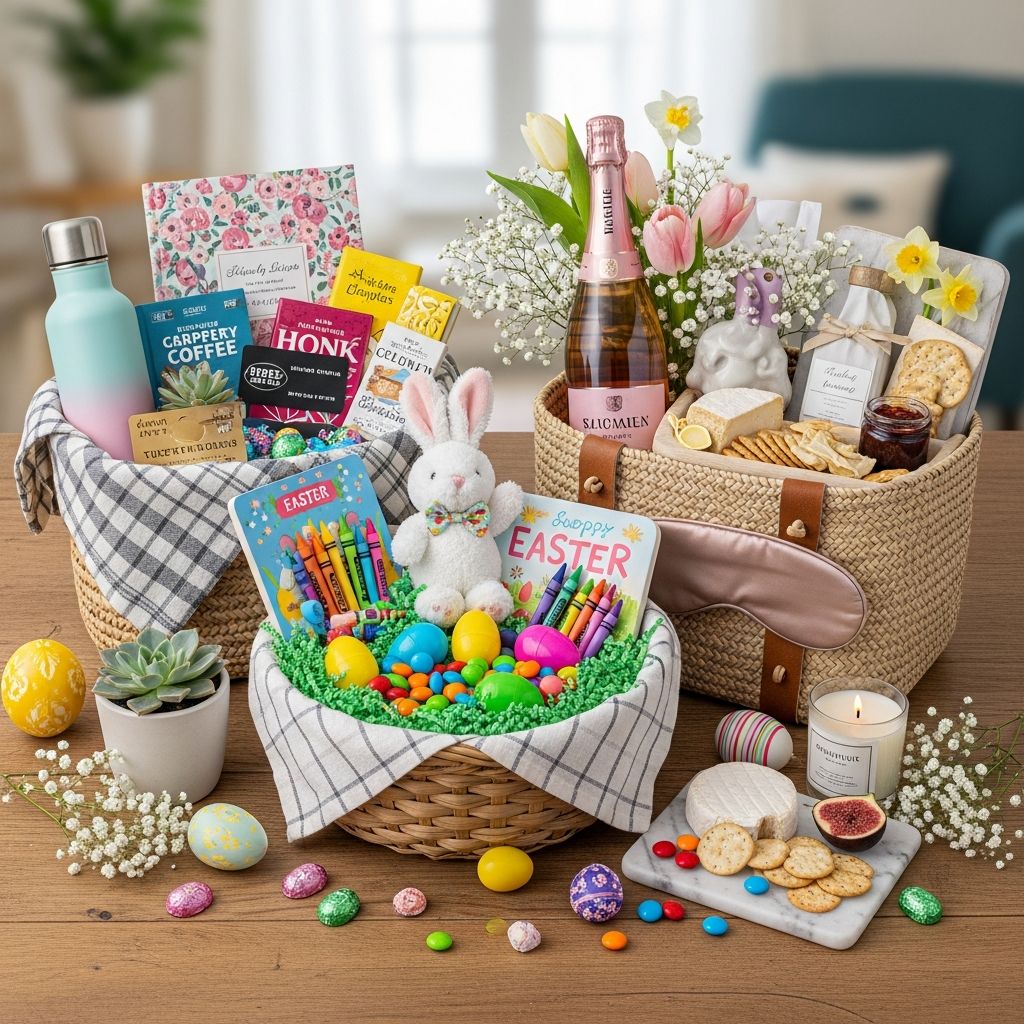
Easter baskets do not have to be overflowing with sugar, plastic trinkets, and last-minute panic purchases. With a bit of planning, you can put together thoughtful baskets that mix fun, learning, and meaning for every age group.
This guide walks you through age-appropriate ideas, budget tips, and simple traditions so you can build baskets that feel special without creating clutter or stress.
Why Rethink the Traditional Easter Basket?
For many families, Easter baskets have gradually shifted from a few chocolate eggs to something closer to a second round of holiday gifts. That often means:
- Too much candy, which most children already consume in excess throughout the year according to public health research.
- Cheap toys that break quickly and add to household clutter and plastic waste.
- Stress for parents trying to keep up with social media-worthy baskets.
Designing baskets more intentionally helps you:
- Support healthier habits by balancing sweets with practical items and experiences.
- Choose durable, reusable items that reduce waste over time.
- Highlight the season’s themes: renewal, kindness, and family connection.
Start with a Plan: Themes, Budgets, and Basket Alternatives
Before you shop, decide on two key things: a simple theme and a realistic budget.
Pick a Simple Theme
A theme keeps you from buying random extras and helps the basket feel more intentional. Try ideas like:
- Outdoor explorer: sidewalk chalk, a magnifying glass, seed packets, a small kite.
- Book lover: one new book, a cozy blanket, a bookmark, and a small snack.
- Little artist: crayons or markers, a sketchbook, stickers, and a smock.
- Mindful & calm: fidget toys, a journal, coloring pages, herbal tea (for older kids/teens).
- Family game night: a card game, popcorn, and a coupon for game night.
Set a Budget and Stick to It
Decide on a per-basket limit and build around one or two “anchor” items.
- Choose one larger gift (like a book, puzzle, or craft set).
- Add 2–5 small fillers (snacks, art supplies, accessories).
- Include one experience when possible (coupon for a zoo trip, movie night, or park picnic).
Think Beyond the Basket
You do not have to use a traditional wicker basket each year. Consider containers that become part of the gift:
- Sand pail or beach tote
- Reusable storage bin or fabric cube
- Backpack or lunch box
- Plant pot or window box for gardening gifts
Easter Basket Ideas by Age Group
Use the ideas below as a menu to mix and match based on your child’s interests and your family’s traditions.
For Babies and Toddlers (0–3 Years)
At this stage, baskets are mostly for parents’ enjoyment and cute photos. Focus on practical, sensory, and developmental items that support play and early learning.
- Board books: Spring or animal themed, with sturdy pages and bright pictures.
- Soft toys: A small plush bunny or lamb.
- Bath fun: Cups, waterproof books, or simple bath toys.
- Clothing: Spring pajamas, a sunhat, or socks.
- Snack cups and utensils: Reusable containers, silicone bibs, or toddler-safe cutlery.
- Simple instruments: Shakers, bells, or a small drum for supervised play.
| Item Type | Example Gift | Why It Works |
|---|---|---|
| Book | Animal-themed board book | Supports early language and bonding. |
| Practical | Sunhat | Prepares for outdoor time and protects skin. |
| Play | Soft rattle or shaker | Encourages motor skills and exploration. |
For Preschoolers (3–5 Years)
Preschoolers love hands-on, imaginative play. Fill baskets with items that invite creativity and movement.
- Art supplies: Washable markers, chunky crayons, stamps, and coloring books.
- Outdoor toys: Bubbles, chalk, a small ball, or a jump rope.
- Simple puzzles: Wooden puzzles, shape sorters, or matching games.
- Dress-up items: Capes, hats, or pretend play accessories.
- Storytime picks: Picture books about spring, kindness, or animals.
For Early Elementary Kids (6–8 Years)
Kids in early elementary school are ready for more complex crafts, stories, and games. They may also start helping with family traditions like egg decorating.
- STEM activities: Simple science kits, magnifying glass, or a bug box.
- Craft kits: Beads, bracelet-making sets, beginner sewing, or origami paper.
- Books: Early chapter books, joke books, or comic-style readers.
- Outdoor gear: Garden gloves, child-sized trowel, or flower seeds.
- Games: Card games that are easy to learn and play with siblings.
For Tweens (9–12 Years)
Tweens often appreciate a mix of practical items and things that reflect their budding independence and interests.
- Journals and notebooks: Fun covers, lockable diaries, or sketchbooks.
- Room decor: String lights, small posters, or mini picture frames.
- Hobby items: Sport accessories, beginner baking tools, or coding workbooks.
- Personal care: Lip balm, gentle soaps, or hair accessories.
- Tech accessories: Earbud case, charging cable, or phone grip.
For Teens
Teenagers may think they are “too old” for Easter baskets, but they still enjoy thoughtful surprises—especially when they feel age-appropriate and useful.
- Gift cards: Small amounts for coffee shops, bookstores, or apps.
- Self-care: Face masks, cozy socks, or water bottles.
- Creative tools: Brush pens, mini canvases, or photography accessories.
- Snacks: Their favorite chips, nuts, or dark chocolate.
- Experiences: Movie tickets, mini golf passes, or a promise of a one-on-one outing.
For Adults
Parents, grandparents, and partners can enjoy Easter baskets too. Keep them simple, thoughtful, and aligned with everyday routines.
- Morning upgrades: Coffee beans, tea, a mug, or a reusable travel cup.
- Relaxation: A novel, bath salts, a candle, or a cozy throw.
- Food and drink: Artisan chocolate, jams, or a favorite snack.
- Hobby gifts: Garden gloves, a new kitchen tool, or craft supplies.
- Memory makers: A small photo album or frame with a recent family photo.
Balancing Sweets with Healthier Treats
Candy can still have a place in Easter baskets, but it does not need to be the main event. Public health guidance recommends limiting added sugar in children’s diets to protect long-term health.
Smarter Candy Choices
- Use smaller portions tucked into eggs instead of large bags.
- Choose dark chocolate or treats without sticky, prolonged exposure to teeth when possible, to reduce cavity risk.
- Set a simple candy rule, like one or two pieces after meals.
Non-Candy Edible Ideas
- Small packs of nuts, trail mix, or granola (age-appropriate for choking risk).
- Applesauce pouches or fruit cups in juice.
- Fun-shaped crackers or whole grain snacks.
- Mini boxes of raisins or dried fruit.
Low-Clutter, Eco-Friendlier Basket Ideas
If you are trying to reduce waste, you can still celebrate Easter in a way that feels festive.
- Skip plastic grass: Use shredded paper, fabric scraps, or a small scarf, which can be reused.
- Choose reusable eggs: Harder plastic eggs that you store each year, or wooden eggs you can paint together.
- Focus on experiences: Coupons for a family hike, picnic, or game night instead of more toys.
- Pick multi-use items: Water bottles, lunch boxes, or art supplies that will be used long after the holiday.
Simple Easter Traditions to Pair with Baskets
Baskets feel even more special when they are part of a larger family rhythm and set of traditions. Family routines and rituals are linked with a sense of belonging and emotional security in children.
- Morning basket hunt: Hide baskets or plastic eggs around your home or yard.
- Family breakfast: Enjoy a simple, recurring meal each Easter—like pancakes, fruit salad, or muffins.
- Craft time: Dye eggs, paint wooden eggs, or work on a spring craft together.
- Story moment: Read a favorite seasonal book or talk about themes of kindness, renewal, and gratitude.
- Service act: Donate a basket to a local drive, send cards to relatives, or bake for neighbors.
Putting It All Together: Sample Basket Formulas
To keep things easy from year to year, try using a simple formula for each basket. For example:
- Something to read (book, magazine, comic)
- Something to wear (socks, hat, shirt)
- Something to make or do (craft kit, game, puzzle)
- Something sweet (small amount of candy or snack)
Adjust the details by age and interest, but keep the structure the same. This simplifies planning and helps set expectations so kids know what kinds of things to look forward to each year.
Frequently Asked Questions (FAQs)
Q: How much should I spend on an Easter basket?
A: There is no right number, but many families aim for a modest budget per child and then choose one main gift with a few small fillers. Decide what is comfortable for your household, communicate expectations clearly as kids get older, and remember that time together and traditions matter more than price.
Q: How can I make Easter baskets more meaningful and less material-focused?
A: Add handwritten notes, include one experience-based gift (like a coupon for a special outing), and build simple family rituals around the day—such as reading together, cooking a meal, or doing a small act of service.
Q: What are good non-candy fillers for kids with food allergies?
A: Focus on toys, art supplies, books, stickers, puzzles, and experiences. When including food, check labels carefully and consider allergy-friendly snacks recommended by your child’s healthcare provider.
Q: How early is too early to give a child an Easter basket?
A: You can make a small, practical basket even for a baby using items like books, clothing, and feeding accessories. Just avoid small parts and any food that is not appropriate for their age, and supervise all play.
Q: How do I handle different ages so older kids do not feel left out?
A: Use a similar basket “formula” for each child but tailor the items to their age and interests. For example, everyone gets something to read, something to wear, something to do, and a treat, but the specific items will differ for a toddler, tween, or teen.
References
- Dietary Guidelines for Americans, 2020–2025 — U.S. Department of Health and Human Services & U.S. Department of Agriculture. 2020-12. https://www.dietaryguidelines.gov
- Added Sugars and Cardiovascular Disease Risk in Children — Vos MB et al., Circulation (American Heart Association). 2017-08-22. https://www.ahajournals.org/doi/10.1161/CIR.0000000000000439
- Single-use Plastics: A Roadmap for Sustainability — United Nations Environment Programme. 2018-06-05. https://www.unep.org/resources/report/single-use-plastics-roadmap-sustainability
- Toys and Play for Toddlers — American Academy of Pediatrics, HealthyChildren.org. 2021-09-01. https://www.healthychildren.org/English/ages-stages/toddler/Pages/Toys-for-Toddlers.aspx
- Reading with Your Child — American Academy of Pediatrics, HealthyChildren.org. 2022-05-09. https://www.healthychildren.org/English/ages-stages/baby/Pages/Reading-to-Your-Baby.aspx
- Children’s Oral Health — Centers for Disease Control and Prevention. 2024-02-07. https://www.cdc.gov/oralhealth/basics/childrens-oral-health/index.html
- Family Routines and Rituals — American Academy of Pediatrics, HealthyChildren.org. 2021-10-21. https://www.healthychildren.org/English/family-life/family-dynamics/communication-discipline/communication-discipline/Pages/Family-Routines-and-Rituals.aspx