Welcoming a newborn into the home often brings joy alongside challenges, particularly for older siblings navigating shifted attention and dynamics. A popular trend among parents involves newborns “gifting” items to their older brothers and sisters, creating immediate positive associations and easing the transition. This approach, combined with intentional parenting strategies, helps foster secure attachments and reduces rivalry.
Understanding the Emotional Shift for Older Children
The arrival of a new baby disrupts the family equilibrium, prompting feelings of jealousy, insecurity, or resentment in toddlers and preschoolers. Research indicates these emotions are normal and temporary, with no long-term impact on sibling relationships if handled supportively. Parents can prepare by acknowledging the change upfront, explaining that the baby requires frequent care while reaffirming the older child’s importance.
Secure attachments formed pre-birth correlate with better post-birth adjustments. Strengthening parent-child bonds through responsive care, consistent routines, and positive reinforcement lays a foundation for resilience. Avoiding concurrent stressors, like moving or potty training, minimizes overwhelm.
The Power of ‘Baby’s Gift’ in Building Excitement
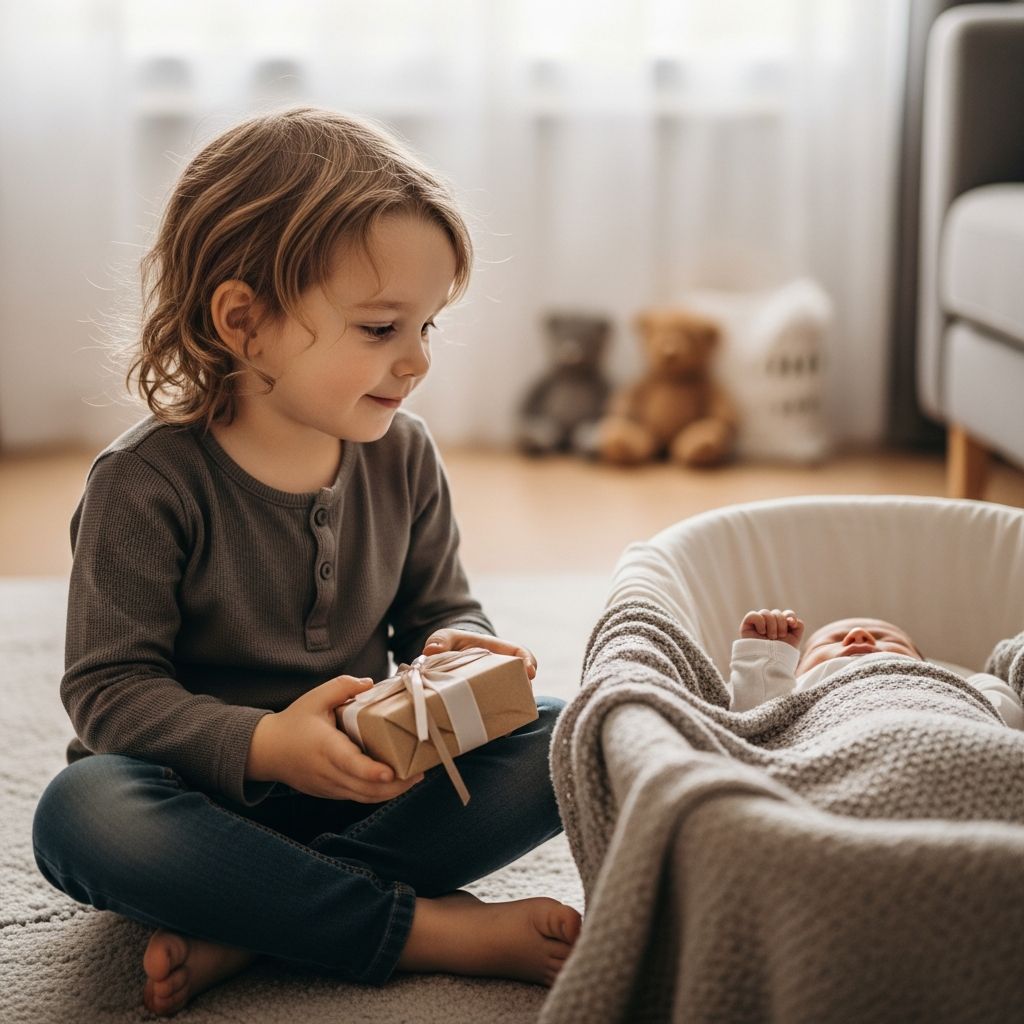
One heartfelt tactic is presenting gifts “from the baby” upon hospital return or homecoming. These can include age-appropriate toys, books, or activity sets that older children enjoy independently or alongside the newborn. This ritual symbolizes the baby’s role as a giver, shifting perceptions from intruder to family ally.
- Choose items like puzzles, coloring kits, or audiobooks for quiet play during feeding times.
- Wrap gifts simply and label them ‘From Your New Sibling’ to spark curiosity.
- Follow up by narrating the gesture: ‘Baby picked this just for you because you’re such a great big brother!’
Parents report this boosts self-esteem and encourages helpfulness, turning potential rivalry into collaboration.
Strategies for Daily Involvement and Positive Reinforcement
Involving older children in baby care promotes a sense of purpose. Supervised tasks build competence without pressure.
| Age Group | Suitable Tasks | Benefits |
|---|---|---|
| Toddlers (1-3 years) | Gently touching baby, fetching diapers, singing lullabies | Fosters gentleness, inclusion |
| Preschoolers (3-5 years) | Preparing bath items, holding towel, choosing outfits | Enhances responsibility, bonding |
Praise specific actions enthusiastically: ‘You held the rattle so gently—Baby loves that!’ This descriptive affirmation encourages repetition and empathy. Ignore minor regressions like babyish behavior, focusing instead on prosocial actions.
Carving Out Dedicated One-on-One Time
Quality individual time reassures older children of their valued status. Short, distraction-free sessions—reading a favorite book or playing a game—reinforce security.
- Alternate caregiving with partners: one handles baby while the other engages the older child.
- During feedings, incorporate the sibling with stories, songs, or music.
- Schedule ‘special time’ daily, even 10-15 minutes, prioritizing child-led activities.
Non-birthing parents or relatives stepping up for playdates or outings further distributes attention.
Navigating Regression and Emotional Expression
Sleep disruptions or clinginess are common as children process changes. Maintain consistent limits while validating feelings: ‘It’s okay to feel mad when Baby cries a lot.’ Research shows expressing anger doesn’t predict poor sibling ties.
Encourage pretend play with dolls mimicking family scenarios. Modeling scenarios like ‘Mommy’s busy with Baby, but here’s how we take turns’ aids emotional processing and yields positive interactions. Books about siblings should emphasize realistic emotions over idealized harmony.
Fostering Fairness Without Equality
Children perceive differential treatment keenly, so explain variances transparently: ‘Baby needs more help now because she’s little, but you’ll get big-kid adventures soon.’ Fairness means equity based on needs, not identical portions. Narrate transitions: ‘After Baby naps, it’s our puzzle time.’
Preparing During Pregnancy for Smoother Arrival
Prenatal involvement demystifies the baby. Use ultrasound visits for commentary: ‘Feel that kick? Baby’s excited to meet you!’ Role-play social skills via playdates to equip for sharing.
Stock sibling-friendly spaces with new toys pre-arrival, framing them as baby gifts to preempt envy.
Real Parent Experiences and Long-Term Outcomes
Families note marked improvements with consistency. One parent shared using mess-free crafts during nursing, keeping everyone content. Another highlighted narrating equity: ‘Baby finishes, then we cuddle,’ reducing conflicts.
Studies affirm proactive positivity—praise, responsiveness—leads to warmer sibling bonds months later. Social skill practice via peers enhances interactions.
Frequently Asked Questions
What if my older child rejects the baby gift?
That’s normal—don’t force it. Offer later during calm moments, praising any interest. Focus on voluntary involvement.
How much one-on-one time is enough?
Aim for 10-20 minutes daily, child-directed. Consistency trumps duration.
Should I punish aggression toward the baby?
Protect safety without shaming: ‘I can’t let that happen—let’s find words for mad feelings.’ Praise kindness instead.
Can books really help?
Yes, from 18 months, select those validating mixed emotions for empathy building.
What about sleep regressions?
Maintain routines, involve child in baby care for purpose. Temporary dips resolve with positivity.
Parental Self-Care for Sustained Support
Parents’ adjustment matters too. Delegate tasks, seek support networks, and model calm. Balanced caregivers sustain family harmony.
References
- Adjusting to a New Baby — Dr. Cara Goodwin, PhD. Parenting Translator. 2023. https://parentingtranslator.substack.com/p/adjusting-to-a-new-baby
- Sibling Rivalry – The Arrival of a Baby Brother or Sister — Child Psychotherapy UK. N/A. https://childpsychotherapy.org.uk/resources-families/understanding-childhood/sibling-rivalry-arrival-baby-brother-or-sister
- New baby: helping toddlers & preschoolers — Raising Children Network. 2023. https://raisingchildren.net.au/toddlers/family-life/new-baby-in-the-family/new-baby-toddlers-preschoolers
- As Families Grow: Helping Siblings Adapt To A New Baby — La Leche League USA. N/A. https://lllusa.org/as-families-grow-helping-siblings-adapt-to-a-new-baby/
- How to Handle Sleep Regressions When Your Child Becomes an Older Sibling — Kelly Murray Sleep. N/A. https://kellymurraysleep.com/the-sleepy-times/how-to-handle-older-child-sleep-regressions