Portable baby beds solve one of the biggest challenges of life with a little one: where your baby will sleep when you are away from home. They offer a dedicated, familiar space that supports safer sleep while keeping travel and daily routines more manageable for parents.
Why Portable Baby Beds Matter
Newborns and young children sleep many hours a day, but their sleep is easily disrupted by unfamiliar environments. A portable baby bed gives your child a consistent place to rest, whether visiting grandparents, staying in a hotel, or simply moving from room to room at home.
Beyond convenience, a well-designed travel sleeper helps you follow safe sleep guidelines when you cannot bring your full-size crib, making trips less stressful and nights away from home more predictable.
Major Types of Portable Baby Beds
Portable baby beds come in several styles, each with different ideal ages, use cases, and portability levels. Understanding the categories will help you quickly narrow your options.
1. Travel Bassinets
Travel bassinets are compact, shallow sleep spaces designed for younger babies, usually from birth through the first months of life. They often feature lightweight frames, soft side walls, and a thin mattress pad suitable for short-term use.
- Best for newborns up to the early rolling or sitting stage.
- Ideal for room-sharing in small spaces, hotel stays, and daytime naps.
- Commonly fold flat or into a compact carry bag for easy transport.
2. Full-Size Travel Cribs and Play Yards
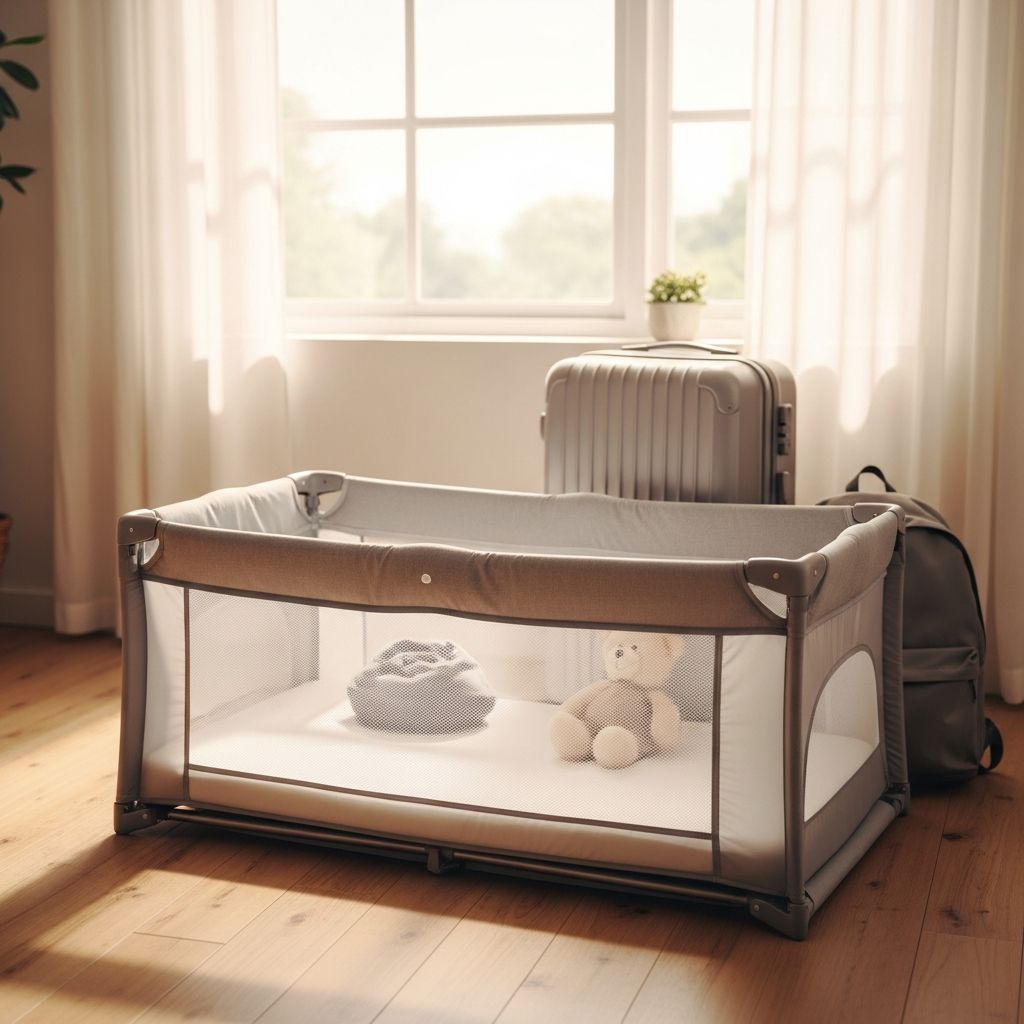
Travel cribs resemble traditional play yards but are engineered to be lighter and more compact when folded. They are typically appropriate from birth (or with a newborn insert) up through toddlerhood, making them one of the most long-lasting portable options.
- Offer enough room for sleep and play, with mesh sides for visibility and airflow.
- Often used as a primary crib alternative in small apartments or for frequent travelers.
- Can be heavier than bassinets but provide greater longevity and versatility.
3. Foldable Bedside Sleepers
These portable sleepers are designed to sit on your bed or directly beside it, allowing you to keep your baby close while maintaining a defined sleep surface. Some styles are approved for bedside use only, while others are intended for temporary overnight sleep when traveling.
- Useful for parents who want a co-sleeping feel without sharing the same mattress.
- May include rigid sides or mesh to create a protective barrier.
- Most are limited to the early months and should no longer be used once baby can roll or push up.
4. Inflatable or Folding Toddler Travel Beds
Once your child outgrows a crib, inflatable or folding toddler travel beds become useful. These are not suitable for babies, but they are a natural progression for older toddlers and preschoolers who no longer need a crib.
- Designed for children who can safely sleep on a low mattress or cot without rolling into dangerous gaps.
- Often used for road trips, sleepovers, and visits to relatives.
- Provide a lighter, packable option compared with travel cribs for larger children.
Key Safety Considerations
Safety is the most important factor when choosing any sleep product for your child. While regulations vary by region, there are consistent principles that parents can follow to support safer sleep in portable beds.
- Firm, flat surface: The mattress or pad should be firm and stay flat without sagging when your baby lies down. Avoid adding extra mattresses or soft toppers that are not designed for the specific product.
- Snug fit: The mattress should fit snugly inside the frame, with no gaps at the sides where a baby could become trapped.
- Clear sleep space: Follow a bare-sleep-surface approach: no pillows, loose blankets, bumpers, or stuffed toys in the bed.
- Stable structure: Check that the legs lock securely, the sides are fully in place, and there is no wobbling before laying your baby down.
- Breathable sides: Mesh panels help increase airflow and allow you to see your baby more easily from different angles.
- Weight and age limits: Respect manufacturer guidelines for maximum weight, height, and developmental milestones like rolling or pulling up.
Always read the product manual and follow the specific instructions for assembly and use. Each brand may have unique safety details, including how and where the bed can be used.
Essential Features to Look For
Beyond safety, the right combination of features will determine whether your portable baby bed is a delight or a hassle to use. Consider how and where you plan to use it most often.
- Weight and size when folded: Families who fly frequently may prioritize ultra-light models that fit in overhead compartments, whereas road-tripping families may accept a slightly heavier option with more room.
- Ease of setup and breakdown: Look for simple mechanisms that you can operate without tools, ideally in just a few steps. Practice at home before your first trip.
- Carrying options: Backpack-style cases free your hands, while shoulder straps work well for shorter distances. Hard-sided cases may offer better protection in checked luggage.
- Mattress and sheet compatibility: Some travel cribs require brand-specific sheets, while others fit standard sizes. Having extra fitted sheets makes cleanup far easier.
- Side access: Zippered side panels allow you to lower your baby into the bed more gently and can double as a play space during the day.
- Multi-stage use: Inserts that convert from a raised bassinet to a lower crib position extend the product’s lifespan through multiple growth stages.
- Cleaning and maintenance: Removable, washable fabrics or wipeable surfaces are essential when you are away from your usual cleaning supplies.
Portable Baby Beds for Different Lifestyles
Not all families travel in the same way, and your ideal sleep solution depends heavily on how you live. Thinking through your lifestyle will help you focus on the features that matter most.
For Frequent Flyers
If you fly multiple times a year, an ultralight travel crib or bassinet with a compact footprint is typically worth the investment. Prioritize models that fit easily into car trunks and airline overhead bins, and that can be carried hands-free through busy airports.
- Low total weight to avoid extra baggage fees and fatigue.
- Backpack or crossbody carry bag for easier navigation with luggage and stroller.
- Fast setup, as you may be assembling it after a long travel day in unfamiliar spaces.
For Road-Tripping Families
When trunk space is your primary limitation, slightly heavier but roomier portable beds often work well. Many parents favor play yards that double as safe daytime play areas at rental homes, campgrounds, or grandparents’ houses.
- Larger sleep surface and higher weight limits to cover toddler years.
- Sturdier construction, since you will likely move it frequently between houses or hotel rooms.
- Optional accessories like sunshades or insect nets for outdoor use.
For City Living and Small Spaces
In compact homes or apartments, a portable bed may double as the child’s primary crib. In this case, look for long-term comfort and durability in addition to portability.
- Slim footprint that fits beside your bed or in tight corners.
- Neutral design that blends with home décor, if the bed will stay up most of the time.
- High-quality mattress pad and robust frame for daily use.
Example Comparison of Portable Bed Types
The table below compares common styles of portable beds based on typical characteristics. Always check the details of any specific model you are considering.
| Type | Typical Age Range | Portability | Main Advantages | Potential Drawbacks |
|---|---|---|---|---|
| Travel Bassinet | Newborn to early rolling stage | Very high; folds small and light | Great for early months, easy to move between rooms, simple setup | Short usage window, usually outgrown within a few months |
| Travel Crib / Play Yard | Birth (with insert) to toddler | Moderate; larger but still foldable | Long lifespan, doubles as play space, stable design | Heavier and bulkier than bassinets, may be less ideal for air travel |
| Bedside Sleeper (Portable) | Newborn to rolling/pushing up | High; compact and often lightweight | Keeps baby close for night feeds, good for small bedrooms | Limited age range, some models are for supervised sleep only |
| Inflatable/Folding Toddler Bed | Toddler to preschooler | High; rolls or folds compactly | Very lightweight for older kids, good for occasional use | Not safe for infants, may require inflation/deflation time |
Practical Tips for Using a Portable Baby Bed
Once you have chosen a portable bed, good habits make the experience smoother for both you and your child. A little preparation goes a long way toward peaceful sleep when you are away from home.
- Introduce it at home first: Let your baby nap in the portable bed at home before using it for travel. This creates familiarity and reduces resistance in new environments.
- Maintain a consistent bedtime routine: Use the same sequence of steps—such as bath, pajamas, feeding, and a short song—to signal that it is time to sleep, even in a different location.
- Pack dedicated bedding: Bring the same fitted sheets and wearable sleep sack your baby uses at home. Familiar textures and scents can be very soothing.
- Choose a safe location: Set up the bed on a flat, stable surface away from cords, curtains, heaters, or gaps where it could tip or become wedged.
- Check the setup every time: Reconfirm that all legs are locked, the mattress is properly placed, and any zippers or side panels are securely closed before each use.
- Monitor room conditions: Pay attention to temperature, noise, and light levels. Portable blackout shades or a white noise machine can help create a more sleep-friendly space.
Budgeting and Value Considerations
Portable baby beds are available at a wide range of price points. More expensive does not always mean safer, but premium models often provide lighter materials, easier setup, and higher-quality fabrics. Balance cost with the frequency and type of use you expect.
- Occasional travel: If you plan one or two trips a year, a mid-range or budget-friendly option may be sufficient, especially if you do not need ultra-compact dimensions.
- Frequent travel or daily use: Parents who travel often or plan to use the bed as a primary crib may benefit from durable construction, better zippers, and a more comfortable mattress pad.
- Resale and hand-me-down potential: Well-known brands in good condition may hold resale value or serve multiple children, spreading out the initial investment.
Frequently Asked Questions
Can a portable baby bed replace a full-size crib?
Some families do use a high-quality travel crib as their primary sleep space, especially in small homes or for the first years of life. If you plan to do this, confirm that the model is designed for long-term daily use, meets current safety standards, and fits your child’s age and size range for an extended period.
Is it safe for a newborn to sleep in a travel crib?
Many travel cribs are rated from birth, particularly when used with an approved bassinet or infant insert. The sleep surface should be firm and flat, and you should always follow manufacturer instructions and general safe sleep guidelines, including placing your baby on their back to sleep and keeping the bed free of loose items.
How long can my baby use a travel bassinet?
Most travel bassinets are suitable only until your baby begins rolling, pushing up, or reaching the product’s specific weight or height limit. At that point, you should transition to a deeper sleep surface, such as a travel crib with higher sides, to reduce the risk of falls.
Do I need a special sheet for a portable baby bed?
Many brands design mattresses with unique dimensions, so fitted sheets from the same manufacturer often provide the safest fit. Using sheets that are too loose or too tight can cause bunching or slipping, which may compromise the flatness of the sleep surface.
What is the best way to clean a portable baby bed?
Always follow the care instructions specific to your product. Some models include removable fabric covers that can be machine washed on gentle cycles, while others call for spot cleaning with mild soap and water. Make sure everything is completely dry before packing the bed away to prevent mold and odors.
Can I use an inflatable mattress for my infant?
Inflatable mattresses are generally intended for older children who can safely sleep on a low bed without becoming trapped in gaps or soft surfaces. For infants and young babies, a firm, dedicated crib or bassinet mattress that fits snugly within a rigid frame is the safer option.
Final Thoughts on Choosing a Portable Baby Bed
Selecting a portable baby bed is about more than simply picking what folds the smallest. It involves balancing safety, comfort, convenience, and your family’s unique lifestyle preferences. By understanding the main types of portable beds, prioritizing essential safety features, and thinking through how you actually travel, you can choose a product that supports better rest for both you and your baby.
When your child has a familiar place to sleep, every trip feels more manageable, and you can focus more on making memories and less on worrying about the next nap.