Picky eating is one of the most common stress points for parents, yet it is also one of the most misunderstood. Many children go through a phase where foods they once loved suddenly become unacceptable, and new foods are rejected on sight. While this can be frustrating, it is possible to support a child in becoming a more confident, flexible eater without turning every meal into a negotiation.
Why Picky Eating Happens
Picky eating is rarely about a child trying to be difficult; it is usually a mix of biology, development, and experience. Understanding the “why” behind picky behavior helps parents respond with empathy instead of pressure.
Biology and Taste Sensitivity
Children naturally experience some flavors, especially bitter or strong ones, as more intense than adults do. This can make vegetables, spices, or mixed dishes feel overwhelming compared with simple, bland foods.
- Young children often prefer sweet and salty tastes, which can make plain carbs and processed snacks very appealing.
- Some kids are genuinely more sensitive to texture, temperature, or smell, and may gag or panic when faced with certain foods.
- Family history can play a role: if caregivers are cautious eaters, children see that behavior modeled.
Normal Developmental Phases
As toddlers gain independence, saying “no” to food becomes an easy way to practice control. Around this age, many children also develop “food neophobia” – a natural wariness of new foods.
- Demanding the same food every day can be comforting for a child navigating a world that feels big and unpredictable.
- Appetite naturally fluctuates from day to day; a child who eats a lot one day may simply not be very hungry the next.
- Growth slows after the first year of life, so intake may drop even though the child is healthy.
When Picky Eating Is Probably Normal
Most children who are labeled “picky” are still growing well, have energy to play, and eventually expand their food choices with time and patience. In these cases, the goal is to lower anxiety, keep mealtimes positive, and give repeated low-pressure exposure to a wide variety of foods.
Signs Your Child Is Likely Doing Fine
- Growth is steady along their usual growth curve, according to their healthcare provider.
- Your child eats from at least a few foods in each broad group: some starches, some proteins, some fruits and/or vegetables, and some fats.
- Energy is good: they can play, focus (age-appropriately), and sleep reasonably well.
- Picky behavior is mostly around meals, not extreme fear, gagging, or distress across many daily activities.
When to Seek Extra Help
Sometimes picky eating is more than a phase and may be tied to sensory challenges, oral-motor difficulties, anxiety, or underlying medical issues. Trust your instincts; if something feels off, it is worth raising with a professional, even if you are unsure.
- Very limited diet (for example, fewer than 10 foods) that continues for months with no signs of expanding.
- Frequent gagging, choking, vomiting, or intense panic around certain textures or smells.
- Noticeable weight loss, poor growth, fatigue, or recurrent illness possibly linked to low intake.
- Mealtimes dominated by battles, tears, or refusal that affect the whole family’s ability to eat together.
| Feature | Common Phase | Needs Professional Input |
|---|---|---|
| Number of accepted foods | Dozens, though not all are eaten every week | Fewer than about 10–15 foods with no expansion over time |
| Reaction to new foods | Mild resistance, spitting out, or ignoring | Crying, panic, gagging, or leaving the table |
| Impact on growth | Growth curve is stable | Weight loss, lack of growth, or clear nutrient concerns |
| Family meals | Occasional arguments but generally manageable | Regular battles, anxiety, or need for special meals every time |
Building a Healthy Mealtime Framework
Before focusing on specific foods, it helps to create a predictable, calm structure around meals. Children eat better when they know what to expect and do not feel pressured or micromanaged with every bite.
Clarifying Parent and Child Roles
A helpful way to think about feeding is to separate what parents control from what children control. Parents are in charge of the big picture; children are in charge of listening to their own bodies.
- Parent responsibilities: decide what foods are offered, when meals and snacks happen, and where eating takes place.
- Child responsibilities: decide whether to eat from what is offered, and how much to eat from those foods.
- This division of responsibility reduces battles over “just one more bite” and respects appetite and autonomy.
Creating a Simple Meal and Snack Rhythm
Constant grazing dulls a child’s sense of hunger and makes trying new foods less appealing. A loose schedule helps them arrive at the table ready to eat but not ravenous.
- Aim for three main meals and two or three planned snacks spaced a few hours apart.
- Offer water between meals; keep milk and juice mostly at meals and snacks.
- Try to eat in the same general place (table, highchair) to cue “this is eating time.”
Making the Plate Less Scary
For a cautious eater, a plate overflowing with unfamiliar food can feel overwhelming. Small, thoughtful changes in how food is offered can lower anxiety and increase curiosity.
Smart Portioning and Variety
Tiny portions make new foods feel safer and reduce waste. A balanced plate does not need to be large to be nutritious.
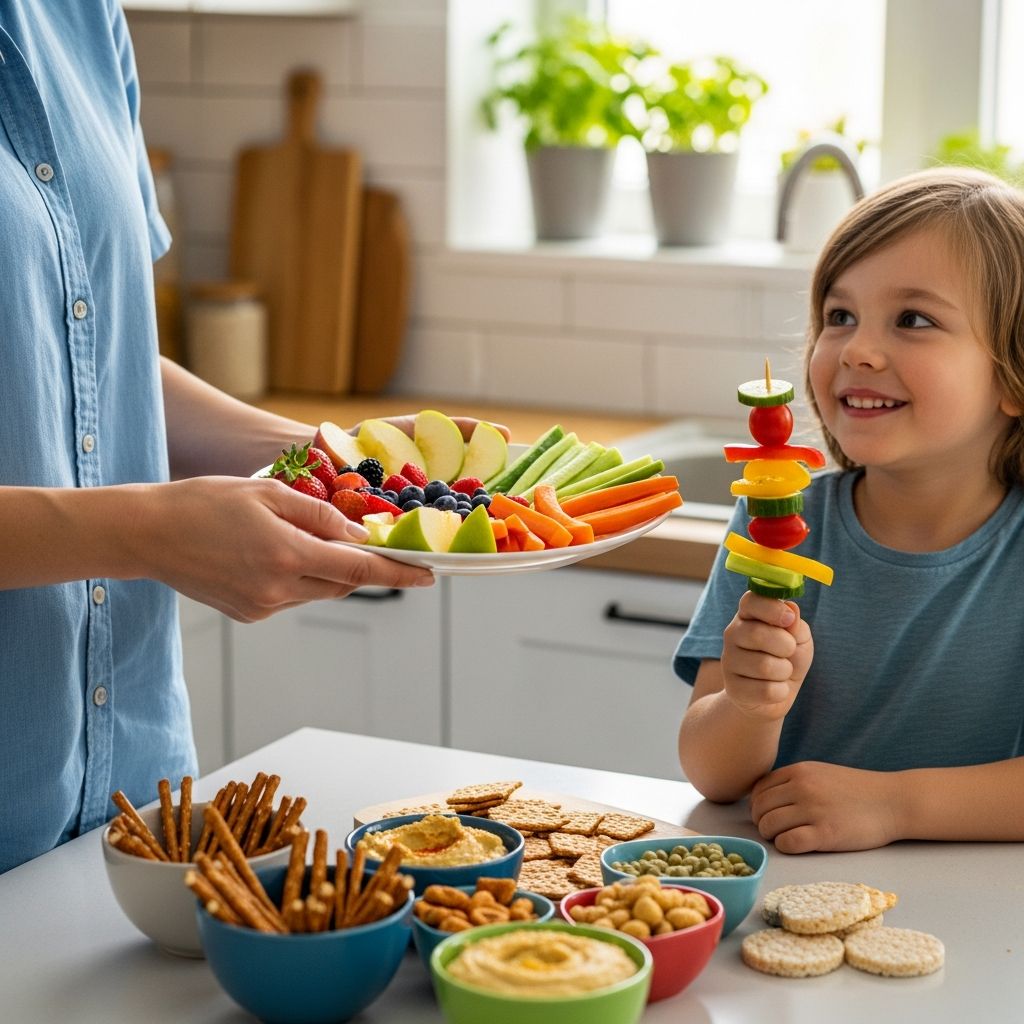
- Start with a spoonful or a few small pieces of new or disliked foods alongside more familiar options.
- Always include at least one “safe” food your child usually accepts, even if it is just bread, fruit, or plain pasta.
- Rotate different colors, shapes, and temperatures over the week to keep variety gentle but consistent.
Examples of Balanced, Picky-Friendly Plates
| Meal | Safe Food | Gentle Stretch Food | New or Less Preferred Item |
|---|---|---|---|
| Breakfast | Dry cereal or toast | Yogurt served plain or with familiar fruit | A slice of a new fruit cut into fun shapes |
| Lunch | Plain pasta or rice | Cheese cubes or beans | A tiny portion of mixed vegetables with dip |
| Dinner | Bread or crackers | Chicken cooked in a simple, familiar way | Roasted vegetable pieces with a favorite sauce |
Strategies That Encourage Exploration
Children are more likely to try new foods when they feel safe, in control, and a bit curious. The goal is gentle exposure, not forcing or bribing.
Non-Pressure Ways to Interact With Food
Touching, smelling, or licking food without swallowing can be meaningful first steps. These “almost tastes” count as progress and should be noticed positively.
- Invite your child to arrange vegetables into a picture on the plate, then eat only what they choose.
- Offer a tiny “taste plate” on the side with small bites of foods you are serving to the rest of the family.
- Use simple language like “You can try it if you want” rather than “You have to take three bites.”
Getting Kids Involved Beyond the Table
Food is less intimidating when a child has helped bring it to the table. Involvement also gives them a sense of ownership and pride.
- Let your child help pick a new fruit or vegetable at the store by color or shape.
- Assign age-appropriate kitchen jobs like rinsing produce, stirring batter, or tearing lettuce.
- Plant a small herb or tomato in a pot so they can watch it grow and then taste it.
What to Avoid During Mealtimes
Some well-intentioned tactics backfire by increasing pressure or turning food into a bargaining chip. Avoiding these habits can transform the tone of your meals.
Common Traps That Increase Picky Eating
- Bribes and threats: linking dessert, screen time, or praise to eating certain foods can make those foods feel like chores.
- Short-order cooking: making a separate meal every time teaches a child that refusing food leads to special options.
- Commentary on every bite: hovering, counting bites, or praising only when the child eats vegetables keeps attention stuck on the conflict.
- Using hunger as punishment: harshly refusing any alternative food when a child is clearly distressed can raise anxiety and resistance.
Creating a Calm Meal Atmosphere
Food is not only about nutrients; it is about connection. When mealtime is pleasant, children are more open to exploring what is on their plate.
- Keep screens and toys away from the table to focus on conversation and connection.
- Share the same or similar foods as a family whenever possible so your child can see others enjoying them.
- Talk about flavors, colors, and textures in a neutral way rather than labeling foods as “good” or “bad.”
Supporting Nutritional Needs Without Panic
It is natural to worry about nutrients when a child eats selectively. The big picture over weeks and months matters more than any single meal.
Focusing on What Your Child Does Eat
Many picky eaters eat more variety than they initially appear to, once foods are listed out. A written list can also highlight small, realistic next steps.
- Write down all the foods your child currently accepts, grouping them into grains, proteins, fruits, vegetables, and fats.
- Look for patterns: do they prefer crunchy over soft, room temperature over hot, plain over mixed?
- Choose stretch foods that are one small step away from their favorites, such as a different shape of pasta or a new spread on bread.
Gentle Ways to Boost Nutrition
While you work on comfort with new foods, there are simple ways to strengthen the nutrition of foods your child already eats. These are not a substitute for variety, but they can ease worry in the meantime.
- Add healthy fats like olive oil, avocado, or nut/seed butters (if safe) to familiar foods to increase calories and satisfaction.
- Stir finely chopped or blended vegetables into sauces, dips, or baked items while still also offering them visibly.
- Discuss supplements or fortified foods with a healthcare provider if you have concerns about iron, vitamin D, or other nutrients.
Sample One-Week Confidence-Building Plan
Change is most effective when it is small and consistent. The following example shows how a family might gently shift habits over a week.
| Day | Main Focus | Simple Action |
|---|---|---|
| Day 1 | Set a meal/snack routine | Plan approximate times for three meals and two snacks; post it on the fridge. |
| Day 2 | Include a safe food | At each meal, make sure there is at least one food your child usually eats. |
| Day 3 | Add a tiny new taste | Offer a very small piece of a new food on a side plate with zero pressure. |
| Day 4 | Reduce commentary | Aim for one whole meal where no one talks about how much the child eats. |
| Day 5 | Involve your child | Let them help wash or stir part of the meal, even briefly. |
| Day 6 | Family foods | Serve one meal where everyone eats a version of the same main dish. |
| Day 7 | Reflect and adjust | Note one small win from the week and one change to keep building on. |
Frequently Asked Questions
How many times should I offer a food before giving up?
There is no magic number, but many children need to see, touch, or taste a new food repeatedly before accepting it. Think in terms of dozens of low-pressure exposures over weeks and months rather than a few attempts in one week.
Should I hide vegetables in my child’s food?
Blending vegetables into sauces or baked goods can raise nutrient intake temporarily, but it does not teach a child to like vegetables they recognize. If you choose to mix vegetables into other foods, also keep offering visible pieces so your child can eventually become familiar and comfortable with how they really look and taste.
What if my child eats nothing at a meal?
If the table included at least one familiar food and your child truly chose not to eat, keep the tone calm and neutral. Let them know there will be another opportunity to eat at the next planned snack or meal, and follow through so they learn that food is reliable even when they skip once in a while.
Is it okay to reward eating with dessert?
Turning dessert into a reward for finishing vegetables often makes sweets seem more special and vegetables more like a task. A different approach is to serve small portions of dessert on some days as just another part of the meal, whether or not your child eats everything else.
How can I handle different preferences within the same family?
Instead of cooking entirely separate meals, build flexible options from the same base recipe. For example, serve a taco or grain bowl bar where each person can choose which vegetables, proteins, and toppings to add, while the main elements remain shared.
Key Takeaways for Parents
Picky eating is often a normal, if exhausting, part of childhood development. By focusing on structure, calm exposure, and shared family meals rather than pressure and perfection, parents can help children grow into more confident, capable eaters over time.