Firearms present significant risks to children in homes across the nation, with statistics indicating their presence in roughly 40% of U.S. households. Parents bear the primary responsibility for preventing tragedies through proactive measures like secure storage and consistent education. This guide outlines practical steps to create a safer environment, drawing from established safety protocols to minimize accidents and foster responsibility.
Why Firearm Safety Matters in Every Home
Even if your household does not own firearms, children may encounter them at friends’ homes, relatives’ places, or public areas. Unintentional injuries from guns claim young lives annually, underscoring the need for universal awareness. The American Academy of Pediatrics emphasizes that the absence of guns is ideal for child safety, but when present, rigorous precautions are non-negotiable. Education alone cannot replace physical security, yet combining both dramatically reduces risks.
Key factors driving the urgency include children’s natural curiosity, which can lead to handling unknown objects, and the lethal potential of even unloaded firearms if mishandled. Federal data highlights that secure practices directly correlate with fewer incidents, empowering parents to act decisively.
Secure Storage: The Foundation of Protection
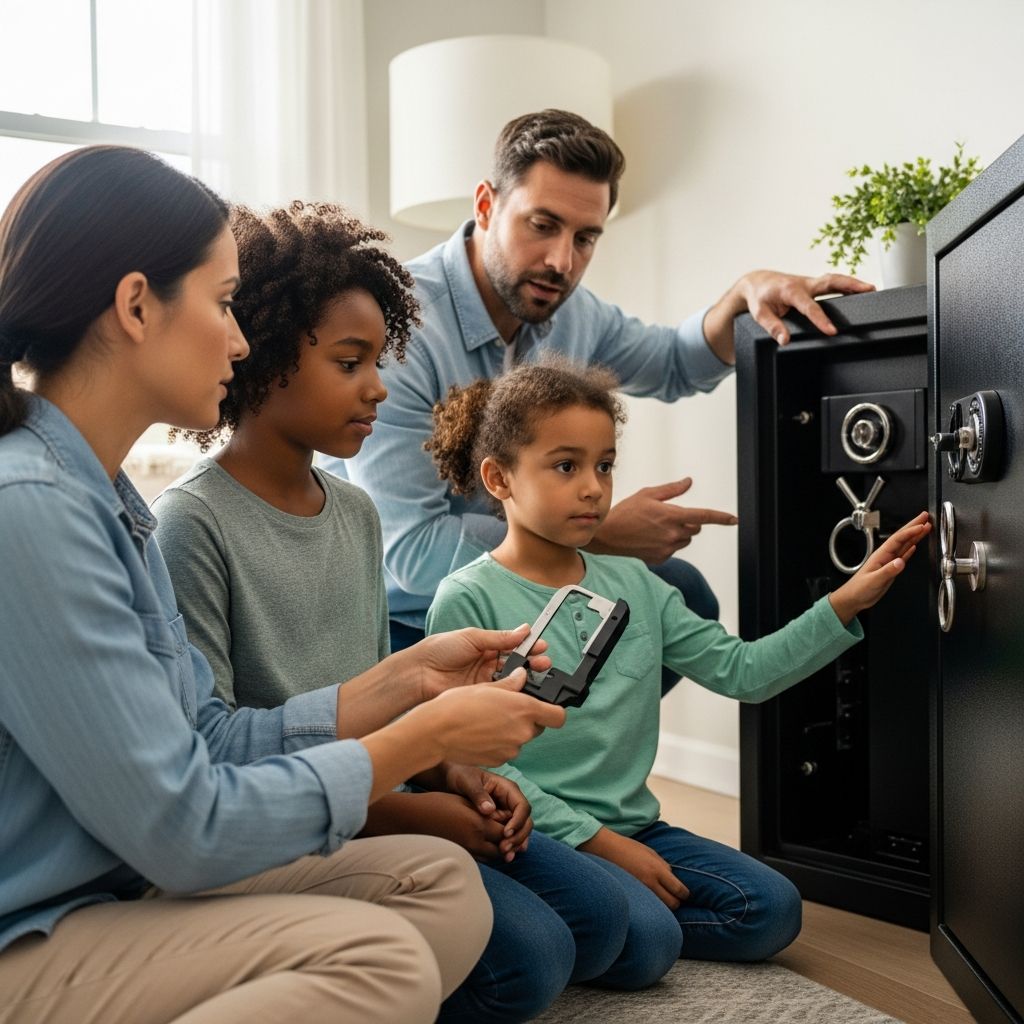
Locking firearms unloaded and separate from ammunition is the cornerstone of safety. Use cable locks, trigger locks, or biometric safes inaccessible to children, ensuring keys or codes remain hidden. Never store guns in easily reachable spots like nightstands, under beds, or vehicles without locks.
- Gun Safes: Opt for heavy-duty models bolted to walls or floors for tamper-proof security.
- Lock Boxes: Portable options for handguns, combining quick access for adults with child-proofing.
- Ammunition Storage: Keep in distinct locked containers to prevent assembly.
Regular audits of storage areas prevent complacency. For families with recreational shooting, maintain these standards post-use, modeling diligence.
| Storage Method | Pros | Cons | Best For |
|---|---|---|---|
| Biometric Safe | Fast adult access, no keys | Higher cost | Bedside or frequent use |
| Trigger Lock | Affordable, easy install | Slower to remove | Supplemental security |
| Full-Size Safe | Maximum protection | Bulky, expensive | Long guns, family homes |
Age-Appropriate Conversations: Building Awareness Early
Initiate discussions tailored to developmental stages. For toddlers, focus on ‘no touch’ rules using simple language. School-age children benefit from explanations distinguishing real guns from toys or media portrayals, stressing irreversible harm.
Use memorable acronyms like EDITH (Expect Danger, Distance yourself, Identify escape route): but adapt to core steps: Stop immediately, do not touch, leave the area, tell a trusted adult. Repeat these in daily routines, vehicles, and bedtime stories to embed them.
- Preschoolers: Visual aids and stories about dangers.
- Elementary: Role-play peer scenarios.
- Teens: Discuss laws, responsibilities if supervised.
Address media influence: Explain that video game guns lack real consequences, reinforcing ‘real guns hurt people permanently.’
Hands-On Training: Role-Playing for Confidence
Simulate encounters to prepare children without real firearms. Use props like toy models (unloaded replicas if available) to practice responses. Scenarios include finding a gun at a playdate or relative’s home.
Guide through steps: ‘Pretend you see a gun on the floor. What do you do?’ Encourage verbalizing ‘Stop! Don’t touch! Run! Tell!’ Debrief to build muscle memory. Programs like Eddie Eagle reinforce this interactively.
For older kids, supervised familiarization demystifies guns, reducing curiosity-driven risks. Check unloaded status together, always under direct watch.
Leading by Example: Parental Role Modeling
Children mirror behaviors, so demonstrate unflinching safety. Narrate actions: ‘I’m unlocking the safe—notice how it’s always locked?’ Share news stories analytically: ‘This accident happened because storage failed; let’s review our rules.’
If recreational use occurs, enforce: unloaded storage, no solo handling, assume loaded, never point. Withhold access codes, prioritizing safety over convenience.
Extending Safety Beyond Your Home
Discuss with caregivers, friends’ parents, and relatives: ‘Do you have firearms? How are they stored?’ Normalize inquiries without judgment. For playdates, confirm protocols or opt for neutral venues.
Vehicle safety: No loaded guns left unattended. Community checks, like asking coaches or scouts about gun policies, broaden protection.
Leveraging Educational Programs and Resources
Supplement home efforts with structured curricula. The NRA’s Eddie Eagle GunSafe® teaches ‘Stop! Don’t touch! Leave the area! Tell an adult!’ via age-specific materials.
- Local Law Enforcement: Free workshops and demos.
- Project ChildSafe: Free lock distributions and toolkits.
- Be SMART: Advocacy for locked, unloaded storage.
- Safe Kids Worldwide: Tip sheets for families.
Online videos, games, and printable posters engage digitally native kids. Schools and clubs often host sessions—enroll proactively.
Frequently Asked Questions (FAQs)
What should my child do if they find a gun?
Teach them to stop, don’t touch, leave the area, and tell an adult immediately. Practice this repeatedly.
Is teaching kids enough without locks?
No—education complements but does not replace secure storage. Curious children may forget under temptation.
How do I talk to other parents about guns?
Politely ask: ‘For safety, how do you store firearms?’ Share resources if needed. It’s a shared responsibility.
Can teens handle guns safely?
Only under direct adult supervision, with strict rules: assume loaded, secure storage, no solo access.
What if we don’t own guns?
Still educate—kids encounter them elsewhere. Role-play and discuss media differences.
Community and Long-Term Commitment
Join workshops, parent groups, or safety coalitions for ongoing support. Track local laws, as regulations evolve. Annual family safety drills maintain vigilance, turning protection into habit.
By integrating storage, education, and example, families mitigate risks effectively. Commitment yields safer generations.
References
- Guns in the Home: How to Keep Kids Safe — American Academy of Pediatrics (HealthyChildren.org). 2023-10-15. https://www.healthychildren.org/English/safety-prevention/at-home/Pages/Handguns-in-the-Home.aspx
- Talking to Your Child About Gun Safety — NRA Eddie Eagle. 2024-05-20. https://eddieeagle.nra.org/parents/
- Gun Safety Tips — Safe Kids Worldwide. 2025-02-10. https://www.safekids.org/tip/gun-safety-tips
- Gun Safety — Nemours KidsHealth. 2024-08-05. https://kidshealth.org/en/parents/gun-safety.html
- Gun Safety — Cook Children’s Center for Community Health. 2024-11-12. https://www.cookchildrenscommunity.org/programs/aim-for-safety/
- Project ChildSafe — Project ChildSafe. 2025-01-01. https://projectchildsafe.org
- Be SMART for Kids — Be SMART. 2024-09-18. https://besmartforkids.org