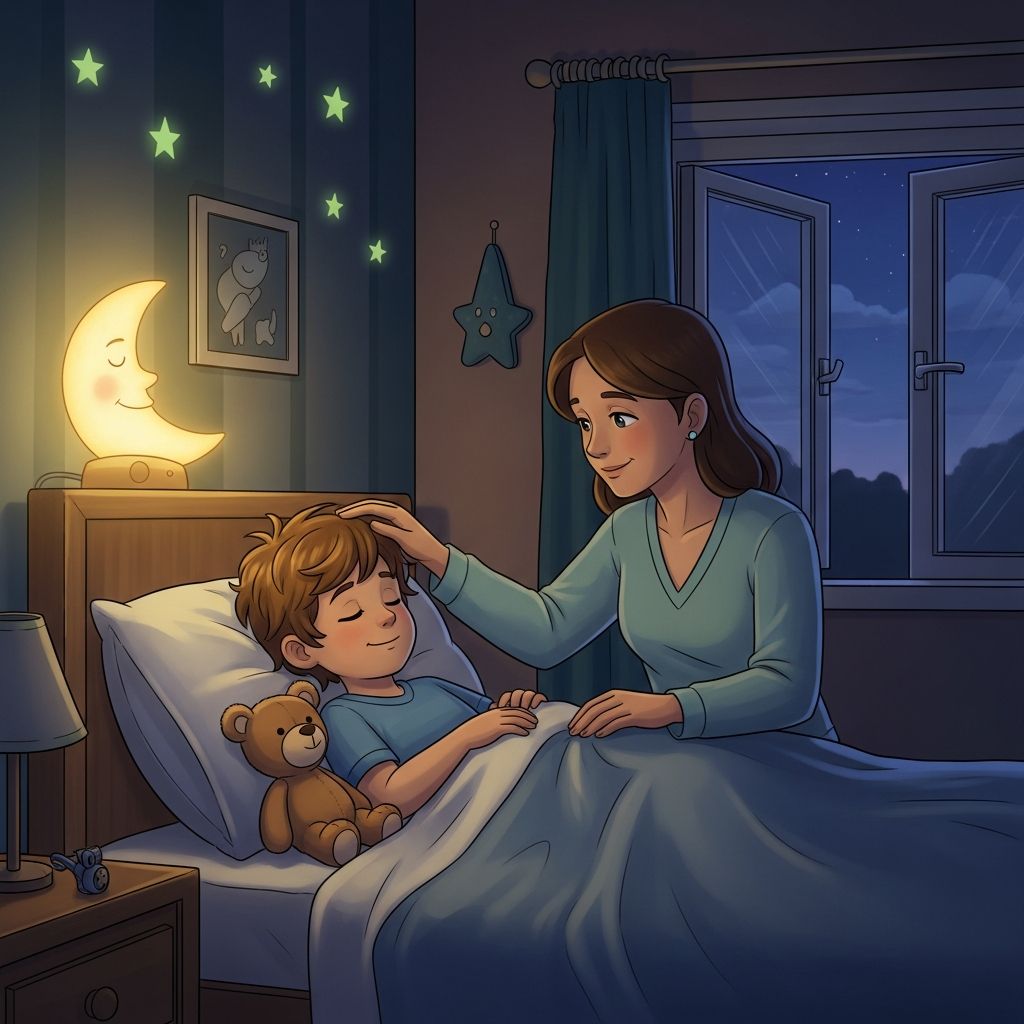
When a seven-year-old becomes panicked at lights-out, refuses to stay in bed alone, or sobs at the thought of sleep, it is not “just misbehavior”—it is a nervous system on high alert, asking for safety and connection. Nighttime can be transformed from a battleground into a place of healing when adults respond with both empathy and clear, steady limits.
Why Bedtime Feels So Scary at This Age
By seven, children are old enough to imagine complex scenarios, yet still too young to fully separate fantasy from reality. The quiet darkness of night removes daytime distractions and magnifies worries about burglars, monsters, illness, or being alone forever. What looks like stalling—one more drink, one more question, one more hug—is often an attempt to feel safe before surrendering to sleep.
This age is also a tipping point for independence. Children may feel pressure to be “big” while still needing a great deal of physical closeness, especially when tired. If the day has been stressful or disconnected, fear often rushes in at night, when there is finally space for feelings to surface.
Recognizing Nighttime Anxiety (Not Defiance)
Many families treat bedtime strife as misbehavior and respond with threats or punishments. Yet the patterns below suggest fear and anxiety rather than simple limit-testing. Understanding this shift changes how parents respond and usually leads to more cooperation over time.
- Intense emotional reactions at bedtime: crying, shaking, clinging, or pleading not to be left alone.
- Physical complaints that appear mainly at night: tummy aches, headaches, or feeling “sick” only when it is time for bed.
- Persistent reassurance-seeking: repeated questions like “Are the doors locked?”, “What if there’s a fire?”, or “What if you die while I sleep?”
- Frequent returns after lights-out: “I forgot to tell you something,” “I’m hungry,” “I need to check something,” often driven by worry rather than manipulation.
These are signs of a nervous system that needs co-regulation more than consequences. When parents prioritize safety first, firm boundaries can be set without harshness.
Common Triggers Behind Fear of the Dark
An anxious child is not afraid of “nothing.” There is usually a story behind the fear, though it might not be obvious at first. Identifying triggers helps parents respond more specifically and avoid accidentally making anxiety worse.
- Exposure to scary media: intense scenes in movies, games, or even news clips can resurface as images in the dark.
- Big life changes: moves, divorce, new schools, or a new sibling can make a child clingier and more fearful at night.
- Perfectionism and daytime stress: children who push themselves hard at school often release their pent-up worries as bedtime anxiety.
- Previous sleep disruptions: night terrors, sleepwalking, or past medical issues can create a fear that sleep itself is dangerous.
Instead of dismissing fears as “silly,” parents can treat them as meaningful clues about what the child has been holding inside all day.
A Balanced Approach: Warmth With Clear Boundaries
The most effective response to nighttime anxiety combines two ingredients: genuine emotional support and predictable structure. Too much focus on comfort without boundaries can lead to ever-expanding demands. Too much focus on rules without empathy can increase panic and resistance.
A balanced approach might sound like this: “You feel really scared when I leave, and your feelings make sense. I am not going to leave you alone with those big worries, and I am also going to help your body learn how to sleep in your own bed.” The goal is to be kind and firm at the same time—present, calm, and consistent.
Preparing for Bed Long Before Lights-Out
Bedtime anxiety cannot be fixed in the ten minutes before sleep. The whole evening routine can be designed to lower arousal, build connection, and give space for worries to be expressed. Think of the hours before bedtime as a runway, not a switch.
Soothing the Day Before the Night
- Protect at least 30–60 minutes of calm, screen-free time before bed to let the nervous system wind down.
- Build in a predictable order: for example, snack, bath, pajamas, story, connection time, then lights-out.
- Keep your voice slower and softer in the hour before bed; your tone is part of the sleep environment.
Creating a “Worry Window”
When children are only allowed to talk about fears at the moment of separation, anxiety tends to spike. Instead, set aside a “worry window” earlier in the evening, when the child is tired but not exhausted.
- Invite worries: “Is there anything your brain keeps bringing up at night that you want to tell me about now?”
- Listen without rushing to fix. Reflect feelings: “That does sound scary” instead of “There’s nothing to be afraid of.”
- If worries keep flowing, gently limit the time: “We have five more minutes to talk about worries, and then we’ll shift into relaxing our bodies for sleep.”
Designing a Sleep-Safe Space
Environment cannot erase anxiety, but it can avoid unnecessary triggers and add small anchors of safety. Many anxious children are highly sensitive to light, sound, and clutter. A thoughtfully arranged bedroom tells the child’s body: “This place is safe, predictable, and for rest.”
| Element | Helpful Adjustments |
|---|---|
| Lighting | Use a low, warm nightlight facing away from the bed; avoid bright overhead lights or glowing screens. |
| Sound | Offer soft white noise, a fan, or gentle music; reduce unpredictable household noise once the child is in bed. |
| Visuals | Keep scary posters or overstimulating decor out of view of the bed; add comforting items like photos or a favorite blanket. |
| Closeness signals | Allow a special stuffed animal, a “parent pillow,” or a small item with your scent to stay on the bed. |
The goal is not a magazine-perfect room, but a space that quietly reassures: “You are safe. You are loved. You are allowed to rest here.”
Calming the Body: Practical Regulation Tools
An anxious child’s body is usually flooded with stress hormones at bedtime. Logical explanations alone rarely touch this state. Children need concrete regulation tools they can feel in their bodies, practiced when they are relatively calm so they are available when fear surges.
- Breathing games: blow slow “bubble breaths,” smelling a flower on the in-breath and blowing out a candle on the out-breath.
- Progressive muscle relaxation: pretend to be different animals—tight “robot” muscles that then melt into “cooked spaghetti” muscles.
- Weighted input: a firm hug, a tucked-in blanket, or a small weighted lap pad (if appropriate and safe) can give grounding pressure.
- Guided imagery: invite the child to imagine a “safe island” or “magic forcefield” being built around the bed as you speak calmly.
When these practices are woven into the nightly ritual, the child begins to associate bed with the feeling of settling rather than bracing.
Gentle Separation: Stepwise Independence at Night
Many families swing between two extremes: staying until the child is fully asleep every night, or abruptly insisting the child must be “independent” overnight. A middle path uses gradual steps so the child’s nervous system can adjust without overwhelming distress.
Example Step Ladder (Adapt to Your Child)
- Step 1: Parent lies next to the child until drowsy, then moves to a chair beside the bed until the child is asleep.
- Step 2: Parent starts in the chair right away, holding the child’s hand if needed, and stays until the child is asleep.
- Step 3: Parent sits by the door, occasionally reassuring with words, then quietly leaves once the child’s breathing has deepened.
- Step 4: Parent does a brief check-in five minutes after lights-out and again ten minutes later, gradually lengthening the interval.
Progress is not linear; some nights will be harder than others. The key is consistency: no sudden leaps ahead, and no permanent sliding backward after a rough night. Celebrate small wins, like staying in bed five extra minutes or falling asleep with one less check-in.
What to Say When Fear Peaks
Parents often feel stuck between comforting and “giving in.” Helpful language acknowledges feelings without reinforcing the story that the child is truly in danger. Simple, repeatable phrases work better than long lectures.
Supportive Phrases That Soothe
- “Your fear is loud right now, but you are safe in this room and I am close by.”
- “I hear that you are scared of the dark. My job is to keep our home safe, and your job is to rest while your body grows.”
- “Let’s breathe together until your heart slows down. I will stay for three more breaths, then I will check on you in five minutes.”
- “You don’t have to like bedtime, and you can handle this feeling. We will get through this together.”
Consistent wording becomes a kind of internal script the child can later repeat to themselves when alone in the dark.
Patterns That Accidentally Feed Anxiety
Even the most loving parents can fall into habits that unintentionally reinforce nighttime fears. Bringing these into awareness allows small course corrections that make every other strategy more effective.
- Endless negotiation: repeatedly extending bedtime or changing rules after tears teaches the child that anxiety is required to feel safe.
- Scolding or shaming: statements like “Stop acting like a baby” increase shame, which often intensifies clinging and fear.
- Using screens as sedation: falling asleep with a device may quiet protests short-term but usually disrupts sleep quality and keeps anxiety high.
- Inconsistent follow-through: sometimes staying all night and sometimes leaving immediately creates uncertainty, which fuels anxiety.
The aim is not perfection, but awareness. When a parent notices, “We slid into one more show again,” they can gently reset the next evening rather than blaming the child.
When to Seek Extra Support
Most children go through phases of bedtime fear that resolve with patient, consistent caregiving. However, there are times when additional help is wise. Parents do not cause anxiety by being loving; they can, however, help relieve it by bringing in outside resources when needed.
- The fear of the dark or being alone lasts for many months and seems to be getting worse, not better.
- Anxiety spills into the daytime: school refusal, frequent physical complaints, or ongoing sadness and irritability.
- The child talks about wishing they did not exist, or frequently expresses hopelessness.
- You or another caregiver feel consistently overwhelmed, resentful, or on edge about bedtime.
In such cases, consulting a pediatrician, school counselor, or child therapist can provide tailored strategies and a safe space for the child to process deeper worries. Professional guidance often brings relief not just to the child, but to the entire family system.
FAQs: Your Most Common Bedtime Questions
Is it okay to let my child sleep in my bed?
This is a family choice, not a moral failing. If co-sleeping helps everyone rest and aligns with your values and safety guidelines, it can be a valid option. Problems tend to arise when parents feel trapped or resentful, or when co-sleeping becomes the only way a very anxious child can fall asleep.
How long should I stay in the room?
There is no perfect number of minutes. The key is to choose a realistic starting point, explain it calmly, and then follow through. Over time, gently shorten your presence or increase the time between check-ins as your child shows even small signs of increased confidence.
What if my child keeps getting up?
Responding with anger often escalates the situation. Instead, guide the child back with as little extra conversation as possible, repeating a simple, warm phrase. If the pattern continues, it may signal that the current step in your plan is too big, and a smaller step might be needed.
Should I talk about their fears during the day, or will that make them worse?
Most children feel relief when their fears are named and held by a calm adult. Talking earlier in the day, during a relaxed moment, allows the nervous system to process without being pushed past its limits. Avoid interrogations; short, gentle conversations work best.
Can rewards help with bedtime anxiety?
Small, specific rewards for brave efforts—like staying in bed for an agreed amount of time—can support motivation if paired with emotional support. Rewards alone will not heal anxiety, but they can highlight progress and make practice more engaging for a seven-year-old.
Bringing It All Together
Helping a seven-year-old who fears the dark means seeing beyond the surface behavior to the vulnerable child underneath. When adults offer steady routines, soothing body tools, and firm yet kind limits, the bedroom slowly shifts from a place of panic to a place of refuge. Progress may be slow and uneven, but every night of staying present through fear teaches the child a deeper lesson: “You are not alone with your worries, even in the dark.”