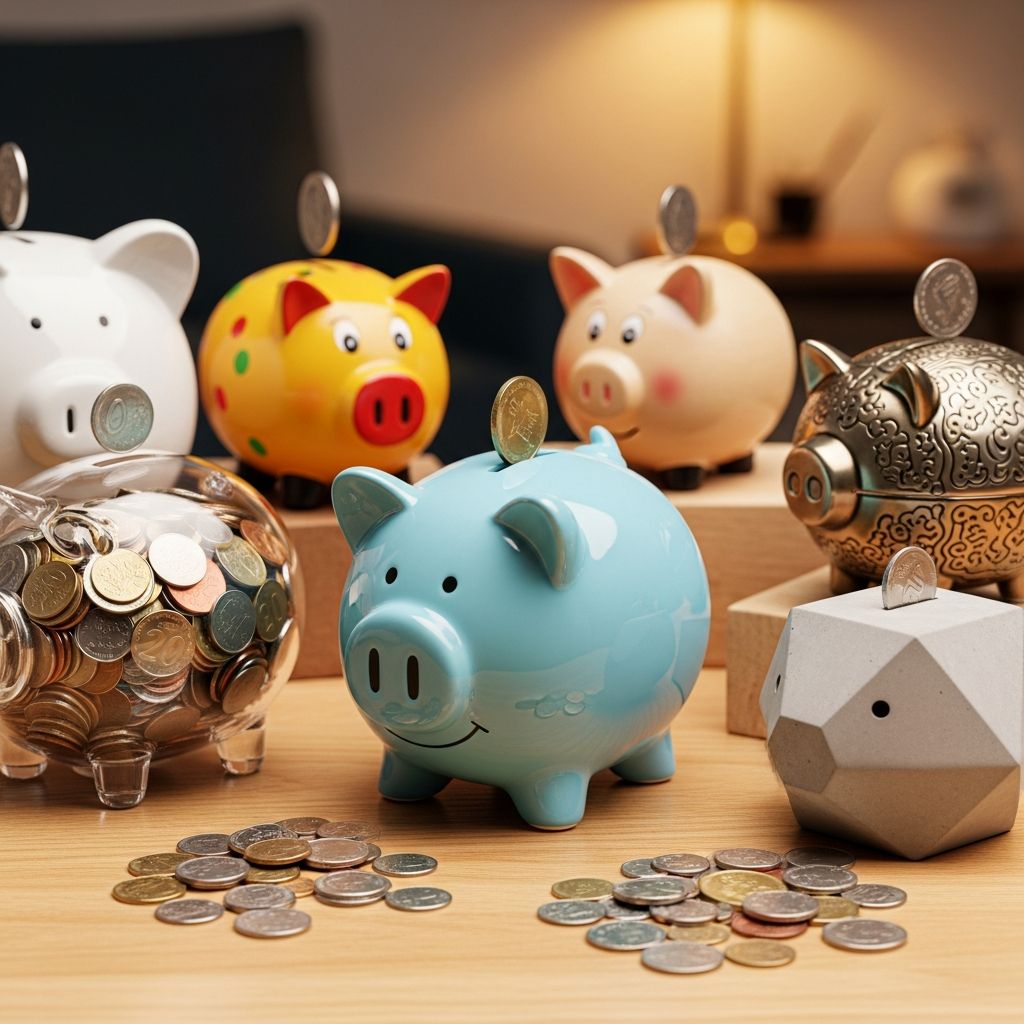
Money lessons do not have to start with spreadsheets and lectures. A simple, beautiful piggy bank can turn loose change into a powerful tool for teaching children how to save, set goals, and feel proud of their progress.
Why a Piggy Bank Still Matters in a Digital World
Most adults pay with cards or apps, but for children, money is easiest to understand when they can see it, touch it, and hear it clink into a container. A piggy bank translates the abstract idea of saving into a visible pile of coins and bills they can track over time.
Even if a family eventually opens a savings account for a child, a physical bank is often the first step that connects everyday behavior (“put this coin away”) with long-term outcomes (“now you have enough for that toy”). The ritual of dropping money into a bank builds patience and creates space for conversation about needs, wants, and goals.
Key Things to Consider Before You Buy
Not all children’s piggy banks are created equal. Some act mainly as decor, while others are more like hands-on teaching tools. Before choosing one, it helps to think about your child’s age, personality, and your own priorities around safety and durability.
- Age-appropriateness: Younger children usually benefit from sturdy, unbreakable designs, while older kids may appreciate more delicate or decorative banks they can display proudly.
- Safety and materials: Rounded edges, non-toxic finishes, and stable bases are essential, especially for toddlers who may handle their bank roughly.
- Ease of use: A slot that accepts both coins and folded bills, and a simple way to retrieve money (plug, stopper, or latch) makes saving less frustrating.
- Capacity: Some kids save slowly, others hoard every birthday bill. Consider how much room you want before the bank is “full” and ready for a trip to the real bank.
- Design and decor: A bank that looks stylish in a nursery or playroom is more likely to stay out in the open, which keeps saving top of mind.
Types of Children’s Piggy Banks
From classic ceramic pigs to sleek acrylic initials, modern piggy banks span a surprising range of styles and materials. Each type brings its own mix of durability, aesthetics, and teaching value.
| Type | Best For | Main Advantages | Potential Drawbacks |
|---|---|---|---|
| Ceramic or Porcelain | Older kids, keepsakes, nursery decor | Classic look, gift-worthy, often hand-painted or personalized | Fragile, usually heavier, may not be ideal for toddlers |
| Plastic | Toddlers, high-use playrooms | Durable, lightweight, often colorful and fun | Can scratch or look cheaper, may not double as decor |
| Wood | Families who love natural, minimalist style | Timeless appearance, sturdy, can be engraved or painted | May have smaller openings; some designs reveal less of the contents |
| Transparent (glass or acrylic window) | Visual learners, goal-driven savers | Kids see progress grow in real time, very motivating | Glass versions can be fragile; fingerprints show easily |
| Multi-compartment “save-spend-give” banks | School-age kids starting basic money management | Teaches budgeting and charity from the start | Less decorative; more of a learning tool than a cute object |
Design Ideas That Match Your Child’s Personality
Because piggy banks now come in many shapes beyond the traditional pig, it is easy to find something that feels personal and special. A bank that reflects a child’s interests often becomes a cherished object instead of just another container on the shelf.
- Animal lovers: Look for elephants, dinosaurs, owls, or even mythical creatures like unicorns. These banks can double as story starters at bedtime when you talk about what the animal is “saving for.”
- Future astronauts or adventurers: Rocket-shaped or globe-themed banks invite children to dream big and connect saving with their hopes for the future.
- Creative kids: Plain ceramic or wooden banks that can be painted let children design their own money container, adding both ownership and a fun weekend project.
- Minimalists-in-training: Clean, simple shapes in neutral colors blend easily into modern decor and make the savings habit feel like a natural part of everyday life.
- Name and initial banks: Acrylic or wooden letters filled with coins spell out a child’s first initial or name, turning their savings into a literal part of their identity.
How Piggy Banks Teach Real Money Skills
A stylish object alone will not magically teach good habits, but the way a family uses a piggy bank can shape how children think about money for years. Small, regular rituals around saving can have a surprisingly big impact.
- Cause and effect: Every time a child drops a coin into the bank, they see and sometimes hear the immediate result. The pile grows, and with it, their sense of control and agency.
- Goal setting: Attaching a specific target—like a book, game, or outing—shows kids that saving is not about restriction but about choosing something meaningful later.
- Basic math: Counting coins, grouping by denomination, and adding bills build number skills in a playful setting.
- Delayed gratification: Waiting until the bank reaches a certain level before spending teaches patience and prioritization, skills that matter far beyond childhood.
- Generosity: Banks with sections for “give” help children see charity as a normal part of managing money, not an afterthought.
Simple Steps to Introduce Saving with a Piggy Bank
Parents do not need a complicated system to start. A straightforward routine keeps saving approachable and sustainable for busy families.
- Make the big reveal: Present the piggy bank as a special gift, not just a storage item. Explain that this is where “their” money will live and grow.
- Choose a first goal together: Pick something small enough to reach within weeks or a couple of months, like a craft kit, puzzle, or ice cream outing.
- Introduce earning opportunities: Depending on parenting style, this might include small paid tasks above and beyond regular chores, birthday money, or a portion of allowance earmarked for saving.
- Set a savings ritual: For example, every Sunday evening, count new coins together and talk about how close they are to the goal.
- Celebrate milestones: When the bank reaches the agreed amount, take a photo, empty it together, and bring the child along when making the purchase or deposit.
Balancing Style, Function, and Safety
Many parents hope to find a piggy bank that looks good on a shelf and also stands up to rough handling. The good news is that current designs often blend practicality with aesthetics, as long as a few details are checked in advance.
- Check the opening: A too-small slot frustrates children who want to insert folded bills or larger coins. If possible, look for an opening that can handle both.
- Look for a secure but accessible closure: Rubber stoppers, screw caps, or small latches allow adults to open the bank while preventing toddlers from spilling everything out unsupervised.
- Mind the weight: Extra-heavy ceramic banks look substantial but may hurt small toes if dropped. Lightweight options may be better for kids who like to carry their savings around.
- Choose finishes with care: Smooth, non-toxic paints or glazes and rounded edges reduce the risk of chips and scratches ending up in little hands.
Making Saving Fun: Games and Ideas to Try
Children are more likely to engage with their piggy bank when saving feels like a game rather than a rule. A little creativity can keep enthusiasm high, even when progress is slow.
- Coin matching challenges: Ask children to sort coins by type, match pairs, or see how many of each they can collect in a week.
- Savings charts: Hang a simple chart near the bank where kids color in a bar or shape every time they add money. When the chart is full, they reach their goal.
- Story time with the bank: Give the piggy bank a name and “personality.” Ask what the bank is hoping to help them buy or do, and let kids narrate their own savings adventures.
- Family savings day: Once a month, everyone in the household adds something to their own savings containers at the same time. This models that saving is a normal habit for adults too.
From Piggy Bank to Real Bank: Next Steps as Kids Grow
Eventually, a child’s savings will likely outgrow a tabletop container. That transition is a perfect opportunity to expand their understanding from coins and bills to larger concepts like interest and long-term planning.
- “Bank trips” as milestones: When the piggy bank is full, turn the visit to a financial institution into a small celebration. Let the child hand the money over and watch it being counted.
- Introduce basic records: For older children, keep a simple notebook or digital note that tracks deposits from their piggy bank. Seeing numbers written down reinforces the link between behavior and outcomes.
- Keep the piggy bank in play: Even once accounts exist, the physical bank can continue as the “first stop” for spare change, bridging everyday life with more formal saving.
Frequently Asked Questions About Children’s Piggy Banks
At what age should a child get a piggy bank?
Many families introduce a piggy bank between ages three and five, when children are old enough to understand that money can be saved for something they want. Younger toddlers can still enjoy dropping coins in with close supervision, but the true lessons about goals and patience usually begin in the preschool years.
How much should children be encouraged to save?
There is no single correct percentage, but a simple rule is to invite children to save a portion of any money they receive rather than the entire amount. For example, they might save half and spend half, or place a small part in a “give” section if their bank supports that. The key is consistency and voluntary participation rather than strict enforcement.
Is it better to use one piggy bank or several?
One bank is often enough for very young children, who mainly need to grasp the basic idea that money can be stored instead of spent immediately. As kids grow older, separate containers labeled “save,” “spend,” and “give,” or a single bank divided into sections, can introduce the idea of budgeting different portions for different purposes.
What if my child wants to break open the bank early?
Occasional early withdrawals are normal and can even become teaching moments. Instead of treating it as a failure, talk through what they want now, how long it took to save, and whether they are willing to start again toward the bigger goal. Over time, children often begin to value the satisfaction of waiting for something they truly want.
Do digital “piggy bank” apps replace physical banks?
Apps can be fantastic for older children who already understand numbers and are ready to practice tracking balances electronically. For younger kids, however, a physical bank remains a powerful learning tool because it uses all their senses and connects money to the real world in a tangible way. Many families successfully use both: a piggy bank for everyday saving and an app or account for larger, long-term goals.
However simple it looks, a piggy bank can become the starting point for a lifelong healthy relationship with money. By choosing a design that suits your child and your home, and weaving it into small, consistent rituals, each clink of a coin becomes more than noise—it becomes practice for future confidence and independence.