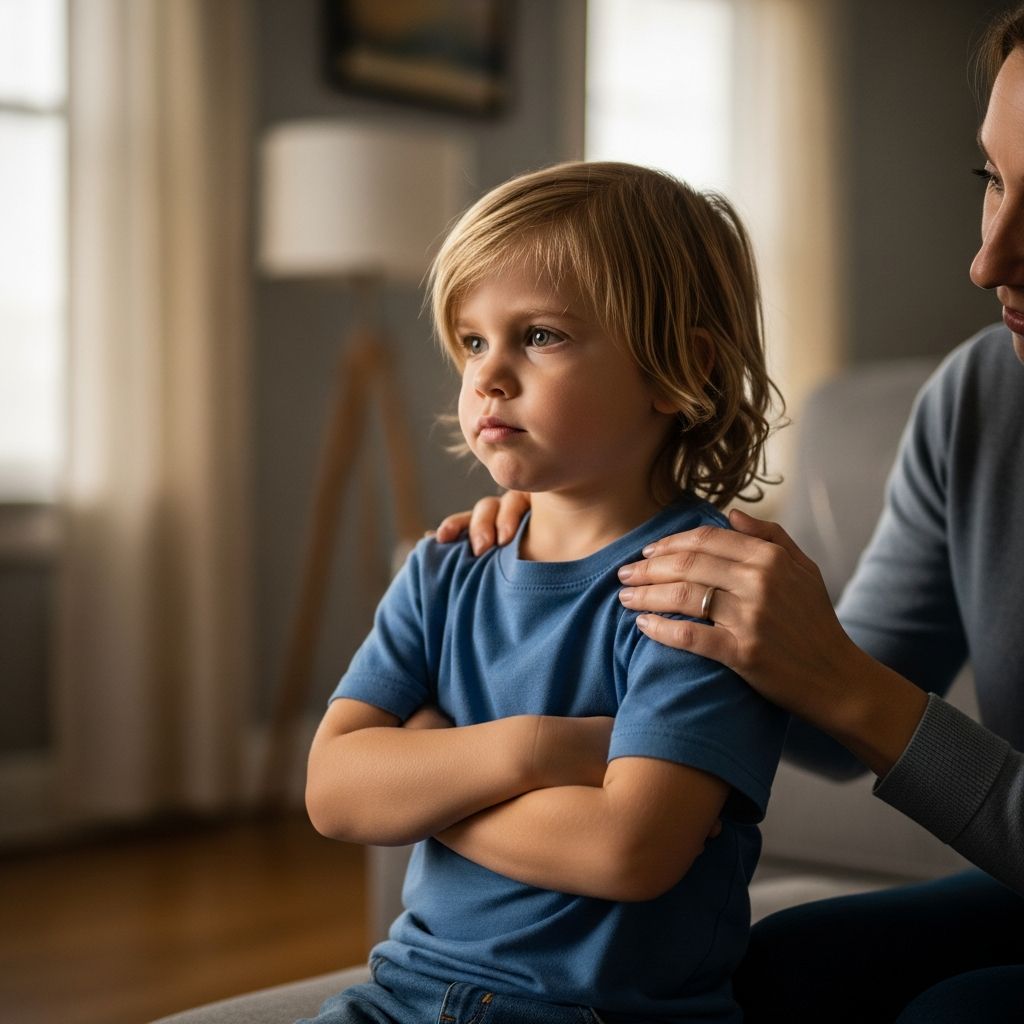
Hearing that your four-year-old is hurting other children can feel shocking, embarrassing, and frightening. You might wonder what went wrong, worry about your child’s future, or feel defensive and judged as a parent. Before jumping to labels like “bad kid” or “bully,” it helps to slow down, understand what’s really going on, and respond in ways that protect all children while still nurturing your own child’s emotional development.
This article offers a calm, practical roadmap for supporting a young child who is repeatedly hitting, teasing, or intimidating others. It focuses on preschoolers (around age four), but the principles apply to many early childhood situations.
Is a Four-Year-Old Really a “Bully”?
The word “bully” carries a lot of weight. It often brings to mind an older child who targets others with deliberate cruelty and enjoys having power over them. Four-year-olds, however, are still learning what empathy is, how to control impulses, and how to manage huge feelings in tiny bodies.
When adults use the word “bully” for a preschooler, it can cause everyone—parents, teachers, and even the child—to see the behavior as a fixed identity rather than as a problem that can be guided, taught, and changed. In early childhood, it is usually more helpful to focus on specific behaviors instead of labeling the child.
- Say: “Right now you are using your hands to hurt,” instead of “You are a bully.”
- Say: “Those words are unkind,” instead of “You are a mean kid.”
This doesn’t mean ignoring serious behavior. It means holding a firm boundary about what is acceptable while still believing in your child’s capacity to grow.
Why Young Children Hurt or Intimidate Others
Preschool aggression has many possible roots. Often, several factors combine. Understanding the “why” does not excuse hurtful behavior, but it does point the way to more effective solutions than punishment alone.
Common Underlying Drivers
- Immature impulse control: The child knows hitting is wrong but cannot stop in the heat of the moment.
- Big, unprocessed feelings: Jealousy, anxiety, frustration, or insecurity may spill out as aggression.
- Power and control: The child feels small or powerless elsewhere and experiments with feeling strong through dominance.
- Learned behavior: The child may be copying what they see from siblings, media, peers, or adults.
- Social skill gaps: The child wants to join play or protect a toy and grabs, shoves, or threatens because they don’t yet know another way.
When parents view hurtful behavior as a signal instead of simply defiance, it becomes easier to respond with both firmness and warmth.
Signals That Behavior Needs Immediate Attention
Occasional conflict between young children is normal. Persistent patterns, however, deserve calm and focused attention. Look for:
- Repeatedly targeting the same child or type of child (for example, younger or quieter kids).
- Enjoying seeing another child scared, crying, or distressed.
- Lying to avoid responsibility while showing little concern for the hurt child.
- Escalating behaviors over time (from teasing to threats to physical harm).
These are signs that your child needs stronger guidance, more support with emotional regulation, and possibly help from teachers or professionals if the behavior does not improve.
First Steps: Grounding Yourself Before Responding
Before addressing your child’s behavior, it helps to regulate your own emotions. Parents often feel a mix of shame, fear, and anger, which can lead to yelling or harsh punishment that make things worse.
- Pause and breathe before speaking to your child or contacting another parent.
- Remind yourself: “My child is learning. This is a problem to solve, not a permanent identity.”
- Seek a supportive friend, partner, or professional to process your feelings so you can show up calm for your child.
Children listen best when adults are steady. Calm does not mean permissive; it means clear and grounded.
How to Respond in the Moment
When you see or hear about hurtful behavior, your response should be immediate, firm, and safe—without shaming or attacking your child’s character.
Step-by-Step Response
- Ensure safety first. Gently but firmly separate the children. Move your child away from the other child or remove the object that is being fought over.
- State the boundary clearly. Use simple, calm language: “Hitting is not allowed. Hitting hurts.”
- Attend to the hurt child. Comfort and tend to the injured child first. This models empathy and shows your child that harm has real consequences.
- Then turn to your child. Once everyone is safe, kneel to your child’s level, make gentle eye contact, and address what happened.
Helpful Phrases to Use
- “Your job is to keep your hands to yourself. My job is to keep everyone safe.”
- “You were very angry and you chose to hit. That hurt Sam. Hitting is not okay.”
- “We can use words to solve problems. Let’s practice what to say next time.”
This kind of response shows that you take the behavior seriously, but it also communicates that the child is still loved and capable of learning.
Teaching Skills Instead of Only Punishing
Consequences may stop behavior temporarily, but lasting change comes when children receive the tools and practice they need to do better. Think of yourself as a coach: your child needs both limits and lessons.
Core Skills to Teach
- Emotion naming: Help your child put words to big feelings: “You felt left out,” “You were scared they’d take your toy,” “You were mad.”
- Assertive words: Practice phrases like “Stop, I don’t like that,” “That’s my turn,” or “Can I play too?”
- Problem-solving: Brainstorm together: “If you want the truck, what can you do instead of hitting?”
- Repair skills: Support your child to check on the other child, say a genuine sorry, or help fix what was broken.
Over time, these skills become internal tools your child can use instead of resorting to aggression.
Home Environment: Quiet Roots of Behavior
Family life forms the backdrop for a child’s emotional world. Children absorb not only how adults treat them, but also how adults treat each other and handle stress.
| Home Pattern | Possible Child Message | Helpful Parent Shift |
|---|---|---|
| Frequent yelling or harsh discipline | “Yelling and hitting are how powerful people solve problems.” | Model calm conflict resolution and non-physical discipline. |
| Constant criticism, little praise | “I’m bad; others must be put down so I feel better.” | Notice and acknowledge effort, kindness, and small improvements. |
| Inconsistent rules or supervision | “Maybe no one really cares what I do.” | Set clear, predictable limits and follow through calmly. |
| Parents overwhelmed or emotionally distant | “The only way to get attention is to create drama.” | Build daily one-on-one connection time, even in brief doses. |
No family needs to be perfect. However, small changes in how adults communicate, repair conflicts, and set limits can have a powerful effect on children’s behavior.
Practical Daily Strategies to Encourage Kindness
Instead of responding only when there’s a problem, build routines that strengthen connection, empathy, and self-control every day.
Connection Rituals
- Spend 10–15 minutes of undistracted one-on-one time daily, following your child’s lead in play.
- Create small rituals: a special handshake, bedtime questions (“What made you happy today? What was hard?”), or morning snuggles.
Playful Ways to Teach Empathy
- Use dolls, stuffed animals, or toy figures to act out simple scenarios where one gets hurt; pause to ask, “How does she feel? What could help?”
- Notice real-life moments: “Look at that baby crying. What do you think he needs?”
When empathy is practiced in low-stress moments, children are more likely to access it when conflicts arise.
Collaborating With Teachers and Other Parents
If the behavior occurs in preschool or playgroups, partnership with other adults is crucial. Avoid secrecy and blame; focus together on safety and learning.
How to Work With Adults Calmly
- Ask teachers for specific examples rather than general labels.
- Share what you are working on at home and ask how you can support consistent limits at school.
- When speaking with another parent, acknowledge their child’s feelings first and explain the steps you are taking to address the issue.
Most parents feel protective of their own children. Clear communication and a visible commitment to change help rebuild trust.
Setting Firm, Respectful Consequences
Consequences should protect others and guide your child, not humiliate or break their spirit. At this age, consequences work best when they are immediate, related to the behavior, and explained briefly.
Examples of Constructive Consequences
- Loss of a specific privilege: If your child keeps misusing a toy to hurt others, the toy is put away for the rest of the day.
- Taking a break from play: Your child sits near you to calm down before returning to the group when ready.
- Repair-focused actions: Helping rebuild a tower that was knocked down, drawing a card, or fetching a cold pack for the injured child.
Avoid public shaming, name-calling, or long lectures. A short, firm statement followed by consistent action is more powerful and less damaging.
When to Seek Professional Support
Some situations call for more than parent guidance alone. Consider consulting a pediatrician, child therapist, or school counselor if:
- The behavior continues or worsens despite consistent boundaries and teaching.
- Your child seems to enjoy others’ pain or shows little or no remorse over time.
- There are other concerning signs, such as extreme sleep problems, frequent nightmares, chronic anxiety, or intense mood swings.
Professional support is not a sign of parental failure. It is simply another tool to help a struggling child—and family—get back on track.
Frequently Asked Questions
Is my four-year-old destined to be a bully forever?
No. Early childhood is a period of rapid growth. With consistent boundaries, strong emotional connection, and guided practice in empathy and problem-solving, most children can dramatically change their patterns. What matters most is not that aggression appears, but how the adults around the child respond to it.
Should I force my child to apologize?
Insisting on a robotic “sorry” often leads to resistance or hollow words. Instead, focus on helping your child notice the impact of their actions and participate in repair. You might say, “Look at Liam’s face; he’s crying because he got hurt. What can we do to help?” Over time, sincere apologies arise more naturally from genuine concern.
What if other parents judge me or avoid my child?
It’s painful when others see your child only through the lens of their worst moments. Stay open and honest: acknowledge the problem, describe what you are doing to address it, and show willingness to adjust settings (shorter playdates, closer supervision). You cannot control others’ reactions, but you can demonstrate that you take the situation seriously and are actively working toward change.
Is punishment the only way to stop hurtful behavior quickly?
Strong, consistent limits absolutely matter, and there should be real consequences when children harm others. However, research and experience both show that fear-based punishment alone does not build empathy or internal self-control. A balanced approach—clear boundaries, repair, teaching, connection, and, when needed, time-limited consequences—tends to produce more stable improvements.
How can I tell if this is typical sibling rivalry or something more serious?
Rivalry often includes back-and-forth conflict, both children sometimes initiating and sometimes being hurt. More serious aggression looks one-sided, repeated, and frightening to the targeted child. If one child consistently expresses fear of being alone with the other, hides belongings, or dramatically changes behavior around them, it is wise to take the situation very seriously and seek guidance.
Key Takeaways for Parents
- Young children who hurt or intimidate others are sending a message that they need help with feelings, skills, or both.
- Firm limits and deep connection can coexist; your child needs both.
- Focusing on teaching and repair—not just punishment—offers the best chance for lasting change.
- You do not have to navigate this alone; teachers, other caregivers, and professionals can work with you to support your child.
With patience, guidance, and a belief in your child’s capacity to grow, aggressive patterns in early childhood can become powerful lessons in kindness, responsibility, and emotional strength—for your child and for your entire family.