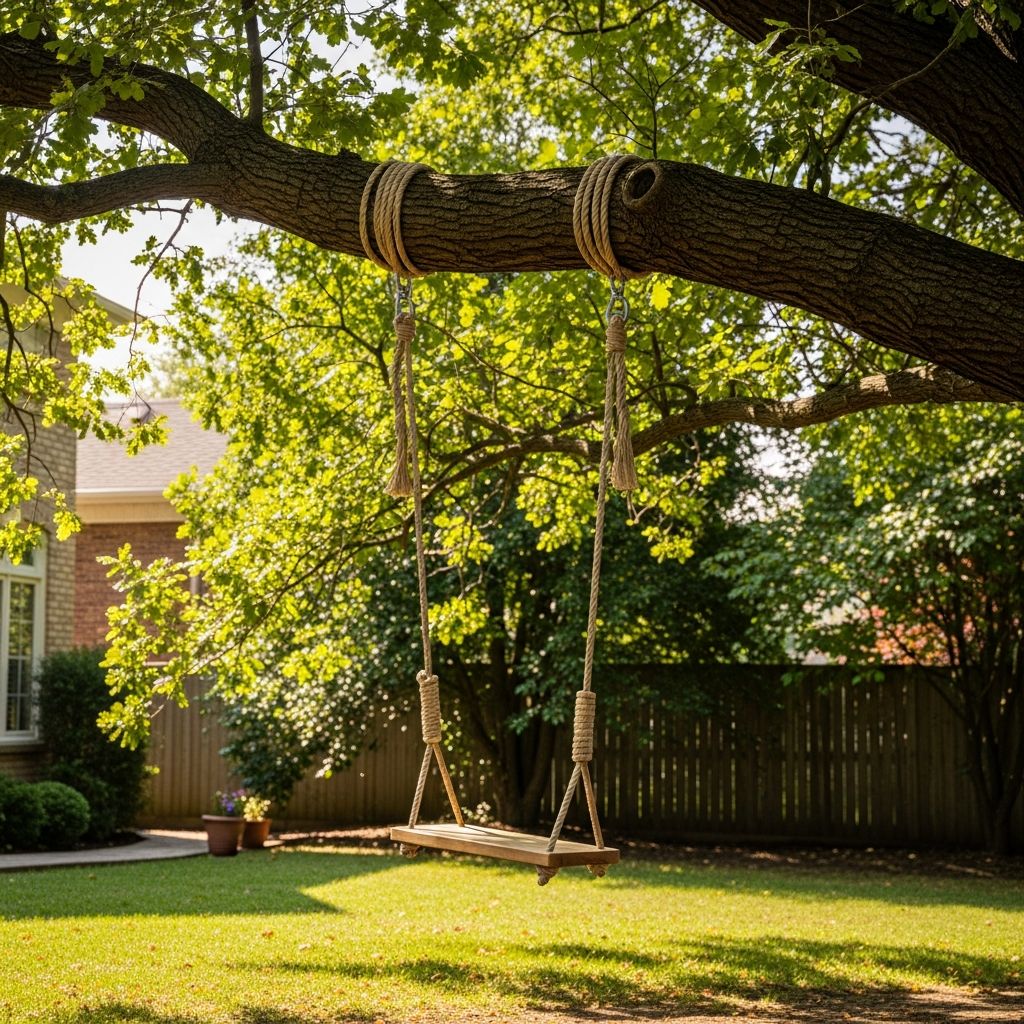
Installing a tree swing transforms any backyard into a hub of joy and activity for children and adults alike. Done correctly, it provides years of entertainment while preserving the health of your tree. This guide draws from proven techniques to ensure your setup is secure, durable, and enjoyable.
Selecting the Perfect Tree for Your Swing
The foundation of a safe tree swing starts with choosing the right tree. Opt for mature, healthy specimens with robust structures that can bear dynamic loads.
- Healthy Indicators: Look for trees with intact bark, no visible cracks, cavities, or dead branches. Hardwoods such as oak, maple, or beech excel due to their density and strength.
- Branch Specifications: Select horizontal branches at least 8-12 inches in diameter to support weight and motion. The branch should extend 3-5 feet from the trunk to allow full swinging without collision risks.
- Tree Avoidance: Steer clear of brittle species like pine, willow, or fruit trees, which may snap under stress. Test the trunk by tapping; a hollow sound signals internal decay.
Position the swing 1-1.5 meters from the trunk and aim for a height of about 1 meter above ground, adjusting for user age and rope stretch. For optimal swing arc, ensure the branch is high and level.
Essential Tools and Materials for Installation
Gather quality supplies to guarantee longevity and safety. Prioritize rust-resistant items for outdoor exposure.
| Item | Purpose | Recommended Specs |
|---|---|---|
| Eye Bolts | Secure branch attachment | Stainless steel, 8-12 inch branch compatible, with washers/nuts |
| Carabiners | Connect rope to hardware | Heavy-duty, rated for 1000+ lbs |
| Ropes/Straps | Suspension | Polypropylene or polyester, 1/2-3/4 inch thick, UV-resistant |
| Drill | Pre-drill holes | 8mm bit for guide holes, 2-3 inches deep |
| Ladder/Climbing Gear | Access high branches | Stable ladder or professional tree service |
Additional needs include wrenches, measuring tape, and soft landing materials like mulch.
Step-by-Step Installation Process
Follow these precise steps for a professional-grade setup. Always prioritize safety by working with a partner for high installations.
- Measure and Mark: Determine seat height (20-30cm higher than final for stretch). Mark eye bolt spots on branch underside, matching seat width.
- Pre-Drill Holes: Use an 8mm bit to drill 5-8cm deep holes, preventing wood split.
- Install Eye Bolts: Thread bolts through holes, secure with washers and nuts on top. Tighten firmly with wrench.
- Attach Ropes: Knot ropes to carabiners, then clip to eye bolts. Ensure level hang by adjusting lengths.
- Mount Seat: Secure swing seat to rope ends using knots or additional carabiners. Test for balance.
- Final Adjustments: Hang 8-12 inches higher initially; ropes settle with use.
For saucer or multi-person swings, reinforce with extra hardware and ensure even weight distribution.
Tree-Friendly Attachment Alternatives
To minimize tree damage, consider non-invasive methods.
- Fabric Slings: Wrap wide straps around the branch using a girth hitch knot. These reduce friction and allow natural growth, staying stationary during swings.
- Strap Lines for Dual Trees: For advanced setups, span straps between two trees (12+ inch trunks, <30 feet apart). Tighten with ratchets and clip swings via carabiners—ideal for multiple swings.
- Swivel Hardware: Add spinners for rotating swings, using double carabiners to prevent twisting.
These options girdle less and adapt to branch expansion.
Prioritizing Safety in Every Detail
Safety standards prevent injuries. The U.S. Consumer Product Safety Commission outlines key requirements for home play equipment.
- Clearance Zones: Maintain 6-foot radius free of obstacles; front/back clearance twice the swing height.
- Impact Absorbing Surface: Cover ground with 12 inches of wood mulch, sand, or engineered fiber under swings.
- Weight Limits: Hardware must support 3x expected load (e.g., 300 lbs per user minimum).
- Inspection Routine: Check monthly for wear, loose parts, or tree stress. Retire if damage appears.
Supervise young children; avoid pushing higher than 60 degrees from vertical.
Different Swing Types and Their Hanging Needs
Tailor installation to swing style for best performance.
- Classic Board Swing: Simple ropes through pre-drilled eye bolts; widest appeal.
- Tire Swing: Use slings to avoid bark abrasion; extend surfacing radius by chain height +6 feet.
- Saucer Swing: Assemble frame with foam tubes, bolts, washers; hang via straps or eye bolts.
- Multi-Swing Line: Tree-to-tree straps support rings, bars alongside traditional swings.
Each demands specific clearances and load ratings.
Ongoing Maintenance for Longevity
Regular care extends your swing’s life.
- Seasonal Checks: Inspect ropes for fraying, hardware for rust, tree for girdling or wounds.
- Cleaning: Hose down seats; lubricate carabiners.
- Winter Storage: Remove or slacken ropes to prevent freeze damage.
- Tree Health: Monitor for growth restriction; readjust annually.
Replace components proactively.
Common Mistakes and How to Avoid Them
Steer clear of pitfalls for a flawless setup.
- Using weak branches or decayed trees—always measure diameter and inspect.
- Skipping pre-drills—leads to cracks.
- Ignoring stretch—hang high initially.
- Forgetting ground prep—hard surfaces cause falls.
- Overloading—know capacity.
Frequently Asked Questions
What branch size is safe for a tree swing?
A minimum 8-12 inches diameter on healthy hardwoods supports typical family use.
Can I hang a swing without drilling into the tree?
Yes, fabric slings or tree-to-tree straps protect bark and allow growth.
How high should the swing seat be?
About 1 meter (3 feet) for kids, adjustable; account for 20-30cm rope stretch.
What ground cover is best under a swing?
12 inches of mulch, sand, or engineered wood fiber for impact absorption.
How often should I inspect the swing?
Monthly, plus after storms; check ropes, hardware, and tree health.
Advanced Tips from Professional Installers
Pros like tree services recommend ladders or climbers for heights over 15 feet. Custom installs evolve with videos showing rope evolutions and secure knots. For complex saucers, use nylon nuts/washers on eye bolts.
With these strategies, your tree swing becomes a backyard heirloom, fostering memories safely.
References
- How To Hang a Tree Swing in Your Garden — The Oak and Rope Company. Accessed 2026. https://theoakandropecompany.co.uk/resources/how-we-hang-our-swings
- How to Attach a Tree Swing Without Damaging the Tree: Best Practices — Hoppe Tree Service. Accessed 2026. https://www.hoppetreeservice.com/post/how-to-attach-a-tree-swing-without-damaging-the-tree-best-practices
- How to Hang a Swing From a Tree (The Best Way) — Bolder Play. Accessed 2026. https://bolderplay.com/blogs/blog/how-to-hang-a-swing-from-a-tree-the-best-way
- Swing Guide Assembly — Hearthsong. Accessed 2026. https://www.hearthsong.com/pages/swing-guide-assembly
- Saucer Tree Swing Assembly Instructions — Play Wild USA (YouTube). 2020. https://www.youtube.com/watch?v=dwBq4U6Y-T8
- Saucer Swing Instructions — Home Depot (PDF). Accessed 2026. https://images.thdstatic.com/catalog/pdfImages/60/60587336-c019-4e89-95a3-02072f3b6b34.pdf