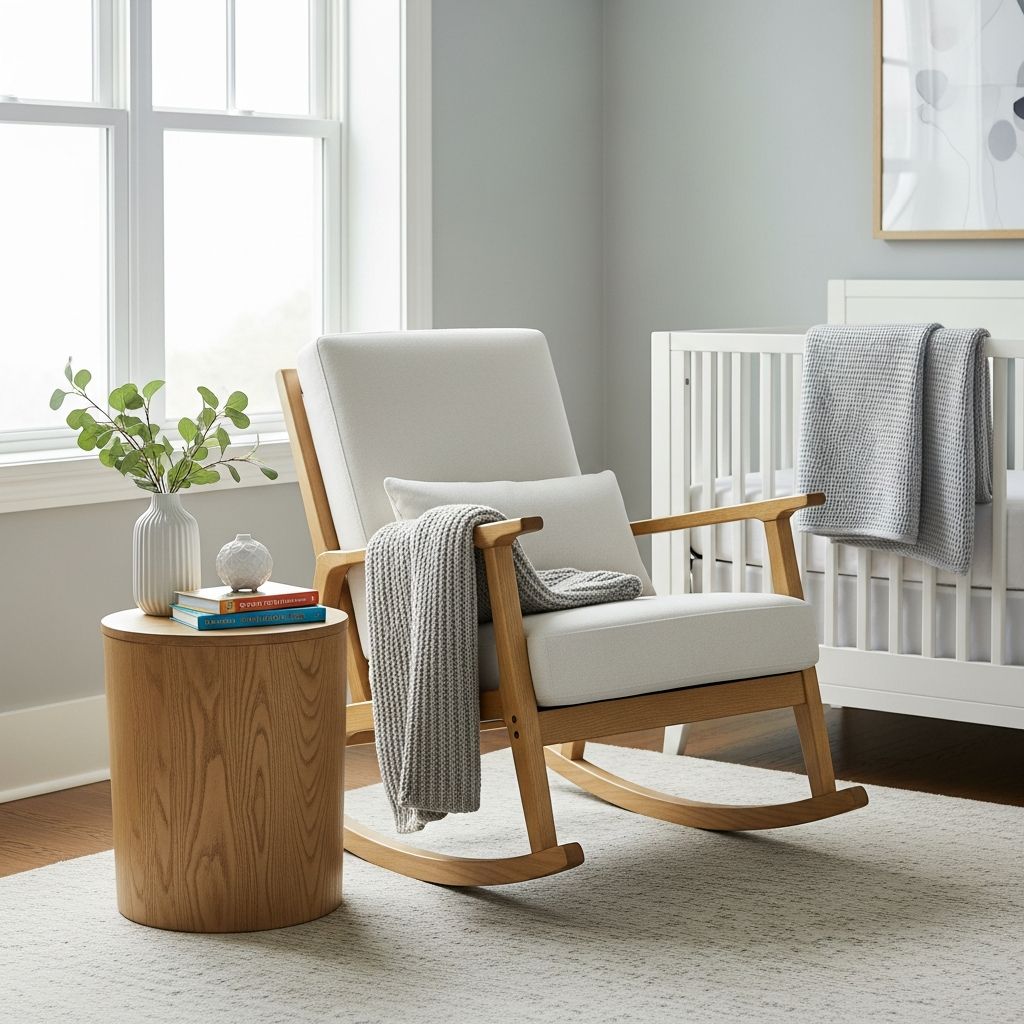
Designing a nursery often starts with the crib, but many parents discover that the rocking or glider chair becomes the true workhorse of the room. It is where you will feed your baby at all hours, soothe fussy nights, read bedtime stories, and later relax with a toddler who still wants to snuggle. Choosing the right nursery chair is therefore a decision that affects your comfort, your baby’s safety, and your daily routines for years.
This guide uses Pottery Barn and Pottery Barn Kids style chairs as inspiration—rockers, gliders, and swivel recliners—to help you understand what features matter most and how to make a choice that fits both your body and your home.
Why a Dedicated Nursery Chair Matters
It may be tempting to repurpose a couch or an old armchair, but nursery-specific rockers and gliders are designed around the needs of new parents.
- Repetitive soothing: Rocking or gliding motion can calm crying infants and help them fall asleep more quickly, which many parents find invaluable.
- Feeding comfort: Proper arm height, back support, and seat depth make breastfeeding or bottle-feeding less physically taxing, especially during prolonged sessions.
- Postpartum recovery: Adequate lumbar support and the ability to change positions (for example, reclining or elevating the feet) may reduce discomfort in the lower back and pelvis while you recover from pregnancy and birth.
- Routine building: Having a consistent, cozy spot for bedtime helps signal sleep for your baby and can support healthier sleep routines over time.
While research on nursery chairs themselves is limited, ergonomic seating and appropriate lumbar support are widely recommended to reduce musculoskeletal strain during prolonged sitting.
Rocking Chair, Glider, or Swivel Recliner?
Pottery Barn offers several motion types, each with advantages. Understanding the differences will help narrow your options.
| Type | Motion | Pros | Potential Drawbacks |
|---|---|---|---|
| Traditional rocker | Arcs back and forth on curved legs | Classic look; no mechanical parts; often easier to reuse in another room later. | Requires more floor space; motion can feel stronger; may be less stable on some floors. |
| Glider | Glides smoothly on a track, usually back and forth | Very gentle, controlled motion; often easier to get in and out of; good for tight nurseries. | Mechanism may squeak over time; base is heavier and harder to move. |
| Swivel glider | Glides and rotates side-to-side | Can pivot toward crib or dresser; convenient in small rooms; easier to reposition without moving the base. | Swivel mechanism adds complexity and cost; may require more clearance from walls. |
| Swivel glider recliner | Glides/rotates and also reclines, sometimes with power controls | Lets you elevate your legs and nap semi-flat; often includes head and lumbar support features. | Bulkier footprint; power models require outlet access and manage cords. |
Key Comfort Features to Evaluate
Comfort is subjective, but certain design elements repeatedly show up in well-reviewed nursery chairs, including several Pottery Barn Kids models.
Seat Depth and Width
- Seat depth: You should be able to sit back with your lower back supported while your feet still touch the floor comfortably. If the seat is too deep, you may slump, which can strain your back over time.
- Seat width: A slightly wider seat can make it easier to hold a nursing pillow or a toddler plus a picture book. On the other hand, very petite parents may feel more secure in a slightly narrower, more structured seat.
Back Height and Head Support
- Tall back chairs allow most adults to rest their head, which matters during long nighttime sessions.
- Wingback styles create side support for your head and can help keep a sleepy parent more upright.
- Some power recliners include adjustable headrests, improving support in both upright and reclined positions.
Armrest Design
Arms that are too low or too high can quickly lead to shoulder and neck discomfort.
- Height: Ideally, when you hold your baby in feeding position, your elbows should rest comfortably on the arms without you shrugging your shoulders or sloping downward.
- Padded arms: Cushioned, slightly wider arms provide a soft resting surface for both your arms and your baby’s head.
- Compatibility with nursing pillows: Check that there is enough room between the arms for the pillow you use.
Cushion Firmness
- Medium-firm cushions tend to provide better long-term support than ultra-soft seats, which may feel great at first but encourage slouching over time.
- Pottery Barn’s nursery recliners often use a feather-down blend seat with a more supportive core, designed to feel plush while still maintaining structure.
Fabrics, Cleanability, and Durability
Babies mean spills, spit-up, and sticky hands, so the fabric you choose matters as much as the frame style.
Performance Fabrics
- Many nursery chairs now come in performance or stain-resistant fabrics, engineered to resist liquids and clean up more easily.
- Look for fabrics that are wipeable or that can be spot-cleaned with mild soap and water. Parents consistently praise chairs whose upholstery stands up to repeated cleaning.
Color and Pattern Choices
- Neutral tones (grays, beiges, creams) tend to transition well from nursery to living room later.
- Darker or mid-tone shades do a better job hiding everyday wear and minor stains than bright white.
- If you love pattern, consider using it on a throw pillow or blanket rather than the main upholstery to increase the chair’s future versatility.
Slipcovers vs. Upholstered Frames
- Slipcovered chairs give you the option to remove the cover for cleaning or swap it out later for a different look.
- Fully upholstered frames tend to look more tailored and modern but rely more on effective spot cleaning.
Safety and Ergonomics in a Nursery Chair
While nursery chairs are not subject to the same safety standards as cribs, a few guidelines can help you choose a safer, more ergonomic option.
Stable Base and Safe Placement
- Place gliders and rockers on a flat, stable surface so the chair does not tip or wobble unexpectedly.
- Ensure there is enough clearance behind and in front of the chair so it cannot hit the wall or furniture while moving.
- Keep power cords from reclining chairs secured and away from walking paths to prevent tripping or entanglement.
Arm Support and Posture
Prolonged feeding in awkward positions can aggravate back and neck pain, particularly postpartum. Health organizations encourage supportive positioning during breastfeeding or bottle-feeding to protect both parent and infant.
- Use the chair’s built-in support plus pillows to bring the baby up to your chest rather than hunched down to the baby.
- Try to keep your shoulders relaxed and your back against the backrest when possible.
- If your feet do not touch the floor comfortably, consider a small ottoman or footstool so your legs are not dangling, which can strain your lower back.
Reclining Safely
- Recliners that glide or swivel in the upright position allow you to rock and then recline gently once the baby is asleep.
- When holding a newborn, many parents prefer only a slight recline, maintaining enough control to reposition quickly.
- Always follow the manufacturer’s instructions for safe use of any reclining mechanism.
Planning for Long-Term Use
A quality Pottery Barn nursery chair can outlive the diaper years. Thinking ahead may help you justify the investment.
Will It Suit Another Room Later?
- Choose a silhouette that could work in a living room, reading nook, or bedroom when you no longer need a dedicated nursery.
- Neutral fabrics and classic lines adapt better than highly themed or juvenile designs.
- Some Pottery Barn Kids swivel recliners are intentionally styled to look like regular living room furniture while still offering nursery-friendly features.
Support for Growing Children
- High backs and deeper seats can remain comfortable as your child grows taller.
- Rockers and gliders often become favorite spots for preschool story time or quiet reading later in childhood.
Measuring Your Space Before You Buy
Nurseries are often compact, and chairs—especially swivel recliners—can be larger than they appear online.
- Measure the footprint: Note the chair’s width and depth from the product description and mark it out on your floor with painter’s tape.
- Account for motion: Add extra clearance behind and in front for rocking or reclining. Many gliders and recliners need several inches of space behind the back.
- Doorways and hallways: Make sure the boxed chair or assembled frame can fit through your doors and around corners.
- Outlet access: For a power recliner, identify where you will plug it in without creating tripping hazards.
Comparing Popular Pottery Barn–Style Nursery Chair Features
The following table summarizes common characteristics you may see across different Pottery Barn and Pottery Barn Kids models. Use it as a checklist when comparing chairs, whether in-store or online.
| Feature | Why It Matters | What to Look For |
|---|---|---|
| Motion type | Affects soothing style, required space, and ease of use. | Rocker, glider, swivel, or recliner based on your preference for movement and room layout. |
| Recline function | Allows rest during long nights and supports different feeding positions. | Manual or power recline; smooth transition; comfortable semi-reclined angle. |
| Head and lumbar support | Reduces fatigue in neck and lower back during extended sitting. | High back, possibly with adjustable headrest; firm but cushioned lumbar region. |
| Armrest comfort | Key for breastfeeding and bottle-feeding support. | Softly padded arms at a height that matches your relaxed elbow position. |
| Fabric type | Determines durability and ease of cleaning. | Performance or stain-resistant fabrics; spot-cleanable; comfortable against bare skin. |
| Size and scale | Influences comfort for different body types and fit within the nursery. | Test for both shorter and taller caregivers when possible; ensure feet can reach the floor. |
Practical Accessories to Pair with Your Chair
The right accessories can make your Pottery Barn rocking or glider chair even more functional.
- Ottoman or pouf: Gives your legs a rest and can help you maintain a more neutral spine posture.
- Small side table: Keep water, burp cloths, and your phone within reach without twisting or bending.
- Task or floor lamp: Gentle lighting for nighttime feeds so you do not have to turn on an overhead light.
- Washable throw blanket: Adds coziness for parent and baby, especially in cooler months.
Frequently Asked Questions About Pottery Barn Nursery Chairs
Is a nursery rocking chair really necessary, or can I skip it?
A nursery chair is not strictly required, but many parents find it becomes one of the most used pieces of furniture in the home. A supportive, comfortable chair can make frequent night feedings and soothing sessions more manageable, and the gentle motion can help calm infants who have difficulty settling.
Should I choose a rocker or a glider for my Pottery Barn nursery?
Rockers have a more pronounced arc and a classic look, while gliders offer a smoother, more linear motion. Swivel gliders and recliners add the ability to rotate or lie back. If you are sensitive to motion or have a small room, a glider or swivel glider may be easier to control and position. If you prefer traditional styling and expect to move the chair to another room later, a rocker may appeal more.
Are power recliners safe to use around babies?
Power recliners from reputable brands are designed with integrated safety mechanisms and stable bases, but they must be used as directed. Keep cords secured, avoid letting older children play with the controls, and always verify that the chair is stable and clear of small hands and feet before reclining or returning upright.
What fabric is best for a nursery chair?
Performance or stain-resistant fabrics are often the most practical choice for nurseries. They typically resist spills better and can be spot-cleaned without specialized products. Parents and reviewers consistently value chairs whose upholstery wipes clean easily while remaining soft enough to be comfortable during long cuddle sessions.
How important is lumbar support in a nursery chair?
Lumbar support can be very important, especially if you have a history of lower back discomfort or expect to spend long stretches feeding or rocking your baby. Ergonomic research shows that maintaining the natural curve of the lower spine reduces strain and fatigue during prolonged sitting. Some nursery recliners include built-in lumbar panels, while others may benefit from an added small pillow placed behind your lower back.
References
- Dream Swivel Glider & Reclining Chair — Pottery Barn Kids. 2024-05-01. https://www.potterybarnkids.com/products/dream-recliner/
- Pottery Barn Kids Comfort Power Swivel Glider Recliner Review — Town & Country (C. Hallemann). 2024-02-16. https://www.townandcountrymag.com/style/home-decor/a60828967/pottery-barn-kids-comfort-recliner-review/
- 9 Best Nursery Rockers and Gliders—Tested in 2025 — The Bump. 2025-01-10. https://www.thebump.com/a/10-best-gliders-and-rockers
- Rocker Reviews: Pottery Barn Kids — Lay Baby Lay. 2014-03-10. https://www.laybabylay.com/rocker-reviews-pottery-barn-kids