Potty training boys introduces unique challenges, particularly transitioning from sitting to standing urination. This skill requires coordination, aiming accuracy, and motivation, but with the right approach, parents can make it a smooth process. Experts recommend starting with sitting to build foundational habits before advancing to standing, ensuring success without frustration.
Understanding the Potty Training Timeline for Boys
Boys typically reach potty training readiness between 18 months and 3 years, showing signs like staying dry for two hours, communicating needs, and pulling pants up and down independently. Begin training seated to associate urination with bowel movements and simplify the learning curve, as standing demands finer motor control.
Transition to standing only after full seated mastery, around age 2.5 to 3, when motor skills support aiming. Rushing leads to misses and cleanup battles. Patience prevents resistance; let interest guide the shift.
- Key readiness indicators: Walks to toilet, follows instructions, shows curiosity about others’ habits.
- Average timeline: Seated by 2 years, standing proficiency by 3-4 years.
- Individual variation: Some boys insist on standing early; accommodate if motivated.
Building Foundational Seated Habits First
Seat your boy facing forward initially, pointing his penis downward to direct flow into the bowl. Limit sessions to 5 minutes to avoid discomfort. Schedule attempts after meals, naps, and before bed to leverage natural urges. Praise dry spells and successes lavishly to reinforce behavior.
For bowel movements, maintain sitting to link elimination processes naturally. This dual approach reduces confusion. Hygiene matters: Teach handwashing and thorough wiping post-bowel movement.
| Seated Training Phase | Goals | Tips |
|---|---|---|
| Weeks 1-4 | Recognition and control | Use timers, rewards charts; watch for cues like leg crossing. |
| Weeks 5-8 | Independence | Practice dressing undressing; naked-from-waist-down playtime. |
| Ongoing | Consistency | Nighttime dryness separate; use pull-ups for sleep. |
Signs It’s Time to Introduce Standing Urination
Observe enthusiasm: Does he mimic dad or peers? Can he balance steadily? Interest spikes at preschool where boys demonstrate standing. Physical cues include improved dexterity for holding and aiming. If he resists sitting for pee only, test standing gently without pressure.
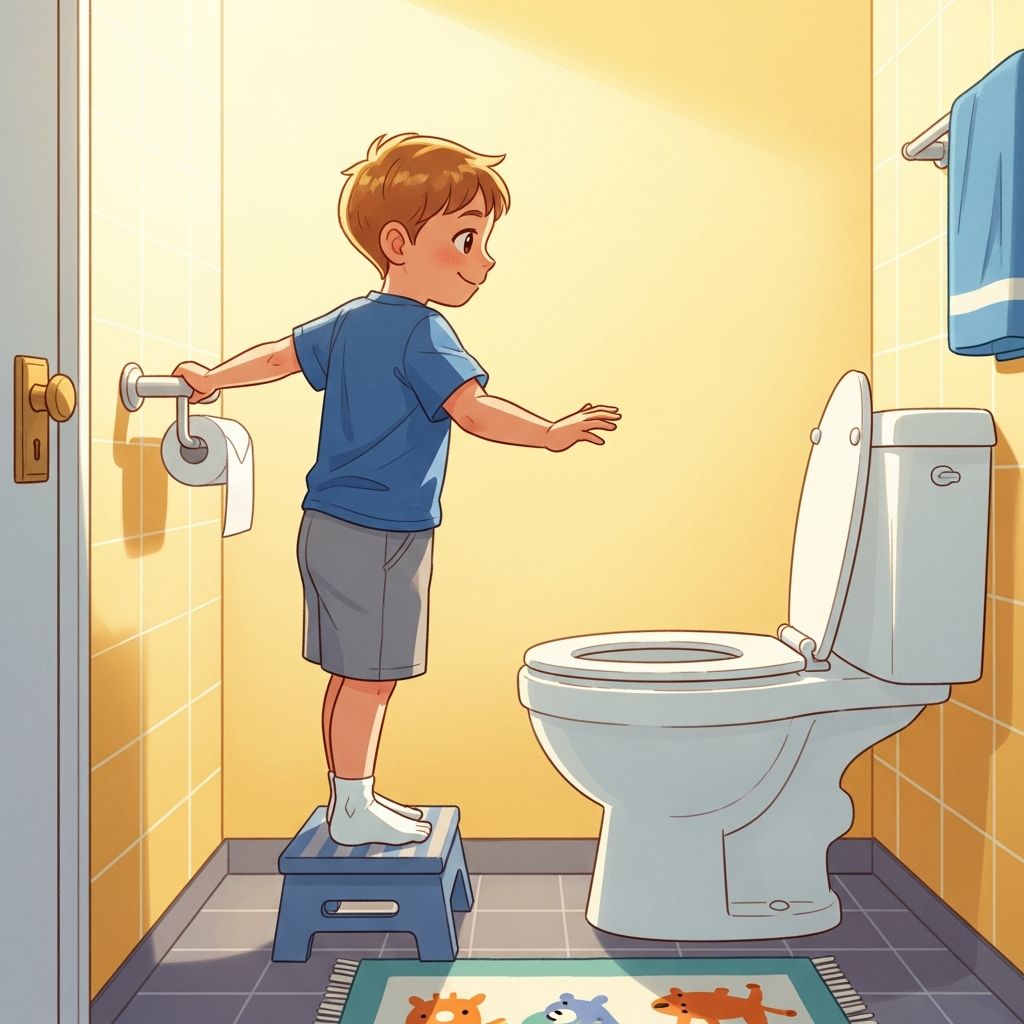
Prepare the environment: Use a stable potty chair or toilet with footstep for height. Opt for tile floors over carpet for easy cleanup. Stock fun aids like floating targets to gamify practice.
Demonstration: The Power of Role Models
Boys learn visually; enlist a male relative—father, uncle, or older brother—to model the process. Stand together, explain steps: Pants down, hold penis tip, aim at target, shake dry. Preschool exposure often sparks imitation naturally.
Single moms: Draw diagrams, use YouTube animations, or simulate with a squirt bottle for aiming demos. Keep explanations simple: “Hold here, point there, hit the circle.” Repeat sessions short and positive.
- Ideal demo setup: Bathroom mirror for self-viewing; verbal narration during act.
- Frequency: 3-5 times daily, 2-3 minutes each.
- Pro tip: Film a quick family demo video for playback (with consent).
Practical Techniques for Accurate Aiming
Position close to the target—6-12 inches away—to shorten stream distance, reducing splatter. Instruct holding the penis end firmly, especially for uncircumcised boys where foreskin affects predictability. Practice holding during seated pees first.
Gradual progression: Start with potty on floor, advance to toilet with stool. Outdoors training minimizes indoor mess—use portable potty in yard with salty snacks to induce urination, rewarding hits with candy. Sessions last 30-60 minutes max; repeat daily if engaged.
Fun Games and Tools to Boost Engagement
Transform practice into play. Float Cheerios or purpose-made targets (biodegradable, shapes like sharks) in water; challenge to sink them. Squirt guns teach trajectory control. Targets sink on impact, providing instant feedback.
Outdoor boot camp: Shirt and shoes only, pee on grass or potty amid play. Keeps it light-hearted. Track progress with sticker charts: 10 hits earns a prize.
- Top tools: Tinkle targets, urinal splash guards, enzyme cleaners for misses.
- Games: “Pee golf” with numbered targets; timed challenges.
- Safety note: Supervise to prevent slips; non-toxic products only.
Overcoming Common Challenges and Misses
Misses happen—have child assist cleanup calmly to build responsibility. Persistent issues? Revert to sitting temporarily. Uncircumcised? Gently retract foreskin midway for better control after practice. Fear of public restrooms? Practice at parks or relatives’ homes first.
Nighttime standing irrelevant; focus daytime. Regression? Common during stress; reassure without punishment. Consistency across caregivers key.
| Challenge | Solution | Expected Resolution |
|---|---|---|
| Poor aim | Closer stance, penis hold, targets | 1-2 weeks |
| Resistance | Role model demos, games | 3-5 days |
| Messes | Outdoor practice, easy-clean floors | Ongoing improvement |
| Public anxiety | Portable urinals, low-stakes outings | 1 month |
Health and Hygiene Essentials
Promote UTIs prevention: Full bladder emptying, proper wiping front-to-back for BMs. Post-pee shake eliminates drips. Handwashing with soap 20 seconds mandatory. Monitor for constipation affecting training.
Circumcision status: No rush to standing; both work with technique. Consult pediatrician if withholding urine or pain occurs.
Long-Term Success and Independence
By age 4, most master standing reliably. Reinforce with praise, fade prompts gradually. Public mastery: Family restrooms or urinals ease transitions. Celebrate milestones like mess-free weeks.
Parental mindset: View accidents as learning, not failure. Positive reinforcement trumps criticism.
Frequently Asked Questions
What age should boys start standing to pee?
After seated mastery, typically 2.5-3 years, when coordinated and interested.
Is it okay if my boy only wants to sit?
Absolutely; many prefer sitting lifelong. No developmental harm.
How do I handle uncircumcised boys?
Hold foreskin back gently during practice; stream less predictable initially.
What if training regresses?
Revert to previous successes, increase positivity; temporary.
Best targets for aiming practice?
Cheerios, floating toys, or septic-safe pee targets.
Advanced Strategies for Stubborn Cases
For resistant toddlers, integrate standing into routines like post-meal checks. Peer playdates with trained boys inspire. Track data: Log hits/misses to visualize progress, motivating via graphs.
Tech aids: Apps with potty timers, virtual rewards. Sensory play: Water tables mimic aiming pre-toilet.
Gender-neutral tip: Girls can join games for sibling bonding, learning hygiene indirectly.
Environmental Adaptations for Success
Install bidets or wipes warmers for comfort. Potty seats with handles aid balance. Night-lights guide nighttime independence. Travel potty for outings prevents setbacks.
Multi-child homes: Stagger training to avoid confusion; older siblings model.
Psychological Aspects of Milestone Achievement
Builds self-esteem; mastery fosters autonomy pride. Avoid shaming misses—focus growth mindset. Parental modeling instills body positivity.
Research underscores play-based training efficacy, reducing stress hormones.
References
- How to Teach Boys to Pee Standing Up — Potty Genius. Accessed 2026. https://pottygenius.com/blogs/blog/how-to-teach-boys-to-pee-standing-up
- How To Teach A Boy To Pee Standing Up (Without the Mess) — Fatherly. Accessed 2026. https://www.fatherly.com/parenting/how-to-teach-boys-to-pee-standing-up
- How to Potty Train a Boy: A Step-by-Step Guide with Tips — Healthline. Accessed 2026. https://www.healthline.com/health/parenting/potty-training/how-to-potty-train-a-boy