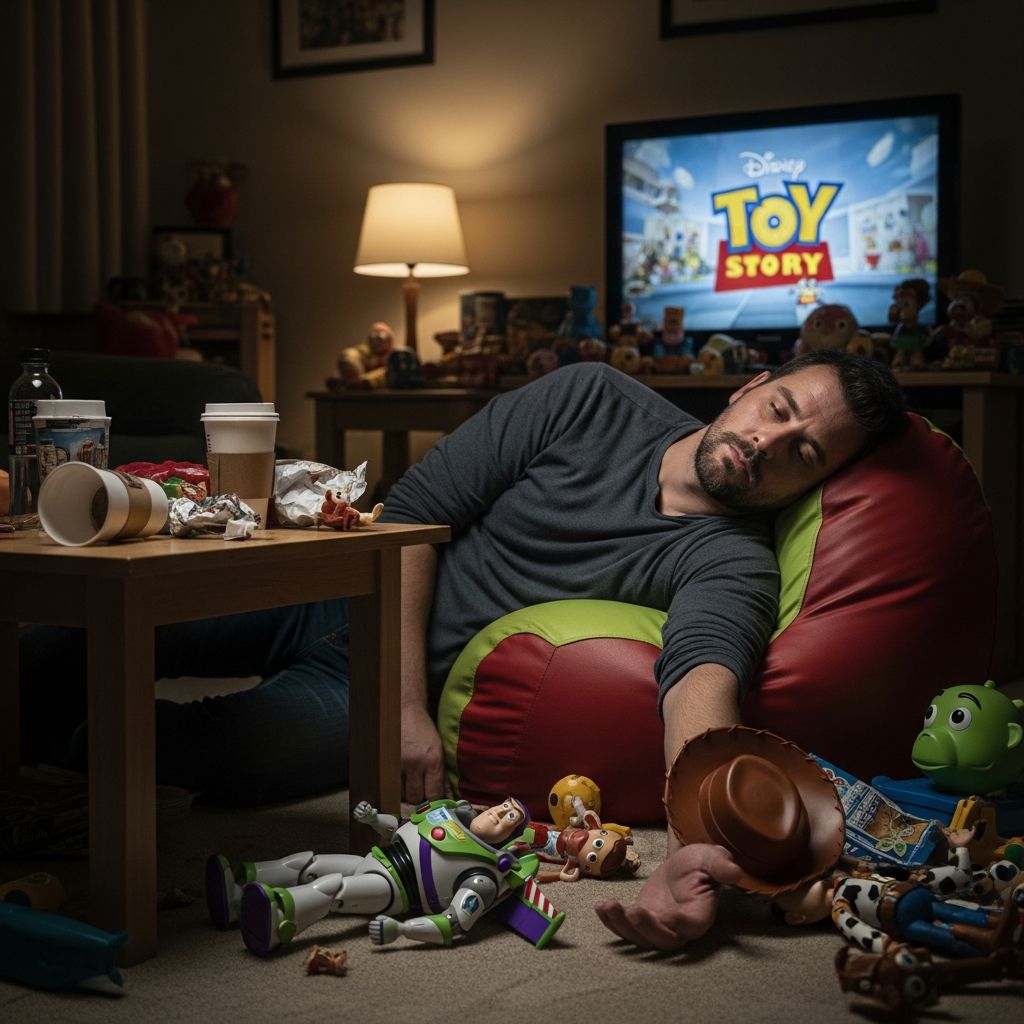
Children fall in love with movies in a way that is intense, repetitive, and often completely exhausting for the adults who share a roof with them. Toy Story, with its talking toys and emotional twists, has become one of those films that kids want to watch, quote, and replay until the opening song sends parents running for the remote. Yet hidden in that exhaustion is a chance to rethink what movie love means for kids, and how parents can respond without losing their minds.
This article looks at the emotional tug-of-war many parents feel about Toy Story and similar films: pride in sharing something meaningful, irritation at corporate overexposure, and guilt when their patience runs out. It offers practical ways to set boundaries, keep perspective, and transform movie overload into something healthier, more balanced, and even—sometimes—enjoyable.
Why Kids Get Hooked on One Movie
Before judging the fiftieth request to watch Toy Story, it helps to understand why children latch on to a single movie so fiercely. Their brains cling to repetition because repetition feels safe, predictable, and comforting. Knowing exactly what will happen next gives kids a sense of control in a world where much of life is decided for them.
- Preschoolers, in particular, are wired to seek out repeated stories and songs because it strengthens memory and language skills.
- Recognizable characters like Woody and Buzz become emotional anchors; kids treat them almost like real friends who always say the same reassuring lines.
- Repetition helps children rehearse big feelings—fear, jealousy, loyalty, sadness—in a controlled, familiar environment.
To an adult, another screening looks pointless; to a child, it can feel like revisiting a favorite playground. That doesn’t mean parents must always say yes, but it explains why the attachment is so intense.
The Hidden Emotional Weight of Toy Story
Part of what makes Toy Story so powerful is also what makes it unexpectedly heavy. Behind the jokes and action sequences is a story about friendship, jealousy, loyalty, and the terror of being replaced. For a small child, that’s a lot to absorb in ninety minutes.
The plot quietly asks questions kids may not have the words for yet: Will the people I love get tired of me? What happens when someone newer or cooler shows up? Am I worth keeping if I’m no longer useful? No wonder children want to revisit the story; they are trying to make sense of those fears and hopes, frame by frame.
- Characters losing their place in a child’s heart echo common childhood worries about siblings, new schools, or shifting friendships.
- Scenes of separation and reunion give kids a script for handling the everyday goodbyes and reunions of family life.
Understanding that Toy Story taps into deep emotional territory can soften some parental frustration, even while parents maintain firm viewing limits.
When Love for a Movie Turns into Parent Fatigue
Of course, understanding what’s happening emotionally does not magically turn endless replays into a pleasant experience. Parents often feel their patience erode in very specific ways when a beloved kids’ film takes over the household.
- The soundtrack invades daily life, looping in your head long after bedtime.
- Quotable lines become constant background noise, repeated by kids at maximum volume and minimum context.
- Merchandise appears everywhere: pajamas, plates, lunch boxes, socks, balloons—reminders that the story has become a brand.
- Relatives and friends, eager to please, gift yet more Toy Story items, turning your home into an unofficial franchise showroom.
After weeks or months of this, many parents feel a strange mix of resentment and guilt. They may miss the days when their child’s playtime wasn’t so tightly woven to a giant media property, yet they also feel bad for disliking something that clearly brings their child joy.
The Commercial Machine Behind the Magic
It is impossible to talk about modern kids’ movies without acknowledging the machinery of marketing that supports them. A beloved story quickly becomes a universe of products: action figures, bedding, branded snacks, birthday party supplies, video games, and more. Families are encouraged to experience the movie not just as a story but as an entire lifestyle.
This can leave parents feeling less like they are sharing art with their children and more like they are being recruited into an advertising campaign. Instead of one special outing to the theater, the film follows them into the grocery store, the clothing aisle, and their email inbox.
| Where It Appears | Common Examples | Impact on Families |
|---|---|---|
| Home | Bedding, dishes, toys, posters | Clutter, constant visual reminders of the franchise |
| Entertainment | Sequels, series, holiday specials, soundtracks | Pressure to keep up with every new release |
| Shopping | Branded food, clothes, party supplies | More begging, harder budgeting, tricky conversations about wants vs. needs |
| Social Events | Themed birthdays, costumes, school events | Expectation to participate or match what other families are doing |
Recognizing the commercial pressure at work can help parents understand why they feel so squeezed and can motivate them to become more deliberate about what they allow into the home.
Balancing Joy and Boundaries
Enjoying Toy Story with a child and feeling overrun by it are not mutually exclusive experiences. It is entirely possible to respect a child’s enthusiasm while also establishing reasonable boundaries that protect family sanity and financial stability.
Parents can think about boundaries in three categories: time, stuff, and space.
Time: Limiting Screen Overload
- Set clear viewing windows. Decide in advance when movies are allowed—perhaps on weekend afternoons or specific evenings—rather than responding to constant requests.
- Use simple language. Phrases such as “One movie today” or “After dinner, we will choose together” are easier for young children to accept than long explanations.
- Rotate choices. Let Toy Story be part of a small, parent-approved selection, not the only option. Offering two or three choices gives kids agency without giving up structure.
Stuff: Containing the Merchandise Flood
- Choose a category. Decide that Toy Story items will be limited to, for example, pajamas and one or two small figures, instead of every category under the sun.
- Use wish lists. When relatives ask what to buy, steer them toward non-branded gifts, experiences, or art supplies.
- Practice the “one in, one out” rule. If a new themed toy comes in, an old toy must be donated or passed along, helping control clutter and teaching sharing.
Space: Protecting Movie-Free Zones
- Keep bedrooms calmer. Consider keeping children’s bedrooms mostly free of branded décor so they have at least one space that isn’t marketing-driven.
- Create screen-free rituals. Daily routines like bedtime stories, walks, and family meals can be firmly separated from movie talk and screens.
When boundaries are predictable and calmly enforced, kids adapt more easily than parents often expect. The goal is not to eliminate Toy Story from life, but to keep it in proportion.
Using the Movie as a Tool, Not a Master
Despite the commercial noise around it, Toy Story can still be a surprisingly useful tool for parents. Its themes make it an excellent starting point for conversations about friendship, jealousy, and change, especially for kids who struggle to talk about their feelings directly.
- Ask children how they think different characters feel in key scenes, then gently relate those feelings to situations in your child’s own life.
- Invite kids to imagine what the toys do when no one is watching, which can lead to creative storytelling and drawing instead of more screen time.
- Use simple questions—“Have you ever felt left out like that?”—to help children connect the story with their own emotions.
In this way, the movie becomes a shared language for processing experiences rather than a constant distraction that replaces them.
When Parents Don’t Like the Movie Anymore
There is often an unspoken assumption that good parents unconditionally enjoy whatever their kids love. In reality, many adults quietly resent specific films, characters, or franchises, even as they watch them yet again with a child pressed against their side.
Disliking Toy Story, or feeling emotionally drained by it, does not mean a parent is unkind or unloving. It simply reflects that adults experience stories differently, bring different histories to them, and have limits on how many times they can absorb the same emotional beats.
- Parents may be reminded of their own childhood fears or losses and feel blindsided by unexpected sadness.
- They may be frustrated by the idea that a large corporation shapes so much of their child’s imagination.
- They might simply be tired and overloaded, making any additional emotional stimulus feel overwhelming.
Talking openly—with partners, friends, or parenting communities—about these mixed feelings can normalize them. It also helps parents brainstorm alternatives that respect both the child’s enthusiasm and the adult’s limits.
Alternatives That Still Honor the Story
For families looking to dial down Toy Story without dismissing a child’s attachment to it, there are many options that keep the core themes while reducing screen exposure. The key is to shift focus from the specific film to the broader ideas that make it meaningful.
- Act it out. Encourage kids to use their existing toys to reenact favorite scenes or invent new adventures, turning passive viewing into active play.
- Draw the characters. Offer crayons, markers, and paper so children can draw Woody, Buzz, or their own original toy heroes.
- Tell “what if” stories. At bedtime, co-create simple stories: “What if your toys could talk? What would they say about your day?”
- Read related themes. Choose picture books about friendship, sharing, or feeling left out to explore the same emotions in a quieter format.
These alternatives allow children to keep what they love—the sense of adventure, the emotional connections, the humor—while helping parents limit the numbing effect of endless repeat viewings.
Accepting That Phases End (Even When It Feels Like They Won’t)
In the middle of a Toy Story obsession, it can feel as though this particular movie will define family life forever. Yet most children move through their intense phases more quickly than adults realize. The day often comes when the once-beloved film barely registers, replaced by some new fascination that parents may or may not like any better.
Remembering that this, too, is a phase can offer real relief. The goal is not to win every battle over what children love, but to guide them through their obsessions with kindness, boundaries, and a sense of humor. One day, the very movie that currently drives parents up the wall may become something children remember fondly as a symbol of feeling safe and seen.
Practical Tips for Surviving a Toy Story Phase
For parents who need clear, concrete strategies, the following quick-reference list can help keep Toy Story (or any kids’ movie) in its proper place.
- Decide family viewing rules in advance and state them simply.
- Limit how much branded merchandise enters the home.
- Keep at least one room generally free of character décor.
- Turn favorite scenes into opportunities for conversation or pretend play.
- Share your frustrations with other adults, not with your child.
- Remind yourself that the phase will eventually end.
FAQ: Parents and Toy Story Overload
Is it bad for my child to watch the same movie repeatedly?
Repeated viewing is developmentally normal and can be comforting for young children, as long as total screen time stays within reasonable limits for their age. The key is balance: mixing movie time with active play, reading, and real-world interaction helps keep repetition from turning into dependency.
What if I cannot stand Toy Story anymore?
Disliking a movie your child loves does not make you a bad parent. It is acceptable—and healthy—to set limits based on your own capacity. Short, firm boundaries such as “We watch this on weekends only” protect both your relationship with your child and your ability to cope.
How do I explain limits without hurting my child’s feelings?
Link boundaries to routines rather than to your opinion of the movie. Instead of saying, “I’m sick of Toy Story,” try “In our family, we watch one movie a day,” or “We’re done with screens until tomorrow.” This keeps the focus on family rules, not on the value of your child’s interests.
Should I refuse all Toy Story merchandise?
You do not have to ban everything to resist commercial pressure. Choosing a small number of items, setting a budget, or tying new purchases to special occasions can keep the collection manageable while still honoring your child’s enthusiasm.
Will my child grow out of this phase on their own?
Most children do move on naturally, especially when their environments offer varied activities, stories, and friendships. Parents can support this process by gently introducing new interests rather than trying to abruptly shut down the old one.
In the end, sharing Toy Story with a child is less about the specific movie and more about the kind of relationship it represents. With thoughtful boundaries and a willingness to laugh at the absurd parts, families can navigate even the most intense Toy Story phase and come out the other side—with memories, inside jokes, and perhaps a slightly frayed but still intact sense of humor.