Transitioning a breastfed baby to accept a bottle is a common challenge for many parents, especially when returning to work or needing occasional relief for the primary caregiver. This process requires patience, the right techniques, and an understanding of infant feeding cues to avoid nipple confusion or nursing disruptions. By introducing bottles thoughtfully after breastfeeding is well-established, typically around 3-4 weeks, parents can foster flexibility without compromising milk supply or baby’s comfort.
Optimal Timing for Introducing Bottles
The key to a successful introduction lies in timing. Wait until breastfeeding is firmly established, which usually occurs after the first 3-4 weeks when baby has regained birth weight and nurses efficiently. Introducing too early risks preference for the bottle’s faster flow, potentially leading to poor latch or reduced milk production. Start during a calm period, such as mid-morning when baby is content but not ravenous, to minimize frustration.
- Assess breastfeeding success: Baby should have 8-12 wet diapers daily and steady weight gain.
- Avoid major changes like teething or growth spurts, which heighten fussiness.
- Begin with one bottle per day, gradually increasing as acceptance improves.
Selecting the Right Bottle and Nipple
Choose bottles and nipples that closely mimic the breast to ease acceptance. Opt for wide-base, slow-flow nipples made of soft silicone that resemble the areola’s shape and texture. Avoid fast-flow options initially, as they can overwhelm baby’s sucking rhythm.
| Nipple Type | Best For | Features |
|---|---|---|
| Wide-base silicone | Breastfed newborns | Soft, breast-like shape; slow flow |
| Orthodontic | Slightly older infants | Flattened tip for palate comfort |
| Standard latex | Allergic considerations | Natural feel but check for sensitivities |
Warm the nipple under running water and add a drop of expressed breast milk to familiarize baby with the taste and scent.
Paced Feeding: Mimicking the Breast
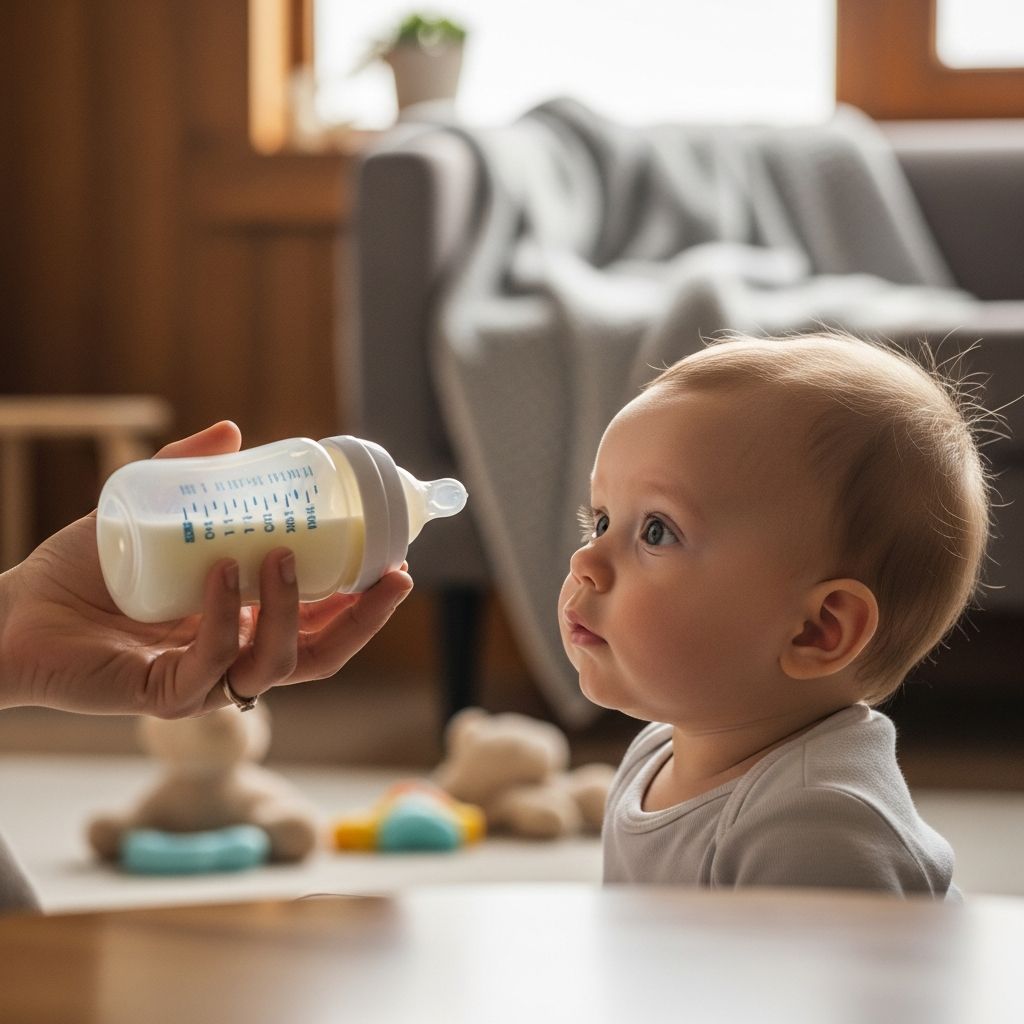
Paced bottle feeding is a technique that replicates breastfeeding’s natural rhythm, preventing overfeeding and gas. Hold baby semi-upright, tilt the bottle horizontally so milk fills the nipple only when baby actively sucks, and pause every 20-30 seconds to burp or allow baby to set the pace.
- Position baby at a 30-45 degree angle.
- Tickle lips with nipple to trigger rooting reflex.
- Hold bottle parallel to floor; tip upward briefly for flow, then lower.
- Switch sides midway to even out facial muscles and provide variety.
- End when baby slows sucking or turns away.
This method strengthens sucking control and maintains breastfeeding compatibility.
Ideal Feeding Positions for Success
Experiment with positions different from nursing to signal a bottle feed. Upright holds promote control and reduce spit-up, while motion can soothe resistance.
- Cradle hold: Arm support at 45 degrees, head aligned with neck.
- Laid-back: Baby on your legs, facing you, back against thighs.
- Seated: In a bouncer or high chair, facing feeder for eye contact.
- Motion feed: Walk or sway gently while offering.
Always ensure baby’s chin touches the nipple base for a deep latch, lips flanged out.
Creating a Supportive Feeding Environment
A calm atmosphere reduces stress. Dim lights, soft music, and skin-to-skin contact help baby associate the bottle positively. Swaddle hands near face for security, and feed when drowsy but alert—such as upon waking—to leverage hunger instincts without overtiredness.
Involve partners or grandparents early; their scent and hold provide novelty without mom’s familiar cues triggering breast preference.
Hands-On Techniques to Encourage Latching
If initial refusals occur, use play-based familiarization. Let baby mouth an empty nipple, dip it in milk, or gently tug a pacifier to build suction strength. Practice 3-5 times daily.
- Rub nipple on tongue and cheeks to stimulate rooting.
- Offer 1-2 ounces first to build confidence.
- Use finger feeding: Insert clean pinky (nail down) into mouth, flowing milk slowly.
- Try alternative vessels like spoons or small cups for transitional sips.
Troubleshooting Common Refusal Issues
Bottle aversion often stems from flow differences, positioning, or stress. If persistent after a week, rule out oral ties or reflux with a pediatrician. Short, frequent trials (5-10 minutes) prevent escalation.
| Issue | Solution |
|---|---|
| Arches back, cries | Try when half-asleep; change holder |
| Pushes nipple out | Slower flow nipple; paced technique |
| Falls asleep quickly | Undress slightly; tickle feet |
| Takes but gulps air | Burp midway; upright position |
Consistency without force yields results; most babies adapt within days to weeks.
Maintaining Breast Milk Supply During Transition
Pump during bottle feeds to match demand and store milk. Nurse frequently upon return to sustain production. Expressed milk in bottles preserves nutrition and bonding familiarity.
Long-Term Benefits of Flexible Feeding
A bottle-accepting baby enables shared caregiving, rest for mom, and preparation for daycare. This flexibility supports extended breastfeeding by reducing burnout risks.
Frequently Asked Questions
What if my baby never takes the bottle?
Patience is key; try alternatives like cups. Consult a lactation specialist if refusal lasts over two weeks.
Can I use formula temporarily?
Yes, if pumped milk is unavailable, but prioritize breast milk to maintain gut health benefits.
How often should I offer bottles?
Once daily initially, building to match needs without replacing all nursings.
Does paced feeding cause underfeeding?
No, it prevents overfeeding; monitor wet diapers and weight gain.
When to seek professional help?
If poor weight gain, frequent choking, or pain during feeds.
References
- How to get a breastfed baby to take a bottle — Philips Avent. 2023. https://www.usa.philips.com/c-e/mo/baby-bottles-nipples/transition-from-breastfeeding-to-bottle-feeding.html
- What to do when baby won’t take a bottle — HealthPartners. 2024-05-15. https://www.healthpartners.com/blog/baby-wont-take-bottle-help/
- 8 Ways to Introduce a Bottle to a Breastfed Baby — Southwest Pediatrics. 2023-08-10. https://swpedi.com/introducing-a-bottle-to-a-breastfed-baby/
- 6 Bottle Feeding Tips for Breastfed Babies — Dr. Brown’s Baby. 2024. https://drbrownsbaby.com/blogs/articles/6-bottle-feeding-tips-for-breastfed-babies
- Using Bottles with a Breastfed Baby — USDA WIC Breastfeeding Support. 2023-11-01. https://wicbreastfeeding.fns.usda.gov/using-bottles-breastfed-baby
- Bottle Refusal — IABLE. 2024. https://lacted.org/iable-breastfeeding-education-handouts/bottle-refusal/
- Hints for Offering a Breastfed Baby a Bottle — Kaiser Permanente. 2022. https://mydoctor.kaiserpermanente.org/ncal/Images/Breastfeeding%20and%20Offering%20a%20Bottle_tcm75-479506.pdf