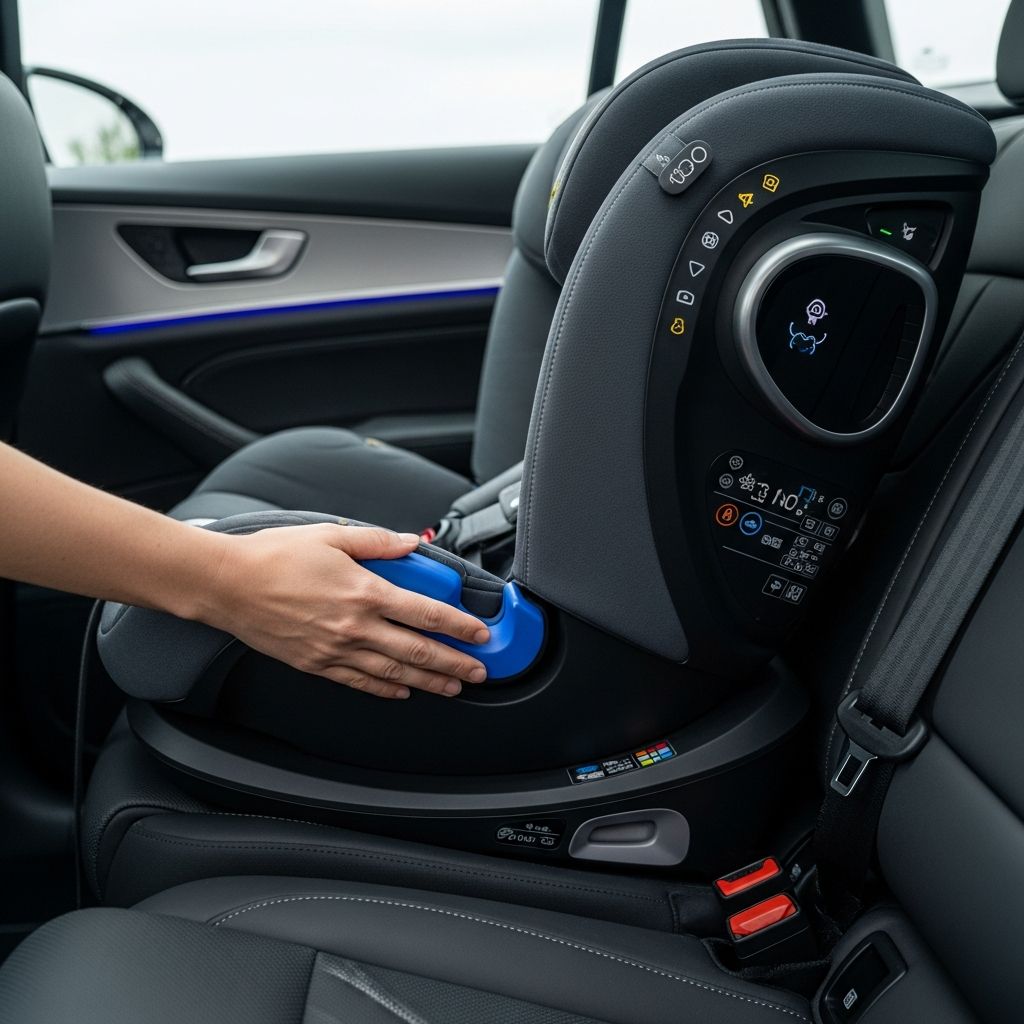
Parents quickly discover that picking a safe car seat is only half the battle. The real test comes when you try to buckle that seat into your car, add another child, and still leave room for actual adults or groceries. This guide walks through how to think about car seats and vehicles together, so you can design a setup that is safe, realistic, and doesn’t require an engineering degree every school run.
Why Car Seat Fit Is More Complicated Than It Looks
Many families purchase car seats by age and weight recommendations alone, only to realize later that the seat is too wide, too tall, or simply awkward in their particular vehicle. This becomes even more obvious when you:
- Welcome a new baby and try to fit a second or third seat into the back row.
- Have a compact car with limited legroom and narrow rear seats.
- Need to balance car pool needs, luggage, and grown-up passengers.
Thinking about the car and the car seat as a matched pair from the start can save time, money, and a lot of frustration later.
Step 1: Understand Car Seat Types and How They Use Space
Before you worry about specific brands, get a clear sense of how each seat type behaves inside a car. Different designs claim the same safety standards, but they demand very different amounts of space.
Infant (Rear-Facing Only) Seats
Infant seats usually come with a detachable base and a carrier that clicks in and out. They are convenient for newborns but can be surprisingly long front-to-back when installed at a newborn-friendly recline angle.
- Best for: Newborns and younger babies who sleep often in the car.
- Watch for: Front seats pushed far forward, especially in compact cars or when the driver is tall.
Convertible Seats
Convertible seats can be used rear-facing for babies and toddlers, then re-installed forward-facing as your child grows. Their flexibility often makes them a better long-term fit, but they vary widely in height, width, and how much overhang they allow on the vehicle seat.
- Best for: Families wanting one seat that lasts through multiple stages.
- Watch for: Bulkier models that limit front-seat legroom when used rear-facing.
Combination and Booster Seats
Combination seats start forward-facing with a harness, then convert to a booster using the vehicle’s seat belt. Dedicated boosters are often slim and light but still need proper belt positioning and sometimes a headrest behind them.
- Best for: Preschoolers and older children who are forward-facing.
- Watch for: How the seat belt routes around the child’s shoulder and lap, and whether the car’s head restraints interfere with the seat’s back.
Step 2: Learn Your Vehicle’s Quirks
Every car has its own personality, and that includes details that matter a lot when you’re installing car seats. A seat that works beautifully in one SUV might be a nightmare in a compact sedan or a pickup truck.
- Seat shape: Deeply contoured, bucket-style back seats can make some car seats tilt or twist.
- Seat belt anchors: Long, flexible buckle stalks can cause wobble; very short, stiff stalks can make tightening the belt harder.
- LATCH anchors: Some seating positions don’t have lower anchors or a top tether, which can limit where you safely place certain seats.
- Head restraints: Some are fixed and push forward; others can be removed, which can help a high-back booster sit flush.
Before shopping, open the vehicle manual and look specifically at the child restraint section. Note where LATCH is available, any restrictions on the center seat, and whether top tethers are provided for all positions in the back.
Step 3: Match Child Needs to Vehicle Seats
Once you understand both car seat types and your car’s limitations, you can strategically assign positions. Think about safety, ease of use, and daily routine, not just what seems simplest today.
| Child | Typical Seat Type | Ideal Position | Why It Helps |
|---|---|---|---|
| Newborn / Infant | Rear-facing infant or convertible | Outboard or center, whichever allows safest install | More room for recline and easier lifting in and out of the car. |
| Toddler | Rear-facing or forward-facing convertible | Center, if possible | Often the most protected spot, good if child tends to kick or fling toys. |
| Preschooler | Forward-facing harness or combination seat | Outboard | Easier to help buckle harness without climbing into the car. |
| Older Child | High-back or backless booster | Outboard | Simpler seat belt use and often better shoulder belt routing. |
Safety experts often say “the safest spot is where you achieve the best installation.” That means a perfectly tight, well-angled seat on the side can be safer than a loose, tilted seat in the middle.
Step 4: Planning for Multiple Kids and Three-Across
The true puzzle emerges when you need to fit three kids in the back or juggle car seats plus adult passengers. Here, a little planning and creativity go a long way.
Think in Terms of Width and Height
Two measurements matter most when squeezing multiple seats side-by-side:
- Width: Narrower, low-profile seats may allow three-across even in some compact cars.
- Height: Very tall seats can interfere with head restraints or limit the driver’s rear visibility.
Mixing Seat Types Strategically
It is often easier to achieve three-across when the seats are different types, because they nest against each other more efficiently. For example:
- A narrower infant seat base next to a taller forward-facing seat can share shoulder space without crowding the buckles.
- A backless booster in the middle may be tricky if the child can’t easily reach the buckle; placing the booster outboard with a harnessed seat in the center can make buckling easier.
If you know a third child is in your future, choosing slimmer seats earlier can avoid having to replace everything later.
Step 5: Common Fit and Installation Pitfalls
Many “this seat just doesn’t work in my car” problems actually come from avoidable mismatches or installation errors. Watch out for these frequent trouble spots.
- Recline conflicts: In rear-facing mode, some seats require a specific angle for newborns, which can rob front-seat legroom. As a child grows, many models allow a more upright angle that frees space.
- Using lower anchors where they’re not allowed: Some vehicle center seats do not support LATCH, even if the anchors look close enough. The manual will specify which anchors may be used together.
- Floating or twisted bases: A car seat that rocks on a sloped or deeply bolstered seat might need a rolled towel or pool noodle (if permitted by the manufacturer) to achieve a stable base.
- Blocked buckles: Wider car seats can sit directly over seat belt buckles, making it nearly impossible for a booster kid to buckle independently.
Step 6: Balancing Safety, Convenience, and Daily Life
Parents sometimes assume that the safest setup is automatically the most difficult to live with. In reality, the safest arrangement is one you can consistently use correctly, every single ride.
- Minimize contortions: If placing a rear-facing seat behind the driver forces a daily twisting, bending dance, consider swapping sides or seat types so you can maintain good form and avoid rushing.
- Support independence: Older children in boosters should be able to buckle and unbuckle themselves without accidentally loosening the neighboring harnessed seat.
- Plan for carpools: If you frequently drive extra kids, consider leaving one seating position open for a low-profile booster that’s easy to store and deploy.
Sample Layout Ideas for Different Vehicles
Every car and every family is unique, but it helps to imagine how different scenarios can work. Consider the following generalized setups as inspiration, not rules.
Compact Sedan with Two Kids
- Place a rear-facing convertible or infant seat behind the passenger so that the driver has more legroom.
- Install a forward-facing harness seat behind the driver, where the adult can quickly check straps when loading.
Small SUV with Three Kids
- Use a narrow rear-facing convertible in the center, flanked by a harnessed forward-facing seat and a high-back booster.
- Ensure each seat has its own secure installation without sharing seat belts or overlapping belt paths.
Minivan with Mixed Ages
- Put the rear-facing baby seat in the second row for easy lifting and monitoring.
- Use the third row for older booster riders who can climb in independently, leaving more space near the sliding door for diaper bags and strollers.
How to Test a Car Seat Before Committing
Because car seats interact so heavily with vehicle design, the best way to know if a seat works is to see it in your car. Wherever possible, test the fit before making a final purchase.
- Ask to try floor models: Some stores allow staff to accompany you to the parking lot so you can dry-fit the seat before buying.
- Check return policies: An easy return window provides insurance if the seat turns out to be incompatible with your exact setup.
- Bring measurements: If in-person testing isn’t possible, measure your back seat width, seat depth, and front-to-back distance with front seats in a safe driving position, then compare those numbers to the car seat’s published dimensions.
Quick Fit-Check Checklist
Once you have seats installed, use this simple mental checklist to decide if your configuration truly works.
- The car seat does not move more than about an inch side-to-side or front-to-back when checked near the belt path.
- The harness lies flat without twists and can be tightened without hitting the car’s seats or head restraints.
- Each child has enough legroom to sit comfortably without bracing dangerously on the front seat where it is not allowed.
- Adults can access buckles without digging deep between seats or pressing hard into neighboring shells.
- You can load and unload your children at normal speed without feeling like you are solving a puzzle every time.
Frequently Asked Questions
Can I always use the center seat for the youngest child?
Not always. Some vehicles don’t allow a secure installation in the center because of seat shape, lack of anchors, or unusual belt geometry. If you can’t achieve a rock-solid install there, an outboard position with a correct install is a safer choice.
Is it okay if car seats touch each other or the front seats?
Light contact between car seats in a three-across layout is common, but each seat must still be independently tight and correctly installed. Contact with the front seats depends on both the car and the car seat manufacturer, so it’s important to check both manuals for specific rules.
Do I have to replace my whole car to fit three kids?
Not necessarily. Sometimes switching to narrower car seats, changing which child sits where, or adjusting front-seat positions slightly solves the problem. In a few very small vehicles, however, realistic space limits may make three-across either unsafe or too difficult to use correctly every day.
What if my child’s legs are bent in a rear-facing seat?
Bent legs alone are not a sign that a seat doesn’t fit. Rear-facing children often sit cross-legged or with knees bent, and this is usually comfortable and safe when the seat is used according to instructions. Space becomes a concern when their head approaches the top of the seat shell or the seat’s stated height limit, not simply because their feet touch the back of the vehicle seat.
How do I know when to switch from a harness to a booster?
Age, size, and maturity all matter. A child should be able to sit upright, not unbuckle, and avoid leaning or slouching for the entire ride before using a booster. Many families keep children harnessed longer, especially when juggling tight spaces or complex three-across arrangements, because a harnessed seat is less likely to be misused.
Final Thoughts
Fitting car seats into a real car, with real kids and real schedules, can feel like an ever-changing puzzle. The good news is that with a solid understanding of seat types, vehicle quirks, and how they interact, you can design a layout that is safe, sustainable, and adapted to your family’s particular needs. Taking time to plan now can turn every future school run, road trip, and grocery dash into a smoother, calmer part of your day.