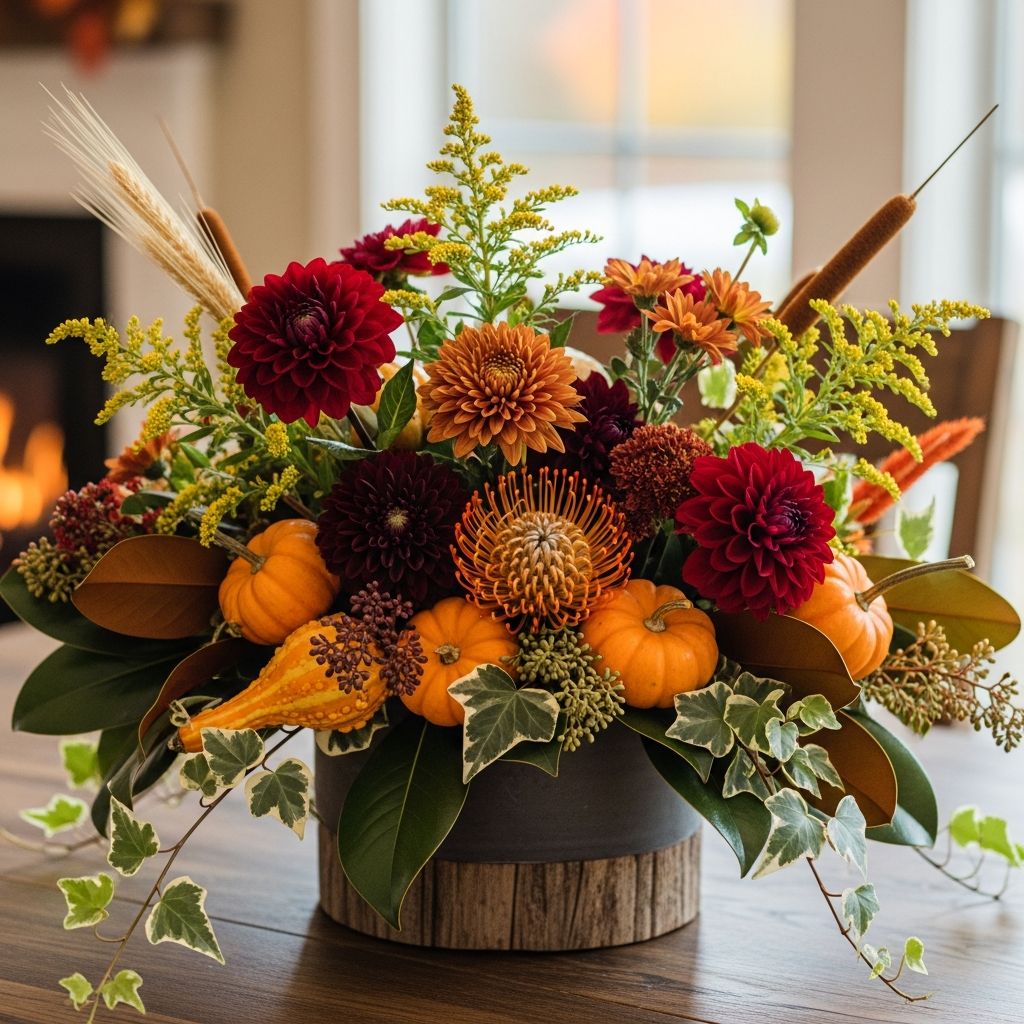
Thanksgiving and the autumn season invite cozy meals, candlelit evenings, and gatherings that feel both abundant and intimate. A thoughtfully designed flower arrangement can anchor that atmosphere, turning an ordinary table or console into a welcoming focal point. Instead of relying on pre-made pieces, you can easily craft your own fall centerpiece that reflects your home, your menu, and your personal style.
This guide walks through how to choose seasonal stems, build an arrangement step by step, and style it beautifully for your Thanksgiving table or any autumn celebration.
Why Autumn Arrangements Feel So Inviting
Autumn arrangements have a unique warmth that comes from their rich colors and organic texture. Unlike the airy pastels of spring, fall flowers often lean into deep oranges, burnished reds, buttery yellows, and earthy browns that instantly make a room feel cozier.
- They echo the harvest season with nods to turning leaves, ripening fruit, and golden fields.
- They bridge formal and casual, working just as well for a sit-down Thanksgiving dinner as for an informal buffet or weekend soup night.
- They pair beautifully with natural materials like wood, linen, stoneware, and woven fibers, which many homes already have on hand.
Planning Your Arrangement: Color, Mood, and Placement
Before buying flowers or cutting branches from the yard, decide how you want the arrangement to feel and where it will live. A little planning keeps your design focused and prevents impulse purchases that don’t work well together.
Choose a Seasonal Color Palette
Pick a color palette of three to five main tones. This gives your design direction and helps you shop or forage with a clear eye.
- Classic harvest: Rust, pumpkin orange, golden yellow, and deep green.
- Warm & romantic: Wine, burgundy, blush, and soft cream.
- Earthy minimal: Bronze, toffee, oatmeal, and sage green.
- Fresh & light: Soft peach, pale yellow, cream, and dusty eucalyptus greens.
Think about your existing decor—your plates, napkins, and tablecloth. Choose colors that complement what you already own instead of competing with it.
Decide Where the Flowers Will Go
Placement influences the height, width, and overall style of your arrangement.
- Dining table centerpiece: Keep it relatively low so guests can see over it. Wide and lush works well here.
- Sideboard or buffet: You can go taller and more dramatic since it won’t block conversation.
- Entry table: A vertical, sculptural arrangement makes a strong first impression for arriving guests.
- Kitchen island: Consider a cluster of smaller arrangements that can be moved easily while cooking.
Autumn Flowers, Foliage, and Extras to Use
Fall arrangements are at their best when they mix blooming flowers with foliage, berries, and even produce. Combining these elements creates movement and depth, and makes your centerpiece more interesting than a simple bouquet of identical stems.
Seasonal Blooms for Fall & Thanksgiving
Look for flowers that naturally peak in late summer and autumn or that echo fall colors. You can source them from florists, farmers’ markets, or sometimes even the grocery store.
- Mums (chrysanthemums) in rich gold, rust, or deep burgundy.
- Roses in caramel, terracotta, copper, or wine tones.
- Sunflowers for a bright harvest feel (choose smaller heads for low centerpieces).
- Dahlias (if available) in jewel tones like plum, merlot, or burnt orange.
- Spray roses or mini carnations to fill gaps and soften edges.
- Alstroemeria and asters for long-lasting color.
Foliage, Branches, and Texture
Foliage gives your arrangement structure, shape, and a seasonal feel. Don’t overlook what might be growing just outside your door.
- Colorful branches from maple or oak trees with changing leaves.
- Eucalyptus for its silvery tone and gentle fragrance.
- Olive, bay, or laurel branches for a Mediterranean twist.
- Seed pods, dried grasses, or wheat for a rustic look.
- Fern fronds, heuchera leaves, or hosta leaves from the garden.
Fruits, Vegetables, and Natural Accents
Small seasonal edibles and natural elements can be tucked among flowers or scattered around the base of your vase to amplify the autumn mood.
- Mini pumpkins and gourds in white, green, or traditional orange.
- Pears, apples, or clusters of grapes for a still-life feeling.
- Whole walnuts or chestnuts for added texture.
- Pinecones, acorns, or seed heads gathered from outside.
- Cinnamon sticks, star anise, or dried citrus slices for a subtle aromatic detail.
Picking the Right Container
The container shapes how your flowers sit and how the arrangement reads in a room. Instead of defaulting to a tall glass cylinder, explore options that suit your style and table.
| Container Type | Best For | Visual Effect |
|---|---|---|
| Low ceramic bowl | Dining table centerpieces | Full, lush, and easy for guests to see over |
| Vintage pitcher | Buffet or sideboard | Casual farmhouse charm with a vertical line |
| Rustic wooden box (lined) | Rectangular tables or mantels | Linear, garden-style arrangements |
| Pumpkin or gourd (hollowed) | Holiday dinners and themed parties | Playful, very seasonal focal point |
| Clear glass vase | Modern, minimal spaces | Clean look that highlights stems and water |
Whatever you choose, make sure the opening is not excessively wide, or your flowers will splay out and look sparse. If your container is shallow or oddly shaped, use floral foam, a flower frog, or a taped grid across the top to help hold stems in place.
Step-by-Step: Building a Thanksgiving Centerpiece
The easiest way to design an arrangement is to work in layers. Start with greenery, move to focal flowers, and finish with delicate accents. This method is forgiving, even for beginners.
1. Prepare Your Tools and Stems
Set yourself up like a small work station so the arranging process stays fun rather than stressful.
- Gather clippers, floral tape, floral foam or frog if needed, and a clean container.
- Fill the container with room-temperature water and add floral preservative if available.
- Strip leaves from the lower portions of stems so no foliage sits below the water line.
- Re-cut stems at an angle to improve water intake before placing them in the vase.
2. Create a Greenery Framework
Begin by establishing shape and size with foliage. Think of this as the skeleton of your design.
- Place a few longer branches to define the overall width and height.
- Add medium-length stems to fill in the middle and soften any harsh lines.
- Keep the center more open if your arrangement will hold larger blooms there.
- Check from all sides to maintain balance, especially if the piece will sit in the middle of a table.
3. Add Focal Flowers
Focal flowers are the stars of the arrangement: the largest, showiest blossoms that immediately draw the eye. Place these with intention rather than clustering them all in one spot.
- Start with three to five focal blooms, depending on the size of your container.
- Stagger them at different heights, avoiding a straight, regimented line.
- Use an informal triangle pattern so the eye moves throughout the arrangement.
4. Tuck in Supporting Flowers
Once the focal blooms are settled, bring in smaller flowers that add fullness and help blend colors.
- Place secondary flowers near focal blooms to create gentle color transitions.
- Use them to bridge gaps and hide mechanics like foam or tape.
- Alternate colors so that one area does not become overwhelmingly heavy or dark.
5. Finish with Delicate Accents
The final layer gives the arrangement life and personality. These are the wispy, trailing, or textural elements that you notice on second glance.
- Add airy textures like grasses, seed heads, or small berries near the edges.
- Let a few stems spill gently over the rim to break up a stiff silhouette.
- Tuck in a few fruit or mini gourds around the base of the container to echo the colors of the flowers.
Keeping It Dining-Table Friendly
A Thanksgiving centerpiece should be beautiful but practical. Guests still need space for plates, serving dishes, and conversation, so design with the dining experience in mind.
- Stay below eye level when guests are seated; most people prefer arrangements under about 12–14 inches for the main dining table.
- Keep the footprint compact enough that platters and glasses can move comfortably around it.
- Avoid heavily scented flowers that might compete with the aromas of the meal.
- If your table is long, consider several smaller arrangements placed down the center rather than one oversized piece.
Styling Ideas for Different Thanksgiving Vibes
The same basic arranging method can be adapted for very different aesthetics. Use these concepts as inspiration and adjust according to what you have on hand.
Rustic Harvest Table
For a cozy, farmhouse feel, lean into texture and a slightly untamed shape.
- Use a wooden box or distressed ceramic bowl as your base.
- Combine sunflowers, mums, and roses with eucalyptus, oak leaves, and wheat.
- Scatter mini pumpkins, walnuts, and a few votive candles along the table runner.
Modern Minimal Gathering
If your space is more streamlined, edit your palette and materials for clarity.
- Choose a simple, matte-finish vase in white, charcoal, or stone.
- Limit your colors to two or three shades, such as cream, soft toffee, and sage green.
- Let negative space show between stems rather than packing the arrangement completely full.
Family-Friendly, Playful Arrangement
When younger guests are involved, a whimsical approach makes the table feel welcoming and fun.
- Turn a hollowed mini pumpkin into a vase by inserting a small waterproof container inside.
- Use cheerful blooms in bright oranges and yellows that feel joyful and approachable.
- Invite kids to place leaves, acorns, or handwritten gratitude notes around the base.
Caring for Your Autumn Flowers So They Last
With a bit of basic care, a Thanksgiving or autumn arrangement can look fresh for several days. This is especially helpful if you like to prep decor in advance of the holiday itself.
- Check the water level daily and top it off; flowers drink more than most people expect.
- Remove any wilted blooms or leaves quickly so they don’t hasten the decline of others.
- Keep the arrangement away from direct heating vents, sunny windows, or fruit bowls that emit ethylene gas.
- If possible, move the arrangement to a cooler room overnight to extend its life.
Eco-Conscious Tips for Seasonal Arranging
Beautiful arrangements do not have to generate unnecessary waste. Small choices in materials and sourcing can make your Thanksgiving flowers more environmentally friendly.
- Prioritize local, seasonal flowers from nearby farms or markets when available.
- Consider reusable mechanics like metal flower frogs or chicken wire instead of single-use foam.
- Repurpose sturdy greenery and branches for winter decorations instead of discarding them.
- Compost spent flowers and foliage once the arrangement has finished its life.
Frequently Asked Questions About Thanksgiving & Autumn Flower Arrangements
How far in advance can I make my Thanksgiving centerpiece?
Most autumn arrangements hold up well for three to five days if you choose long-lasting flowers like mums, alstroemeria, and many roses. If designing ahead, keep the finished piece in a cool room, refresh the water regularly, and avoid placing it near direct heat or sunlight. Very delicate blooms can be added a day closer to your event.
Which flowers last the longest in fall arrangements?
Mums, alstroemeria, carnations, and many spray roses have excellent vase life, often staying attractive for over a week with proper care. Combining these with a few showy but shorter-lived blooms gives you a balance of longevity and impact. Foliage such as eucalyptus and many branches can outlast even the flowers, extending the visual life of your design.
Do I need floral foam to make a good centerpiece?
Floral foam is not strictly necessary; many beautiful arrangements are built in water using a simple tape grid or a reusable metal frog. Foam can be helpful for very complex shapes or unusual containers, but it is less eco-friendly and can restrict water flow. For most home projects, a grid of clear tape across the vase opening or a loosely packed nest of chicken wire is more than sufficient.
How do I keep flowers from getting in the way during dinner?
Focus on a low profile and a modest footprint. When guests are seated, test your arrangement by sitting at the table yourself and looking across: if you can’t make eye contact easily, trim the height or move the piece to a sideboard. For long tables, multiple small arrangements or bud vases between dishes are often more comfortable than a single large centerpiece.
Can I reuse the same container and concept for other fall occasions?
Yes. Once you find a container shape and style you love, you can easily adapt it for different gatherings by adjusting colors and a few key flowers. For example, a low ceramic bowl used at Thanksgiving can also hold late-season greenery and candles for autumn birthdays or quiet Sunday suppers. Think of your container as a versatile tool you return to throughout the season.
Bringing It All Together
A Thanksgiving or autumn flower arrangement does more than decorate a table; it signals to guests that they are entering a space prepared with care. By choosing a color palette, gathering seasonal flowers and foliage, and following a simple step-by-step process, you can create a centerpiece that feels personal and welcoming. Let your surroundings, your menu, and your favorite fall colors guide you, and your autumn flowers will feel like a natural extension of the season itself.