If you live with small children or indoor pets, pee cleanup is not a rare emergency — it is part of normal family life. While accidents can feel overwhelming, a calm plan and a few science-backed techniques make them easier to handle and less likely to leave permanent stains or smells.
This guide walks through what to do the moment you discover a puddle, how to handle different surfaces like mattresses, carpets, and hard floors, and how to protect your home (and your mood) the next time it happens.
Why Urine Is So Tricky to Clean
Urine is more than just water. It typically contains urea, uric acid, salts, and organic compounds that can break down and create strong odors over time. Pet and human urine behave similarly on fabrics and flooring: it soaks in quickly, can damage materials if left in place, and odor can remain even when the stain looks gone.
Two main issues make urine cleanup challenging:
- Deep penetration: On carpets and mattresses, liquid can soak through the surface into padding and underlayment, making it harder to remove completely.
- Odor formation: As urine breaks down, ammonia and other by-products are released, creating that unmistakable smell and attracting repeat accidents from pets.
Because of this, effective cleanup involves both removing moisture and breaking down odor-causing compounds, not just masking smells.
Golden Rules the Moment You Find a Puddle
Whether you step in a wet spot or your child points out a suspicious patch, a few universal rules apply to almost every pee incident:
- Act quickly: The faster you respond, the less time urine has to soak into padding or wood and the easier the cleanup will be.
- Blot, don’t scrub: Press towels firmly to absorb liquid instead of rubbing, which can push urine deeper into carpet fibers or fabric.
- Avoid heat: Hot water or steam can set stains and odors, especially in carpets and upholstery.
- Test cleaners first: On hardwood, laminate, or delicate fabrics, try any cleaner on a hidden spot to avoid damage or discoloration.
Essential Pee Cleanup Kit for Families
You do not need fancy tools, but having a simple kit ready can turn a stressful moment into a quick routine. Consider keeping these items together in one bin or cupboard:
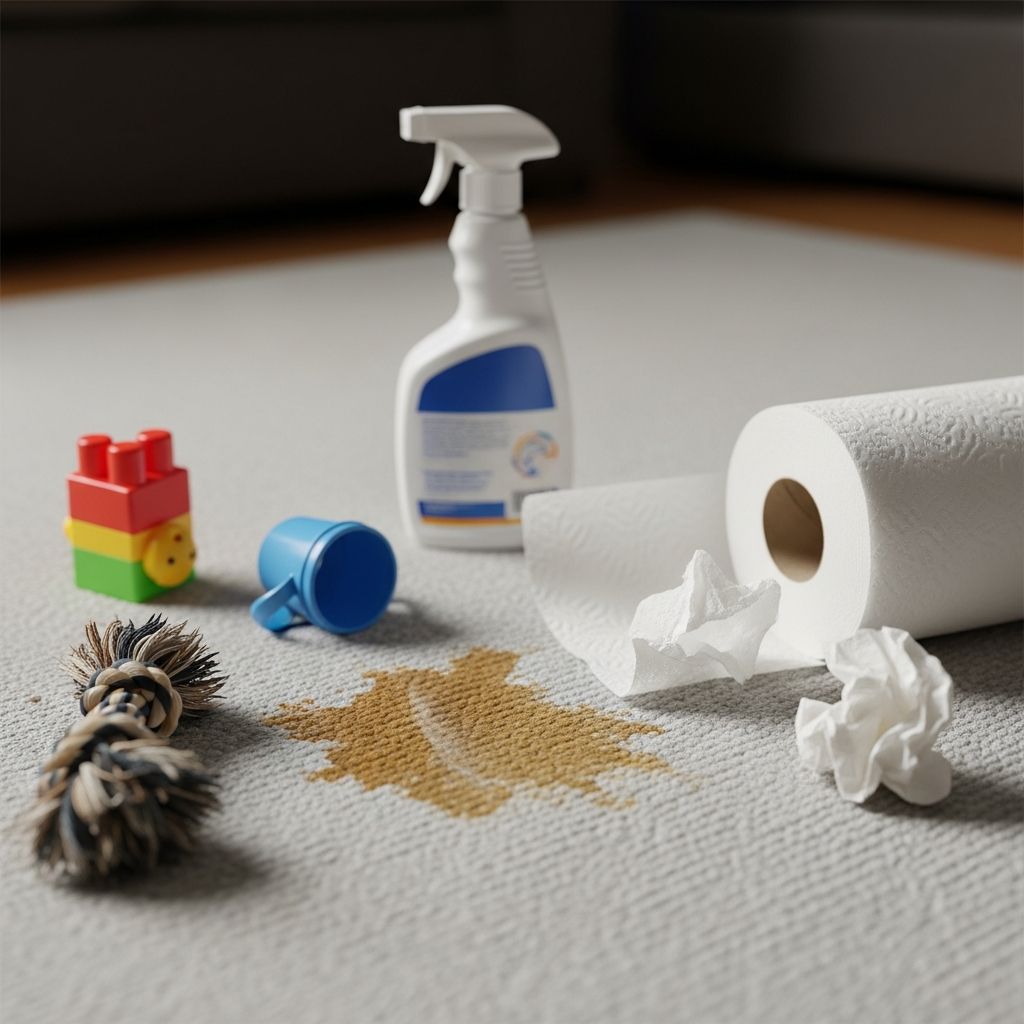
- Plain white paper towels or clean absorbent cloths
- A small stack of old bath towels
- Enzymatic cleaner labeled for pet or bio stains
- White vinegar and baking soda
- Mild dishwashing liquid (non-bleach, non-lanolin)
- Spray bottles for homemade solutions
- Disposable gloves
- Plastic bags for soiled linens or trash
- A portable wet/dry vacuum if you own one (very helpful for carpets)
Step-by-Step: Fresh Pee on Carpet and Rugs
For recent accidents on carpet or area rugs, your main goal is to remove as much liquid as possible before it spreads into the backing or subfloor.
Immediate Response
- Blot thoroughly: Place several layers of paper towels over the wet area. Press down firmly with your hands or stand on them for extra pressure. Replace as they become saturated until little moisture transfers.
- Avoid scrubbing: Scrubbing frays carpet fibers and spreads the urine outward, creating a larger stained zone.
Cleaning and Odor Control
- Rinse with cool water: Lightly apply cool water to the area and blot again. A wet/dry vacuum makes this step much more effective by extracting liquid from deeper layers.
- Use mild detergent if needed: On non-wool carpets, you can apply a solution of about 1/4 teaspoon of mild dishwashing liquid in 1 cup of lukewarm water, blotting and rinsing until there is no more transfer to the towels.
- Neutralize with diluted vinegar: A follow-up solution of about 1 part white vinegar to 2 parts water can help counter residual odor and detergent residue. Blot dry afterwards.
| Step | What to Do | Why It Helps |
|---|---|---|
| 1. Blot | Press towels firmly over the wet spot | Reduces the amount of urine that can soak into the padding |
| 2. Rinse | Apply a small amount of cool water and extract or blot | Flushes out urine from fibers without setting stains |
| 3. Clean | Use mild detergent solution as needed, then rinse | Removes residue that can attract dirt and odors |
| 4. Deodorize | Apply diluted vinegar or enzyme cleaner | Targets odor-causing compounds rather than masking them |
| 5. Dry | Cover with dry towels and weight them down | Prevents musty smells and possible mold growth |
When to Use Enzymatic Cleaners
Enzyme-based cleaners are designed to break down organic material, including urine components, at a molecular level. They are especially helpful when:
- The stain is from a pet who might return to the same spot
- You can still smell urine after basic cleanup
- The accident was large or has partially dried
Follow product directions carefully; many require generous application and enough time to sit so the enzymes can work, followed by blotting or extraction.
Dealing With Dried or Set-In Carpet Stains
Dried urine may not look obvious, but you may notice a persistent smell or visible yellowing. For old or set-in carpet staining:
- Re-wet and extract: Thoroughly rinse the area with cool water and extract repeatedly with a wet/dry vacuum until the water runs clearer.
- Use an enzymatic cleaner: Saturate the area, allow the recommended dwell time, then blot or extract. This can help break down uric compounds that cause lingering odor.
- Consider professional help: If stains or odors persist, a professional carpet cleaner with equipment and specialty treatments may be needed, particularly for large or heavily soiled areas.
Hard Floors: Protecting Wood, Tile, and Laminate
Urine left on wood or laminate can stain, warp, or compromise protective finishes, while tile can develop grout staining and odor. Quick action is critical.
Basic Cleanup for Fresh Accidents
- Wipe up immediately: Use paper towels or cloths to absorb as much as possible.
- Use a safe cleaner: On many sealed hardwood floors, a diluted white vinegar solution (about 1:1 with water, or more diluted if you are cautious) can be used, but always test first in an inconspicuous spot.
- Dry thoroughly: Follow with a dry towel so moisture does not sit on the surface or seep between planks.
Odor and Stain Management on Hard Floors
- Baking soda on damp spots: After cleaning, a light sprinkle of baking soda on a still-damp patch can help absorb odor; vacuum or sweep once dry.
- Enzyme cleaner for persistent smells: Use an enzyme-based cleaner specifically labeled safe for your type of flooring and follow product instructions.
- Address finish damage: If urine has discolored or damaged the finish, you may need consultation with a flooring professional about refinishing or spot repair.
Mattresses, Cribs, and Upholstered Furniture
Beds and couches are prime targets for nighttime accidents and naptime surprises. Because they are thick and absorbent, you want to focus on drawing moisture up and out rather than pushing it deeper inside.
Fresh Mattress Accidents
- Remove bedding quickly: Strip sheets, pads, and blankets and place them in a plastic bin or bag until you can wash them.
- Blot the mattress: Press towels or paper towels gently but firmly into the wet zone. Work from the edges toward the center to keep the wet area from spreading.
- Apply a cleaning solution: Lightly mist a mix of cool water and a small amount of mild detergent onto the surface, avoiding over-saturation.
- Rinse and blot: Use a clean, damp cloth to remove residue and continue blotting with dry towels.
- Deodorize: Sprinkle a thin layer of baking soda over the area and let it sit for several hours or overnight before vacuuming thoroughly.
Furniture and Cushions
For upholstered furniture and removable cushions:
- Check fabric care labels before applying water or cleaning solutions.
- Blot and clean similarly to a mattress, but use less liquid on delicate fabrics.
- If covers are removable and washable, pretreat with an enzymatic laundry additive and wash according to care instructions.
- For lingering smells or stains on fine fabrics, consider professional cleaning.
Washing Linens, Clothing, and Soft Items
Sheets, pajamas, stuffed animals, and small rugs often can go straight into the washing machine with a couple of adjustments:
- Cold rinse first: Run a short cold rinse or pre-wash cycle to remove most urine before adding detergent.
- Use enzymatic laundry boosters: These products are designed to break down organic stains and are often recommended for urine and pet odors.
- Avoid very hot water initially: Heat can set some protein-based stains; consider hotter water only after they are mostly removed.
- Air-dry if in doubt: If you are not sure the stain or odor is gone, air-dry instead of using a hot dryer so you can re-treat if needed.
Preventing Repeat Accidents and Protecting Your Home
While no method can guarantee a pee-free home, you can greatly reduce damage (and drama) with some preventive strategies.
Surface Protection
- Waterproof mattress protectors: Use them on every child’s bed, plus any guest beds that toddlers or pets might visit.
- Washable crib liners and pads: Layer mattress protectors, fitted sheets, and thin absorbent pads for faster middle-of-the-night changes.
- Rugs as buffers: In high-risk zones, use inexpensive, washable rugs or runners over carpets or hard floors.
Behavior and Routine
- Regular bathroom breaks: Encourage bathroom trips around transitions — before car rides, meals, naps, and bedtime.
- Pet routines: Maintain consistent outdoor potty times and reward desired behavior; sudden changes in frequency may warrant a veterinary check.
- No-drama response: Calmly helping kids clean up and change gives them a sense of control and reduces shame, which is important for long-term toileting success.
Safety Considerations When Using Cleaning Products
Because families often clean while kids and pets are nearby, it is important to handle cleaning agents carefully:
- Follow label instructions: Use only as directed, especially for enzyme cleaners and hydrogen peroxide-based products.
- Do not mix random chemicals: Combining some cleaners (for example, bleach and ammonia) can release dangerous gases. Stick to one type of product at a time unless the manufacturer explicitly indicates compatibility.
- Ventilate: Open windows or use fans to reduce inhalation of strong fumes.
- Store safely: Keep all cleaning products out of reach and sight of children, ideally in locked cabinets, as recommended by pediatric safety guidelines.
Frequently Asked Questions (FAQs)
Q: Is it really necessary to use an enzymatic cleaner, or will regular soap be enough?
A: Mild detergent and water can remove much of the visible stain, especially if you act quickly, but enzymes are more effective at breaking down urine components that cause lingering smells and attract pets back to the same spot.
Q: Can I use a steam cleaner on urine stains in carpet?
A: It is generally not recommended to use steam on urine stains because the heat can set both the odor and the stain into the carpet fibers and padding. Cool water extraction and enzymatic cleaners are preferred.
Q: How do I know when I need a professional cleaner?
A: Consider professional help if odors persist after thorough home treatment, if the affected area is large, or if repeated accidents have soaked through to the subfloor or padding.
Q: What should I do if my pet keeps peeing in the same place?
A: Clean the area deeply with an enzymatic cleaner to remove any residual scent markers, block access to that spot temporarily if possible, and address underlying causes such as incomplete housetraining, anxiety, or medical issues with guidance from a veterinarian.
Q: Are homemade vinegar and baking soda solutions safe for all surfaces?
A: Vinegar and baking soda are widely used, but they are not ideal for every material. Vinegar can be too acidic for some natural stone or certain floor finishes, so always test in an inconspicuous area first and follow recommendations specific to your flooring type.
References
- How to Remove Set-In Urine Stains From Carpet — The Stain Guide (video transcript). 2024-02-25. https://www.youtube.com/watch?v=P29Og0OLgfc
- How To Get Dog Pee Out of Carpet, Floors, and Couches — PetMD. 2023-08-10. https://www.petmd.com/dog/general-health/how-to-get-dog-pee-out-of-carpet-floors-couches
- Technical Bulletin: Pet Urine and Carpet — Carpet and Rug Institute. 2022-05-01. https://carpet-rug.org/technical-bulletin-pet-urine-and-carpet/
- How to Get Rid of Dog Pee Stains and Smells — American Kennel Club. 2021-07-23. https://www.akc.org/expert-advice/home-living/dog-urine-stains/
- Poison Prevention Tips for Parents — American Academy of Pediatrics / HealthyChildren.org. 2023-03-01. https://www.healthychildren.org/English/safety-prevention/at-home/Pages/Poison-Prevention.aspx