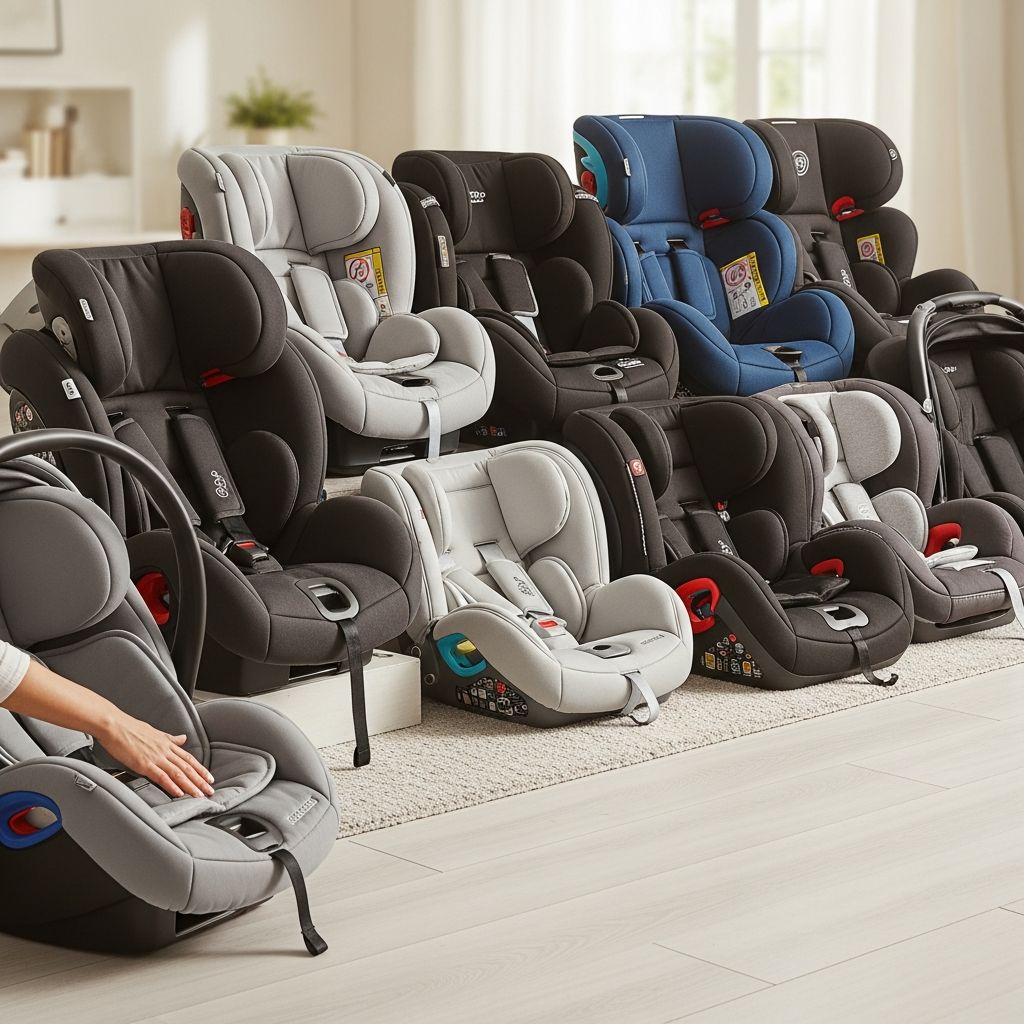
One of the most important decisions you’ll make as a parent involves protecting your child during vehicle travel. Selecting an appropriate car seat requires understanding your child’s current age and size, recognizing the different categories available, and learning about safety features that matter most. This guide walks you through the essential considerations that will help you choose confidently.
Understanding the Critical Role of Proper Car Seat Usage
Vehicle crashes represent a significant risk for young passengers, making proper car seat selection and installation essential. The right seat for your child’s stage provides crucial protection by distributing crash forces safely across their developing body. Rear-facing seats offer superior protection for infants and toddlers because they support the head, neck, and spine more effectively than forward-facing alternatives, significantly reducing the risk of serious injuries during collisions.
Every child will progress through multiple car seat stages as they grow. Understanding these transitions and choosing appropriate seats at each phase ensures consistent protection throughout their early years. The goal is selecting seats that fit your child properly while accommodating their current developmental stage and anticipated growth.
The Rear-Facing Stage: Foundation for Safety
The rear-facing stage represents the most critical period for car seat protection. During infancy and toddlerhood, a child’s spine and neck remain vulnerable and require specialized support that rear-facing seats uniquely provide. Rear-facing seats cradle your child’s body and move with them during a crash, absorbing impact forces across a larger surface area rather than concentrating pressure on the neck and head.
You have multiple options for rear-facing protection:
- Rear-Facing-Only Seats: These specialized infant seats are designed specifically for newborns and young babies, typically accommodating children from birth until they reach approximately 30-35 pounds or 32 inches in height. They excel at providing optimal support for tiny bodies and integrate seamlessly with many stroller systems for convenient travel.
- Convertible Seats in Rear-Facing Mode: These versatile seats begin as rear-facing options for infants and toddlers, then convert to forward-facing as your child grows. Most quality convertible seats accommodate rear-facing use until children reach 40-50 pounds, extending the rear-facing stage considerably.
- All-in-One Seats: These comprehensive options provide rear-facing, forward-facing, and booster functionality in a single seat, growing with your child from infancy through early elementary school years.
A critical safety consideration involves airbag placement. Never position a rear-facing seat in the front passenger seat of a vehicle equipped with an active airbag, as airbag deployment could strike the seat back with dangerous force. Always position rear-facing seats in the back row of your vehicle for maximum safety.
Identifying Quality Rear-Facing Options
When evaluating rear-facing seats, consider several key features that distinguish quality options. Look for seats with extended rear-facing weight limits, allowing your child to benefit from rear-facing protection as long as possible. Ease of installation matters significantly; seats with clear labeling and intuitive attachment systems reduce the risk of improper installation that can compromise safety.
Comfort features like multiple recline positions, adequate cushioning, and head support contribute to a positive experience, making journeys more pleasant for your child. Some seats offer removable infant inserts that provide proper positioning for newborns while remaining useful as your baby grows. Consumer testing organizations have identified several models that excel in crash test performance, ease of use, and value, making them worth investigating as you narrow your choices.
Transitioning to Forward-Facing Protection
Once your child outgrows the weight or height limits of their rear-facing seat, the forward-facing stage begins. This typically occurs sometime between ages 2 and 4, though some modern convertible seats allow rear-facing use into the preschool years. Forward-facing seats with built-in harnesses should be used for as long as possible, ideally until children reach maximum weight or height limits for their specific seat.
Forward-facing options include several categories:
- Convertible Seats in Forward-Facing Mode: The same seats that work rear-facing transition to forward-facing when your child reaches appropriate size milestones. These seats maintain the protective harness system while repositioning your child to face forward.
- Combination Seats with Harness: Designed specifically for forward-facing use, these seats accommodate children from approximately 22 pounds up to 65 pounds while using the internal harness system. Once children exceed harness limits, many models transform into belt-positioning boosters for extended use.
- All-in-One Seats in Forward-Facing Mode: These comprehensive options function as forward-facing harness seats during this stage, preparing for booster conversion later.
Forward-facing seats with longer harness ranges prove particularly valuable because they allow your child to benefit from the secured harness system longer than traditional forward-facing seats. Look for models offering harness slots adjustable to at least 17-18 inches to accommodate growing children comfortably and safely.
The Booster Seat Stage: Final Transition
When your child exceeds the harness weight and height limits of their forward-facing seat, the booster stage begins. Booster seats reposition the vehicle’s lap and shoulder belt to properly fit your child’s smaller frame, ensuring the belt crosses the chest and hips correctly rather than the neck and stomach. This proper positioning is crucial for safety during crashes and cannot be achieved by simply allowing your child to sit on a regular vehicle seat with an adult-style belt.
Two primary booster types exist:
- High-Back Boosters: These seats feature a tall back that positions the shoulder belt correctly, provides lateral side-impact protection, and offers a comfortable headrest for sleeping children. High-back boosters work well in any vehicle and prove especially valuable in cars without well-positioned vehicle seats.
- Backless Boosters: More portable and easier to store, backless boosters position the lap belt correctly but rely on the vehicle seat back for proper shoulder belt positioning. These work best in vehicles with appropriately designed seat backs and are not recommended for all situations.
Many all-in-one and combination seats convert to boosters, allowing single-seat solutions that evolve with your child. Children typically use booster seats from ages 4-8, though some children may need boosters longer depending on their size. Once your child reaches approximately 4 feet 9 inches tall and demonstrates the maturity to sit still with proper belt positioning, they may transition to regular vehicle seat belts.
Evaluating Ease of Installation and Use
Safety benefits of any car seat depend entirely on proper installation. Seats with clear instructions, intuitive attachment points, and visible installation guides reduce the likelihood of mistakes. Look for seats that clearly mark belt paths, feature lockoff mechanisms for secure positioning, and accommodate both lower anchors and seat belt installation for flexibility in different vehicles.
Practical daily use considerations matter equally. Consider how easily you can adjust straps as your child grows, how accessible harness slots are for dressing your child in winter clothing, whether the seat fits three-across in your vehicle if needed, and how easily covers remove for washing. Extended research from consumer testing organizations provides detailed assessments of these practical factors alongside crash test performance.
Key Features Comparison Table
| Seat Type | Age Range | Weight Limits | Primary Advantage | Best For |
|---|---|---|---|---|
| Rear-Facing Only | Birth to ~2 years | Up to 35 lbs | Optimal infant support | Maximum safety focus |
| Convertible | Birth to ~6 years | 4-65 lbs (rear) then 22-65 lbs (forward) | Extended use, value | Long-term investment |
| All-in-One | Birth to ~8 years | Birth to 100-120 lbs | Single seat solution | Simplicity across stages |
| Combination with Harness | ~2 years to ~6 years | 22-65 lbs (harness) then 40-100 lbs (booster) | Forward-facing only | Upgrading from rear-facing |
| High-Back Booster | ~4 years to ~8 years | 40-100 lbs | Side protection, comfort | All vehicles |
| Backless Booster | ~4 years to ~8 years | 40-100 lbs | Portability | Good vehicle seats |
Safety Considerations Beyond Seat Selection
Proper installation represents a critical safety factor often overlooked. Many parents inadvertently install seats incorrectly, compromising their protective capabilities. Local child passenger safety technicians offer free installation checks in most communities. Taking advantage of these resources ensures your selected seat provides maximum protection for your specific vehicle.
Vehicle airbags create additional safety considerations. Modern vehicles feature front passenger airbags that work effectively for teenagers and adults wearing seat belts, but pose significant risks for young children in rear-facing seats and elementary-aged children not properly restrained. Always consult your vehicle’s owner’s manual regarding airbag safety zones for child occupants.
Regularly checking your seat’s expiration date matters, as car seats typically expire 6-10 years after manufacture. Expired seats may not perform as designed, as foam and plastic components degrade over time. Additionally, seats involved in significant crashes should be replaced, even if they appear undamaged, as internal damage may not be visible.
Making Your Selection: Practical Next Steps
Begin your selection process by determining your child’s current size and identifying which stage applies to them. Research crash test ratings from established testing organizations that evaluate actual crash performance rather than relying solely on marketing claims. Read detailed consumer reviews highlighting both safety performance and practical usability factors that matter in daily life.
Consider your lifestyle and driving patterns. Frequent travelers may prioritize lightweight, portable options, while families with multiple vehicles might invest in seats that fit each vehicle permanently. Budget considerations matter, but remember that quality safety equipment represents an investment in your child’s wellbeing. Many excellent seats exist at various price points, from budget-conscious options to premium models with advanced features.
Test the seat’s fit in your vehicle before finalizing your purchase. Some seats fit certain vehicle configurations better than others, and ensuring proper installation in your specific vehicle is crucial. Many retailers offer reasonable return policies allowing you to confirm fit and usability before committing to your purchase.
Frequently Asked Questions
How long should my child stay in a rear-facing seat?
Keep your child rear-facing as long as possible, ideally until they reach the maximum weight or height limit specified by your seat’s manufacturer. Modern convertible and all-in-one seats often accommodate rear-facing use well into the toddler years, sometimes up to 40-50 pounds. Extended rear-facing provides superior protection during this vulnerable developmental period.
Can I use a booster seat in the front seat of my vehicle?
Check your vehicle’s owner’s manual for specific guidance, but most safety experts recommend keeping children in the back seat throughout the booster stage. If a child must sit in the front, ensure they are tall enough and mature enough to sit properly, and verify that the vehicle’s airbag system can be deactivated if your specific situation requires front-seat placement.
What’s the difference between lower anchors and seat belt installation?
Lower anchors (LATCH system) are connection points built into newer vehicles and car seats that securely attach the seat without using the vehicle’s seat belt. Seat belt installation uses the vehicle’s standard lap and shoulder belt to secure the car seat. Both methods work effectively when properly installed; lower anchors simply provide an alternative approach that some parents find easier to use consistently.
How do I know if a car seat will fit my vehicle?
Many manufacturers provide fit finder tools on their websites where you enter your vehicle information and the tool identifies compatible seats. Reading consumer reviews mentioning your vehicle model helps identify potential fit challenges. When possible, test the seat in your specific vehicle before purchase to confirm proper installation and positioning.
When should my child transition from one stage to the next?
Follow the weight and height limits specified by your specific car seat’s manufacturer, as these vary between models. Never transition your child to the next stage based on age alone; size determines appropriate stage transitions. Each seat clearly labels its limits, and exceeding these limits means your child has outgrown that stage’s protection profile.
References
- Types of Child Safety Seats — Indiana University School of Medicine, Department of Pediatrics. 2024. https://preventinjury.medicine.iu.edu/child-passenger-safety/selecting-the-best-car-seat/types-of-child-safety-seats
- Car Seat & Booster Seat Safety, Ratings, Guidelines — National Highway Traffic Safety Administration (NHTSA). 2025. https://www.nhtsa.gov/equipment/car-seats-and-booster-seats
- Car Safety Seats: A Guide for Families — Grandville Pediatrics. 2024. https://www.grandvillepediatrics.com/safety/Car-Safety-Seats-A-Guide-for-Families-2013-Safety
- Choose the Right Car Seat for Your Child — Consumer Reports. 2025. https://www.consumerreports.org/babies-kids/car-seats/buying-guide/
- Recommended Seats: USA — Car Seats For The Littles. Last updated August 10, 2025. https://csftl.org/recommended-seats/
- Car Seats: Product Listing for 2025 — American Academy of Pediatrics HealthyChildren.org. 2025. https://www.healthychildren.org/English/safety-prevention/on-the-go/Pages/Car-Safety-Seats-Product-Listing.aspx
- Types of Car Seats by Stage — Safe Ride 4 Kids. 2024. https://saferide4kids.com/blog/types-of-car-seats-by-stage/