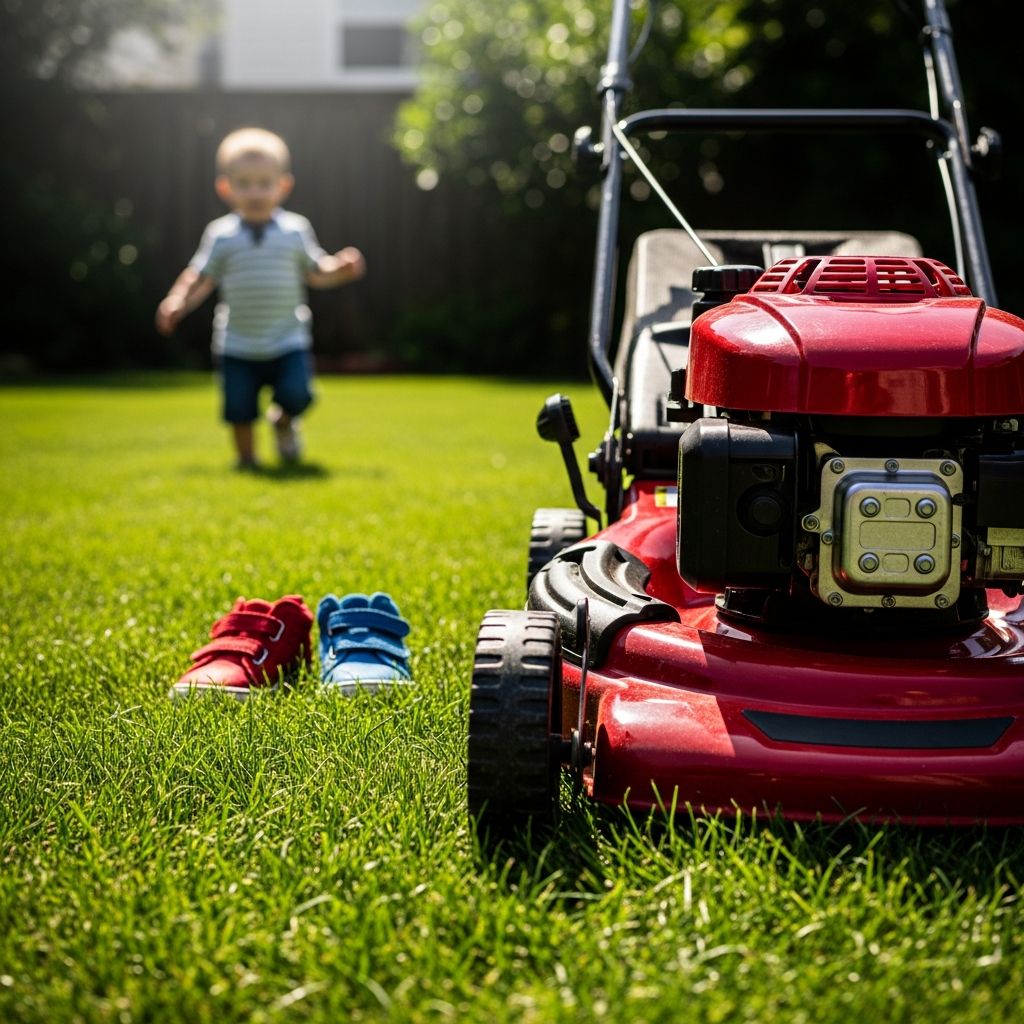
Every spring and summer, families across the U.S. fire up lawn mowers to maintain tidy yards, but this routine chore hides serious hazards for children. Recent data reveals thousands of pediatric injuries annually, many resulting in amputations or permanent disabilities. Parents must prioritize vigilance to avert these preventable tragedies.
Alarming Statistics on Child Lawn Mower Injuries
Lawn mowers rank among the most perilous household machines for kids. Nationwide Children’s Hospital reports over 8,490 children under 18 receive emergency treatment yearly for mower-related wounds. Broader estimates from pediatric centers indicate 9,000 to 17,000 cases, with about 75 fatalities.
These incidents lead to devastating outcomes: deep lacerations, fractures, burns, eye damage, and soft tissue trauma. Alarmingly, lawn mowers cause the top reason for major limb amputations in children younger than 10. A Nationwide Children’s study of 142 cases over 25 years found 38% involved amputations, with patients averaging 7.5 years old, 2.2 surgeries, and 7.4 hospital days.
| Key Statistic | Details | Source |
|---|---|---|
| Annual ED Visits | >8,490 children <18 years | Nationwide Children’s |
| Amputation Rate | 38% in studied cases; #1 cause <10 years | Nationwide; UIowa |
| Average Age | 7.5 years; peaks at toddlers & teens | Nationwide; Children’s Mercy |
| Hospital Stays | Avg. 7.4 days; 2.2 surgeries | Nationwide |
Injuries affect boys more than girls and show two peaks: toddlers/preschoolers and 15-year-olds. Despite safety advancements, rates remain steady over decades, underscoring the need for better awareness.
Primary Ways Children Get Hurt by Lawn Mowers
Most accidents involve bystanders rather than operators. A University of Iowa study surveying parents and survivors found 69% of severe cases occurred when kids were struck near operating mowers, versus 24% from falling off as passengers. Reversing accounted for 79% of these, due to blind spots.
- Bystander Strikes: Kids approach unseen during turns or backups, slipping under blades moving at 230 mph.
- Passenger Falls: Children tumble off ride-ons over rough terrain, suffering upper limb wounds (21% of cases).
- Debris Ejection: Flying objects blindside nearby kids.
- Hot Parts Burns: Nearly half of under-6 injuries are hand burns from engines.
- Operator Errors: Teens mowing without supervision face blade contact or rollovers on wet/uneven ground.
Prior rides normalize danger: 73% of bystander victims had ridden before, viewing mowers as toys. Ride-ons lack passenger seats, amplifying risks even with blades disengaged.
Why These Injuries Persist Despite Safety Improvements
Blades spin at speeds tearing through bone effortlessly, while reverse blind spots and thrown projectiles extend hazards. Rural kids face worse outcomes due to delayed care. Teens often mow unsupervised for chores or pay, peaking injuries at 15.
Acclimation plays a role: Early rides desensitize children to noise and power, prompting them to chase mowers for fun. Constant incidence over 40 years signals failed messaging.
Essential Safety Practices for Families
Prevention hinges on strict rules. Experts from UIowa Stead Family Children’s Hospital and Nationwide Children’s outline these:
- Prohibit all child passengers, blades on or off—acclimation breeds danger.
- Keep kids indoors and supervised during mowing; designate a kid-free zone.
- Avoid reversing; use forward-only if possible, check surroundings meticulously.
- Supervise teens: Minimum 12 for push mowers, 16 for ride-ons, with adult oversight.
- Wear protection: Glasses, sturdy shoes, long pants; maintain equipment per manual.
Clear yard of toys/rocks before starting. For young operators, teach hazards first.
Age-Appropriate Guidelines for Mower Use
| Age Group | Allowed Activities | Restrictions |
|---|---|---|
| <6 years | None; indoors only | No proximity, no passengers |
| 6-11 years | Observe supervised | No operation; push mower at 12+ with adult |
| 12-15 years | Push mower supervised | No ride-ons |
| 16+ years | Ride-on with training | Adult supervision initially |
These align with hospital recommendations to minimize exposure.
Real Stories Highlighting the Stakes
Tate’s story, via Tate’s Army nonprofit, exemplifies risks. At 3, he darted behind his dad’s reversing mower, unseen, suffering leg/organ trauma needing 30+ surgeries. Such tales fuel advocacy for zero-tolerance policies.
Studies echo this: 92% of surveyed survivors had amputations/disabilities, mostly bystanders (97%). Lifelong physical/psychological scars affect families profoundly.
Community and Policy Efforts to Curb Risks
Organizations like Amputee Coalition note 800+ annual ride-on injuries, 600+ amputations. Hospitals push education; parents should join local safety drives and model caution.
Check mowers yearly for blade guards, kill switches. Rural families: Plan rapid emergency response routes.
Frequently Asked Questions (FAQs)
Can kids ever ride on lawn mowers safely?
No—experts unanimously advise against it, even blades off, due to falls, rollovers, and desensitization.
What age is safe for children to use a mower?
Push mowers at 12+ with supervision; ride-ons at 16+ after training. Younger kids stay away.
How do most bystander injuries happen?
During reverses (79%) or turns; kids slip under blades from blind spots.
Are push mowers safer than ride-ons?
Somewhat, but still hazardous without supervision; burns and ejections occur.
What if a child is injured—first steps?
Stop bleeding, call 911, do not remove embedded objects. Seek trauma centers.
Empowering Parents for a Safer Season
By enforcing no-ride, indoor, no-reverse rules, families slash risks dramatically. Share these guidelines—prevention saves limbs and lives. Warm weather demands proactive safety.
References
- Serious child injuries from lawn mowers — Injury Prevention Research Center, University of Iowa. 2024-04-04. https://iprc.public-health.uiowa.edu/2024/04/04/serious-child-injuries-from-lawn-mowers/
- Lawn Mower Safety – Nationwide Children’s Hospital — Nationwide Children’s Hospital. Accessed 2026. https://www.nationwidechildrens.org/research/areas-of-research/center-for-injury-research-and-policy/injury-topics/home-safety/lawn-mower-safety
- Lawnmower Injuries in Children Are Limb-Threatening and Avoidable — Pediatrics Nationwide. 2021-07-23. https://pediatricsnationwide.org/2021/07/23/lawnmower-injuries-in-children-are-limb-threatening-and-avoidable/
- Lawnmower Safety — Amputee Coalition. 2021-03. https://amputee-coalition.org/lawnmower-safety/
- Lawn Mower Safety: Information for Families — HealthyChildren.org (AAP). Accessed 2026. https://www.healthychildren.org/English/safety-prevention/at-home/Pages/Lawnmower-Safety.aspx
- Outbreaks, Alerts and Hot Topics: Lawn Mower Injuries — Children’s Mercy. 2024-02-02. https://www.childrensmercy.org/health-care-providers/refer-or-manage-a-patient/connect-with-childrens-mercy/newsletter-the-link/2024/february2/outbreaks-alerts-and-hot-topics-measles-and-immune-memory-loss/