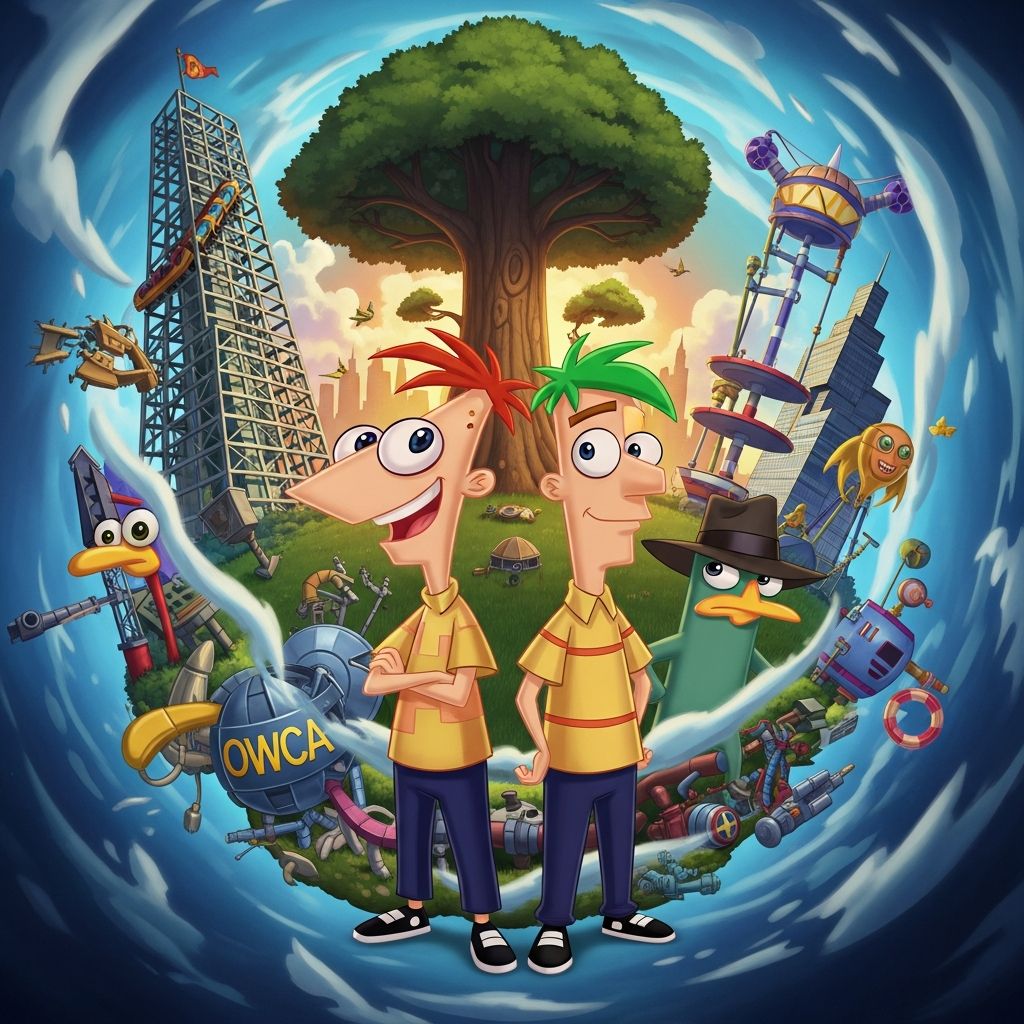
After years off the air, Phineas and Ferb has returned with new episodes that aim to feel like the same show families loved, while still offering fresh stories for a new generation of kids.
Parents who grew up with the series now have the rare chance to watch a reboot that respects their memories, keeps its core values intact, and still finds space to surprise them.
The Return of a Modern Classic
The original run of Phineas and Ferb followed two inventive stepbrothers who turned every summer day into an over-the-top project, from backyard theme parks to wild scientific experiments.
The reboot arrives after roughly a decade without new episodes, picking up once again during summer vacation, with the familiar cast of characters—including Candace, Perry, and Dr. Doofenshmirtz—back in the mix.
What Has Changed (And What Hasn’t)
The revival is intentionally designed to look and feel like the original, with only subtle visual tweaks, such as a small change to Phineas’s shirt that creates the illusion that he has grown without actually aging him up.
The show’s fundamental rhythm remains: the boys dream something huge, Candace tries to bust them, Perry vanishes to fight Doofenshmirtz, and everything more or less resets by the end of the episode.
- Art style and character designs closely echo the classic seasons, preserving the show’s recognizable silhouette-based look.
- Storylines continue to blend big physical gags with fast dialogue and layered references aimed at adults.
- Episodes still feature original songs, maintaining the musical identity that helped the show stand out.
Why the Reboot Exists at All
In the years after the finale, the series remained highly streamed, ranking among the most-watched animated kids’ shows on major platforms despite not releasing new episodes.
Strong viewing numbers signaled that both nostalgic adults and new young audiences kept discovering the show, convincing executives that a new batch of episodes would find a ready audience.
Core Values: Kindness Over Cruelty
One of the most distinctive creative choices behind Phineas and Ferb has always been its refusal to lean on mean-spirited humor, cheap insults, or double entendres for laughs.
The reboot continues this philosophy, portraying even its so-called villains as flawed but ultimately decent people whose schemes are more silly than sinister.
- Parents are competent and loving rather than clueless punchlines, avoiding a common trope in kids’ comedies.
- Candace’s obsession with “busting” her brothers is rooted in a need to be taken seriously, not pure cruelty.
- Doofenshmirtz is more eccentric than evil, often failing out of his own misguided logic rather than malice.
Smart Jokes That Respect Kids
The show’s writers are known for slipping in philosophical references, wordplay, and cultural nods that reward older viewers, from highbrow thinkers to pop culture riffs.
Instead of removing clever material for fear that kids will not “get it,” the creative team deliberately leaves in smarter jokes, under the assumption that young viewers can either follow along or enjoy the surface humor while older viewers catch the deeper layers.
A Quick Look: Then vs. Now
| Aspect | Original Run | Reboot Era |
|---|---|---|
| Timeframe | Premiered in 2007 and ended after four seasons in the mid-2010s. | New season released around a decade later with fresh episodes on TV and streaming. |
| Visual Style | Distinctive angular designs and bold colors defined the look. | Same core style with small updates like an extra stripe on Phineas’s shirt. |
| Distribution | Aired primarily on cable networks for kids. | Debuts on children’s channels and quickly lands in streaming libraries. |
| Tone | Optimistic, inventive, and music-filled with limited mean humor. | Maintains the same lighthearted, kind tone while introducing new stories. |
What Parents Should Know
From a content perspective, the reboot continues to present non-graphic slapstick, emotional stakes around family relationships, and comedic cartoon peril that is consistently resolved by the end of the episode.
The absence of crude jokes and the focus on supportive relationships makes the series an option many parents feel comfortable leaving on in the background or watching together with elementary-aged kids and older.
Positive Themes Embedded in the Chaos
- Creativity: Phineas and Ferb turn boredom into opportunity, encouraging resourcefulness and imagination.
- Resilience: Candace’s repeated failures never stop her from trying again, modeling persistence in a lighthearted way.
- Hidden heroism: Perry’s secret-agent life shows that quiet characters can still be brave and capable.
- Ethical humor: The writers consciously avoid “punching down,” steering away from cruelty for laughs.
Music as a Storytelling Tool
Every episode continues the tradition of featuring at least one original song, ranging from genre parodies to heartfelt character numbers that move the story forward or deepen a joke.
The co-creators remain heavily involved in writing the music, giving the reboot the same playful yet polished sound that helped earlier songs stick in viewers’ memories.
Cameos and Guest Stars for the Grown-Ups
New episodes again feature a wide roster of guest voices, including well-known singers, actors, and athletes whose names mean more to parents than to kids.
These celebrity appearances function as small Easter eggs for adults, layering extra enjoyment onto episodes without distracting younger viewers who are focused on the main characters and plot.
How the Reboot Connects Generations
For many parents, the reboot is not just another children’s program but a return to a show they watched in their teens or college years, now shared with their own kids.
Because the tone, humor, and character dynamics remain so familiar, older viewers can slip back into the world easily while their children discover it for the first time, making the series a natural cross-generational bridge.
Simple Ways to Turn Episodes into Family Time
- Pause after a big invention and ask kids what they would build if they had a free summer day.
- Encourage children to design their own “blueprints” of imaginary machines or theme parks inspired by the episode.
- Use Perry’s double life as a conversation starter about how people can have different sides—quiet at school but bold in hobbies, for example.
- Talk with older kids about how Candace balances fairness, jealousy, and her desire to be believed.
Balancing Nostalgia and New Stories
The creative team behind the reboot has acknowledged that there was some initial concern about repeating old plots or feeling like they had “already done everything,” yet they ultimately found space for new ideas within the established formula.
Because the series resets each day of summer, writers can explore new mashups of characters, locations, and musical styles without breaking continuity, letting the reboot feel fresh while still comfortably familiar.
Tips for Parents on Screen Time and Expectations
Like any animated series, the reboot is best used as part of a balanced media diet, not a nonstop background presence, no matter how lighthearted the tone.
Parents who set clear viewing windows—such as a couple of episodes after homework or on weekend mornings—can keep the show special while still encouraging offline creative play inspired by what kids watch.
- Co-view when possible so you can catch references, clarify confusing moments, and model media literacy.
- Ask kids what they liked about an episode’s invention or song to encourage reflection rather than passive viewing.
- Invite children to come up with “rules” for their own imaginary devices, echoing the show’s playful pseudo-science.
Frequently Asked Questions
Is the reboot appropriate for young kids?
The tone remains gentle and comedic, with cartoon action but no realistic violence or graphic imagery, making it generally suitable for school-age children and many younger viewers, depending on family preferences.
Do I need to have seen the original seasons?
The show’s episodic structure means new viewers can jump in easily, while returning fans will appreciate long-running character quirks and callbacks woven into the new episodes.
Are there any big changes to the characters?
Main personalities stay consistent—Phineas is still optimistic, Ferb is quiet but capable, Candace is determined, and Doofenshmirtz is endearingly inept—though the writers use the reboot to explore new comedic situations and guest roles around them.
Where can families watch the new episodes?
Fresh installments premiere on children’s television channels and then appear on major streaming platforms, giving families flexibility to watch live, record, or binge at their own pace.
What makes this reboot different from many others?
Unlike some revivals that dramatically redesign characters or shift tone, this one deliberately tries to feel like a natural continuation, preserving the spirit that made the original successful while adding just enough novelty to engage returning audiences.
Final Thoughts for Parents
The return of Phineas and Ferb offers families a rare combination: a series that respects children’s intelligence, values emotional warmth over cruelty, and gives adults enough wit and nostalgia to enjoy watching alongside their kids.
Handled thoughtfully, the reboot can be much more than background noise; it can become a shared ritual that sparks creativity, conversation, and the kind of inside jokes that stick around long after summer is over.