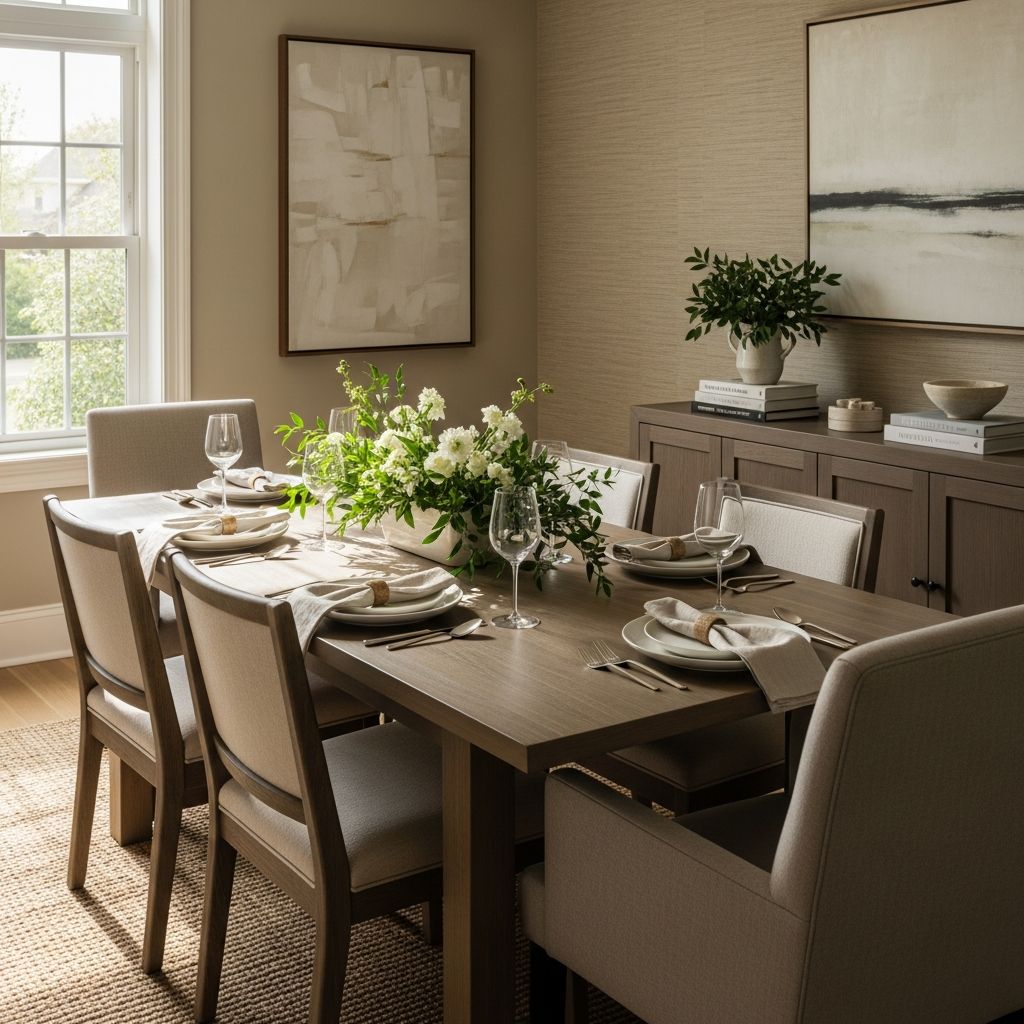
Your dining table is more than a piece of furniture; it is where meals, conversations, projects, and celebrations all collide. The right table can handle spaghetti nights, science fair displays, and holiday feasts without feeling cramped or cluttered. This guide walks through how to choose a table that works for real life and how to style and use it so it feels welcoming every single day.
Why the Dining Table Still Matters
In many homes, the dining table has quietly replaced the formal dining room. Open floor plans and busy schedules mean the table often sits between the kitchen and living area, acting as a daily command center. That makes its design, durability, and flexibility more important than ever.
Family dinners, board game nights, and long conversations with friends all become easier when the table is comfortable, sized correctly, and easy to clean. When you get this one piece right, it can make the rest of the space feel more organized and intentional.
Choosing the Right Shape for Your Space
The shape of your dining table affects how people move around it, how many seats you can comfortably fit, and how the room feels overall. Think about both daily life and those times when you host a few extra people.
- Round tables work well in smaller rooms and encourage conversation because everyone can see each other easily.
- Rectangular tables suit long, narrow rooms and offer plenty of surface area for dishes, decor, and projects.
- Square tables feel intimate and balanced but require a fairly square room to avoid awkward circulation.
- Oval tables soften the look of a rectangular room while still seating many people comfortably.
Pedestal Bases vs. Four Legs
One of the most practical design choices is whether you prefer a pedestal base or four traditional legs. A pedestal table places the support in the center, which can make it easier to tuck in chairs and slide benches around the perimeter.
Four-legged tables can feel visually lighter and more classic, but they sometimes create tight spots where chair legs and table legs compete for the same space. For families who squeeze in an extra guest regularly, a pedestal base can be a smart, people-friendly choice.
Size and Seating: Getting the Numbers Right
Before falling in love with a style, confirm the table will fit in your space. You need room for chairs, walking paths, and the occasional zooming child or pet. A quick measuring session can prevent years of frustration.
| Table Length | Approximate Seats | Best For |
|---|---|---|
| 120–140 cm (48–55 in) | 4 people | Small households, apartments |
| 150–180 cm (60–72 in) | 6 people | Most families and frequent guests |
| 200–230 cm (80–90 in) | 8 people | Larger families, regular entertaining |
| 240+ cm (95+ in) | 10+ people | Big gatherings, open-plan homes |
As a rule of thumb, plan at least 60 cm (24 inches) of width per person along the table edge so everyone has room for plates and elbows. Leave at least 90 cm (36 inches) between the table edge and the nearest wall or furniture for people to move in and out easily.
Materials That Match Your Lifestyle
The most beautiful table will quickly become frustrating if it cannot handle your household’s daily wear and tear. Consider how often you cook at home, whether you have children or pets, and how often your table doubles as a workspace.
- Solid wood ages gracefully, can be refinished, and hides minor wear, making it ideal for family homes.
- Veneer on engineered wood can look high-end at a lower price but needs gentler treatment to avoid chips and swelling.
- Glass opens up small spaces and shows off sculptural bases but shows fingerprints and smudges quickly.
- Stone or ceramic tops offer excellent heat and scratch resistance but can be heavy and require sturdy bases.
- Metal details on bases or edging add a modern touch and can handle scuffs better than many painted finishes.
Designing a Centerpiece That Works Every Day
Many people want a styled dining table but quickly get annoyed when decor has to be cleared off for every meal. The trick is to keep the everyday centerpiece simple, low, and easy to move.
- Use one long runner or placemat-style strip to define the center and protect the surface.
- Group a few items on a tray so the entire arrangement can be lifted off at once.
- Choose low vases, candles, or greenery that do not block views across the table.
- Keep colors complementary to your chairs and nearby rooms so the table feels connected to the rest of the house.
Think of your everyday styling as “light armor” for the table surface rather than a rigid display. It should be attractive, but also practical enough to slide aside for pizza boxes or laptop cords when needed.
Making Room for Guests Without a Formal Dining Room
Not everyone has a dedicated dining room, but almost every home hosts guests at some point. With a bit of planning, a single everyday table can stretch to handle birthdays, holidays, and impromptu dinner parties.
- Consider a table with a hidden leaf or extension mechanism to gain extra length when needed.
- Keep a few lightweight stacking chairs or folding chairs stored in a nearby closet.
- Use a bench along one side of the table; benches can often fit more children than individual chairs.
- Borrow occasional chairs from a home office or bedroom and add cushions for comfort at the table.
When you host, think beyond “perfect” place settings. Focus on clear surfaces, comfortable seating, and enough elbow room, and your gatherings will feel relaxed and generous even in a compact space.
Kid-Friendly and Life-Proof Details
A dining table that is too precious will quickly become a source of stress. If you have children, pets, or frequent guests, choose finishes and shapes that forgive daily life rather than fight it.
- Rounded corners on the tabletop feel softer visually and are kinder to small foreheads.
- Sturdy, wipeable finishes on both the top and the base make cleaning up spills much less dramatic.
- Matte or subtly textured surfaces hide fingerprints and crumbs better than high-gloss ones.
- Slipcovered or easily cleaned chairs keep the whole area looking fresh, even after messy meals.
Think about how quickly you can clear and reset the table after a chaotic dinner. If the process feels easy, you’re more likely to actually use the table every day instead of defaulting to the sofa.
Lighting and Atmosphere Above the Table
The fixture above your dining table acts like a spotlight on your gatherings. Good lighting can turn the same simple meal into a cozy ritual or an inviting party.
- Hang a pendant or chandelier so the bottom sits roughly 75–85 cm (30–34 inches) above the tabletop.
- Use a dimmer switch so you can go bright for homework and softer for dinner.
- Choose bulbs with warm color temperature for a welcoming glow.
- If your table is long, consider two or three smaller pendants instead of one large central fixture.
Mirrors, art, and soft window treatments around the dining area also shape the mood. They bounce light, absorb echo, and make the space feel more finished and intentional.
Balancing Style with Storage
Even a beautiful dining area will feel cluttered if placemats, serving bowls, and extra glasses live permanently on the table. Integrating a bit of nearby storage keeps the top clear and ready for use.
- Add a slim sideboard or console to hold napkins, candles, and seasonal decor.
- Use baskets on a low shelf to store kids’ art supplies or board games that come out during family nights.
- Consider a bench with hidden storage if you want to keep extra linens or cushions close at hand.
When everything has a place to land near the table, it is much easier to reset quickly between weekdays and special occasions. Your table remains the star instead of a storage surface.
Everyday Habits That Keep the Table in Use
Even the most thoughtfully chosen table can turn into a dumping ground if it is not anchored by a few simple routines. The goal is to make the table feel like a natural gathering spot rather than a flat surface available for clutter.
- Clear the table fully at least once a day, even if it’s just before bedtime.
- Keep a small tray for keys and mail elsewhere so they don’t land near dinner plates.
- Schedule one or two meals each week that you intentionally eat at the table, phones away.
- Use the table for one non-meal activity you enjoy, like puzzles or creative projects, to associate it with pleasure rather than chores.
Over time, these habits turn the table into a reliable, comforting place to gather. It becomes easier to invite others in when you know you can clear and set it in a matter of minutes.
Frequently Asked Questions
How much space do I need around a dining table?
Plan for at least 90 cm (36 inches) between the table edge and the nearest wall or furniture so people can move chairs and walk behind seated guests comfortably. If your space is very tight, you can reduce this slightly on one side, but aim to maintain full clearance on the main traffic path.
Is a pedestal table stable enough for families?
A well-designed pedestal table with a wide, heavy base can be extremely stable, even with active children. Look for solid construction, a broad footprint, and materials that do not wobble or flex when you apply pressure to the tabletop edges.
What is the best dining table finish for kids?
Durable matte finishes, sealed wood, and scratch-resistant ceramic or stone tops tend to be most forgiving. Avoid delicate high-gloss finishes or surfaces that stain easily if you expect spills, art projects, and everyday bumps.
Can I mix different chair styles around one table?
Yes. Mixing chair styles adds personality and can make the dining area feel collected rather than matchy. To keep the look cohesive, repeat at least one unifying element such as color, material, or general shape, and keep chair heights similar for comfortable seating.
How do I make a small dining area feel bigger?
Choose a lighter-colored table, keep chair silhouettes slender, and allow as much natural light as possible into the area. Round tables, armless chairs, and a rug that extends at least 60 cm (24 inches) beyond the table edge on all sides can visually expand the space without changing the actual footprint.
Bringing It All Together
A thoughtfully chosen dining table can quietly support almost everything that matters at home: shared meals, conversations, celebrations, and even the occasional last-minute craft project. By focusing on the right shape, size, materials, and daily habits, you can create a table that welcomes people in rather than intimidating them.
Instead of treating the dining area as a rarely used formal space, design it for how you actually live. When your table feels sturdy, flexible, and inviting, it naturally becomes the place where your favorite memories begin.