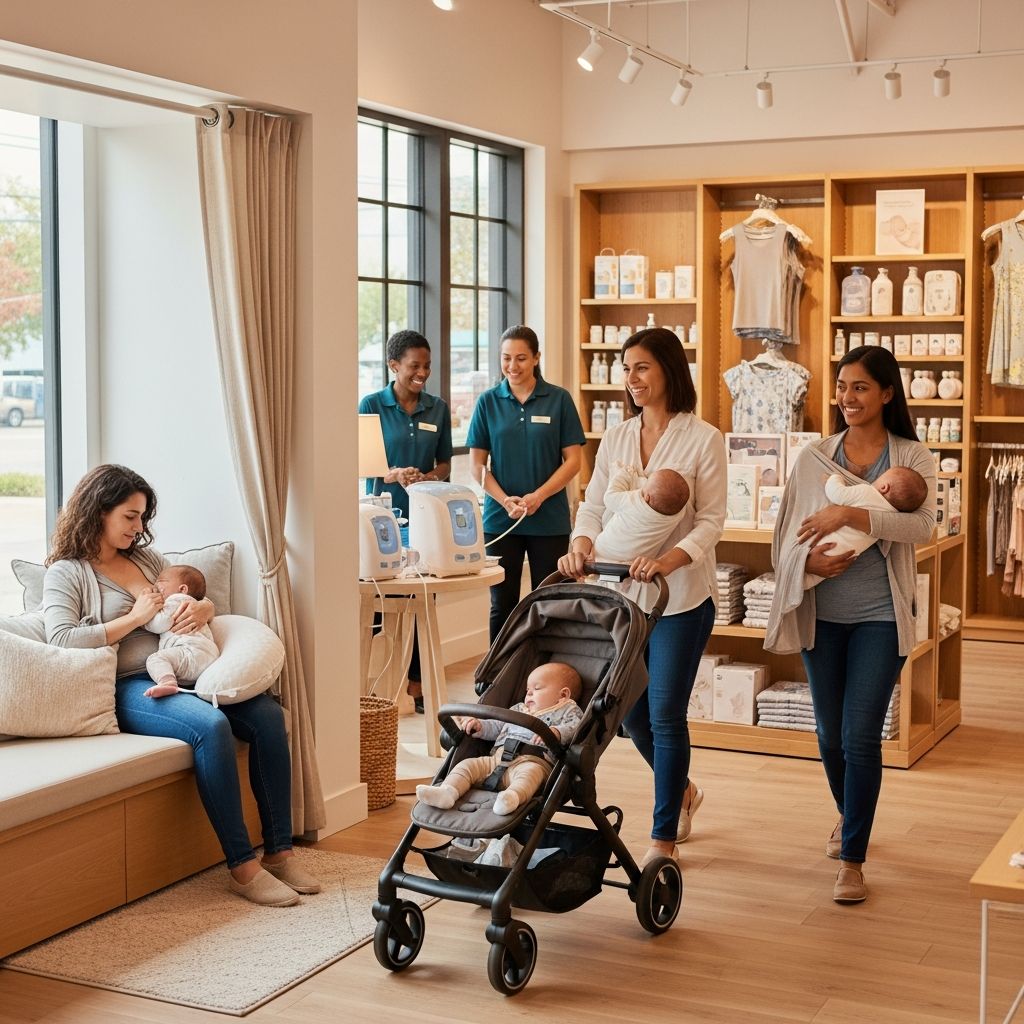
Breastfeeding provides essential health benefits for both infants and mothers, yet many face significant barriers to initiating and continuing this practice in public settings. Major retailers are stepping up by creating welcoming environments, such as dedicated nursing rooms, which help normalize breastfeeding and close support gaps.
The Critical Need for Public Breastfeeding Support
Access to supportive spaces in everyday locations like stores is fundamental for encouraging breastfeeding duration and exclusivity. Community environments that proactively welcome nursing mothers reduce stigma and promote equity, particularly for underserved populations. According to health experts, normalizing breastfeeding “anytime, anywhere” requires collective action from businesses, communities, and policymakers.
Barriers such as lack of private areas, societal discomfort, and inadequate workplace policies contribute to lower breastfeeding rates, especially among low-income and minority families. Retailers play a pivotal role by transforming shopping trips into opportunities for seamless family care.
Retail Innovations in Maternal Support
Leading clothing brands have introduced nursing-friendly facilities, including comfortable lounges equipped with changing stations and amenities. These initiatives not only aid mothers but also signal a cultural shift toward inclusivity. For instance, policies mandating self-assessments for facilities receiving public funds highlight the growing expectation for such supports.
- Private, clean nursing pods with seating and outlets for pumps.
- Signage promoting breastfeeding as a natural activity.
- Staff training to assist and direct mothers confidently.
These features address practical challenges, allowing mothers to nurse without interruption during routine outings.
Health and Equity Benefits of Inclusive Policies
Supportive retail environments contribute to broader public health goals. The World Health Organization and UNICEF’s Ten Steps to Successful Breastfeeding emphasize hospital and community practices that boost initiation and continuation rates. Extending this to retail spaces narrows racial and socioeconomic disparities in breastfeeding outcomes.
| Benefit | Impact on Mothers | Impact on Infants |
|---|---|---|
| Increased Duration | Reduced stress, better mental health | Optimal nutrition, fewer illnesses |
| Equity Gains | Support for diverse families | Closing disparity gaps |
| Societal Normalization | Less stigma | Healthier future generations |
Peer counseling and community programs further amplify these effects, with evidence showing higher success among minority groups.
Policy Frameworks Driving Change
Government and organizational guidelines reinforce retail responsibilities. The Patient Protection and Affordable Care Act mandates breastfeeding accommodations in workplaces, influencing broader public spaces. ACOG advocates for paid parental leave of at least six weeks at full pay to sustain breastfeeding post-hospital.
Statewide policies, like those in California, correlate with higher exclusive breastfeeding rates, demonstrating policy impact. Coalitions such as the U.S. Breastfeeding Committee push for transparent reporting on support services.
Overcoming Barriers for All Families
Parents with disabilities encounter unique challenges, including gaps in hospital practices like skin-to-skin contact and timely initiation. Retailers can model inclusive design with accessible nursing areas, universal training, and partnerships with lactation experts.
- Adaptable seating for mobility needs.
- Trained staff sensitive to diverse abilities.
- Integration with community health initiatives.
Community and Workplace Synergies
Effective support spans hospitals, workplaces, and communities. Training health professionals and ending exploitative formula marketing are key. Retailers collaborating with coalitions enhance continuity of care.
Maternity entitlements prevent forcing choices between work and family, with calls for government monitoring and financing. Businesses adopting these align with evidence-based strategies.
Frequently Asked Questions (FAQs)
What legal protections exist for public breastfeeding?
Most U.S. states protect the right to breastfeed in public, with federal law supporting workplace pumping under the ACA.
How do nursing rooms benefit retail businesses?
They attract family shoppers, boost loyalty, and enhance brand reputation for inclusivity.
Can retailers help close breastfeeding equity gaps?
Yes, through targeted training and partnerships with peer counseling programs for underserved groups.
What role does paid leave play in breastfeeding success?
It significantly increases initiation and duration rates, as shown in states with family leave policies.
How can communities advocate for more supports?
By joining coalitions, requesting assessments, and promoting normalization campaigns.
Future Directions for Retailer Involvement
Expanding nursing facilities nationwide, integrating technology like app-based room finders, and measuring impact through data will sustain progress. Partnerships with entities like PAHO/WHO amplify global standards locally.
Ultimately, when retailers prioritize breastfeeding mothers, they invest in healthier families and equitable societies. This movement, inspired by pioneering efforts, calls all businesses to action.
References
- Policy Gaps | Breastfeeding Family Friendly Communities — Breastfeeding Family Friendly Communities. 2023. https://breastfeedingcommunities.org/policy-gaps/
- Closing the gap: Breastfeeding support for all — PAHO/WHO. 2024-07-31. https://www.paho.org/en/events/closing-gap-breastfeeding-support-all
- Closing the gap: Breastfeeding support for all – YouTube — PAHO TV. 2024. https://www.youtube.com/watch?v=nHBCF8_7XMQ
- Barriers to Breastfeeding: Supporting Initiation and Continuation of Breastfeeding — American College of Obstetricians and Gynecologists (ACOG). 2021-02. https://www.acog.org/clinical/clinical-guidance/committee-opinion/articles/2021/02/barriers-to-breastfeeding-supporting-initiation-and-continuation-of-breastfeeding
- Closing the Breastfeeding Disparity Gap: Methods for Improvement — National Institute for Children’s Health Quality (NICHQ). 2023. https://nichq.org/blog/closing-breastfeeding-disparity-gap-methods-improvement/
- Interventions and policy approaches to promote equity in breastfeeding — PMC (National Library of Medicine). 2022. https://pmc.ncbi.nlm.nih.gov/articles/PMC9088147/
- Strategies for Continuity of Care in Breastfeeding — Centers for Disease Control and Prevention (CDC). 2024. https://www.cdc.gov/breastfeeding/php/strategies/public-health-strategies-for-continuity-of-care-in-breastfeeding.html