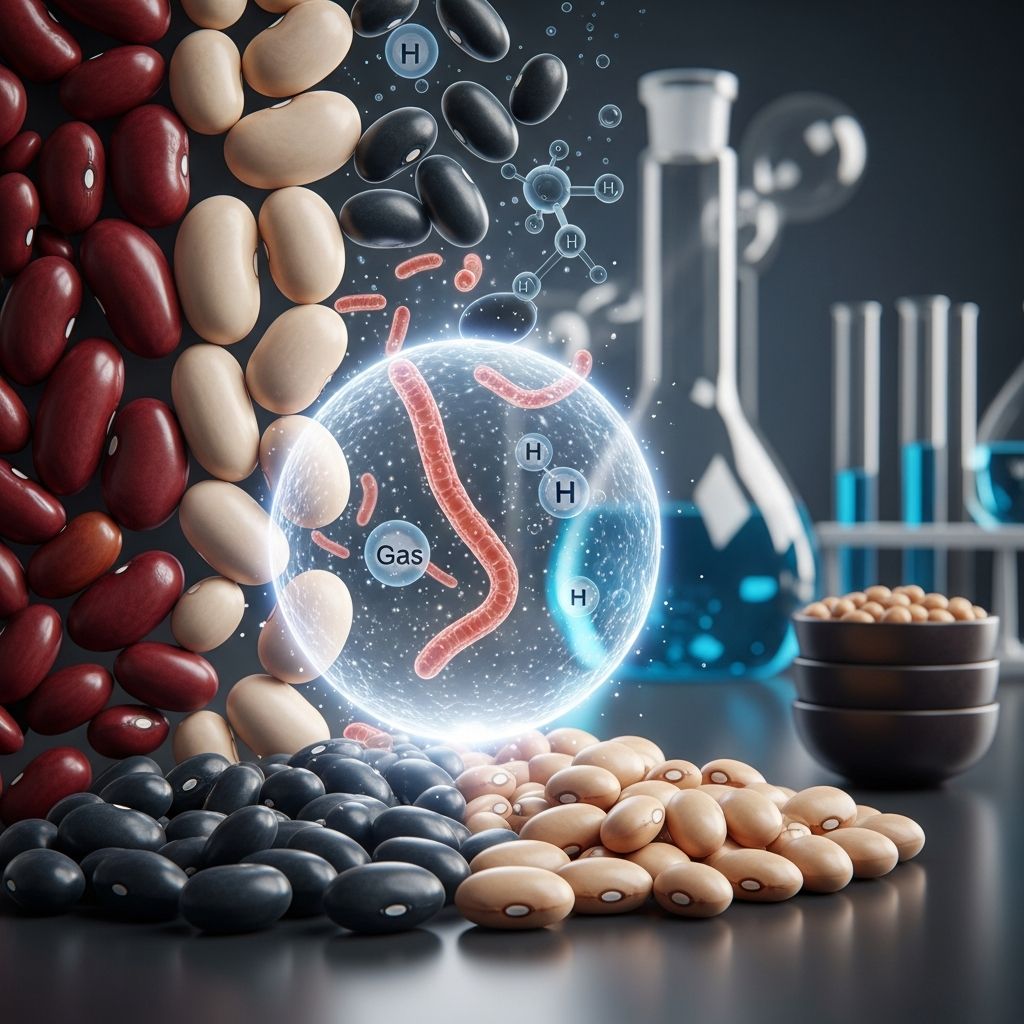
Legumes like beans are nutritional powerhouses packed with protein, fiber, and essential nutrients, yet they’re infamous for causing flatulence. This common side effect stems from specific carbohydrates that human enzymes can’t fully digest, leading to bacterial fermentation in the large intestine.
The Digestive Journey of Beans in Your Body
When you eat beans, their complex carbohydrates—particularly oligosaccharides such as raffinose and stachyose—pass through the stomach and small intestine largely intact. The human body lacks the enzyme α-galactosidase needed to break these down. These undigested sugars reach the colon, where trillions of gut bacteria ferment them, producing gases like hydrogen, carbon dioxide, methane, and sometimes sulfur compounds.
This fermentation process is a normal part of gut microbiota activity. Soluble fiber in beans also contributes by absorbing water and forming a gel-like substance that slows digestion and feeds bacteria, amplifying gas production. While uncomfortable, this gas buildup leads to bloating and flatulence as the body expels it.
Key Culprits: Oligosaccharides and Fiber Explained
- Raffinose family oligosaccharides (RFOs): Found abundantly in beans, these include raffinose and stachyose. They’re prebiotics that nourish beneficial gut bacteria but trigger gas as a byproduct.
- Soluble fiber: Beans are rich in this type, which ferments easily compared to insoluble fiber. It supports digestive regularity, blood sugar control, and cholesterol reduction.
- Resistant starches: These mimic fiber, resisting breakdown until the colon, where bacteria metabolize them into short-chain fatty acids and gas.
Not all beans are equal; varieties like pinto and baked beans may produce more gas due to higher oligosaccharide content than black-eyed peas.
Debunking the Bean Gas Myth: What Research Shows
Contrary to popular belief, beans don’t cause excessive gas for everyone, and symptoms often fade with regular consumption. A study across three trials found less than 50% of participants reported increased flatulence from pinto or baked beans in the first week, dropping to 19% for black-eyed peas. By weeks 2-3, 70% or more noted dissipation.
Even control groups eating fiber-rich carrots reported some gas, suggesting fiber adaptation plays a role. Psychological factors amplify perceptions; if you expect gas, you’re more likely to notice it. Long-term, bean eaters showed lower total and LDL cholesterol, outweighing temporary discomfort.
| Bean Variety | Fiber Content (per 1/2 cup cooked) | Reported Gas Increase (Week 1) | Adaptation by Week 3 |
|---|---|---|---|
| Pinto Beans | High | ~50% | 70% reduction |
| Baked Beans | High | ~50% | 70% reduction |
| Black-eyed Peas | Lower | 19% | Quick dissipation |
| Carrots (Control) | Moderate | 3-11% | Resolved |
Data synthesized from controlled trials on flatulence perceptions.
Health Benefits That Make Beans Worth the Wind
Despite gas concerns, beans offer profound advantages. Their fiber lowers LDL cholesterol, stabilizes blood sugar, and promotes satiety for weight management. As prebiotics, oligosaccharides foster a diverse microbiome, potentially reducing inflammation and boosting immunity.
Regular intake links to better heart health and digestive regularity. Participants in bean studies ended with improved lipid profiles despite initial gas. For vegetarians, beans provide complete proteins when paired with grains.
Strategies to Minimize Gas from Beans
You can enjoy beans without the orchestra of flatulence using these evidence-based methods:
- Start small: Begin with 2-3 tablespoons daily, gradually increasing to allow gut bacteria to adapt over 2-4 weeks.
- Soak and rinse: Overnight soaking reduces oligosaccharides by up to 50%; discard soak water and rinse thoroughly.
- Cook thoroughly: Pressure cooking or long simmering breaks down complex carbs more effectively than quick boils.
- Combine with herbs: Add cumin, fennel, ginger, or epazote during cooking to inhibit gas-producing bacteria.
- Enzyme supplements: Products with α-galactosidase (e.g., Beano) digest oligosaccharides pre-fermentation, reducing gas by 50-75% in studies.
Pro tip: Pair beans with digestive aids like yogurt for probiotics that enhance fiber breakdown.
Bean Varieties: Gas Potential Comparison
Different legumes vary in gas-causing potential:
- Low-gas options: Lentils, split peas, black-eyed peas—lower oligosaccharides.
- Moderate: Chickpeas, kidney beans.
- Higher-gas: Navy, pinto, soybeans—richer in raffinose.
Experiment to find your tolerance; processing like canning or sprouting further lowers gas factors.
Frequently Asked Questions (FAQs)
Do all people get gassy from beans?
No, only about half report increased flatulence initially, and it often resolves within weeks as the gut adapts.
Can I prevent bean gas entirely?
Not always, but soaking, cooking methods, enzyme supplements, and gradual introduction minimize it significantly.
Are canned beans less gassy?
Yes, processing removes some oligosaccharides; rinse well to cut sodium and further reduce gas.
Is bean gas a sign of intolerance?
Usually not—it’s normal fermentation. Persistent severe symptoms may indicate IBS; consult a doctor.
Do beans benefit gut health despite gas?
Absolutely; their fibers and prebiotics promote beneficial bacteria, improving long-term digestion.
Recipes for Gas-Friendly Bean Meals
Lentil Soup (Low-Gas Starter): Sauté onions, add soaked lentils, carrots, cumin, simmer 45 mins. Serves 4, ~15g fiber/serving.
Black Bean Salad: Rinse canned beans, mix with corn, avocado, lime, cilantro. Enzyme supplement optional.
Gut Microbiome Adaptation Over Time
Your gut’s bacterial community shifts with consistent bean intake, upregulating enzymes for better oligosaccharide handling. Studies confirm flatulence peaks early then normalizes, with sustained health gains like cholesterol drops. Embrace beans for microbiome diversity—key to resilience against diseases.
Conditions like IBS may prolong symptoms due to impaired gas transit, not overproduction. Bloating can occur sans excess gas from motility issues.
References
- Why do beans make people so gassy? — Medical News Today. 2023. https://www.medicalnewstoday.com/articles/why-do-beans-make-you-fart
- Why Do Beans Make You Fart? — Healthline. 2023. https://www.healthline.com/nutrition/why-do-beans-make-you-fart
- Perceptions of flatulence from bean consumption among adults in 3… — PMC (NCBI). 2011-10-27. https://pmc.ncbi.nlm.nih.gov/articles/PMC3228670/
- Why Beans Make You Fart and How To Prevent It — Cleveland Clinic. 2023. https://health.clevelandclinic.org/why-do-beans-make-you-fart
- Bean Mythbusting Document — SDG2 Advocacy Hub. 2023-12. https://sdg2advocacyhub.org/wp-content/uploads/2023/12/Bean-Mythbusting-Document.pdf
- Why Do Beans Make You Fart? What Does Science Say? — ZOE. 2023. https://zoe.com/learn/why-do-beans-give-you-gas