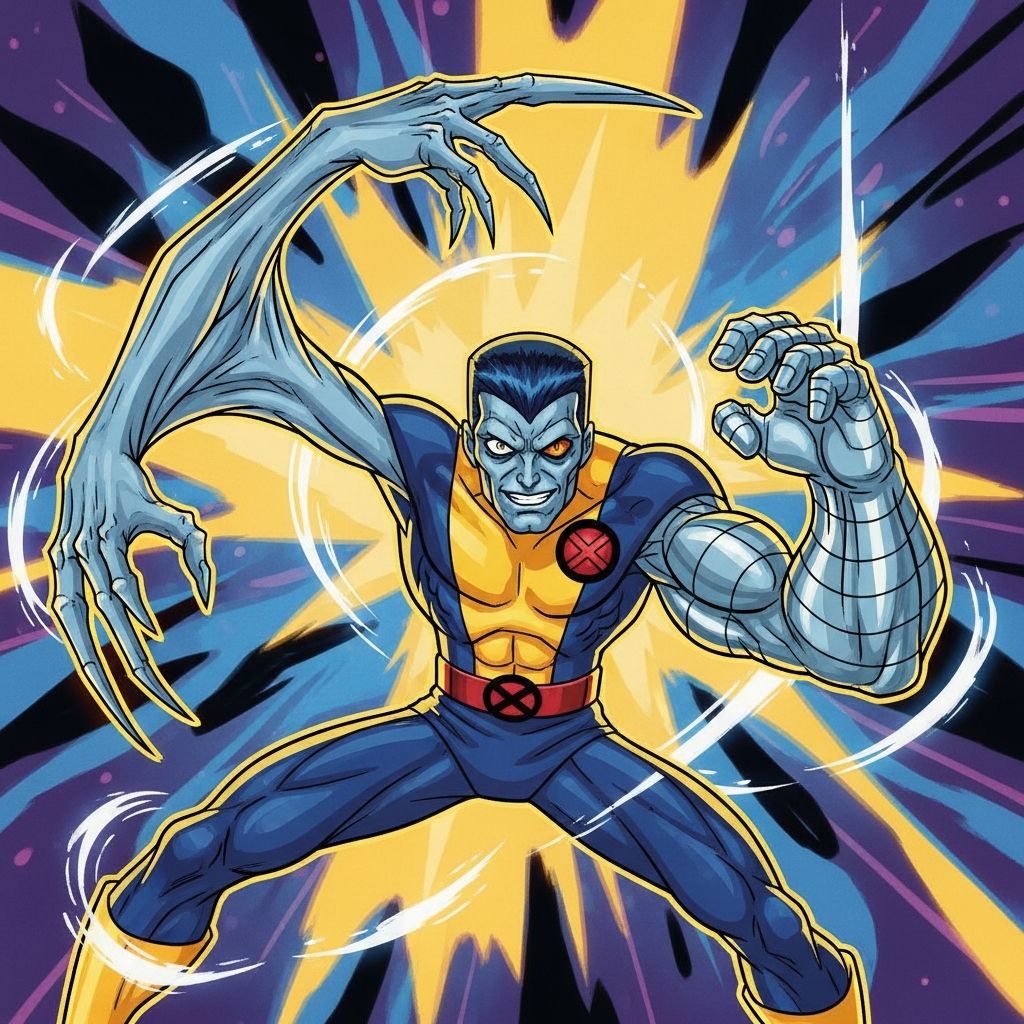
The 1990s X-Men animated series arrived at a time when superhero cartoons were expected to be loud, colorful, and ultimately safe, yet one smiling shapeshifter named Morph quietly changed that rulebook for a generation of young viewers.
By turning a lighthearted comic-relief character into the emotional core of a story about sacrifice, trauma, and recovery, the show signaled that even Saturday morning animation could handle very real consequences.
Morph: The Joke That Got Serious
Morph first appears in the 1992 cartoon as the kind of character every team show seems to need: a mischievous shapeshifter whose impressions and pranks defuse tension among battle-hardened heroes.
His ability to turn into anyone gives him instant comedic potential, but it also makes him emotionally disarming, which is why even the gruff Wolverine is shown to let down his guard around him.
- Mutant power: full-body shapeshifting, allowing perfect physical mimicry of other people.
- Primary role: comic relief and morale booster on a team often dealing with prejudice and war.
- Initial impression: a fun side character, not obviously built for a long, complex arc.
A Character Invented for Television
Unlike many of his teammates, Morph was not a straightforward translation from the comics but rather a character designed specifically for the animated series, loosely inspired by the comic-book mutant Changeling.
This allowed the writers to treat him as both a blank slate and a narrative tool, free from decades of comic continuity yet rich with the possibilities of a shapeshifter embedded in a team dynamic.
| Aspect | Morph (Animated Series) | Changeling (Comics) |
|---|---|---|
| Medium of origin | Created for 1992 X-Men TV show as a regular team member. | Introduced in 1960s X-Men comics as a short-lived character. |
| Core tone | Playful, prank-loving, often used for humor. | Initially villainous, later a serious, sacrificial figure. |
| Function in story | To humanize the team and embody emotional stakes for young viewers. | To protect Professor X’s secrets and explore themes of redemption. |
| Legacy | Symbol of how kids’ TV could handle trauma and recovery. | Cult-favorite deep-cut character for comics fans. |
When Saturday Morning TV Discovered Consequences
Early in the series, a mission against mutant-hunting Sentinels goes horribly wrong, and Morph appears to be killed in action, a shocking beat for what many children assumed was a safe, reversible universe.
This moment was not an accident; the creative team deliberately chose to remove a lovable character in order to communicate that the X-Men’s battles carried genuine risk, even in animation aimed at kids.
- The sequence emphasizes chaos and panic rather than heroic glory, underlining how quickly victory can turn to tragedy.
- The other X-Men are forced to retreat, leaving Morph behind, which makes the loss feel like a failure rather than a noble send-off.
- For many young viewers, this was one of the first times a cartoon suggested that beloved characters might not be safe.
Why Morph’s Loss Hit So Hard
Morph’s apparent death worked precisely because he had been presented as approachable and funny; losing the team’s emotional pressure valve made the world of the series feel abruptly colder and more unstable.
The show also lingers on the reactions of his teammates, especially Wolverine and Beast, who carry guilt and unresolved anger that echo across later episodes.
- Wolverine’s grief manifests as rage, isolation, and a refusal to fully trust the team’s decisions.
- Beast responds with reflection and philosophical sadness, underscoring the show’s recurring theme that intellect cannot always protect you from loss.
- Viewers see a superhero team not just mourning but struggling to function without their emotional center.
Breaking the Rules of Kids’ Animation
In the early 1990s, American children’s television still operated under conservative content expectations, often avoiding irreversible harm or explicit acknowledgment of death.
By pushing against those boundaries and presenting loss as something that could not simply be shrugged off at the end of an episode, the X-Men series invited kids to confront complex emotions usually reserved for older audiences.
| Traditional Kids’ Cartoon Norm | X-Men Animated Series Approach |
|---|---|
| Major characters rarely stay dead or visibly suffer long-term consequences. | Morph’s apparent death casts a long shadow over multiple episodes, shaping character arcs. |
| Villains are often simple and one-note. | Antagonists like Mister Sinister use psychological manipulation and mind control, complicating good-versus-evil. |
| Emotional beats are reset by episode’s end. | Grief, trauma, and mistrust linger across seasons, especially related to Morph. |
The Twist: Viewers Refuse to Let Morph Go
Despite only appearing briefly before his apparent death, Morph resonated strongly in early audience research, with a surprising number of children listing him as their favorite X-Man.
This unexpected popularity led network decision-makers to pressure the creative team to bring the character back, forcing the writers to turn what had been a final sacrifice into the starting point for a much darker arc.
- Marketing data contradicted the assumption that a side character could be safely removed.
- The showrunners now had to reconcile the thematic power of his death with the commercial incentive to revive him.
- The solution: return Morph, but scarred in body and mind, turning fan affection into a vehicle for deeper storytelling.
Resurrected, Rewritten, and Weaponized
When Morph returns, it is under the influence of Mister Sinister, an antagonist who represents exploitation of mutant potential without moral restraint.
Sinister uses his control over Morph to infiltrate the team, transforming a once-lighthearted shapeshifter into an instrument of doubt, deception, and sabotage.
- Morph poses as allies and authority figures to fracture trust within the X-Men and lure them into traps.
- His wavering sense of self mirrors the mental fragmentation caused by trauma and brainwashing.
- The series uses his divided personality to dramatize internal conflict: the part that still loves the team versus the part that feels abandoned and betrayed.
Trauma, Guilt, and the Mutant Metaphor
One reason Morph’s story still feels relevant is that it reframes the show’s existing themes of prejudice and identity through the lens of trauma and survival.
The X-Men have always embodied outsiders who carry the burden of being different, but Morph adds another layer by showing how even heroes can be broken, manipulated, and forced to fight against those they care about.
- His instability highlights how psychological wounds can be exploited by those in power.
- The rest of the team must face their own guilt for leaving him behind, symbolizing survivor’s guilt and the ethics of sacrifice.
- The show suggests that healing is possible but slow, especially when trust has been shattered.
From Casualty to Cautionary Tale
Across later seasons, Morph shifts from a tragic weapon of the villain to a symbol of hard-won redemption, gradually reclaiming his sense of humor and loyalty while still bearing visible and invisible scars.
His journey demonstrates that a character’s resurrection does not have to erase previous stakes; instead, it can deepen the emotional texture of a narrative if the consequences of that return are taken seriously.
| Phase | Emotional State | Narrative Purpose |
|---|---|---|
| Early episodes | Playful, carefree, openly affectionate with teammates. | Establish warmth and camaraderie within the team. |
| After apparent death | Absent but painfully remembered, source of grief and guilt. | Show long-term cost of heroism and loss. |
| Return under Sinister | Conflicted, angry, manipulated, experiencing psychological fragmentation. | Explore themes of brainwashing, identity, and betrayal. |
| Later seasons | Cautiously hopeful, working toward healing while still haunted. | Demonstrate the difficulty and possibility of recovery. |
Morph and the Evolution of Superhero TV
The handling of Morph’s arc foreshadowed a broader shift in superhero animation toward serialized storytelling, moral ambiguity, and emotional continuity that later shows would lean on heavily.
Instead of resetting the world each week, the X-Men series allowed events to build upon one another, inviting the audience to grow alongside the characters rather than simply watching isolated adventures.
- Later superhero cartoons, including follow-ups within the same broader Marvel animation ecosystem, increasingly adopted multi-episode arcs and lasting consequences.
- Morph’s storyline demonstrated that young viewers could engage with long-running emotional threads without losing interest.
- This approach helped prepare the ground for modern serialized superhero television that expects audiences to track complex character journeys.
A Legacy That Outlived the 1990s
In more recent projects revisiting the world of the 1990s X-Men, Morph has reappeared in updated visual form, sometimes drawing from later comic designs that give him a more androgynous, blank-faced look.
This evolution underlines how the character has become a flexible symbol: not just of comic relief or trauma, but of shifting identity, queerness, and the fluidity of self in contemporary superhero narratives.
- New iterations of Morph lean into the metaphorical potential of a shapeshifter in a world still debating who gets to belong.
- By embracing less human, more stylized designs, newer versions visually foreground themes of otherness and self-reinvention.
- The character’s enduring presence shows how a figure created for a single 1990s cartoon can grow alongside cultural conversations about identity.
Why Morph Still Matters to Viewers
For many adults who grew up with the series, memories of Morph are less about specific plot points and more about a first encounter with the idea that good people can be hurt, changed, and still find a path back toward the light.
The character encapsulates the emotional education that genre storytelling can offer: teaching kids to process fear, grief, loyalty, and forgiveness without condescension.
- Fans often point to Morph’s arc as their earliest exposure to topics like post-traumatic stress, mind control, and recovery.
- His combination of humor and vulnerability makes him a natural point of identification for viewers who felt like outsiders.
- Even decades later, references to his fate in the original cartoon can evoke powerful nostalgia and unresolved emotions.
SEO-Focused Takeaways for Superhero Fans
When discussing the 1992 X-Men cartoon, it is easy to focus on iconic names like Wolverine, Cyclops, or Magneto, but Morph’s journey is what quietly marks the series as a turning point in superhero television.
His story demonstrates how a seemingly minor shapeshifter helped the X-Men animated series tackle death, trauma, and redemption in a way that still feels unusually bold for a kids’ show.
- Morph proves that even a character introduced in a supporting role can become the emotional backbone of a franchise.
- The X-Men cartoon’s willingness to let his arc unfold over multiple seasons helped establish the norm of serialized superhero storytelling.
- Revisiting his episodes today offers valuable insight into how pop culture first taught 1990s kids to deal with complicated feelings through superhero narratives.
FAQs About Morph and the 1992 X-Men Cartoon
Who is Morph in the X-Men animated series?
Morph is a shapeshifting mutant introduced in the 1992 X-Men cartoon as a fun-loving member of the team, known for impersonations and practical jokes that lighten the mood during otherwise intense storylines.
Was Morph originally a comic-book character?
While Morph draws loose inspiration from the comics character Changeling, he was effectively created for television, allowing the show’s writers to use him in ways not strictly tied to prior comic continuity.
Why was Morph’s apparent death such a big deal?
His early removal from the team shocked viewers because children’s cartoons rarely showed major characters dying, especially ones designed to be likeable and humorous, which made his loss feel unusually personal and real.
How did Morph return to the series?
Audience research showing that kids loved the character led to his revival in later episodes, where he reappears under the control of the villain Mister Sinister and must fight to reclaim his identity and loyalty.
What makes Morph important to superhero storytelling today?
Morph’s arc pioneered the idea that animated superhero shows could explore long-term consequences, psychological trauma, and redemption, paving the way for more complex and serialized storytelling in later superhero media.